by Medea Benjamin | Dec 17, 2025 | Article, Drones, Opinion, Politics and Movements: International, Politics and Movements: US, Reprint
This story originally appeared in Common Dreams on Dec. 16, 2025. It is shared here under a Creative Commons (CC BY-NC-ND 3.0) license.
In May 2013, as President Barack Obama delivered a major foreign-policy speech in Washington, I managed to slip inside. As he was winding up, I stood and interrupted, condemning his use of lethal drone strikes in Yemen, Pakistan, and Somalia.
“How can you, a constitutional lawyer, authorize the extrajudicial killing of people—including a 16-year-old American boy in Yemen, Abdulrahman al-Awlaki—without charge, without trial, without even an explanation?”
As security dragged me out, Obama responded, “The voice of that woman is worth paying attention to.” Perhaps my questions touched a chord in his conscience, but the drone attacks did not stop.
Just before that incident, I had returned from Yemen, where a small delegation of us met with Abdulrahman’s grandfather, Nasser al-Awlaki—a dignified man with a PhD from an American university, someone who genuinely believed in the values this country claims to represent. He looked at us, grief etched into his face, and asked, “How can a nation that speaks of law and justice kill an American child without apology, without even a justification?”
Under Obama, drone strikes killed thousands of people. Entire communities lived under the constant terror of buzzing drones—never knowing whether a flash in the sky meant death for them, their children, or the neighbors who ran to help.
We heard these horrors firsthand in 2012, when CODEPINK traveled to Pakistan to meet with victims’ families. A tribal leader from Waziristan described attending a peaceful jirga—a gathering of elders—when a US missile obliterated the meeting. Dozens were instantly killed. As survivors rushed to help the wounded, a second missile struck.
Forty-two people died, including elders
by Michael Fox | Dec 17, 2025 | Panama, Podcast, Politics and Movements: International, Politics and Movements: US, Stories of Resistance
On Dec. 20, each year, people march in Panama City. They march to remember the fallen. They march to continue to demand justice for the violence, the destruction, and for those who were killed in the last US invasion in Latin America—the 1989 invasion of Panama.
BIG NEWS! This podcast has won Gold in this year’s Signal Awards for best history podcast! It’s a huge honor. Thank you so much to everyone who voted and supported.
And please consider signing up for the Stories of Resistance podcast feed on Spotify, Apple Podcasts, Spreaker, or wherever you listen. And please take a moment to rate and review the podcast. A little help goes a long way.
The Real News’s legendary host Marc Steiner has also been in the running for best episode host. And he also won a Gold Signal Award. We are so excited. You can listen and subscribe to the Marc Steiner Show here on Spotify or Apple Podcasts.
Please consider supporting this podcast and Michael Fox’s reporting on his Patreon account: patreon.com/mfox. There you can also see exclusive pictures, video, and interviews.
Written and produced by Michael Fox.
Resources:
Panama. US invasion. | Under the Shadow Episode 13
The upcoming Season 2 of Under the Shadow
Resources used in today’s episode:
“Deja el canal”: panameños protestan contra Donald Trump ante embajada de Estados Unidos
Nov. 25, 2025: PROTESTAS EN PANAMÁ contra la presencia militar de EE.UU.: “GOBIERNO VENDEPATRIAS…”
Protestas en Panamá contra acuerdo con UU. EE., reforma pensional y minería | FRANCE 24 Español
Panama: 8th anniversary of US invasion to topple Noriega marked
Transcript
On December 20, each year, in Panama City, people march. They carry banners
by Jessica Corbett | Dec 15, 2025 | Article, Gun Violence, Israel, Palestine, Politics and Movements: International, Reprint
by Michael Fox | Dec 15, 2025 | Article, Politics and Movements: International, Politics and Movements: US, Reprint, Venezuela
by Sharon Zhang | Dec 11, 2025 | Article, Politics and Movements: International, Politics and Movements: US, Prisons and Policing, Reprint
This story was originally published on Truthout on Dec. 10, 2025. It is shared here under a Creative Commons (CC BY-NC-ND 4.0) license.
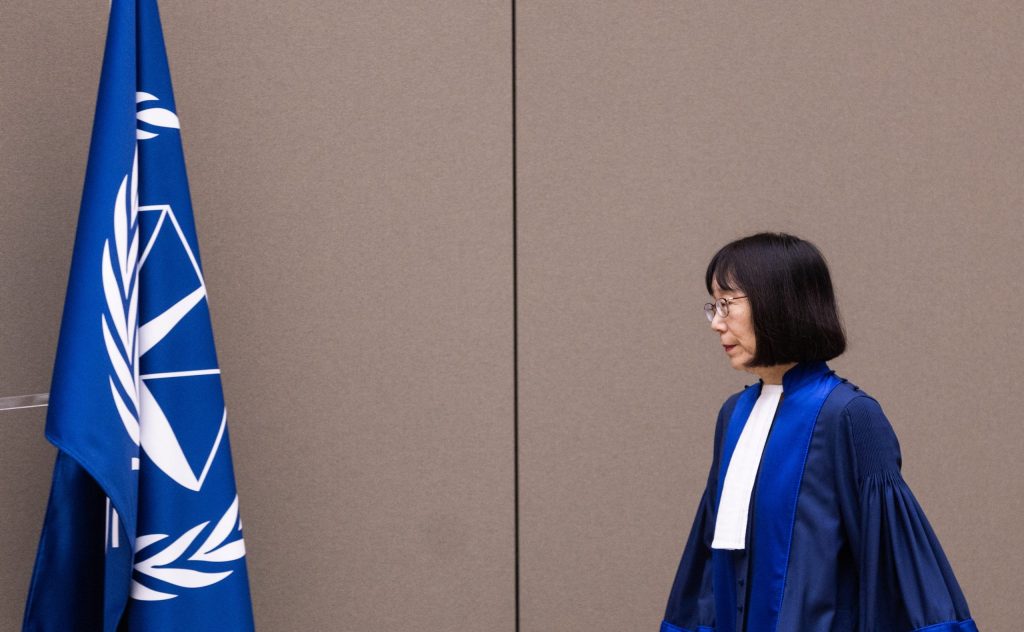
The Trump administration is reportedly trying to strongarm the International Criminal Court (ICC) into changing its founding document to carve out an exception for President Donald Trump and his top officials ensuring that they are never prosecuted by the court for potential war crimes.
The administration is threatening the ICC with yet more sanctions if they do not amend the Rome Statute, which established the court in 2002, to ensure Trump and his administration’s top officials are never prosecuted, Reuters reports, citing a Trump administration official.
U.S. officials are also demanding that the ICC drop its investigations into Israeli Prime Minister Benjamin Netanyahu and former Israeli Defense Minister Yoav Gallant over charges related to Gaza, as well as a probe into potential war crimes committed by U.S. troops in Afghanistan.
These demands have been made known to the court by the U.S. government, Reuters reports.
“There is growing concern … that in 2029 the ICC will turn its attention to the president, to the vice president, to the secretary of war and others, and pursue prosecutions against them,” the Trump administration official told Reuters. “That is unacceptable, and we will not allow it to happen.”
The official said there is “open chatter” within the international legal community about the possibility of prosecuting Trump and other top officials in relation to international human rights violations.
The official did not specify why the administration would be afraid of such charges being issued.
Experts say that the Trump administration is committing war crimes and crimes against humanity in its boat strike campaign and its military support of Israel
by Blanca Missé | Dec 11, 2025 | Podcast, Politics and Movements: International, Politics and Movements: US, Solidarity Without Exception, Venezuela
Throughout 2025, the government of Nicolás Maduro in Venezuela has faced growing and violent pressure from the United States, with President Trump’s administration deploying naval fleets in the Caribbean, ordering lethal and illegal strikes on suspected drug trafficking vessels departing from the Venezuelan territory—and, most recently, seizing a massive oil tanker off the Venezuelan coast. In response, Maduro has invoked emergency powers, mobilized militias, and signaled that his regime is preparing for military confrontation rather than compromise with the US, all while Trump and Maduro face waves of popular dissent and unrest within their own countries. In this urgent episode of Solidarity Without Exception, co-host Blanca Missé speaks with Venezuelan journalist and researcher Simón Rodríguez Porras about the decades-long path that has led us to the brink of war between the US and Venezuela, and about the need for working people around the globe to oppose Trump’s imperialist aggression and stand in solidarity with the Venezuelan people without excusing or ignoring the political crisis within Venezuela itself.
Guests:
Simón Rodríguez Porras is a Venezuelan journalist, researcher, and editor at Venezuelanvoices.org.
Credits:
Pre-Production: Blanca Missé
Audio Post-Production: Alina Nehlich
Transcript
The following is a rushed transcript and may contain errors. A proofread version will be made available as soon as possible.
Blanca Missé:
As the confrontation between the US and Venezuela intensifies, we find ourselves at a pivotal moment where international, working-class solidarity is very much needed. Across 2025, the government of Nicolas Maduro in Venezuela has faced growing pressure from Washington with naval deployments in the Caribbean, lethal strikes, unsuspected drug trafficking vessels departing from the Venezuelan territory, and an escalating rhetoric of national defense from Caracas. In response, one US