‘Spectacle of disorder’: How ICE creates the chaos ICE, cops, and the military are called in to ‘fix’

‘Spectacle of disorder’: How ICE creates the chaos ICE, cops, and the military are called in to ‘fix’

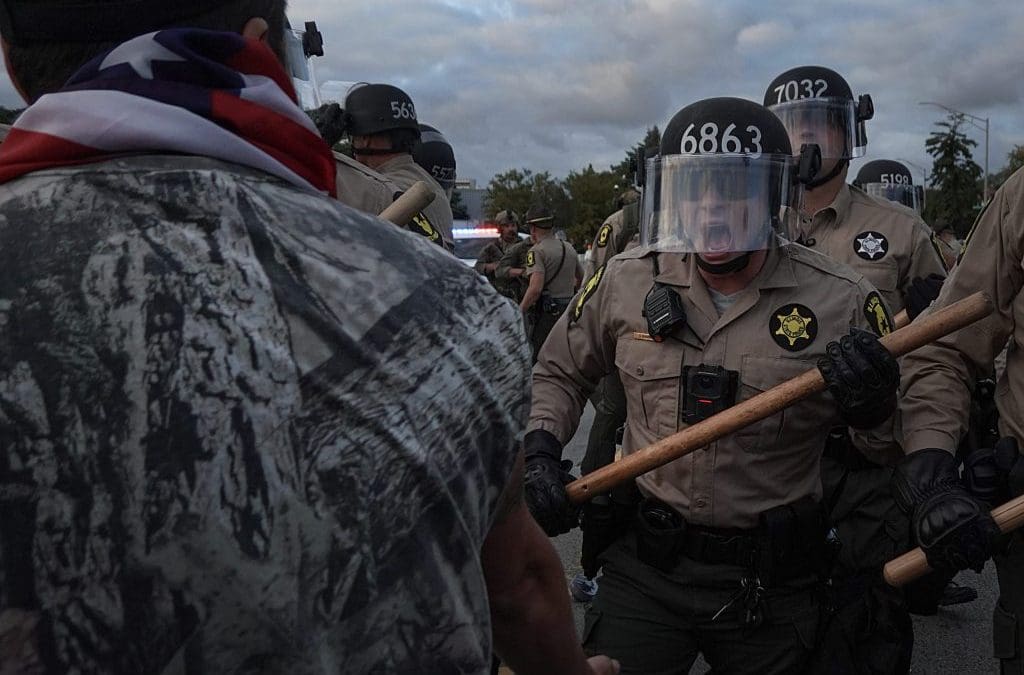
President Trump repeatedly promised that his mass deportation efforts would target “the worst of the worst” criminals, yet the government’s own data reveals that immigrants with no criminal record are the largest group in US immigration detention today. How can the Trump administration justify its deployment of federal agents, and even the military, to US cities based on the factually disprovable fictions that American cities are crime-ridden “war zones” overrun with criminal “illegal aliens”? To answer that, one must study the long-established precedent in the USA of overpolicing poor communities of color that are painted as inherently violent, chaotic, and crime-ridden. In this episode of Rattling the Bars, host Mansa Musa speaks with TRNN reporters Stephen Janis and Taya Graham about what the history of policing in America can teach us about Trump’s authoritarian deployment of law enforcement agencies today.

Credits:

Producer / Videographer / Post-Production: Cameron Granadino

Transcript
The following is a rushed transcript and may contain errors. A proofread version will be made available as soon as possible.

Mansa Musa:

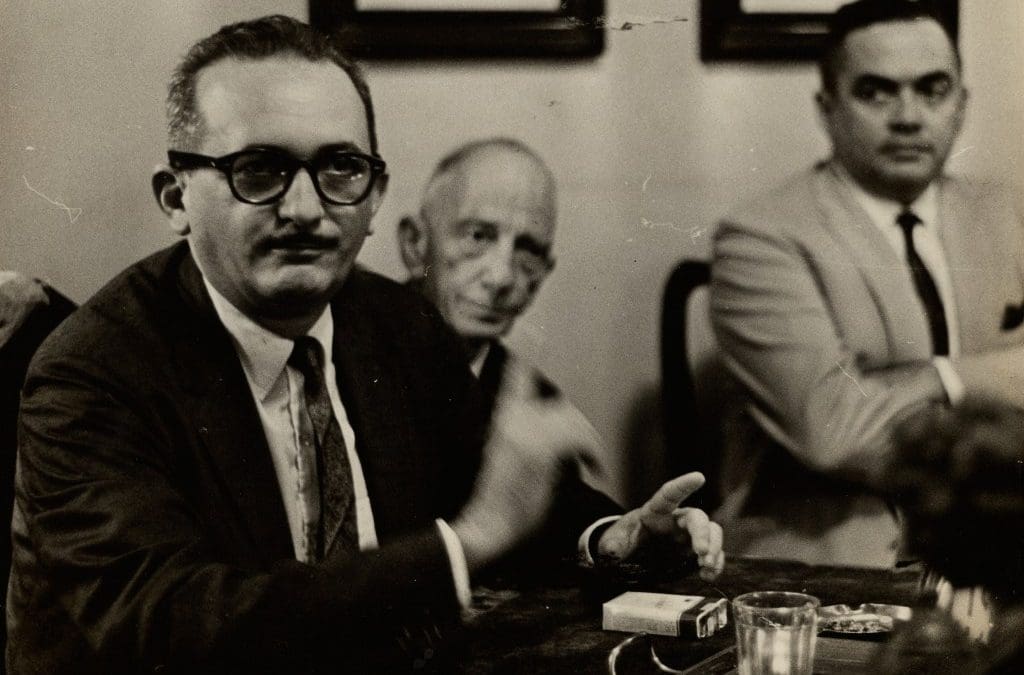
Welcome to this edition of Rattling the Bars. I’m your host Mansa Musa. The Watts Riots, sometimes referred to as Watts Rebellion or Watts Uprising, took place in Watts neighborhood and surrounding areas of Los Angeles from August 11th and 16th from 1965. The rise was motivated by anger at racist and abusive practices of Los Angeles Police, as well as his grievances over unemployment discrimination and residential segregation of property. The backdrop of it was that they arrested our individual that they claimed didn’t pass the drunk driving test. Out of that grew a conversation about police kicking a pregnant woman. At any rate,

Original

Ecuador’s Indigenous movement launches ‘indefinite national strike’

Ecuador’s Indigenous movement launches ‘indefinite national strike’

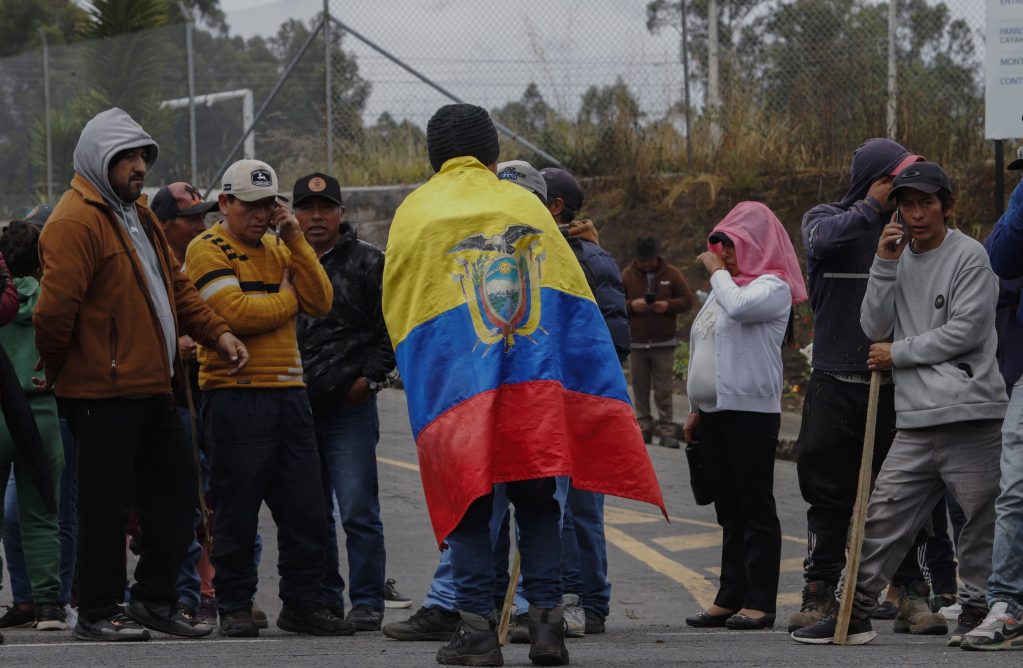
In Ecuador, the country’s largest Indigenous movement has been leading mass protests in the streets for nearly two weeks against President Daniel Noboa’s lifting of diesel subsidies. Gas prices have spiked. They say it will impact the price of food.

They’re calling their protests an “indefinite national strike.” The country is now on fire. They have faced repression. But they have vowed to continue in the streets, demanding justice. Demanding their rights. Standing in defense of their communities, their lives, and their future.

This is Stories of Resistance—a podcast produced by The Real News. Each week, we’ll bring you stories of resistance like this. Inspiration for dark times.

Please keep an eye out for Michael’s latest article about the Ecuador protests. It’ll be online with Truthout. You can visit www.Truthout.org for more.

BIG NEWS! This podcast is a finalist for this year’s Signal Awards for best history podcast. It’s a huge honor just to get this far. 

And you can help us win. Your vote can make a difference. Anyone can vote.

Here’s the link: https://vote.signalaward.com/PublicVoting#/2025/shows/genre/history

All you have to do is click on the link. That will take you to a page where you can click on the Stories of Resistance icon. Register your email and you’re all set. 

While you’re there, please also vote for The Real News’s Marc Steiner. He’s in the running for best episode host. You can vote for him here: https://vote.signalaward.com/PublicVoting#/2025/individual-episodes/craft/best-host

Please consider supporting this podcast and Michael Fox’s reporting on his Patreon account: patreon.com/mfox. There you can also see exclusive pictures, video, and interviews. 

If you like what you hear, please subscribe, like, share, comment, or leave a review. 

And please consider signing up

Original

More federal layoffs, healthcare cuts, and blocking the Epstein files: Breaking down the GOP government shutdown

More federal layoffs, healthcare cuts, and blocking the Epstein files: Breaking down the GOP government shutdown

Seven years ago, during Donald Trump’s first presidential term, the US endured the longest government shutdown in its history: 35 days. Now, in the first year of Donald Trump’s second presidential term, with Republicans and Republican appointees controlling all three branches of government, the government is shut down again. How long will this shutdown last? What short-term and long-term impacts will the shutdown have on poor and working people, on the Affordable Care Act, on the Trump agenda, and on the congressional battle to release the Epstein files? TRNN Editor-in-Chief and “Inequality Watch” hosts Taya Graham and Stephen Janis break down your questions on Day 1 of the 2025 government shutdown.

Additional resources:

Follow Taya Graham on Instagram and TikTok for more on-the-ground updates

Follow Stephen Janis on Instagram and TikTok for more on-the-ground updates

Credits:

Studio Production / Post-Production: Cameron Granadino

Transcript
The following is a rushed transcript and may contain errors. A proofread version will be made available as soon as possible

Maximillian Alvarez:

Seven years ago during Donald Trump’s first presidential term, America endured the longest government shutdown in our history. 35 days Now in October of 2025, in the first year of Donald Trump’s second presidential administration. When Republicans and Republican appointees control all three branches of government, the government is shut down. Again, we don’t know how long this is going to go on, but the real news is going to be here for as long as it takes to get you the information and perspectives you need to act. And our resident inequality watchdogs, Taya Graham and Steven, Janice were on the ground in Washington, DC earlier this week doing just that. And this was just hours before the shutdown actually

Original

Federal whistleblowers illegally fired after exposing ‘chaos’ at Trump’s HUD

Federal whistleblowers illegally fired after exposing ‘chaos’ at Trump’s HUD

Last week, The Real News Network published a bombshell interview with two federal whistleblowers working in the Department of Housing and Urban Development (HUD). TRNN Editor-in-Chief Maximillian Alvarez spoke with Paul Osadebe and Palmer Heenan, two attorneys in HUD’s Office of Fair Housing, about the “chaos” that has upended HUD under the new Trump administration, and the vulnerable Americans who are being systematically abandoned as a result. Then, on Monday, Sept. 29, exactly one week after going public, Osadebe and Heenan were fired in what the Federal Unionist Network describes as “a stunning act of illegal retaliation.” In this urgent followup interview, we speak once again with Osadebe and Heenan about the conditions of their firing, and what this attack on whistleblowers means for the future of government transparency and the future of HUD itself.

Guests:

Paul Osadebe is a shop steward for the American Federation of Government Employees (AFGE) – Local 476, a member of the Federal Unionists Network, and, until recently, an attorney working in the federal government. Osadebe is one of the four employees within HUD who have filed formal whistleblower complaints through the office of Senator Elizabeth Warren (D – Massachusetts). Osadebe was fired for his whistleblowing on Sept. 29.

Palmer Heenan is a rank-and-file member of AFGE – Local 476, a member of the Federal Unionists Network, and, until recently, an attorney working in the federal government. Heenan is one of the four employees within the Department of Housing and Urban Development who have filed formal whistleblower complaints through the office of Senator Elizabeth Warren (D – Massachusetts). Heenan was fired for his whistleblowing on Sept. 29.

Additional resources:

Debra

Original

Healthcare is the hill Democrats should die on

Healthcare is the hill Democrats should die on

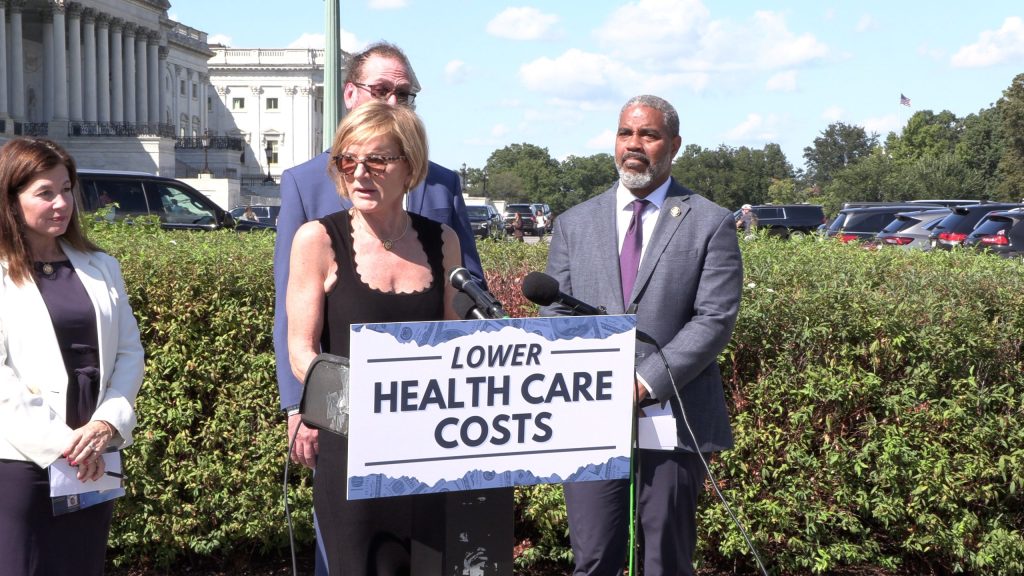
Democrats hold a press conference on Capital Hill to call for the reauthorization of AVA subsidies. Rep. Susie Lee (D-Nevada)) Rep. Kristen McDonald Rivett (D-Neveada) and Steven Horsford pictured. Photo: Stephen Janis

The meager collection of congressional Democrats standing outside the Capitol last Thursday belied the gravity of the policy on the agenda: the pending elimination of Obamacare tax credits.  

The credits, enacted during the pandemic, raised the income ceiling to qualify for subsidies for anyone purchasing ACA insurance. The extra help from the government led to record enrollment, since 2020, the year before the enhanced subsidies went into effect, the number of people with ACA Marketplace coverage has grown by 88% from 11.4 million to the current 21.4 million

But the credits are set to expire in 2026. Republicans refused to renew the program as part of the Big Beautiful Bill . And now Democrats are pushing them to reconsider amid a looming deadline to fund the government. 

The Congressional Budget Office, a nonpartisan agency, estimates 2.2 million people will no longer be able to afford insurance when the credits expire in 2026 .  

“This isn’t a small thing, this isn’t something that is only going to impact the people who claim those credits,”  Nevada Congresswoman Kristen McDonald Rivett argued.

“What we are going to see is that this is going to affect the cost of insurance of every single American.”  

This has all the makings of a crisis. Which is why McDonald – Rivett and two other members of Congress stood in a hot September sun pleading with Republicans to renew them as part of a deal to fund the government. 

“When Republicans repealed the tax credits for the Affordable Care Act, Republicans basically said we don’t care about Americans losing their health insurance,” Nevada Representative Susie Lee said. 

But there’s a big difference between this policy dispute and conflicts in the past. This time,  Republicans need Democratic votes to pass a looming spending resolution. Democrats have leverage.

The question is, will they use it?

The biggest obstacle is in the Senate. Republicans hold just 53 seats, seven short of the number need to bypass the filibuster and pass legislation. 

But the Republican House margins are slim, too, after a special election in Arizona to fill a vacant seat was won by a Democrat. The Republicans now hold 219 House seats, and it takes 218 votes for legislation to pass .

House Republicans did approve a bill that would fund the government through November, but it failed in the Senate. Congress has until the end of the month to pass legislation to keep the government open. 

Still, when we asked if they were willing to support a shutdown to force Republicans to restore the credits, the elected officials on hand were circumspect, if not muted.

“That’s the Republicans’ choice,” explained Rep. Steven Horsford (D-7),  another Nevada Democrat house member who attended the press conference. “They have the power.”

And therein lies the rub. Because truthfully, in this case, Democrats are not without power. They just seem reluctant to wield it. 

Senate Minority Leader Chuck Schumer was just as cagey. Appearing on CNN Sunday, he also declined to threaten a shutdown .

“Look, it’s the Republicans shutting down the government,” Schumer told CNN anchor Dana Bash. “What we are asking very simply is bipartisan negotiation.”

It’s a cautious approach that has proven ineffective for Democrats in the past. While Trump has indiscriminately issued dozens of executive orders, wielding power like a king, the Democrats have done little to counter him. 

As we have noted in our coverage of Capitol Hill, part of the problem is that Democrats are essentially risk-averse. Even though Trump’s most high-profile moves are often poorly executed or simply theatrical, the Democrats seem woefully ill-equipped to counter them. 

To be fair, Democrats might be playing their cards close to the vest. Openly threatening a shutdown now could be premature, and allow Republicans to portray them as obstructionists. 

But Democrats have substance on their side, and the power to do something about it. The loss of ACA subsidies has real implications for real people . Forcing a shutdown would provide a stage to make this clear to the public. At the very least, people would know who to blame for the increase in health premiums if Republicans refuse to budge. 

That’s what’s at stake for the Democrats. Trump and his Republican cohorts have grown accustomed to winning. He’s so confident he’s willing to fight on any political stage to prove it.

To beat him, the Democrats have to be willing to do something he does all the time: take risks and be bold. The shutdown is a good place to start. The Democrats need to figure that out before it’s too late. 

Original

Paulo Freire and education for freedom

Paulo Freire and education for freedom

Paulo Friere, 1963. Public domain/Arquivo Nacional Collection.

Brazilian educator Paulo Freire inspired and he resisted. He was imprisoned and exiled during the Brazilian dictatorship and he carried his teachings around the world. He believed literacy and learning could be tools to empower. He helped people learn to read and write, but also understand their place of oppression and rise above it.

He wrote, “Education doesn’t transform the world. Education changes people. People transform the world.”

This is episode 67 of Stories of Resistance—a podcast produced by The Real News . Each week, we’ll bring you stories of resistance like this. Inspiration for dark times.

You can check out Michael’s exclusive pictures of this student march here, on his Patreon .

Michael’s Panamerican Dispatch podcast episode and pictures on the voices of resistance in Washington, DC, are here: https://www.patreon.com/posts/voices-of-in-dc

Please consider supporting this podcast and Michael Fox’s reporting on his Patreon account : patreon.com/mfox . There you can also see exclusive pictures, video, and interviews. 

If you like what you hear, please subscribe, like, share, comment, or leave a review. 

And please consider signing up for the Stories of Resistance podcast feed, either in Spotify , Apple Podcasts , Spreaker , or wherever you listen.

Written and produced by Michael Fox .

Resources

Transcript

He was a man who inspired; who left a left a legacy long beyond his 75 years. A man who empowered, and continues to empower others, even though he passed nearly three decades ago. A man of hope. Of belief in the power of every individual. Every human being. And that we could learn through each other—with each other—together.

This man was Paulo Freire.

His life was dedicated to helping others to unlock their every potential, to help others break the chains that tie them down. His words and his teachings, his pedagogy, has been taught the world over, and changed lives. It still does.

Paulo Freire was born in Recife, Brazil, on September 19, 1921. He faced poverty and hunger early. It would impact him throughout his life. 

“I didn’t understand anything because of my hunger,” he said. “I wasn’t dumb. It wasn’t lack of interest. My social condition didn’t allow me to have an education. Experience showed me once again the relationship between social class and knowledge.”

He studied law and philosophy. He worked as a Portuguese teacher. Above all, he was an educator. See, he believed that true learning, transformative learning, didn’t come through rote memorization and repetition. It came through creative critical thinking. Through personalizing lessons.

He believed that education could truly be a means of liberation. Of empowerment. And he put this into practice in Northeastern Brazil.

In the early 1960s, working through the University of Recife, he and a team of youth educators helped to teach 300 farmworkers in the town of Angicos, Rio Grande do Norte, to read and write in just 40 hours. 

It was a huge success and it had profound significance. It meant they could now vote. See, at the time, only people who could read or write could vote in Brazil. The Brazilian government brought Freire on to replicate the program around the country. 

But plans were cut short by the 1964 military coup. Paulo Freire was imprisoned and then exiled to Bolivia and then Chile. 

“The right to ask questions,” he would say later, “is the reason I was jailed and the reason I was exiled.”

He published books: “Education as a Practice of Freedom,” and then, in 1968, his infamous “Pedagogy of the Oppressed.”

The book is so profound it is still used and taught around the world today. And it was banned in Brazil under the dictatorship.

In it, he attacks what he calls the “Banking Model” of education, where students are empty cups to be filled up by their teachers. This, he writes, is an instrument for oppression, while a “problem-posing concept of education is an instrument for liberation.”

“Education,” he writes, should be “a mutual process” where teachers work with the students, not teach at them.

Freire writes in the Pedagogy of the Oppressed that “In their political activity, the dominant elites utilize the banking concept to encourage passivity in the oppressed… and take advantage of that passivity to ‘fill’ that consciousness with slogans which create even more fear of freedom. This practice is incompatible with a truly liberating course of action, which, by presenting the oppressors slogans as a problem, helps the oppressed to ‘eject’ those slogans from within themselves.”

Simple words, yet so profound. And so, so different from most of the teaching and education around us. Paulo Freire was truly ahead of his time. 

He inspired. And he resisted. Literacy and learning can be a tool to empower. It can be a tool to change the world. But, as he wrote, “Education doesn’t transform the world. Education changes people. People transform the world.”

Paulo Freire would teach at Harvard University and work as an education advisor with the World Council of Churches. He would act as an advisor on education reform in numerous former Portuguese colonies in Africa. He finally returned home to Brazil in 1980, after 16 years in exile.

His message is still carried across the country and the globe. From land occupations by Brazil’s Landless Workers’ Movement to university classrooms. His pedagogy and praxis continues to be a roadmap for liberation and freedom. A roadmap for lifting us all up. A roadmap for democracy 

He writes in the Pedagogy of the Oppressed: “For the truly humanist educator and the authentic revolutionary, the object of action is the reality to be transformed by them together with other people—not other men and women themselves. The oppressors are the ones who act upon the people to indoctrinate them and adjust them to a reality which must remain untouched.

“But the more I think of what I did, what I proposed, the more I understand myself much more as a thinker and a kind of epistemologist, proposing a critical way of thinking and a critical way of teaching, of knowing to the teachers in order for them to work differently with the students.”

Paulo Freire died on May 2, 1997, at the age of 75. His words and his teachings are just as important today as ever. And, in fact, in Brazil, while in office then-President Jair Bolsonaro pushed to ban his work and his books from university classrooms.

Creative and critical discussions in classrooms and in the public are prohibited for only one reason—to control the message on behalf of the powerful and the elite, and ensure that long-standing systems of oppression continue unchallenged and untouched. Something, sadly, that we are seeing more and more of, today, in the United States and elsewhere around the world.

Hi folks, thanks for listening. I’m your host Michael Fox. Paulo Freire was born today, More than a century ago. 

My dear friend Catherine Murphy has just finished a documentary on Paulo Freire’s life and in particular his work in Angicos, Rio Grande do Norte. It’s called “Reading the World.” You must check it out. It debuted in Brazil recently. It’s still making the rounds on the festival circuit. I’ll add a link in the show notes to the trailer and the website.

The clip I used of Paulo Freire speaking in English comes from an interview he did with the International Literacy Institute in 1996. It’s on YouTube. I’ll add a link to that too in the show notes. 

As always, if you like what you hear and enjoy this podcast, please consider becoming a subscriber on my Patreon. It’s only a few dollars a month. I have a ton of exclusive content there, only available to my supporters. And every supporter really makes a difference.

This is the latest episode of Stories of Resistance, a podcast series produced by The Real News. Each week, I bring you stories of resistance and hope like this. Inspiration for dark times. If you like what you hear, please subscribe, like, share, comment, or leave a review.

Thanks for listening. See you next time.

“My philosophical conviction is that we did not come to keep the world as it is. We came to the world in order to remake the world. We have to change reality.”
Original