by Taya Graham and Stephen Janis | Oct 22, 2025 | Economy, Economy and Inequality, Inequality, Inequality Watch, Politics and Movements: US, video
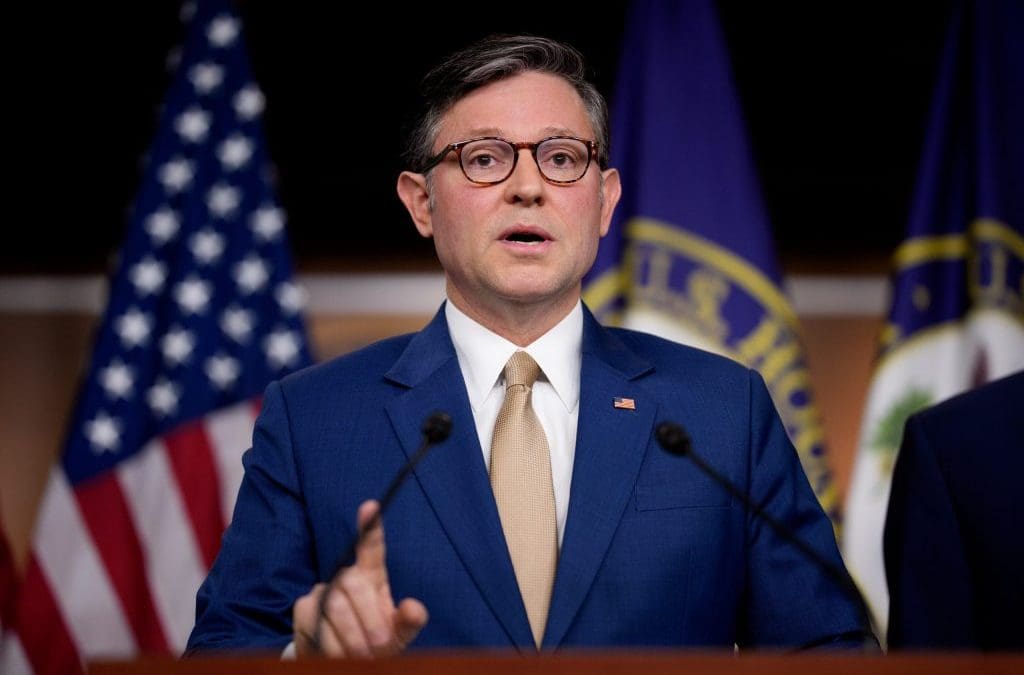
The current shutdown of the federal government is more than just a dispute between two parties with different policy ideas. It’s also a stark example of how America’s massive wealth inequality continues to weaken our democracy. Taya Graham and Stephen Janis break down the evidence that billionaires are running the show.
Credits:
Written by: Taya Graham
Studio/Post-Production: David Hebden
Transcript
The following is a rushed transcript and may contain errors. A proofread version will be made available as soon as possible.
Taya Graham:
Hello everyone. Welcome back to the Inequality Watch Report. I’m Taya Graham, your inequality watchdog. Now, these past two weeks, Washington didn’t just shut down the government. It shut down equality because when the government stops working, inequality doesn’t take a break. It actually cashes in. Now Republicans are saying that the shutdown is about bad policy from Democrats, but we see something different that it is fundamentally about inequality and we can prove it right, Stephen?
Stephen Janis:
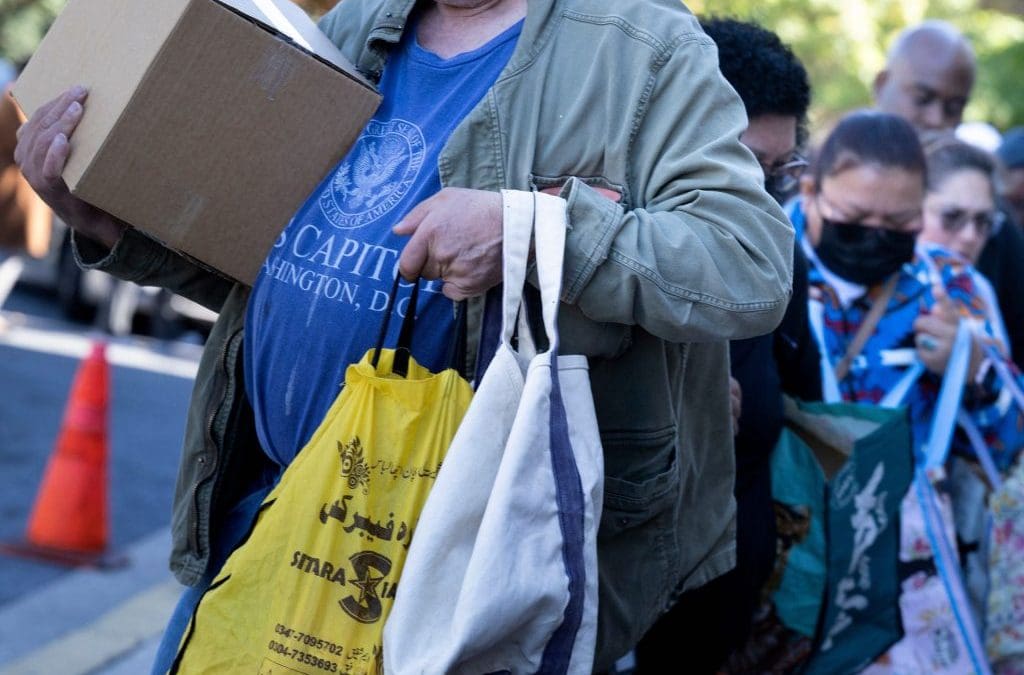
Yeah, absolutely. This is what I think we are going to start calling the first full throated inequality shutdown. It’s not just about politics. It’s not just about who has different policy proposals. I think we’re seeing something really, really different. It’s been evolving and it’s been on the horizon for a long time, but walking around Capitol Hill, we are seeing a different force here that is kind of defining the moment. I think it has a lot to do with economic inequality.
Taya Graham:
Now, what have you been seeing on Capitol Hill? I mean, we’ve been going to DC I would say, every other day for the past two weeks monitoring this shutdown. What have you
by Maximillian Alvarez | Oct 22, 2025 | Economy, Economy and Inequality, labor, Podcast, Politics and Movements: US, Trump, Working People
The federal government shutdown is now in its fourth week. Over 700,000 federal employees have been furloughed, with nearly as many continuing to work without pay, yet there are still no signs that an end to the shutdown is near. “Unlike past presidents, Mr. Trump appears to feel little urgency to strike a deal to reopen the government,” Luke Broadwater writes at The New York Times. “Instead, he has used the shutdown, which began Oct. 1, as an opportunity to further remake the federal bureaucracy and jettison programs he does not like, seizing on unorthodox budgetary maneuvers that some have called illegal.” In this episode, we speak with three furloughed federal employees about the harm government shutdowns cause working people, and we discuss why this shutdown is different.
Guests:
Adam is a furloughed federal employee who works in recreation for the US Forest Service, managing hiking, biking, and equestrian trails in central Idaho. He serves as chapter president of National Federation of Federal Employees Local 1753, and he is an organizer with the Federal Unionists Network.
Ellen is a furloughed federal employee who works in SNAP oversight and administration at the USDA Food and Nutrition Service. She serves as chapter president of National Treasury Employees Union Local 255, representing FNS employees at the Northeast regional office, and she is an organizer with the Federal Unionists Network in Boston.
April is a furloughed federal employee who works in the office of Head Start at the Administration for Children and Families HQ in Washington, DC. She serves as chapter president of the National Treasury Employees Union Local 250.
Additional links/info:
Federal Unionists Network website, BlueSky, and Instagram
Federal Unionists Network: “Join Us To
by Julia Conley | Oct 21, 2025 | Article, Economy, Economy and Inequality, ICE, Politics and Movements: US, Reprint, Trump
This story originally appeared in Common Dreams on Oct. 20, 2025. It is shared here under a Creative Commons (CC BY-NC-ND 3.0) license.
The $170 billion in new funding for immigration enforcement operations that the Republican Party included in the One Big Beautiful Bill Act earlier this year led some to warn that the Trump administration was ramping up spending at anti-immigration agencies not just to fund its attacks on migrants, but to deploy federal forces against anyone it wanted to across US communities.
New reporting on Monday detailed just how much US Immigration and Customs Enforcement has spent on weaponry since President Donald Trump took office—weapons that have been purchased as the administration has turned federal agents on US cities such as Chicago and Portland, illustrating how the president is treating increasingly armed ICE officers as his “private military,” as one progressive critic said.
As images spread online of immigration agents deploying pepper spray and tear gas at nonviolent protesters, Judd Legum at Popular Information recently delved into government contracting records from the Federal Procurement Data System and found that ICE has increased its spending on “small arms, ordnance, and ordnance accessories manufacturing” by 700% this year compared to 2024 numbers.
The agency spent $71,515,762 on small arms from January 20—the day Trump began his second term—through October 18.
The number dwarfs ICE’s spending during the first Trump term, during which the agency spent about $8.4 million annually on small arms, and during President Joe Biden’s administration.
The type of weaponry purchased by ICE also raised alarm Monday, with Legum reporting that while most of the agency’s spending was on guns and armor, “there have also been significant purchases of chemical weapons and ‘guided missile warheads and explosive components.’”
“If the immigration enforcement apparatus of the United States were its own national military,
by Branko Marcetic | Oct 21, 2025 | Argentina, Article, Economy, Economy and Inequality, health care, Politics and Movements: International, Politics and Movements: US, Reprint, Trump
This story originally appeared in Jacobin on Oct. 17, 2025. It is shared here with permission.
Last November, Americans voted for a president who said he would put “America First.” They’re getting “Argentina First” instead.
Earlier this week, the Donald Trump administration announced it was doubling its planned bailout of Argentina, which, under President Javier Milei’s harsh austerity program, has seen its economy stagnate and the country scramble to sell $1 billion of its foreign reserves to stabilize its collapsing currency.
The Trump team’s plan is to scrounge around for another $20 billion from the private sector to send to the crisis-stricken country, on top of the $20 billion of US taxpayer money Trump already pledged he would use to buy up pesos, which would supposedly be a loan. The $40 billion Trump is sending the country is roughly on par with the $41.8 billion it owes the International Monetary Fund — by far the largest debt on the organization’s books, half of which was taken out under Milei earlier this year.
There is no benefit to working Americans from this, and the president isn’t even pretending there is. As he explained, “it’s just helping a great philosophy take over a great country,” because “Argentina is one of the most beautiful countries that I’ve ever seen, and we want to see it succeed. It’s very simple.”
That “great philosophy” is Argentinian president Milei’s “anarcho-capitalism,” or libertarianism, which holds that government should be radically shrunk and its role in society limited to the barest essentials, while letting private, corporate interests run free. Seriously pursued, turning that philosophy into concrete reality necessitates the dismantling of safety net programs like food stamps, Medicaid, and Social Security; the
by Maximillian Alvarez, Taya Graham and Stephen Janis | Oct 20, 2025 | Economy and Inequality, Politics and Movements: US, protest, Trump, video, Washington
WASHINGTON, DC: At the “No Kings” protest on Saturday, Oct. 18, TRNN was on the ground walking the entire length of the demonstration looking for the “paid protestors,” “agitators,” “Hamas supporters,” and “antifa terrorists” Republicans claimed would be filling the streets in what they called a “Hate America” rally. Here’s what we actually saw…
Studio Production: Maximillian Alvarez Post-Production: Cameron Granadino
TOWSON, MD: What brought millions of Americans out to over 2,500 “No Kings” protest sites across the US on Saturday,? Were these protests really “Hate America” rallies, as Republicans accused? What are the hopes, expectations, and goals of these protests, and what comes next? Reporting on the ground from one of the multiple protests that took place in Baltimore County on Oct. 18, Inequality Watchdogs Taya Graham and Stephen Janis posed these questions directly to protestors themselves. Here’s what they said…
Transcript
The following is a rushed transcript and may contain errors. A proofread version will be made available as soon as possible.
Taya Graham:
This is Taya Graham reporting for the Inequality Watch. I’m here at the No Kings protest in Baltimore, Maryland, where demonstrators are challenging not just one leader, but entire system. They say treats wealth and power like a birthright. Their message is both political and personal, that democracy should serve people, not coordinate kings, but let’s listen to the protesters in their own words.
Speaker 2:
Just tired of having our personal rights eroded. We’re seeing really bad bashing on First Amendment, and we just can’t be putting up with that. That’s what this country’s built on, and we got to protect it. And if that means forcing out folks that
by Maximillian Alvarez | Oct 17, 2025 | Economy, Economy and Inequality, labor, video, Working People
Around 31,000 registered nurses and front-line healthcare workers at Kaiser Permanente are on strike, demanding better wages, working hours, and proper staffing. The strike began on Tuesday, Oct 14, and spans hundreds of medical centers and offices in California, Oregon, and Hawaii. Calling in from the picket line in Portland, Oregon, Registered Nurse First Assistant (RNFA) and Executive Secretary of the Oregon Federation of Nurses & Health Professionals (OFNHP) Nick Eng speaks with TRNN Editor-in-Chief Maximillian Alvarez about what healthcare workers are fighting for.
Additional links/info:
Oregon Federation of Nurses & Health Professionals (OFNHP) website, Bluesky, and Instagram
OFNHP: “We are Kaiser: Fighting for the Care Our Patients Deserve“
AP News, “31,000 Kaiser Permanente nurses and other health care workers strike for better wages and staffing“
Credits:
Studio Production: Maximillian Alvarez
Post-Production: Cameron Granadino
Transcript
The following is a rushed transcript and may contain errors. A proofread version will be made available as soon as possible.
Maximillian Alvarez:
Around 31,000 registered nurses and frontline healthcare workers at Kaiser Permanente are on strike, demanding better wages and proper staffing among other things, and even more workers could be joining the picket line soon. The strike began on Tuesday and spans hundreds of medical centers and offices in California, Hawaii, and Oregon. And as we always do here at the Real News Network, we’re going to take you to the heart of the action and to the front lines of struggle right now and calling in from the picket line in Portland, Oregon. I’m speaking with Nick Ang today. Nick is a registered nurse, first assistant, and he’s the Executive secretary of the Oregon Federation of Nurses and Health Professionals. Nick, thank you so much for