by Maximillian Alvarez | Dec 17, 2025 | east palestine, Economy, Economy and Inequality, Inequality, Politics and Movements: US, video
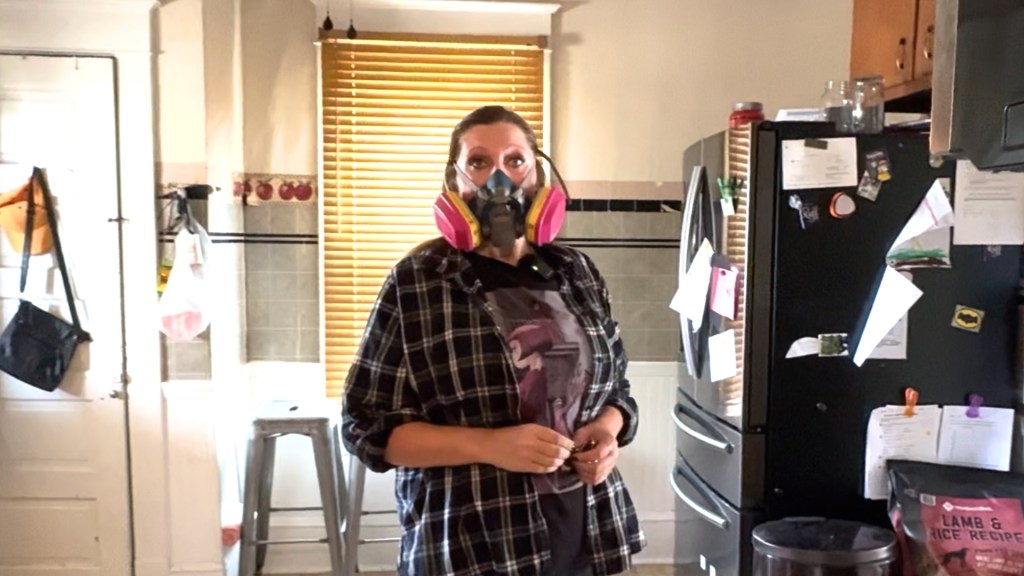
Ashley McCullom’s quiet, small-town life “changed in an instant” on the night of Feb. 3, 2023, when a Norfolk Southern “bomb train” derailed near her home in East Palestine, OH. The derailment, followed by the disastrous decision to “vent and burn” multiple carloads of hazardous chemicals, exposed residents in East Palestine and the surrounding area to toxins that have made them sick, poisoned their homes, and changed their community forever. While Norfolk Southern, politicians, and media pundits have all moved on from the East Palestine train derailment and chemical disaster, residents like McCullom are still dealing with the toxic fallout.Additional links/info:
Maximillian Alvarez, Steve Mellon, & Mike Balonek, The Real News Network, “Trainwreck in ‘Trump Country’: Partisan politics hasn’t helped East Palestine, OH (DOCUMENTARY)”
Credits:
Production: Maximillian Alvarez
Post-Production: Maximillian Alvarez, David Hebden
Transcript
The following is a rushed transcript and may contain errors. A proofread version will be made available as soon as possible.
WKYC Channel 3:
Breaking news from Columbiana County. East Palestine is now under an urgent mandatory evacuation order after a toxic train derailment
ABC News:
State of emergency in Ohio. After a train derailment and massive fire, some of the cars were carrying hazardous chemicals.
NBC News:
Some 2000 residents, nearly half of East Palestine still under evacuation orders. Visitors told to stay away.
PBS NewsHour:
For Ashley McCullum, the fear is warranted. She lived two blocks from the derailment site.
Ashley McCullom:
When I looked out, everything looked like it was on fire. The entire entire thing looked like it was going up in smoke in flames. I’m Ashley McCollum and this is my house. It’s pretty bad inside. I had multiple chemical testing done. I don’t go in without
by Dean Baker | Dec 16, 2025 | Article, Economy and Inequality, health care, Opinion, Politics and Movements: US, Reprint
This story originally appeared in Common Dreams on Dec. 16, 2025. It is shared here under a Creative Commons (CC BY-NC-ND 3.0) license.
During his first term, after repeatedly promising the country a terrific healthcare plan, Donald Trump famously commented, “Nobody knew that healthcare could be so complicated.” In fact, everyone who spent even a few minutes looking at the issue knew that healthcare was complicated. That is why Obamacare ended up being a hodgepodge that was pasted together to extend healthcare coverage as widely as possible. It is also the reason Trump and the Republicans never produced a healthcare plan in Trump’s first term.
The basic problem is that healthcare costs are hugely skewed. Ten percent of the population accounts for more than 60% of total spending, and just 1% accounts for 20% of spending. Most people have relatively low healthcare costs. The trick with healthcare is paying for small number of people who do have high costs.
Individual Choice, Cherry-Picking the Pool, and Screwing Cancer Survivors
The Republicans in Congress, along with Trump on alternate days, are pushing plans that are supposed to give choice to individuals and somehow take it away from insurers. It’s not clear what they think they are saying. They seem to still envision that people will buy insurance, as they do now in the Obamacare exchanges, but somehow that they will have more control in the Republican option.
There is one story they could envision, which would make it much easier for insurers to skew their pool. The Affordable Care Act (ACA) restricted what sort of plans could be offered in the exchanges in order to limit the ability for insurers to avoid high-cost individuals.
It would be possible to relax
by Jessica Corbett | Dec 10, 2025 | Amazon, Article, Climate Crisis, Economy and Inequality, Ecuador, Politics and Movements: International, Politics and Movements: US, Reprint
This story originally appeared in Common Dreams on Dec. 09, 2025. It is shared here under a Creative Commons (CC BY-NC-ND 3.0) license.
A US advocacy group, American human rights lawyer Steven Donziger, and the group in Ecuador behind a historic legal battle against Chevron over its dumping of toxic waste in the Amazon rainforest are condemning the Ecuadorian government’s plans to pay the oil giant hundreds of millions of dollars due to an arbitration ruling.
In response to the legal fight in Ecuador that led to a $9.5 billion judgment against Chevron—which bought Texaco—the fossil fuel company turned to the investor-state dispute settlement (ISDS) system, suing the South American country in the Hague-based Permanent Court of Arbitration. As part of the latter case, Ecuadorian Attorney General Diana Salazar Méndez’s office announced Monday that the government would pay the US company only around $220 million, rather than the over $3 billion Chevron sought.
While Chevron said in a statement that it was “pleased with the resolution of this matter” and claimed the decision “strengthened the rule of law globally,” and Salazar Méndez’s office celebrated the dramatically lower figure, and the Union of Peoples Affected by Chevron-Texaco (UDAPT)—the group that began the case against oil company in 1993—pushed back against the government’s framing of the reduction “as if it was a success and an economic achievement.”
“The reality is it is a defeat for justice,” UDAPT argued in a Tuesday statement. “For 32 years, UDAPT has documented pollution, environmental crime, and lives broken by Chevron, proving what should be obvious: Communities have not recovered, health has not been restored, clean water has not returned, and the territories that sustain life remain contaminated. A debt is not owed to Chevron. A debt is owed to the Amazonian families still waiting for
by Alexis Goldstein | Dec 3, 2025 | Article, baltimore, Economy and Inequality, New York, Politics and Movements: US, Reprint
This story was originally published on Truthout on Dec. 01, 2025. It is shared here under a Creative Commons (CC BY-NC-ND 4.0) license.
During the COVID-19 pandemic and its associated economic downturn, many people couldn’t pay their transportation costs, and often didn’t. In New York City in 2021, some 21 percent of bus riders did not pay the fare, a figure that grew to 48 percent in 2024. Some local governments, including New York City, responded with reduced or free fare programs. From 2023 to 2024, New York’s Metropolitan Transit Authority (MTA) ran a zero-fare bus pilot that served around 43,000 riders. The pilot, championed by then-assembly member Zohran Mamdani, offered free trips on one bus in each borough.
To expand this small pilot to universal zero-fare buses throughout New York City is a tall task, with a total 2024 bus ridership of 409 million and 6,300 buses. As mayor-elect Mamdani and his administration look to grow zero-fare buses in New York, they have a stellar example just a few hours south of New York, in Maryland.
The largest free bus program in Maryland by ridership is in Montgomery County, a suburb north of Washington, D.C.
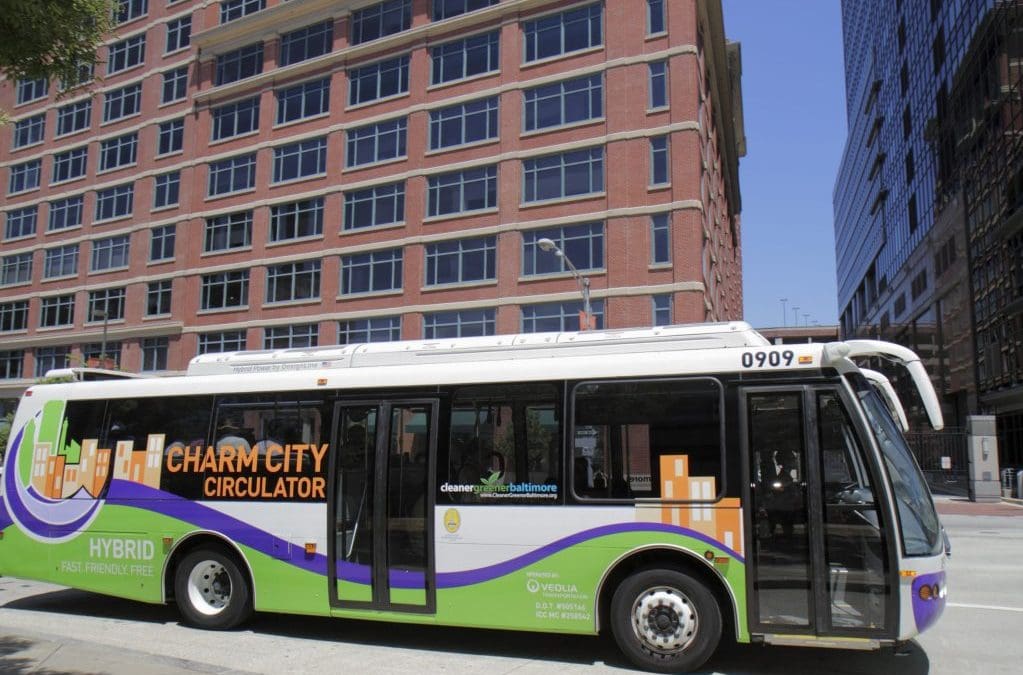
Montgomery County first made its “Ride On” buses free to all riders under 18 in 2019. Then on June 29, 2025, it made all of its buses fare-free for all passengers. The system has a fleet of nearly 400 buses, 80 routes, and provided 19.2 million rides in the 2025 fiscal year. In the three months since free fares were instituted, ridership has increased by 5.4 percent. Phil McLaughlin, General Manager of Transit Services for Montgomery County Department of Transportation (MCDOT), said an estimated 1 percent to 2 percent of
by Mansa Musa | Dec 1, 2025 | Economy, Economy and Inequality, labor, Podcast, prison reform, Prisons and Policing, Rattling the Bars
In this episode of Rattling the Bars, host Mansa Musa speaks with Miami-based organizer Katherine Passley about how prison labor, temp agencies, and the 13th Amendment have created a system that traps formerly incarcerated people in unending cycles of cheap, hyper-exploited work. Passley, co-executive director of Beyond the Bars, also talks with Musa about how her organization is fighting to win free jail phone calls, erase millions of dollars in fines and fees for systems-impacted people, and build powerful bridges between the prison abolition movement and the labor movement in Florida.
Guest:
Katherine Passley is co-executive director of Beyond the Bars, a worker center in South Florida building the social and economic power of workers with criminal records and their families. Passley was named the 2025 Labor Organizer of the Year by In These Times magazine.
Additional links/info:
Kim Kelly, In These Times, “Building bridges and erasing jail debt: Katherine Passley“
Mansa Musa, The Real News Network, “America is built on prison labor. When will the labor movement defend prisoners?“
Credits:
Producer / Videographer / Post-Production: Cameron Granadino
Transcript
The following is a rushed transcript and may contain errors. A proofread version will be made available as soon as possible.
Mansa Musa:
My name is Mansa Musa. I’m a former political prisoner, member of the Black Panther Party. And prior to being released from prison, I served 48 years. Now I’m the host of rallying the bars on the Real News Network when we think of labor and labor movement in this country. More importantly, when we think of the quote from Marxist, when Marx say, workers of the world Unite. Was Marx talking about only workers of a certain ethnic group? Was Marx talking about all
by Brad Reed | Dec 1, 2025 | Article, Economy, Economy and Inequality, Inequality, Reprint