by Maximillian Alvarez | Dec 18, 2025 | Economy, Economy and Inequality, labor, Podcast, Politics and Movements: US, Unions, Working People
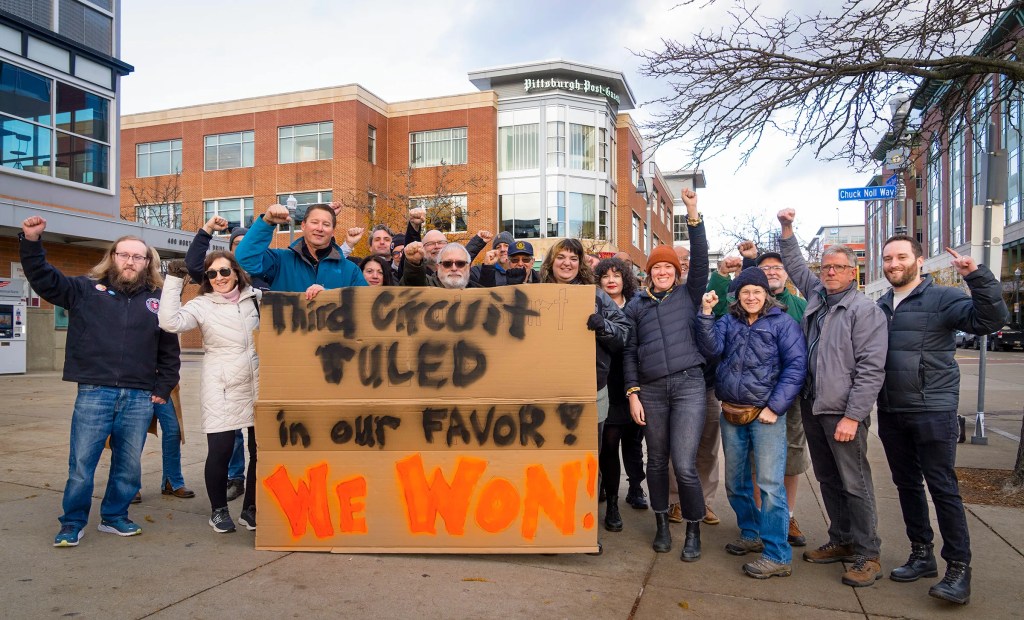
On Monday, Nov. 24, after more than 1,100 days on strike, Newspaper Guild of Pittsburgh members were cheered on by supporters at a rally in downtown Pittsburgh before returning to work at the Pittsburgh Post-Gazette. Even though strikers have returned to work, however, many issues at the center of the strike are still in legal limbo—and their fight for a fair contract is not over. In this episode of Working People, we speak with three Newspaper Guild of Pittsburgh members—Bob Batz. Jr, Natalie Duleba, and Steve Mellon—about where things stand now, how their lives have changed since returning to work, and what it takes to hold the picket line for over three years.
Additional links/info:
Pittsburgh Union Progress website
Newspaper Guild of Pittsburgh website, Facebook page, and Instagram
Bob Batz Jr. & Steve Mellon, Pittsburgh Union Progress, “Pittsburgh journalists vote to end country’s longest strike and notify the PG they are returning to work”
Newspaper Guild of Pittsburgh, “Post-Gazette strikers send company return to work offer”
Sara Scire, Nieman Lab, “What newsroom organizers learned from the years-long strike at the Pittsburgh Post-Gazette”
Featured Music:
Jules Taylor, Working People Theme Song
Credits:
Audio Post-Production: Alina Nehlich
Transcript
The following is a rushed transcript and may contain errors. A proofread version will be made available as soon as possible.
Maximillian Alvarez:
Alright. Welcome everyone to Working People, a podcast about the lives, jobs, dreams, and struggles of the working class today. Working People is a proud member of the Labor Radio Podcast Network and is brought to you in partnership within these Times Magazine and the Real News Network. This show is produced by Jules Taylor and made possible by the support of listeners like you. My name is Maximillian Alvarez, and as we reach the
by Maximillian Alvarez | Dec 3, 2025 | Gaza, Israel, labor, Palestine, Politics and Movements: International, Politics and Movements: US, video, Working People
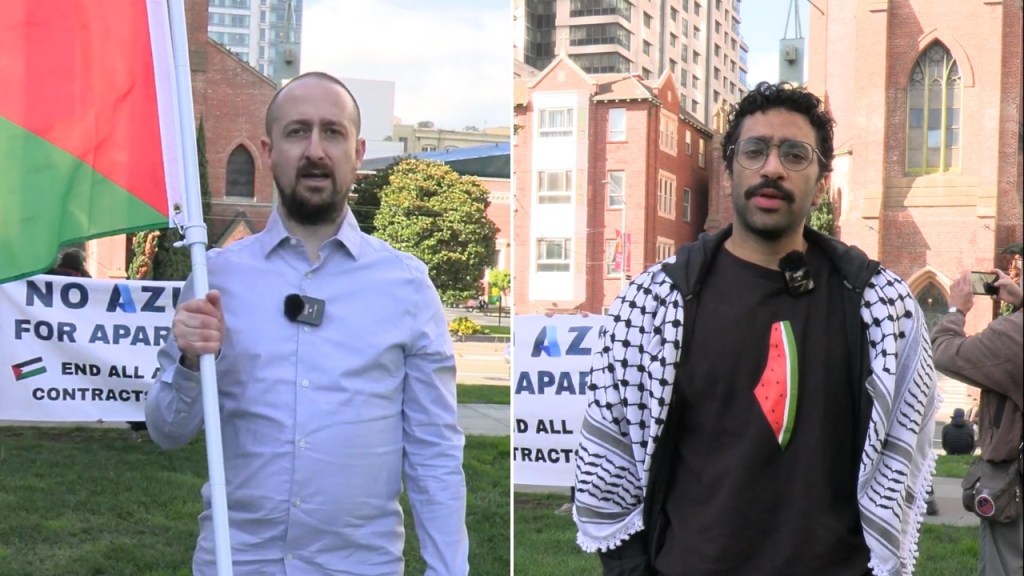
Around 20,000 people attended tech giant Microsoft’s Ignite conference in San Francisco last month. Current and former tech workers and Microsoft employees with the No Azure for Apartheid movement were also there to disrupt business as usual, and to continue their ongoing protests of Microsoft’s contracts with Israel’s government and its complicity in the war crimes Israel has committed against Palestinians. TRNN Editor-in-Chief Maximillian Alvarez speaks with Patrick Fort, a Microsoft senior engineer who resigned in protest at the Ignite conference, and Hossam Nasr, a No Azure for Apartheid organizer who was fired by Microsoft.
Additional links/info:
No Azure for Apartheid Instagram and Linktree
Maximillian Alvarez, The Real News Network, “Microsoft cancels Israeli spy unit access after tech worker revolt”
Credits:
Post-Production: David Hebden
Transcript
The following is a rushed transcript and may contain errors. A proofread version will be made available as soon as possible.
Maximillian Alvarez:
Around 20,000 people attended Tech Giant Microsoft’s Ignite Conference in San Francisco last month. But current and former tech workers and Microsoft employees with the no Azure for Apartheid movement were also there to disrupt business as usual and to continue their ongoing protests of Microsoft’s contracts with Israel’s government and its complicity in the war crimes that Israel has committed against Palestinians. Here’s a video that was posted from the No Azure for Apartheid Instagram account, which shows the moment that one brave tech worker called out Microsoft’s CEO of commercial business, Judson Altoff, in front of the entire conference. Take a look.
Patrick Fort:
Hey, Judson, the point of the children of God is on our hands. Judson, I worked at Microsoft for seven years and I resigned today Microsoft Disappointing Israel genocide, free
by Michael Fox | Nov 20, 2025 | brazil, Podcast, Politics and Movements: International, Stories of Resistance, Working People
Nov. 20 is Black Consciousness Day in Brazil. A day celebrating the struggle of Black organizations, people, and movements in Brazil. Celebrating the ongoing fight against racism. And, above all, celebrating the history of Brazil’s most historic Black leader: Zumbi dos Palmares.
He was leader of the great Palmares Quilombo, present-day Alagoas, an autonomous state built by escaped slaves in the 1600s.
Palmares would last for roughly a century. It would grow to a population of tens of thousands of people spread out over 11 towns in the forested mountains and hillsides of northeastern Brazil. And they would defend it time and time again against attacks by the Portuguese colonial army.
BIG NEWS! This podcast has won Gold in this year’s Signal Awards for best history podcast! It’s a huge honor. Thank you so much to everyone who voted and supported.
And please consider signing up for the Stories of Resistance podcast feed on Spotify, Apple Podcasts, Spreaker, or wherever you listen. And please take a moment to rate and review the podcast. A little help goes a long way.
The Real News’s legendary host Marc Steiner has also been in the running for best episode host. And he also won a Gold Signal Award. We are so excited. You can listen and subscribe to the Marc Steiner Show here on Spotify or Apple Podcasts.
Please consider supporting this podcast and Michael Fox’s reporting on his Patreon account: patreon.com/mfox. There you can also see exclusive pictures, video, and interviews.
Written and produced by Michael Fox.
Resources:
Culture, Land and Resistance: Brazilians Celebrate Black Consciousness Day
‘Existing and resisting’: Black quilombo communities fight for land, rights in Brazil
Black Consciousness Day in
by Maximillian Alvarez | Nov 20, 2025 | Economy, Economy and Inequality, labor, Podcast, Politics and Movements: US, Unions, Working People
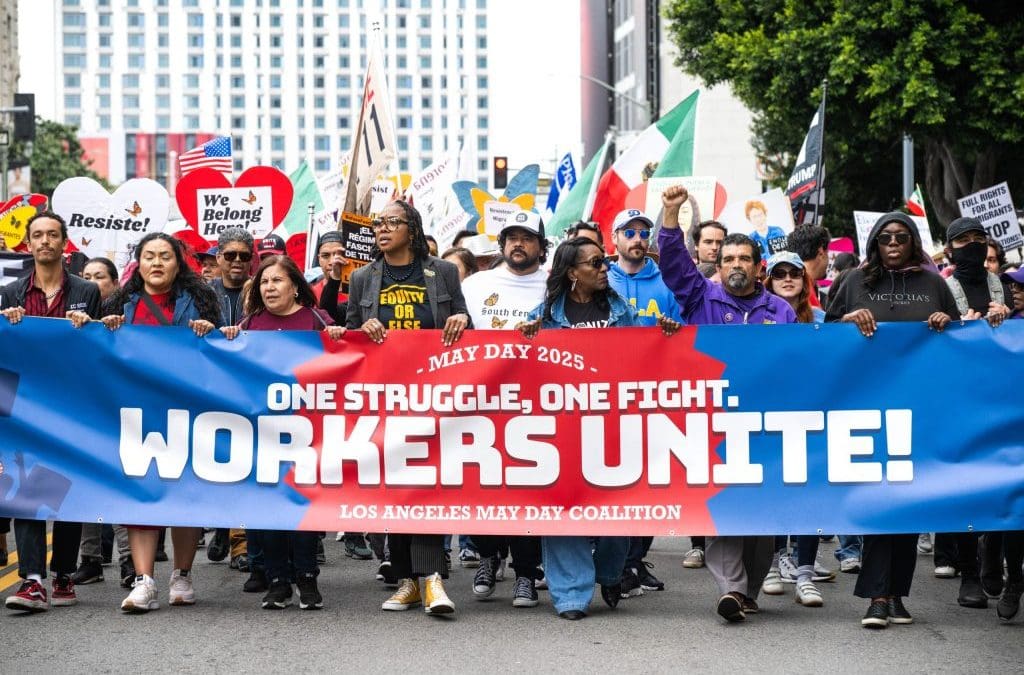
Making ends meet in today’s economy is difficult enough, but with so many societal crises affecting working people’s lives on and off the shop floor—from mass layoffs to untenable costs of living, from an authoritarian federal government to AI and the climate crisis—it can feel all but impossible. What does it mean to have a union job, to be a union member, and to be part of the labor movement in these overwhelming times? What role do unions and other labor organizations have to play, not just in the fight for economic justice, but in the fight for democracy, civil rights, the rule of law, and a livable planet? We posed these questions to a range of emerging labor leaders from different unions and worker centers enrolled in the 2025-26 Minnesota Union Leadership Program (MULP). Here’s what they told us…
Additional links/info:
Minnesota Union Leadership Program website
Workday Magazine website
Maximillian Alvarez, Working People / The Real News Network, “What good is a union in Hell?”
Featured Music:
Jules Taylor, Working People Theme Song
Credits:Audio Post-Production: Alina Nehlich
Transcript
The following is a rushed transcript and may contain errors. A proofread version will be made available as soon as possible.
Maximillian Alvarez:
Alight. Welcome everyone to Working People, a podcast about the lives, jobs, dreams, and struggles of the working class today. Working People is a proud member of the Labor Radio Podcast Network and is brought to you in partnership within these Times Magazine and the Real News Network. This show is produced by Jules Taylor and made possible by the support of listeners like you. My name is Maximillian Alvarez and I am very excited to share today’s episode with y’all because believe me as
by Maximillian Alvarez | Nov 14, 2025 | Economy, Economy and Inequality, labor, Politics and Movements: US, Unions, video, Working People
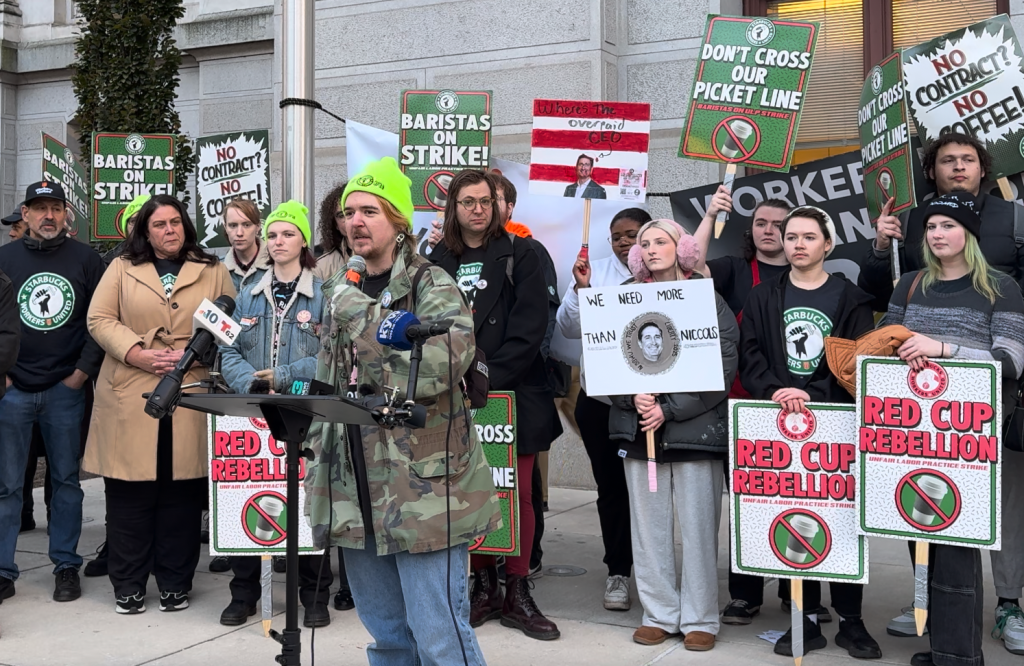
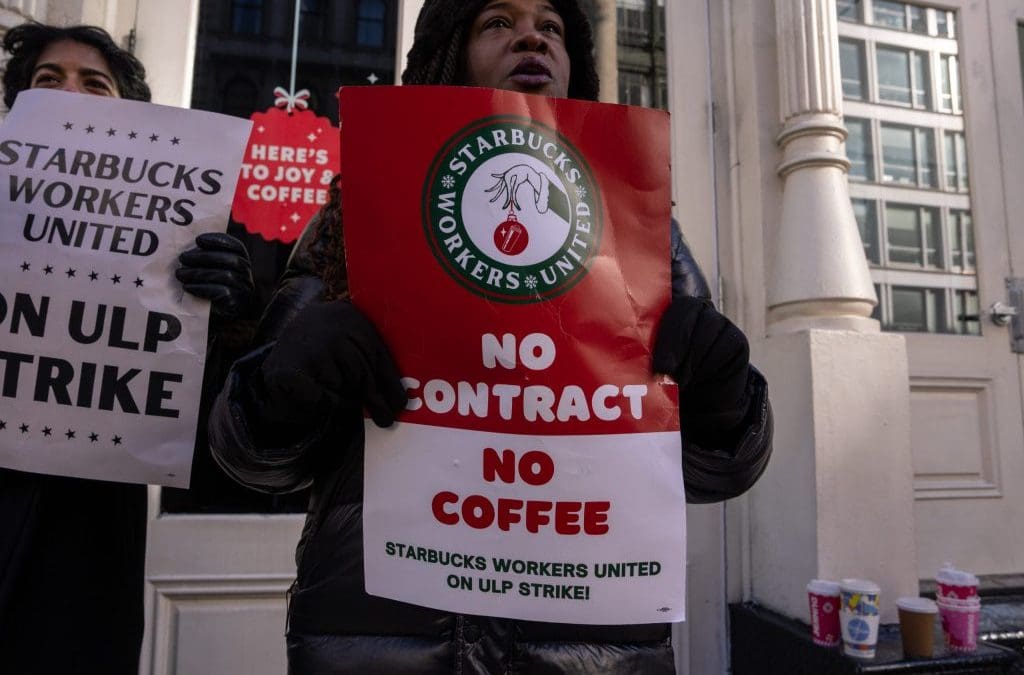
Over 1,000 unionized Starbucks workers in over 40 cities across the US walked off the job on an indefinite Unfair Labor Practice strike on Thursday, Nov. 13. The union, Starbucks Workers United, says more workers at more unionized stores will be joining the picket line during the busy holiday season to pressure Starbucks to return to the bargaining table with proposals that seriously address workers’ ongoing demands regarding better pay and work hours, safe staffing, and resolving the hundreds of Unfair Labor Practice charges that have been filed against the coffee giant. TRNN Editor-in-Chief Maximillian Alvarez reports on the ground from the picket line in Philadelphia, PA.
Credits:
Videography: Maximillian Alvarez
Post-Production: David Hebden, Maximillian Alvarez
Transcript
The following is a rushed transcript and may contain errors. A proofread version will be made available as soon as possible.
Crowd chants:
What do we want? Contract! When do we want it? Now! If we don’t get it? Shut it down! If we don’t get it? Shut it down!
Maximillian Alvarez:
I’m here in Philadelphia, Pennsylvania, just outside City Hall. It’s Thursday, November 13th, around 5:00 PM Eastern time. And earlier today, over a thousand Starbucks workers in over 45 cities around the country walked off the job and went out on an unfair labor practice strike. After last week, a super majority of unionized baristas voted to authorize the strike, demanding that Starbucks come back to the bargaining table with serious proposals to address workers’ ongoing years long concerns about safe staffing, better pay, better work hours, and all manner of unfair labor practices that have been filed against the company since the first store unionized in Buffalo, New
by Maximillian Alvarez | Nov 12, 2025 | Economy, Economy and Inequality, labor, Podcast, Politics and Movements: US, Unions, Working People
Four years after the first Starbucks store in the US unionized in 2021, workers across the country are still facing rampant union busting and still fighting for a first contract with the coffee giant. That is why a supermajority of unionized baristas with Starbucks Workers United recently voted to authorize an Unfair Labor Practice strike, which is set to begin on Thursday, Nov. 13, on “Red Cup Day,” in over 25 cities around the US. “Union baristas mean business and are ready to do whatever it takes to win a fair contract and end Starbucks’ unfair labor practices,” says Michelle Eisen, Starbucks Workers United spokesperson and 15-year veteran barista. “If Starbucks keeps stonewalling, they should expect to see their business grind to a halt. The ball is in Starbucks’ court.” In this urgent episode, we speak with Eisen about the impending strike and the state of the yearslong union struggle at Starbucks.
Additional links/info:
“No Contract, No Coffee!” website
Starbucks Workers United website, Facebook page, Bluesky page, Instagram, and TikTok
Starbucks Workers United press release: “With 92% ‘Yes’ vote, union Starbucks baristas overwhelmingly authorize ULP strike”
Dee-Ann Durbin, Associated Press, “Starbucks’ union workers plan strike next week unless company agrees to a contract”
Alina Selyukh, NPR, “Starbucks is closing more stores and laying off 900 workers”
Michael Sainato, The Guardian, “A year under CEO Niccol: Starbucks workers’ long fight for a union contract”
Featured Music:
Jules Taylor, Working People Theme Song
Credits:
Audio Post-Production: Jules Taylor
Transcript
The following is a rushed transcript and may contain errors. A proofread version will be made available as soon as possible.
Maximillian Alvarez:
Alright. Welcome everyone to Working People, a podcast about the lives, jobs, dreams, and struggles of the working class today. Working People is a proud member