by Maximillian Alvarez | Nov 6, 2025 | education, Israel, Palestine, Podcast, Politics and Movements: US, Prisons and Policing, Trump, Working People
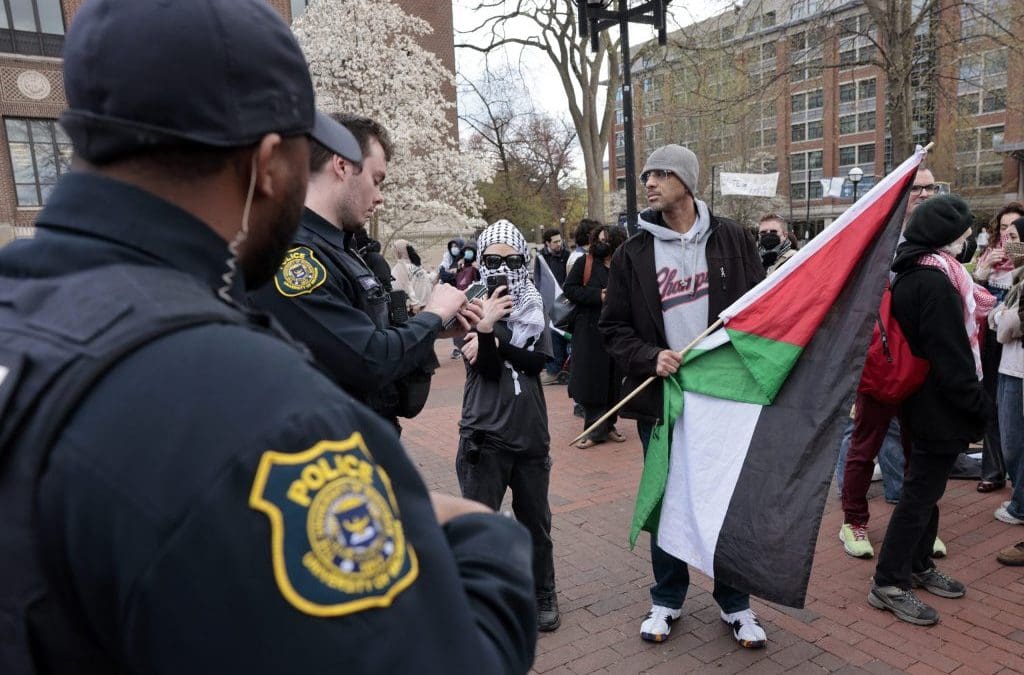
Life on college campuses has changed dramatically in the last 10 months. While institutions of higher education continue to reel from the Trump administration’s top-down attacks and scramble to adjust, workers on campus say that their universities are simultaneously expanding their own internal repression and surveillance apparatuses to squash dissent. In this episode, we speak with a panel of graduate student workers and union members from Columbia University and the University of Michigan about the chilling new reality on their campuses and what it’s like to live, learn, and work there today.
Panelists include; Vayne, a PhD candidate in history at Columbia University and a member of the bargaining committee for Student Workers of Columbia; Conlan Olson, a PhD student in computer science at Columbia University and a member of the bargaining committee for Student Workers of Columbia; Jared Eno, a grad worker in sociology and public policy at the University of Michigan and a rank-and-file member of the Graduate Employees Organization.
Additional links/info:
Graduate Employees Organization (GEO) website, Instagram, Facebook page, and X page
Student Workers of Columbia-UAW Local 2710 website, Instagram, Facebook page, and X page
Glenn Hedin & Barrett Dolata, The Michigan Daily, “Three pro-Palestine activists arrested for protesting speech given by former Israeli soldiers”
Student Workers of Columbia press release: “Columbia threatens discipline for union picket, extends repression to labor action”
Maximillian Alvarez, Working People / The Real News Network, “‘The raids happened Wednesday, finals started Thursday’: FBI agents raid homes of pro-Palestine students at University of Michigan”
Maximillian Alvarez, The Real News Network, “‘Worse’ than McCarthyism: Trump’s war on higher education, free speech, and political dissent”
Maximillian Alvarez, Working People / The Real News Network, “‘A tremendous chilling effect’: Columbia students describe dystopian reality on campus amid
by Maximillian Alvarez | Oct 31, 2025 | Gaza, Israel, October 7: One Year Later, Palestine, Podcast, Politics and Movements: International, Politics and Movements: US, Working People
In September, before the current ceasefire deal was announced, we spoke with two Palestinians in Gaza—Mohamed Abu Tawila (a former English teacher) and his nephew Abdul Rahman (a would-be college student)—about surviving 700 days of genocidal destruction at the hands of Israel’s military and with the full backing of the United States. In this critical follow-up episode, we speak once again with Mohamed Abu Tawila from Gaza to get an on-the-ground account of life for Palestinians after the shaky implementation of the ceasefire began on Oct. 10.
Additional links/info:
Mohamed’s Instagram account
Living Water Mutual Aid in Gaza Chuffed fundraiser page and Instagram account
GoFundMe campaign to support Mohamed’s water delivery operation and his family
Maximillian Alvarez, Working People / The Real News Network, “‘Hearts are crying and bodies are bleeding’: Gazans describe their daily struggle to survive”
Tareq S. Hajjaj, Mondoweiss, “Israel’s repeated ceasefire violations are part of its strategy to keep waging war on Gaza”
DropSite News, “Israel kills over 100 Palestinians in overnight bombardment of Gaza; thousands killed in Sudan’s El-Fasher”
Featured Music:
Jules Taylor, Working People Theme Song
Credits:
Audio Post-Production: Alina Nehlich
Transcript
The following is a rushed transcript and may contain errors. A proofread version will be made available as soon as possible.
Maximillian Alvarez:
Alright. Welcome everyone to Working People, a podcast about the lives, jobs, dreams, and struggles of the working class today. Working People is a proud member of the Labor Radio Podcast Network and is brought to you in partnership within these Times Magazine and the Real News Network. This show is produced by Jules Taylor and made possible by the support of listeners like you. My name is Maximilian Alvarez and we’ve got a short but extremely important episode for you
by Maximillian Alvarez and Marc Steiner | Oct 29, 2025 | AI, Economy, Economy and Inequality, labor, Podcast, Politics and Movements: US, The Marc Steiner Show, Working People
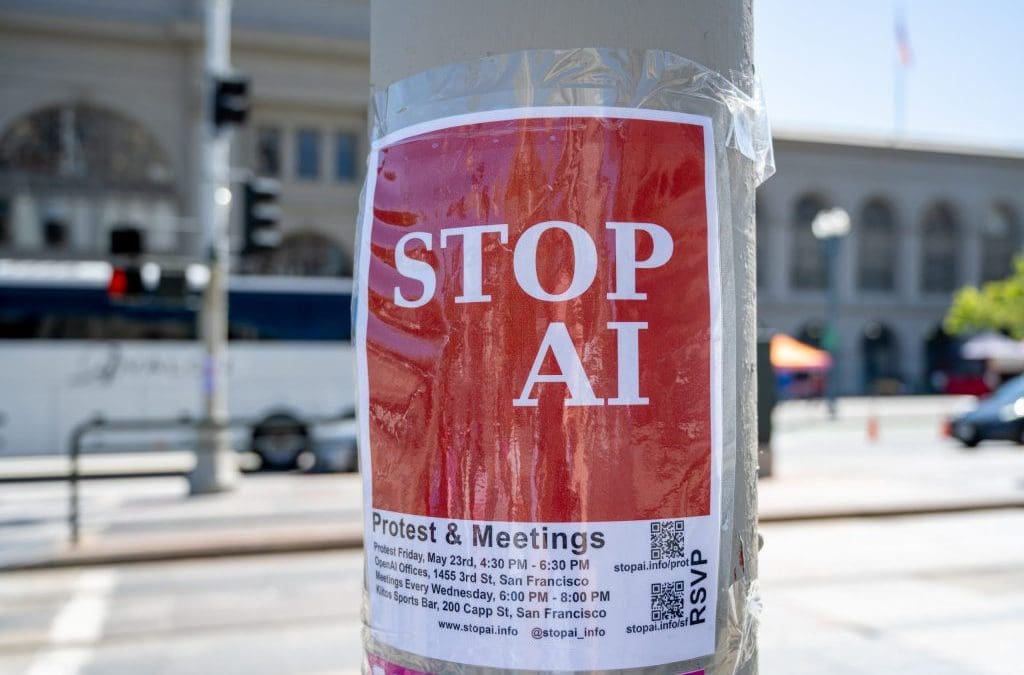
In this special crossover edition of Working People and The Marc Steiner Show, hosts Maximillian Alvarez and Marc Steiner examine how the “artificial intelligence” (AI) boom is shaping the economy and the impact it is already having—and will continue to have—on working people’s lives, livelihoods, and jobs. Alvarez and Steiner speak with two members of a new mutual aid and advocacy group called Stop Gen AI, which formed this year out of the critical need to provide material support for creatives, knowledge workers, and anyone else impacted by generative AI.
Guests:
Kim Crawley is a former cybersecurity professor and co-author of The Pentester Blueprint. She founded Stop Gen AI in May 2025 in response to the immense socioeconomic harm generative AI has done to her and her peers, and to the vast environmental, cultural, scientific, psychological, and economic harm it does to the world. Stop Gen AI is unique for its anticapitalist focus and commitment to raising survival funds for people who are struggling.
Emmi is an information security expert with experience across many niches of the industry, including application security across a number of verticals, and she is a specialist in insider threat and cyber threat intelligence. She joined the efforts of Stop Gen AI in 2025 due to the overwhelming amount of friends she has seen lose their entire lives and careers due to the out-of-control AI bubble. She also has nearly two decades of experience with boots-on-the-ground union organizing, protesting, and activism.
Additional links/info:
Stop Gen AI website and Mastodon page
Stop Gen AI Twitch Fest information
Khiree Stewart, WBALTV 11, “‘Just holding a Doritos bag’: Student handcuffed after AI system mistook bag of chips for weapon”
Marc Steiner & Maximillian Alvarez, The Marc
by Maximillian Alvarez | Oct 22, 2025 | Economy, Economy and Inequality, labor, Podcast, Politics and Movements: US, Trump, Working People
The federal government shutdown is now in its fourth week. Over 700,000 federal employees have been furloughed, with nearly as many continuing to work without pay, yet there are still no signs that an end to the shutdown is near. “Unlike past presidents, Mr. Trump appears to feel little urgency to strike a deal to reopen the government,” Luke Broadwater writes at The New York Times. “Instead, he has used the shutdown, which began Oct. 1, as an opportunity to further remake the federal bureaucracy and jettison programs he does not like, seizing on unorthodox budgetary maneuvers that some have called illegal.” In this episode, we speak with three furloughed federal employees about the harm government shutdowns cause working people, and we discuss why this shutdown is different.
Guests:
Adam is a furloughed federal employee who works in recreation for the US Forest Service, managing hiking, biking, and equestrian trails in central Idaho. He serves as chapter president of National Federation of Federal Employees Local 1753, and he is an organizer with the Federal Unionists Network.
Ellen is a furloughed federal employee who works in SNAP oversight and administration at the USDA Food and Nutrition Service. She serves as chapter president of National Treasury Employees Union Local 255, representing FNS employees at the Northeast regional office, and she is an organizer with the Federal Unionists Network in Boston.
April is a furloughed federal employee who works in the office of Head Start at the Administration for Children and Families HQ in Washington, DC. She serves as chapter president of the National Treasury Employees Union Local 250.
Additional links/info:
Federal Unionists Network website, BlueSky, and Instagram
Federal Unionists Network: “Join Us To
by Maximillian Alvarez | Oct 17, 2025 | Economy, Economy and Inequality, labor, video, Working People
Around 31,000 registered nurses and front-line healthcare workers at Kaiser Permanente are on strike, demanding better wages, working hours, and proper staffing. The strike began on Tuesday, Oct 14, and spans hundreds of medical centers and offices in California, Oregon, and Hawaii. Calling in from the picket line in Portland, Oregon, Registered Nurse First Assistant (RNFA) and Executive Secretary of the Oregon Federation of Nurses & Health Professionals (OFNHP) Nick Eng speaks with TRNN Editor-in-Chief Maximillian Alvarez about what healthcare workers are fighting for.
Additional links/info:
Oregon Federation of Nurses & Health Professionals (OFNHP) website, Bluesky, and Instagram
OFNHP: “We are Kaiser: Fighting for the Care Our Patients Deserve“
AP News, “31,000 Kaiser Permanente nurses and other health care workers strike for better wages and staffing“
Credits:
Studio Production: Maximillian Alvarez
Post-Production: Cameron Granadino
Transcript
The following is a rushed transcript and may contain errors. A proofread version will be made available as soon as possible.
Maximillian Alvarez:
Around 31,000 registered nurses and frontline healthcare workers at Kaiser Permanente are on strike, demanding better wages and proper staffing among other things, and even more workers could be joining the picket line soon. The strike began on Tuesday and spans hundreds of medical centers and offices in California, Hawaii, and Oregon. And as we always do here at the Real News Network, we’re going to take you to the heart of the action and to the front lines of struggle right now and calling in from the picket line in Portland, Oregon. I’m speaking with Nick Ang today. Nick is a registered nurse, first assistant, and he’s the Executive secretary of the Oregon Federation of Nurses and Health Professionals. Nick, thank you so much for