by Mansa Musa | May 11, 2026 | Israel, Palestine, Politics and Movements: International, Rattling the Bars, video
Israel’s genocidal destruction of Gaza is the culmination of a violent settler-colonial project that goes all the way back to the Nakba (“Catastrophe”) of 1948. In this episode of Rattling the Bars, former political prisoner and Black Panther Mansa Musa speaks with award-winning Palestinian author and former political prisoner Basem Khandakji about the decades-long destruction of Palestinian society and mass displacement of Palestinians from their homeland, as well as the perseverance of Palestinian prisoners under the totalitarian conditions of Israeli prisons.
Guests:
Basem Khandakji, born in 1983 in Nablus, is a Palestinian novelist, poet, and journalist. Arrested in 2004 at the age of twenty-one for his political activities, he continued to write from prison, producing a body of work that has earned wide recognition across the Arab world. Khandakji was released from Israeli prison in 2025, one year after his novel A Mask the Color of the Sky won the prestigious International Prize for Arabic Fiction.
Credits:
Producer / Videographer / Editor: Cameron Granadino
Transcript
The following is a rushed transcript and may contain errors. A proofread version will be made available as soon as possible.
Mansa Musa:
Welcome to this edition of Rattling the Bars. I’m your host, Mansa Musa. Today we are joined by Basem Khandakji, an award-winning author and former political prisoner who was held in Israel’s prisons for 21 years. Baising was released this past October and joins us today from Cairo. Let me say before I welcome you, he was released under the terms that Israelis concocted to release hundreds of Palestinians under the pretense that if Hamas released so- called hostages, he was released along with other people, but in being released
by Erica Woodland, Mansa Musa and Maximillian Alvarez | May 4, 2026 | Politics and Movements: US, Racial Justice, Rattling the Bars, video
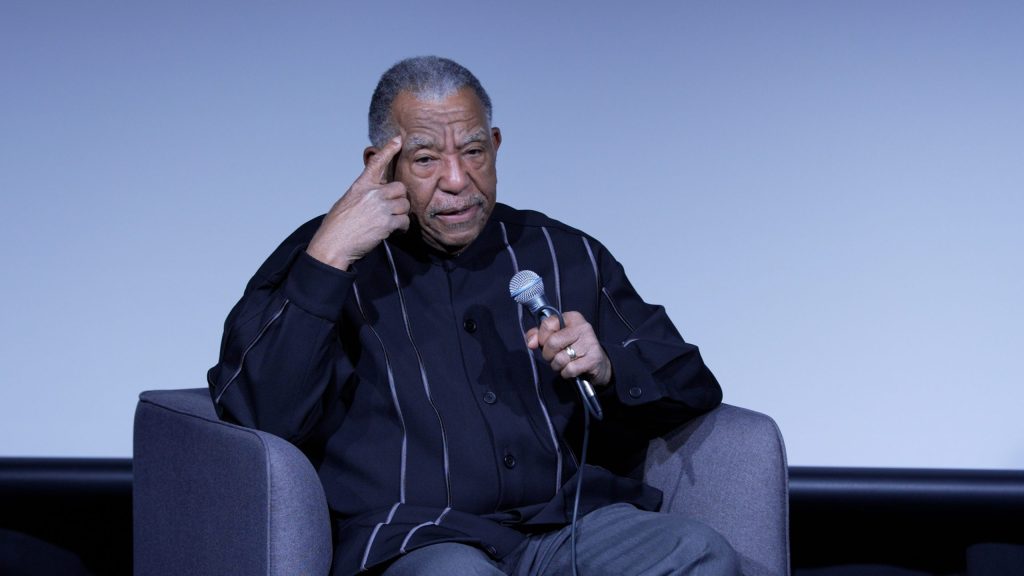
From the dawn of the digital age to the current era of “artificial intelligence,” the future of literacy, reading, and book publishing is facing an existential threat. But Paul Coates—legendary activist, publisher, former Baltimore Black Panther Party member, and founder of Black Classic Press—has some critical wisdom to share in these perilous times about the revolutionary necessity of books. At a live event organized by Tubman House and Eddie’s Front Porch and recorded at the TRNN studio in Baltimore, MD, on March 6, 2026, community organizer and creator of Healing Justices Erica Woodland sits down with Coates for a wide-ranging discussion about propaganda, publishing, Black literary production, and the past and present of revolutionary politics.
Guests:
W. Paul Coates is the founder of Black Classic Press and BCP Digital Printing. Black Classic Press, established in 1978, specializes in republishing obscure and significant works by and about people of African descent. A former member of the Black Panther Party, Coates led the effort to establish the Black Panther Archives at Howard University.
Credits:
Producer / Editor: Cameron Granadino
Videographer: Phil Glaser
Transcript
The following is a rushed transcript and may contain errors. A proofread version will be made available as soon as possible.
Maximillian Alvarez:
Thank you all so much for being here. I am Maximillian Alvarez. I’m the editor in chief and co-executive director of the Real News Network and on behalf of our whole team, many of which are here over there in the back room or the back table. We just wanted to welcome you all here to the Real News Network Studio. Thank you so much for being here. Nuestra Casa Esu Casa. And we are
by Taya Graham and Stephen Janis | May 4, 2026 | Police Accountability Report, Politics and Movements: US, Prisons and Policing, video
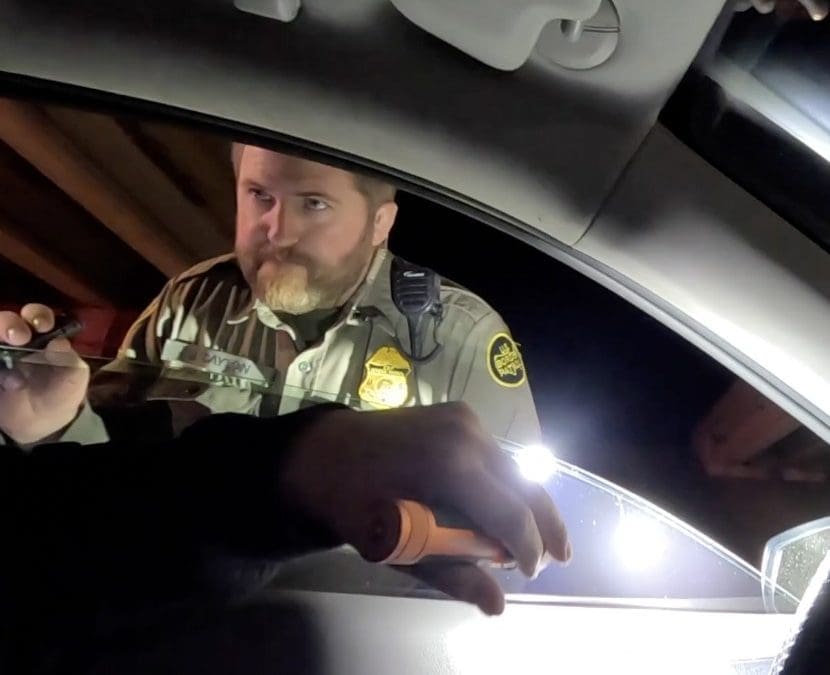
In this episode of the Police Accountability Report we speak with Ismael Rincon, aka Corners News, of Texas, who often encounters Customs and Border Patrol while driving to pick up clients for ride share. Federal agents have now taken to stopping cars and engaging in traffic enforcement, and in his case prolonging a stop to introduce K-9 even though it was established that the driver was an American citizen. Federal agents stopping American citizens shouldn’t be a problem if they have nothing to hide, right? Unfortunately, history has taught us that allowing governmental agents more and more access to your private property, your person, and your time leads to the erosion of civil rights and often more disastrous consequences for the individual. Join us for the conversation, live chat, and discussion in the comment section on where Americans should draw the line between privacy and constitutional rights and the current imperative of law enforcement.
Credits:
Written by: Stephen Janis Produced by: Stephen Janis, Taya Graham
Transcript
The following is a rushed transcript and may contain errors. A proofread version will be made available as soon as possible.
Taya Graham:
Hello, my name is Taya Graham and welcome to the Police Accountability Report. As I always make clear, this show has a single purpose holding the politically powerful institution of policing accountable. And to do so, we don’t just focus on the bad behavior of individual cops. Instead, we examine the system that makes bad policing possible. And today, we will achieve that goal by showing you this video of Border Patrol agents illegally detaining popular Cop Watcher Coroners News. A questionable example of law enforcement overreach
by Maximillian Alvarez | May 4, 2026 | baltimore, Economy and Inequality, May Day, Politics and Movements: US, protest, video
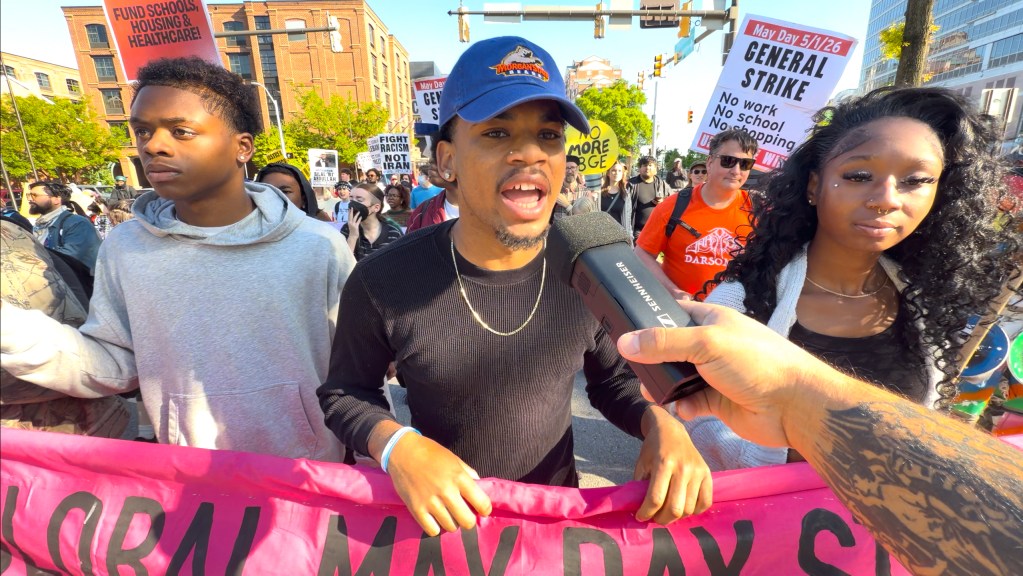
Inspired by January’s mass strike against ICE terror in Minnesota, a vast coalition of labor unions, democratic organizations, and community groups organized protests around the US on Friday, May 1, to coincide with International Workers Day (aka May Day). Organizers called for a one-day “economic blackout” (“no school, no work, no shopping”) in protest of authoritarianism and government policies that put billionaires’ needs above those of workers. TRNN takes you inside the Baltimore, Maryland, May Day march so you can see it and hear directly from protesters yourself.
Additional links/info:
Maximillian Alvarez, Working People / TRNN, “May 1: Unions, community orgs plan nationwide ‘economic blackout’ against billionaires and authoritarianism”
Hamilton Nolan, In These Times, “May Day was a reminder that we make the world run”
Credits:
Videography / Post-Production: Maximillian Alvarez
Transcript
The following is a rushed transcript and may contain errors. It will be updated as soon as possible.
Maximillian Alvarez: This is Maximillian Alvarez for the Real News Network. I’m here in downtown Baltimore and behind me. Around a hundred or more local residents are marching through the streets of downtown on Mayday in solidarity with others around the country who are participating in the Mayday Strong Day of Protests inspired by the anti-ice mass strike that shut down Minneapolis earlier this year. Organizers are calling for a day of no work, no school, no shopping. Here in Baltimore, the demonstration may be on the smaller side, but the spirit is still very lively. I’m about to take you into the heart of the march so you can see it for yourself.
So here in Baltimore, you’re seeing a lot of the signs you’re probably seeing at
by Maximillian Alvarez | May 1, 2026 | Economy and Inequality, labor, Podcast, Politics and Movements: US, Unions, video, Working People
After decades of decline, the organized labor movement in the US has seen a resurgence in rank-and-file militancy over the last decade, with increased strike actions and union drives in industries across the economy. And in the story of this recent revival of labor in America, the movement led by predominantly young baristas to unionize coffee giant Starbucks has played a pivotal role. The new documentary Baristas vs. Billionaires takes viewers on a journey through the last five years of the epic, ongoing struggle to unionize Starbucks, told by some of the workers and organizers at the center of that struggle. TRNN Editor-in-Chief Maximillian Alvarez speaks with director of Baristas vs. Billionaires and Academy Award nominee Mark Mori, and with legendary actor and Academy Award nominee Alec Baldwin, who is a producer on the film.
Additional links/info:
Baristas vs. Billionaires website
Maximillian Alvarez, Working People / TRNN, “‘Starbucks is the largest labor violator in modern history’: Starbucks workers prepare for indefinite national strike”
Maximillian Alvarez, Working People / TRNN, “How union organizing can change your life and the world: A conversation with Jaz Brisack”
Maximillian Alvarez, Working People / TRNN, “Want to unionize your workplace? These worker-organizers have some advice”
Featured Music:
Jules Taylor, Working People Theme Song
Credits:
Studio Production / Post-Production: David Hebden
Audio Post-Production: Jules Taylor
Transcript
MAXIMILLIAN ALVAREZ: Welcome back to The Real News Network. I’m Maximillian Alvarez. In the post-World War heyday of American manufacturing and industrial unionism, when the middle class was exploding, about one in every three workers in this country was part of a union. But today, as working people face a punishing cost of living crisis, an evaporating middle class, and Gilded Age levels of
by Mansa Musa | Apr 27, 2026 | Economy and Inequality, history, Inequality, Politics and Movements: US, Racism, Rattling the Bars, video
2026 marks the 250th anniversary of the American Revolutionary War. While the national mythology behind the “America at 250” celebrations focuses on the 18th-century battle between Patriot and Loyalist elites, what does the story of the American Revolution and the founding of the United States look like through the eyes of enslaved people? In this episode of Rattling the Bars, host Mansa Musa speaks with Professor Justene Hill Edwards, author of Unfree Markets: The Slaves’ Economy and the Rise of Capitalism in South Carolina.
Guests:
Justene Hill Edwards is an associate professor of History in the Corcoran Department of History at the University of Virginia. Her research explores the intersection of African American history, the history of slavery, and the history of American capitalism. She is the author of Unfree Markets: The Slaves’ Economy and the Rise of Capitalism in South Carolina and Savings and Trust: The Rise and Betrayal of the Freedman’s Bank.
Credits:
Producer / Videographer / Editor: Cameron Granadino
Transcript
The following is a rushed transcript and may contain errors. A proofread version will be made available as soon as possible.
Mansa Musa:
This year marks the 250th anniversary of the Revolutionary War, a conflict that we typically frame as a struggle between the colonialists and the British. However, we rarely examine the age of revolution from the perspective of the enslaved and the enslaved has a voice in this matter, as we will see. Join us today as the University of Virginia Professor of History, Justine Hill Edwards, an author of Unfree Market: The Slave Economy and the Rise of Capitalism in South Carolina. And Saviors and Trust. Professor, welcome to Rattling the Bars