by Maximillian Alvarez | Mar 23, 2026 | elections, midterms, Politics and Movements: US, Trump, video, Voting Rights
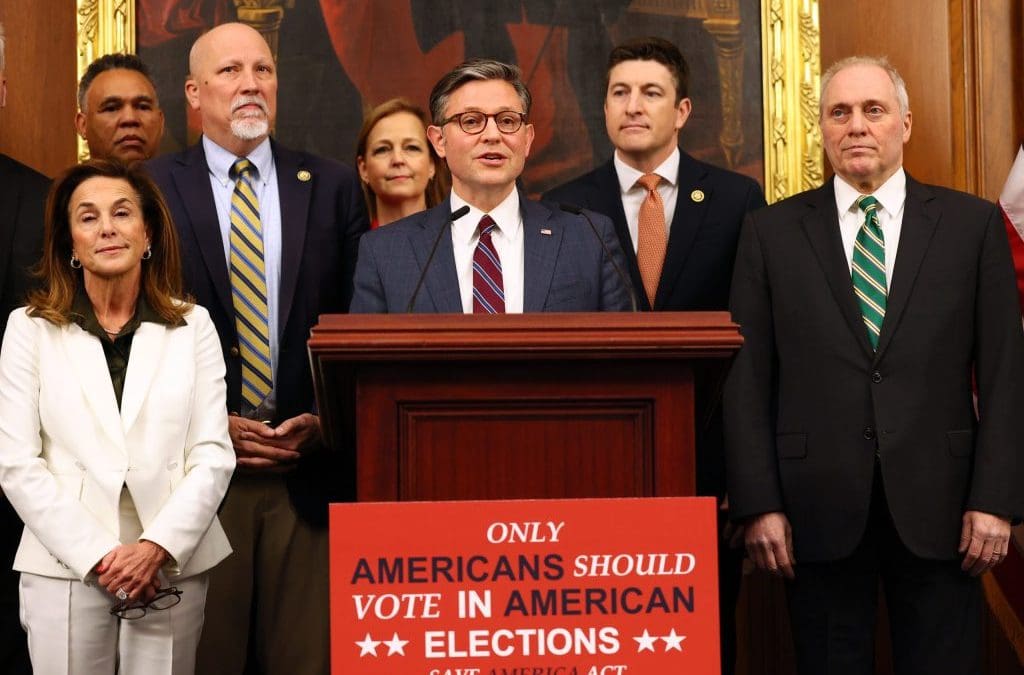
With the public outraged over the US-Israeli war with Iran, the Epstein Files coverup, and a cost-of-living crisis, even President Donald Trump’s base of supporters is fracturing, and Republicans are fixing to get slammed in the upcoming midterm elections. Perhaps that explains why Trump and MAGA Republicans are obsessively focused on attacking voting rights, taking federal control over the electoral system, and preemptively casting doubt on the midterm election results before the elections even happen. TRNN Editor-in-Chief Maximillian Alvarez speaks with Ari Berman, national voting rights correspondent for Mother Jones, about MAGA Republicans’ effort to rig the midterms—and what can be done to stop it.
Guest:
Ari Berman is Mother Jones‘ national voting rights correspondent. He’s the author of the new book Minority Rule: The Right-Wing Attack on the Will of the People—and the Fight to Resist It, as well as Give Us the Ballot: The Modern Struggle for Voting Rights in America.
Additional links/info:
Ari Berman, Mother Jones, “The world is on fire. Gas prices are rising. Republicans are trying to make it harder to vote”
Ari Berman, Mother Jones, “The GOP’s “show us your papers” bill is the latest effort to help Trump take over elections”
Credits:
Studio Production / Post-Production: Cameron Granadino
Transcript
The following is a rushed transcript and may contain errors. A proofread version will be made available as soon as possible.
Maximillian Alvarez:
Welcome everyone to the Real News Network Podcast. I’m Maximillian Alvarez. I’m the editor-in-chief here at The Real News, and it’s so great to have you all with us. Between the federal government’s coverup of the Epstein Files, President Trump’s catastrophic decision to plunge the US into a war with Iran, an
by Glenn Diesen | Mar 22, 2026 | Article, Iran, Israel, Politics and Movements: International, Reprint, Third Party Content, Trump
This story originally appeared in Professor Glenn Diesen’s Substack on March 14, 2026. This shortened, edited version is shared here with permission.
The war in Iran, besides being dangerous, is also very interesting because it’s an example of asymmetric warfare. The US is obviously much more powerful, which is probably why there has been a significant amount of hubris: it entered this war with a lot of confidence and assumption of escalation dominance. Thus, we see that the Iranians are forced to fight with other means, including the ability to shut down the energy trade. And given that Iran also sees this as an existential threat—not just an effort to “liberate women” or something—they seem to be willing, or prepared, to shut down the global economy in order to avoid defeat.
I recently spoke with Professor Yanis Varoufakis, the former finance minister of Greece and a founder of DiEM25, the Democracy-in-Europe Movement, about where this war is heading and what impacts it is having on the global economy.
[Editor’s Note: The following transcript has been lightly edited for length and readability from the original full conversation, available here]
Glenn Diesen: Where do you see this war heading? Because it seems like everyone is betting everything on it, and I don’t see enough off-ramps for anyone.
Yanis Varoufakis: We must remember that this is not new. The United States has engaged in a series of asymmetric conflicts where it entered with immense confidence and exited, sometimes many many years later, with its wings clipped.
They invaded Afghanistan. It took them 20 years to be defeated, but they were defeated and they left with the Taliban—whom they had
by Marc Steiner | Mar 17, 2026 | cuba, Podcast, Politics and Movements: International, Politics and Movements: US, The Marc Steiner Show, Trump
With Cuba’s electric grid collapsing this week, the inhumane results of the Trump administration’s oil blockade continue to pile up and strangle Cuba and its people. In this urgent episode of The Marc Steiner Show, Marc speaks with American activist and co-founder of CODEPINK Medea Benjamin about her latest trip to Cuba, the extent of the devastation caused by the US-imposed blockade, and the twisted motivations behind it.
Medea Benjamin will be sailing to bring humanitarian aid to Cuba with the Nuestra América Flotilla on March 21, 2026.
Guests:
Medea Benjamin is co-founder of Global Exchange and CODEPINK: Women for Peace. She is the author or co-author of numerous books, including: War in Ukraine: Making Sense of a Senseless Conflict; Inside Iran: The Real History and Politics of the Islamic Republic of Iran; and Drone Warfare: Killing by Remote Control.
Additional links/info:
Democracy Now!, “Report from Havana as Trump threatens to “take” Cuba & pushes for ouster of Cuban leader”
Michael Fox, Under the Shadow / TRNN, “Trump’s war on Cuba: Crisis made in the USA | Under the Shadow S2E7”
Marc Steiner, The Marc Steiner Show / TRNN, “SOS: The US is manufacturing a humanitarian crisis in Cuba”
Credits:
Producer: Rosette Sewali
Studio Production: David Hebden
Audio Post-Production: Stephen Frank
Transcript
The following is a rushed transcript and may contain errors. A proofread version will be made available as soon as possible.
Marc Steiner:
Welcome to the Marc Steiner Show here in The Real News. I’m Marc Steiner. It’s great to have you all with us. Cuba is under attack from the United States. Relations between our countries have been intense since the revolution of 1960, when they overthrew that fascist government of Batista.
by Michael Fox | Mar 12, 2026 | Ecuador, Latin America, Podcast, Politics and Movements: International, Politics and Movements: US, Trump, Under the Shadow
At least 17 countries in Latin America and the Caribbean are on board with Trump’s new military alliance. They are calling it the America’s Counter Cartel Coalition. Latin America’s top right-wing leaders are involved, including El Salvador’s Nayib Bukele and Argentina’s Javier Milei. They met in Florida for the event, on March 7.
The United States has promised to use lethal force to destroy cartels and narco-traffickers in those nations. Kristi Noem, the former head of Homeland Security, is the new special envoy for the coalition.
This is a new phase of Trump’s plan for Latin America. Trump’s Donroe Doctrine—Monroe 2.0. The first was the offensive against his enemies in the region. Now Trump is shoring up his allies, and building a coalition where the US military can continue to take action, now in collaboration with countries allied with Trump. We’ve already begun to see this unfold in Ecuador.
This is Episode 8 of Under the Shadow, Season 2.
Under the Shadow is an investigative narrative podcast series that walks back in time, telling the story of the past by visiting momentous places in the present. Season 2 responds in real time to the Trump administration’s onslaught on Latin America.
Hosted by Latin America-based journalist Michael Fox.
Many thanks to Belly of the Beast for the interview with Liz Oliva Fernandez and the use of the sound from several of their videos.
This podcast is produced in partnership between The Real News Network and NACLA.
Theme music by Michael Fox’s band, Monte Perdido. Monte Perdido’s 2024 album Ofrenda is available on Spotify, Deezer, Apple Music, YouTube or wherever you listen to music.
Other music from Blue Dot Sessions.
Script editing by Heather Gies. Hosted,
by Branko Marcetic | Mar 11, 2026 | Article, Iran, Israel, Politics and Movements: International, Politics and Movements: US, Reprint, Trump, War
This story originally appeared in Jacobin on Mar. 10, 2026. It is shared here with permission.
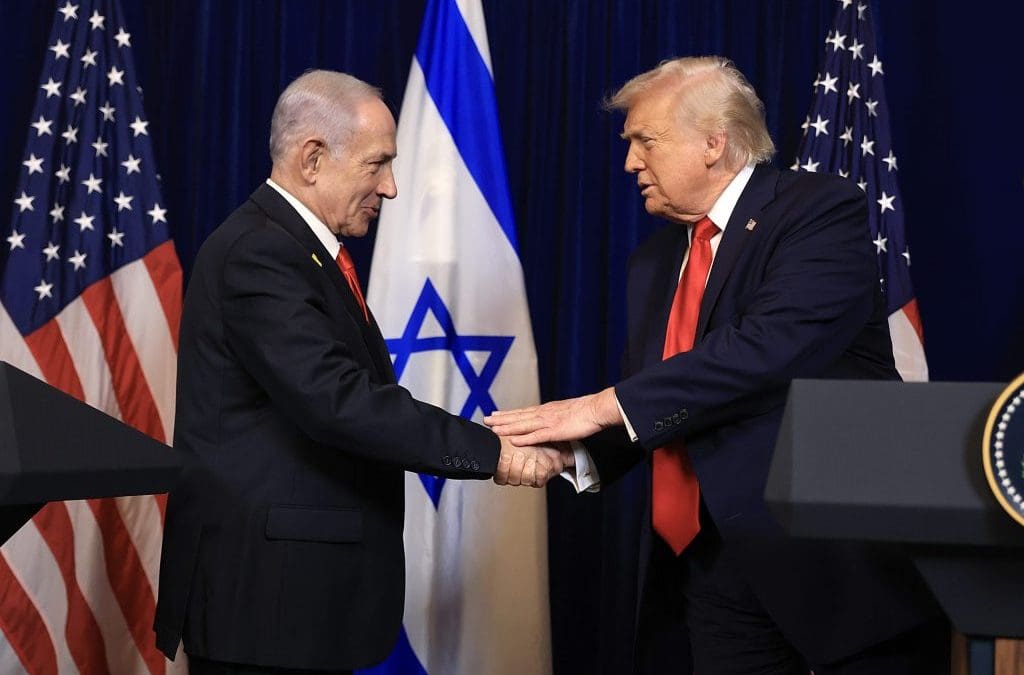
Over the weekend, the Washington Post was the latest to publish a claim that Israeli prime minister Benjamin Netanyahu used the threat of launching a war with Iran solo as a way to pressure Donald Trump into the disastrous war he has now embroiled the United States in. It’s at least the fifth piece of evidence now suggesting that the United States was pushed into this war by Israel, and that the very military support that Washington provides Israel has served as the mechanism to do it.
It’s tempting to see this as a deliberate way to dump responsibility for this horror show onto Israel and divert it away from the US president, who ordered it, and the US foreign policy establishment as a whole, which has salivated over a war with Iran for decades. But we have mounting evidence that Israel bears a huge amount of responsibility. Which raises the question: If Israel was indeed able to successfully trigger a US-Iran war, is any ceasefire or lasting peace possible here without Israel’s approval? This is particularly relevant to an American public that foots the bill for Israel’s war-making.
According to the Post, Netanyahu, “increasingly alarmed” that Trump might actually solve the Iran issue peacefully, repeatedly rushed to Washington over the past few months to make sure he went to war instead. A “key component of his drive to war,” reports the Post, was telling Trump that Israel would go ahead and attack Iran with or without his help, which “led Trump to believe an Israeli attack was inevitable” and that his best
by Jake Johnson | Mar 10, 2026 | Article, Economy, Economy and Inequality, Iran, Politics and Movements: International, Politics and Movements: US, Reprint, Trump, War
This story originally appeared in Common Dreams on Mar. 10, 2026. It is shared here under a Creative Commons (CC BY-NC-ND 3.0) license.
The Trump administration is quietly pursuing a regulatory change that would strip federal nutrition assistance from an estimated 6 million low-income Americans—including nearly two million children—as it spends billions on an illegal, open-ended war on Iran that has killed more than a thousand people and plunged the global economy into chaos.
The change sought by the US Department of Agriculture would curb broad-based categorical eligibility in the Supplemental Nutrition Assistance Program (SNAP). Broad-based categorical eligibility allows states to automatically qualify residents for SNAP if they are already enrolled in other aid programs, such as Temporary Assistance for Needy Families, thus reducing administrative hurdles and costs.
The Center on Budget and Policy Priorities (CBPP) estimated in a blog post published late last month—the day before President Donald Trump announced the joint US-Israeli assault on Iran—that gutting broad-based categorical eligibility would likely strip modest federal food aid from around 6 million people, including nearly 2 million children.
“The people losing access to food assistance from SNAP, school meals, and [the Women, Infants, and Children Program] would mainly be working families, older adults, and people with disabilities,” the think tank noted. “In other words, the change would primarily harm groups that federal and state policymakers from across the political spectrum have long sought to help: people who work but are living near poverty; older adults and people with disabilities with low, fixed incomes; and people trying to build modest savings in order to become more economically independent.”
The Congressional Budget Office has projected that restricting broad-based categorical eligibility would result in roughly $11 billion in savings over a 10-year period—or just over $1 billion a year.
The Trump administration is currently spending