by Mansa Musa | Jun 17, 2026 | Fascism, history, Politics and Movements: International, Politics and Movements: US, Rattling the Bars, Trump, video
In Part 2 of a conversation between Mansa Musa (former political prisoner and Black Panther) and Alberto Toscano (professor of critical theory and author of Late Fascism), the two discuss how consent and coercion operate within US civil society and abroad. They specifically unpack how Donald Trump’s domestic and foreign platforms animate white nationalism—relying on the explicit promise of state violence against targeted populations.
Guests:
Alberto Toscano is a renowned Italian cultural critic, social theorist, philosopher, translator, and adjunct professor at the Simon Fraser University School of Communication. Toscano is a columnist at In These Times and the (co-)author of numerous books, including: Late Fascism: Race, Capitalism and the Politics of Crisis; and Fanaticism: On the Uses of an Idea.
Credits:
Producer / Videographer / Editor: Cameron Granadino
Transcript
The following rushed transcript may contain errors. It will be updated as soon as possible.
Mansa Musa:
Gramsci wrote about consent and coercion. Talk about the difference when it comes to a targeted population of prisons and policing.
Alberto Toscano:
Yeah. So that relationship between consent and coercion or in Gramsci’s terms also hegemony and domination or consent and force is really crucial. Gramsci was enough of a realist about politics. After all, he was also a very brilliant reader of Machiavelli that he never thought that force or coercion could be eliminated from politics altogether, but he was very interested in looking both at the past and the present to think about the mix of force and coercion, hegemony and consent. That’s also why he was so interested in the question of policing and of how to conceive of the police. And on could argue that the expansion of repression and incarceration is always a
by Mansa Musa | Jun 9, 2026 | history, Political Prisoners, Politics and Movements: International, Prison Industrial Complex, Rattling the Bars, video
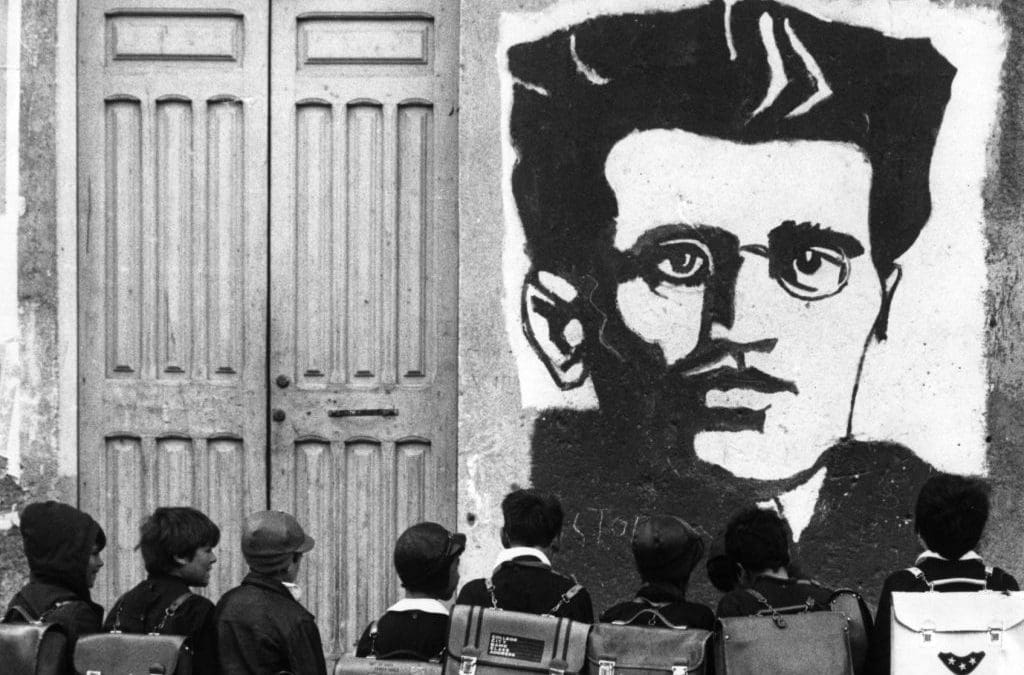
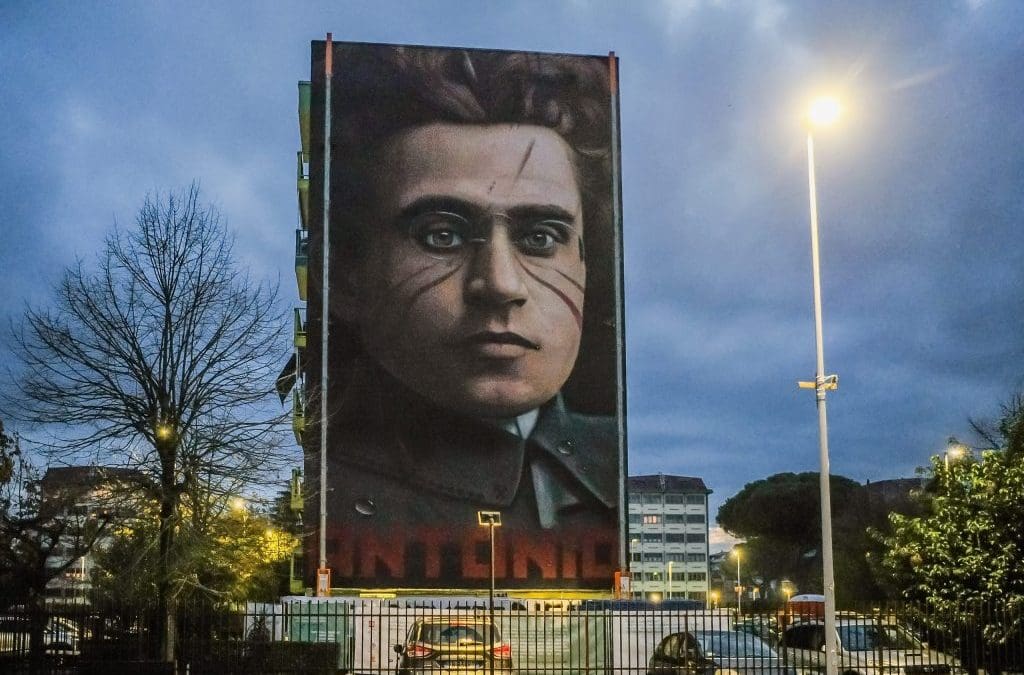
Imprisoned by fascist dictator Benito Mussolini in 1926, the prison writings of Italian Marxist theorist Antonio Gramsci remain essential 100 years later for understanding how fascism, policing, and incarceration function to suppress political dissent and preserve unequal systems of power. In this episode of Rattling the Bars, former Black Panther and political prisoner Mansa Musa speaks with renowned scholar Alberto Toscano about the importance and terrifying relevance of Gramsci today.
Guests:
Alberto Toscano is a renowned Italian cultural critic, social theorist, philosopher, translator, and adjunct professor at the Simon Fraser University School of Communication. Toscano is a columnist at In These Times and the (co-)author of numerous books, including: Late Fascism: Race, Capitalism and the Politics of Crisis; and Fanaticism: On the Uses of an Idea.
Credits:
Producer / Videographer / Editor: Cameron Granadino
Transcript
The following rushed transcript may contain errors. It will be updated as soon as possible.
Mansa Musa:
Welcome to this edition of Rattling the Bars. I’m your host, Mansa Musa. Today, this is just a political conversation that we’ll be having about fascism, but more importantly, talking about the works of Antonio Gramsci. Joining me today is Alberto Toscano. Welcome to Rattling the Bars Alberto.
Alberto Toscano:
Thanks for having me.
Mansa Musa:
First, explain to our audience who Antonio Gramsci was.
Alberto Toscano:
So Gramsci is best known as former secretary of the Italian Communist Party and one of the most significant Marxist and communist theorists of the 20th century. And most of his theorizing, such as we know today, was done in prison in a series of no books, his prison notebooks that were published after his death and after the end of World War II. It’s
by Mansa Musa | May 27, 2026 | Democratic Party, Fascism, Politics and Movements: US, Rattling the Bars, video
In 2026, fascism in the US is rising while “the left” descends further into powerlessness, goofiness, and irrelevance—but, author William C. Anderson argues, it doesn’t have to stay that way. In this episode of Rattling the Bars, Anderson returns to the show for an unflinching conversation with former political prisoner and host Mansa Musa about the state of the political left today and the lessons organizers and everyday people can learn from the Black Liberation Movement and figures like the late Russell Maroon Shoatz.
Editor’s Note: This conversation was recorded on May 1, 2026.
Guests:
William C. Anderson is a writer and activist from Birmingham, AL. His work has appeared in outlets ranging from The Guardian, MTV, Truthout, British Journal of Photography, to Pitchfork. He is the author of The Nation on No Map: Black Anarchism and Abolition, and co-author of As Black as Resistance: Finding the Conditions for Liberation. He’s also the co-founder of Offshoot Journal and provides creative direction as a producer of the Black Autonomy Podcast.
Additional links/info:
William C. Anderson, Prism / TRNN, “Another Way Out: We need a mosaic movement, not fragmented ‘leftism’”
Credits:
Producer / Videographer / Editor: Cameron Granadino
Transcript
The following is a rushed transcript and may contain errors. A proofread version will be made available as soon as possible.
Mansa Musa:
Joining us today again is William C. Anderson, author and columnist of Prism. If you missed our first conversation where we explore how Black citizenship has historically been called into question, you can find it on our YouTube channel. The history feels especially urgent this week following the United States Supreme Court’s ruling gutting the Voting Rights Act. This is clearly
by Mansa Musa | May 13, 2026 | elections, midterms, Politics and Movements: US, Racial Justice, Rattling the Bars, video, Voting Rights
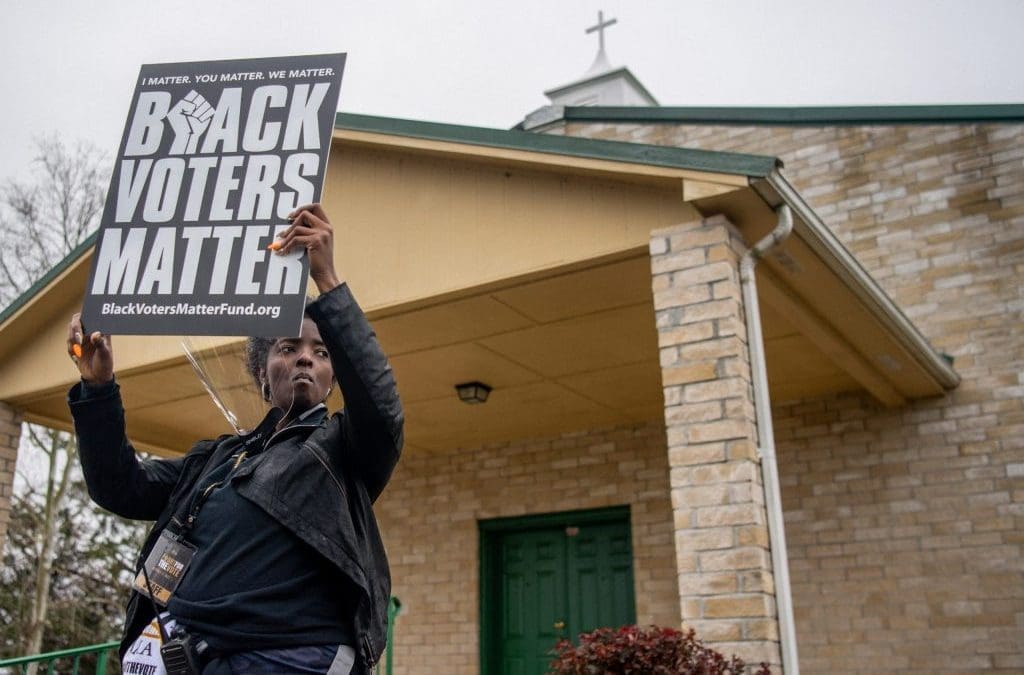
Alabama US Senate candidate Dakarai Larriett joins Mansa Musa on Rattling the Bars to expose the rising tide of voter suppression and the battle for the Democratic ticket. Ahead of the May 19, 2026, primary, Larriett takes aim at opponent Kyle Sweetser—a former three-time Trump voter—calling his sudden party shift disingenuous while vowing to ‘fight like hell’ against racist redistricting in the South.
Credits:
Producer / Videographer / Editor: Cameron Granadino
Editor’s Note: This interview was recorded on May 11, 2026. Following the recording, a US Supreme Court ruling cleared the way for Alabama to implement a new congressional map that effectively dismantles one of the state’s two majority-Black districts.
Transcript
The following is a rushed transcript and may contain errors. A proofread version will be made available as soon as possible.
Mansa Musa:
Welcome to this edition of Rattling the Bars. I’m your host, Mansa Musa. Since the Supreme Court decision in Louisiana versus Cowan, significantly weakening protection under the Voting Rights Act. Several Southern states have redrawn district lines leading to concerns over the delusion of Black political representation. From the Supreme Court decision in Virginia, striking down Democrat drawing maps to Texas Governor Greg Abbott redistricting plans, receiving formal approval, the national landscape is shifting. Today we are following up with the Dakarai Larriett, a candidate for the United States Senate of Alabama to discuss these nationwide shifts and their impact on the midterm and the balance of power in Congress. Dakarai, welcome to Rattling the Bar.
Dakarai Larriett:
Oh, good to be back, man, sir.
Mansa Musa:
So let’s dive into how you see this latest decision coming out of the Supreme Court and how you assessing
by Mansa Musa | May 11, 2026 | Israel, Palestine, Politics and Movements: International, Rattling the Bars, video
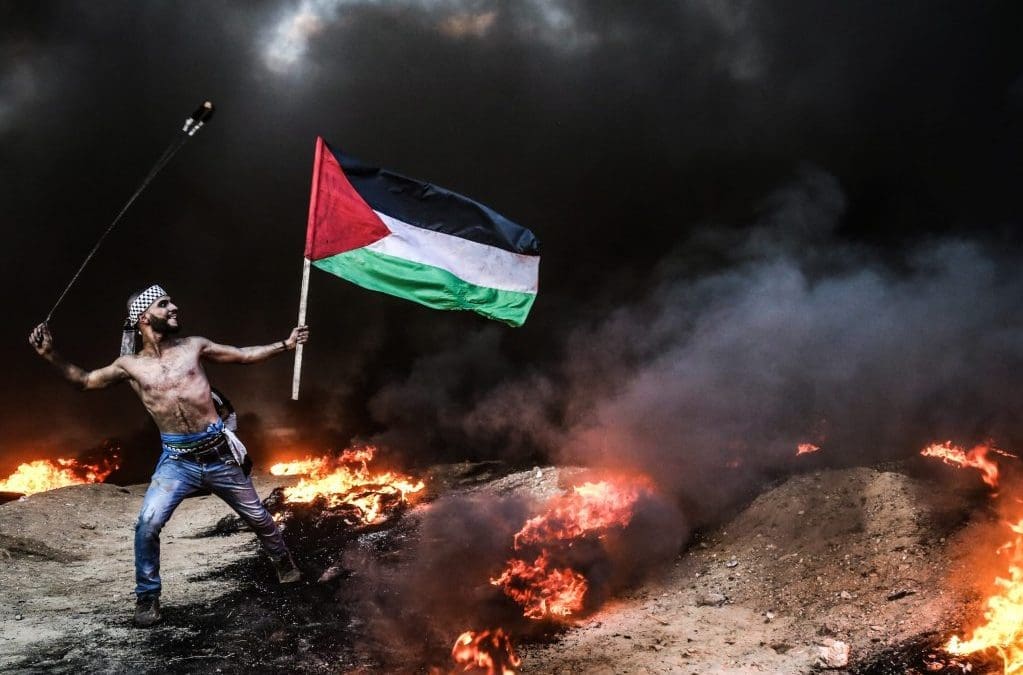
Israel’s genocidal destruction of Gaza is the culmination of a violent settler-colonial project that goes all the way back to the Nakba (“Catastrophe”) of 1948. In this episode of Rattling the Bars, former political prisoner and Black Panther Mansa Musa speaks with award-winning Palestinian author and former political prisoner Basem Khandakji about the decades-long destruction of Palestinian society and mass displacement of Palestinians from their homeland, as well as the perseverance of Palestinian prisoners under the totalitarian conditions of Israeli prisons.
Guests:
Basem Khandakji, born in 1983 in Nablus, is a Palestinian novelist, poet, and journalist. Arrested in 2004 at the age of twenty-one for his political activities, he continued to write from prison, producing a body of work that has earned wide recognition across the Arab world. Khandakji was released from Israeli prison in 2025, one year after his novel A Mask the Color of the Sky won the prestigious International Prize for Arabic Fiction.
Credits:
Producer / Videographer / Editor: Cameron Granadino
Transcript
The following is a rushed transcript and may contain errors. A proofread version will be made available as soon as possible.
Mansa Musa:
Welcome to this edition of Rattling the Bars. I’m your host, Mansa Musa. Today we are joined by Basem Khandakji, an award-winning author and former political prisoner who was held in Israel’s prisons for 21 years. Baising was released this past October and joins us today from Cairo. Let me say before I welcome you, he was released under the terms that Israelis concocted to release hundreds of Palestinians under the pretense that if Hamas released so- called hostages, he was released along with other people, but in being released
by Erica Woodland, Mansa Musa and Maximillian Alvarez | May 4, 2026 | Politics and Movements: US, Racial Justice, Rattling the Bars, video
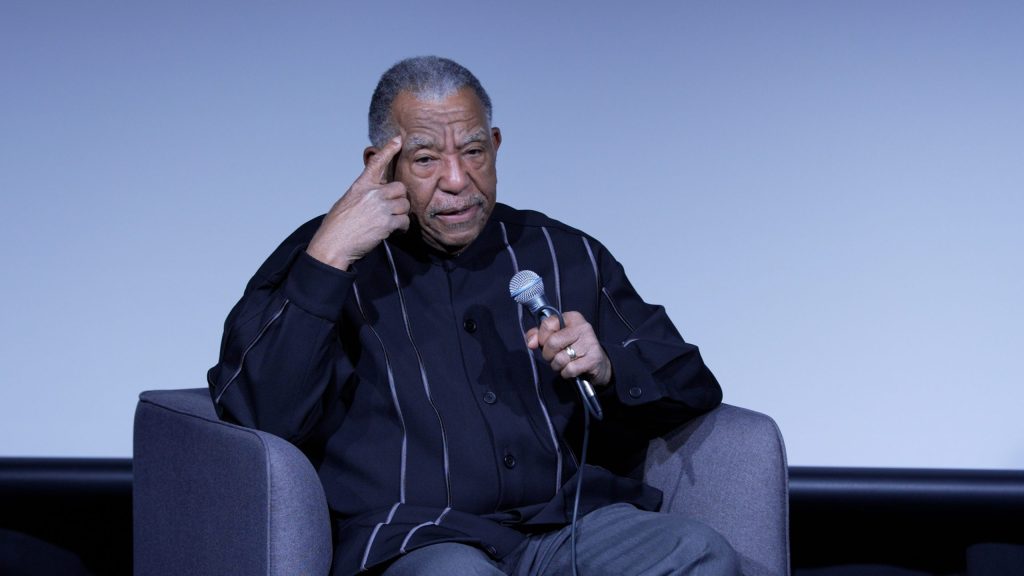
From the dawn of the digital age to the current era of “artificial intelligence,” the future of literacy, reading, and book publishing is facing an existential threat. But Paul Coates—legendary activist, publisher, former Baltimore Black Panther Party member, and founder of Black Classic Press—has some critical wisdom to share in these perilous times about the revolutionary necessity of books. At a live event organized by Tubman House and Eddie’s Front Porch and recorded at the TRNN studio in Baltimore, MD, on March 6, 2026, community organizer and creator of Healing Justices Erica Woodland sits down with Coates for a wide-ranging discussion about propaganda, publishing, Black literary production, and the past and present of revolutionary politics.
Guests:
W. Paul Coates is the founder of Black Classic Press and BCP Digital Printing. Black Classic Press, established in 1978, specializes in republishing obscure and significant works by and about people of African descent. A former member of the Black Panther Party, Coates led the effort to establish the Black Panther Archives at Howard University.
Credits:
Producer / Editor: Cameron Granadino
Videographer: Phil Glaser
Transcript
The following is a rushed transcript and may contain errors. A proofread version will be made available as soon as possible.
Maximillian Alvarez:
Thank you all so much for being here. I am Maximillian Alvarez. I’m the editor in chief and co-executive director of the Real News Network and on behalf of our whole team, many of which are here over there in the back room or the back table. We just wanted to welcome you all here to the Real News Network Studio. Thank you so much for being here. Nuestra Casa Esu Casa. And we are