by Mansa Musa | Apr 27, 2026 | Economy and Inequality, history, Inequality, Politics and Movements: US, Racism, Rattling the Bars, video
2026 marks the 250th anniversary of the American Revolutionary War. While the national mythology behind the “America at 250” celebrations focuses on the 18th-century battle between Patriot and Loyalist elites, what does the story of the American Revolution and the founding of the United States look like through the eyes of enslaved people? In this episode of Rattling the Bars, host Mansa Musa speaks with Professor Justene Hill Edwards, author of Unfree Markets: The Slaves’ Economy and the Rise of Capitalism in South Carolina.
Guests:
Justene Hill Edwards is an associate professor of History in the Corcoran Department of History at the University of Virginia. Her research explores the intersection of African American history, the history of slavery, and the history of American capitalism. She is the author of Unfree Markets: The Slaves’ Economy and the Rise of Capitalism in South Carolina and Savings and Trust: The Rise and Betrayal of the Freedman’s Bank.
Credits:
Producer / Videographer / Editor: Cameron Granadino
Transcript
The following is a rushed transcript and may contain errors. A proofread version will be made available as soon as possible.
Mansa Musa:
This year marks the 250th anniversary of the Revolutionary War, a conflict that we typically frame as a struggle between the colonialists and the British. However, we rarely examine the age of revolution from the perspective of the enslaved and the enslaved has a voice in this matter, as we will see. Join us today as the University of Virginia Professor of History, Justine Hill Edwards, an author of Unfree Market: The Slave Economy and the Rise of Capitalism in South Carolina. And Saviors and Trust. Professor, welcome to Rattling the Bars
by Mansa Musa and Ruwaida Amer | Apr 20, 2026 | Israel, Palestine, Political Prisoners, Politics and Movements: International, Prisons and Policing, Rattling the Bars, video
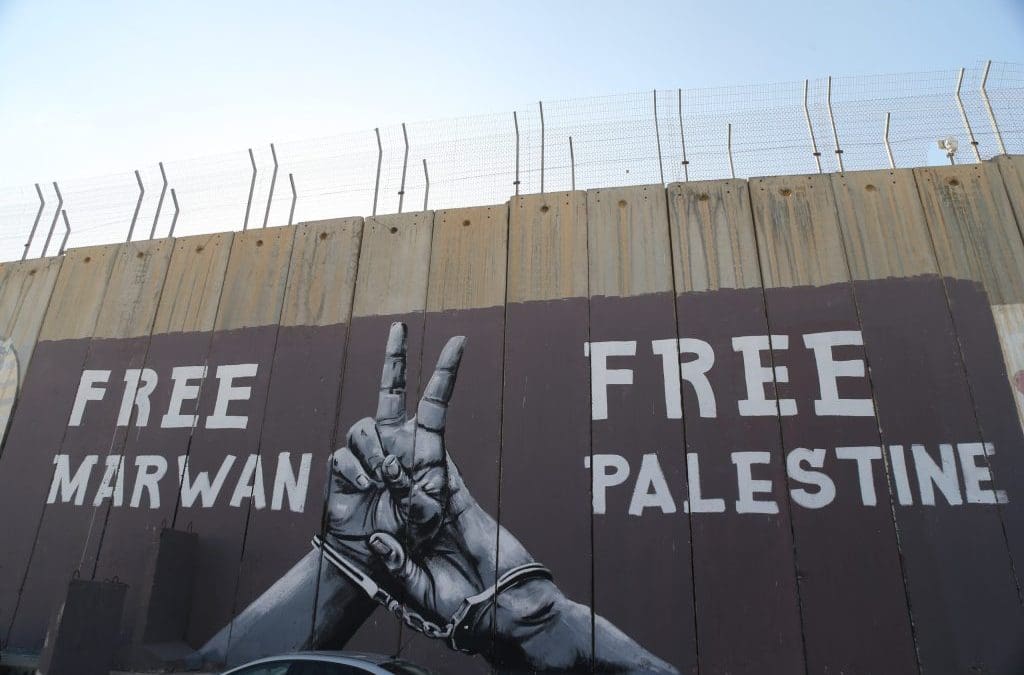
Former political prisoner Mahmoud al-Arda was first arrested by Israeli occupation forces in 1992 due to his involvement in the First Intifada and his membership in Islamic Jihad. Since then, for the past three decades, al-Arda has been incarcerated in different Israeli prisons, and he made international headlines in 2021 after leading a daring, successful, but short-lived escape from the maximum-security Gilboa Prison. In this blockbuster episode of Rattling the Bars, host Mansa Musa—a former Black Panther and political prisoner in the US—speaks with al-Arda after he and 2,000 other Palestinian prisoners were finally released from incarceration in Israel in 2025.
Additional links/info:
B’Tselem, Statistics on Palestinians in Israeli Custody
B’Tselem, “Welcome to Hell”: The Israeli Prison System as a Network of Torture Camps (Report)
Mansa Musa, TRNN, “Inside Israel’s Prison Regime”
Ruwaida Amer, Electronic Intifada, “Freedom is the eternal dream”
Aseel Mousa, Middle East Eye, “Jailbreak, freedom, exile: Life of Mahmoud al-Arda, architect of daring Israeli prison escape”
Credits:
Videography: Ruwaida Amer, Cameron Granadino
Producer / Editor: Cameron Granadino
Voiceover: Danny Bou-Maroun
Transcript
The following is a rushed transcript and may contain errors. A proofread version will be made available as soon as possible.Mansa Musa:
For the past two years, the four major US Sunday news shows have almost entirely excluded Palestinian voices from their coverage of Gaza. Airing just one brief interview in that time, according to journalist Adam Johnson. Corporate media’s propaganda war isn’t only about the stories it chooses to show, but even more about the voices and perspective it leaves out. In contrast, the real news is committed to amplifying those voices. In this spirit, we connected with Mahmoud al-Arda , a 50-year-old Palestinian who spent 32 years
by Mansa Musa | Apr 13, 2026 | Gaza, Israel, Palestine, Politics and Movements: International, Prison Industrial Complex, Prisons and Policing, Rattling the Bars, video
While international attention has decreased in recent months, the horrors Israel continues to systematically unleash on Palestinians in Gaza and the Occupied West Bank have not. In this episode of Rattling the Bars, host Mansa Musa—a former Black Panther and political prisoner—speaks with renowned scholar-activist Dr. Rabab Abdulhadi about Israel’s apartheid system of incarceration and the urgent fight to free Palestinian political prisoners detained by Israel.
Additional Links:
Stop the Torture of Palestinian and Lebanese Prisoners – Open the Prisons to the Red Cross petition
Credits:
Producer / Videographer / Editor: Cameron Granadino
Transcript
The following is a rushed transcript and may contain errors. A proofread version will be made available as soon as possible.Mansa Musa:
Welcome to this edition of Rattling the Bars. I’m your host, Mansa Musa. The number of Palestinian detainees in Israel custody has been on the rise. A population now marked by a revolving door where ceasefire releases are being eclipsed by new arrest campaign. Despite the release of nearly 2000 prisoners during the October 2025 ceasefire, or I must say so- called ceasefire, a massive wave of new detentions and occupied territories of Palestine has effectively reset the scales of incarceration. Join us today is Dr. Rabab Abdulhadi, the founding director and senior scholar of the Arab and Muslim Ethnicities and Diaspora Studies Program at SFSU, a Yale educated sociologist. She is the principal investigator of Teaching Palestine. Welcome, doc. How you doing today?
Dr. Rabab Abdulhadi:
I’m okay. I’m okay. I’m as best as could be expected under the terrible conditions that we’re living under.
Mansa Musa:
Before we go into a more detailed thing what’s going on with our occupation, give update as
by Mansa Musa | Apr 6, 2026 | history, Prisons and Policing, Rattling the Bars, video
When state violence and systemic denial of full citizenship by the state makes true belonging impossible for Black people, Black anarchists have envisioned and fought for a free life beyond the state. In this episode of Rattling the Bars, author William C. Anderson explores the rich, radical tradition of Black anarchism and its connection to prison abolitionist movements.
Guests:
William C. Anderson is a writer and activist from Birmingham, AL. His work has appeared in outlets ranging from The Guardian, MTV, Truthout, British Journal of Photography, to Pitchfork. He is the author of The Nation on No Map: Black Anarchism and Abolition, and co-author of As Black as Resistance: Finding the Conditions for Liberation. He’s also the co-founder of Offshoot Journal and provides creative direction as a producer of the Black Autonomy Podcast.
Credits:
Producer / Videographer / Editor: Cameron Granadino
Transcript
The following is a rushed transcript and may contain errors. A proofread version will be made available as soon as possible.
Mansa Musa:
Welcome to Rattling Bars. I’m your host, Mansa Musa. When you hear the term “anarchy” and “anarchist,” what comes to mind? Joining me today is William C. Anderson, author of The Nation on No Map: Black Anarchism and Abolition, and a columnist for Prism News where he writes the series Another Way Out. Welcome, William. Welcome to Rattling the Bars.
William C. Anderson:
Hey, thanks for having me on.
Mansa Musa:
First start out, could you introduce yourself to our audience and share how some of your background?
William C. Anderson:
Yeah. So my name’s William C. Anderson. I’m a writer, an activist, do some organizing here and there, and a person who’s just generally committed to struggle. I
by Mansa Musa | Mar 23, 2026 | history, labor, Politics and Movements: US, Rattling the Bars, video
Born into slavery and forged in the fire of the 19th-century labor movement, Lucy Parsons became one of the most dangerous women in America. In this Women’s History Month special, Rattling the Bars host Mansa Musa and guest William C. Anderson honor Parsons, the “Goddess of Anarchy,” and trace her journey from former slave to militant activist on the front lines of the class war.
Guests:
William C. Anderson is a writer and activist from Birmingham, AL. His work has appeared in outlets ranging from The Guardian, MTV, Truthout, British Journal of Photography, to Pitchfork. He is the author of The Nation on No Map: Black Anarchism and Abolition, and co-author of As Black as Resistance: Finding the Conditions for Liberation. He’s also the co-founder of Offshoot Journal and provides creative direction as a producer of the Black Autonomy Podcast.
Credits:
Producer / Videographer / Editor: Cameron Granadino
Transcript
The following is a rushed transcript and may contain errors. A proofread version will be made available as soon as possible.
William C. Anderson:
Yeah. Lucy Parsons is an extremely inspiring figure for me personally. She was a radical anarchist who made waves as a labor organizer and she was also an outspoken militant. She was very much ahead of her time for a person during the era in which she lived. And this is a formerly enslaved Black woman who was speaking with an unfettered, unrestrained radicalism. And she didn’t live with a lot of openness around her race and her personal history, but she had a very interesting life. She married one of the victims of the infamous haymarket affair where there were seven anarchists who were
by Mansa Musa | Mar 9, 2026 | ICE, Politics and Movements: US, Prison Industrial Complex, Prisons and Policing, Rattling the Bars, Trump, video
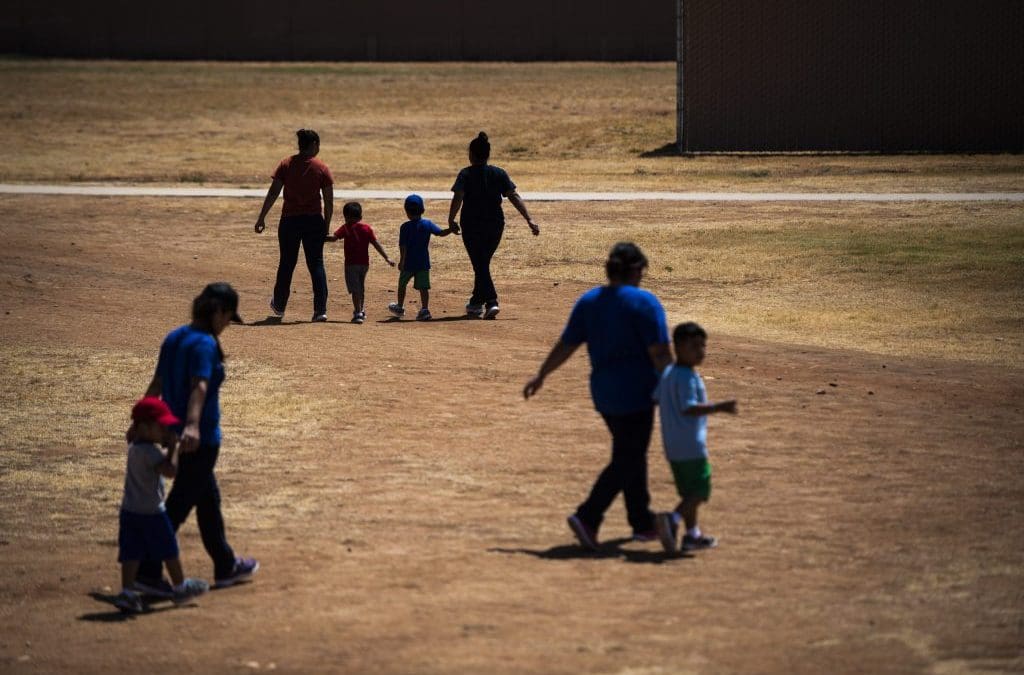
A new report from the Marshall Project reveals that the daily number of kids in ICE detention has increased sixfold under the second Trump administration. In this episode of Rattling the Bars, host Mansa Musa speaks with Shannon Heffernan and Anna Flagg of The Marshall Project about the the human cost of Trump’s mass deportation campaign, and about the horrifying reality inside the South Texas Family Processing Center—the “black box” facility in Dilley, Texas, where children are subjected to substandard food, medical deprivation, and prolonged detention beyond legal limits.
Guests:
Anna Flagg is a senior data reporter at The Marshall Project and works with data to report on detention, deaths in custody, crime, race, policing and immigration. Her reporting has appeared in The Marshall Project, The New York Times, The Washington Post, The Los Angeles Times, ProPublica, Politico, The Guardian, The Associated Press, Al Jazeera, and others.
Shannon Heffernan is a staff writer at The Marshall Project whose work focuses on prisons and jails across the US, as well as sexual and gender-based violence, immigration and mental health, and how arts and culture shape (and are shaped by) crime and punishment.
Additional links/info:
Anna Flagg & Shannon Heffernan, The Marshall Project, “‘Why is this happening to us?’ Daily number of kids in ICE detention jumps 6x under Trump”
Maximillian Alvarez, TRNN, “Texas’ one-of-a-kind concentration camp for children and families”
Credits:
Producer / Videographer / Editor: Cameron Granadino
Transcript
The following is a rushed transcript and may contain errors. A proofread version will be made available as soon as possible.
Mansa Musa:
Welcome to this edition of Rattling the Bars, I’m your host Mansa Musa. Why is this happening to us? Daily numbers