by Mansa Musa | Aug 10, 2026 | Prison Industrial Complex, prison reform, Prisons and Policing, Rattling the Bars, video
Effective public safety policy is founded on preventing crime and repairing harm, but these are not the foundations of America’s reactionary criminal justice establishment. This week on Rattling the Bars, we host a roundtable discussion about the DC Justice Lab’s 2026 Public Safety Policy Agenda, which has been endorsed by 30 progressive organizations working directly with system-impacted individuals, and about criminal justice reforms that would ensure safer communities through restorative justice, not draconian punishment.
Additional links/info:
DC Justice Lab website, Facebook page, X page, and Instagram
DC Justice Lab, 2026 DC Public Safety Policy Agenda
Credits:
Producer / Videographer / Editor: Cameron Granadino
Transcript
The following is a rushed transcript and may contain errors. It will be updated.
Mansa Musa:
Welcome to this edition of Rattling the Bars, I’m your host, Mansa Musa.
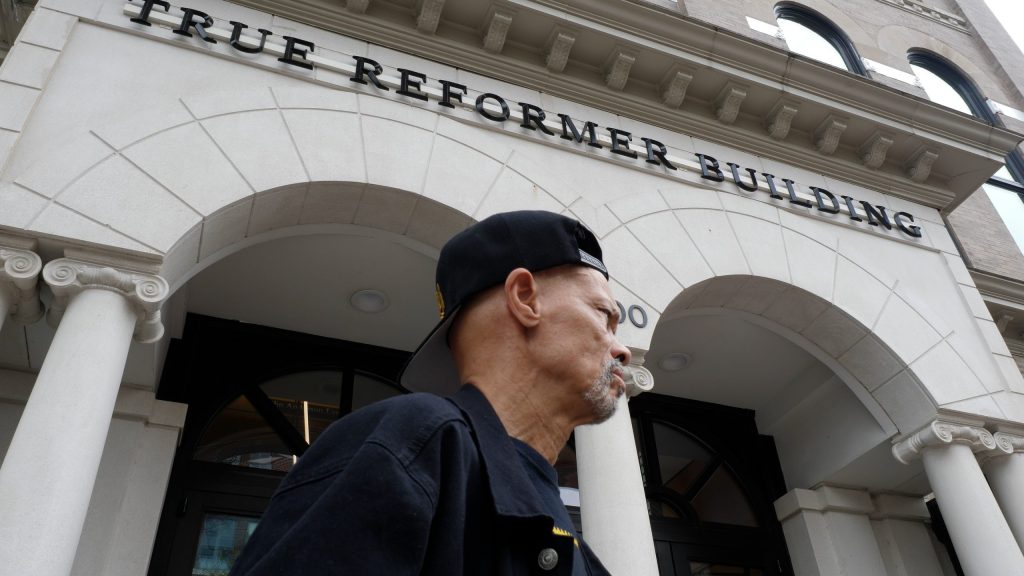
Today we are at the True Reformer Building talking to representatives from DC Justice Lab. I’m talking to Clinique Chapman, CEO, Bethany Young, the policy director. We’re here to discuss a roadmap for a safer and more equitable District of Columbia through the lens of the public safety policy agenda that DC Justice Lab has developed. Welcome to Rattling the Bars.
Clinique Chapman:
Thank you. We’re happy to be here.
Mansa Musa:
OK. Let’s start with transparency and technology. Clinique and Bethany, your agenda highlights surveillance oversight and the need for virtual testimony from the jail. Why are these two so critical for ensuring the justice system remains accountable to public safety and accessible to those inside? And when we talk about the virtual, for the benefit of our audience, DC Code Defenders can vote. And because DC Code Defenders can vote, they also should have the right. I think this
by Maurizio Guerrero | Aug 3, 2026 | Article, ICE, immigration, Politics and Movements: US, Prisons and Policing, Reprint
This story originally appeared in Prism on July 27, 2026.
Hundreds of noncitizens detained by Immigration and Customs Enforcement (ICE) have gone on hunger strikes across the country to protest the widespread denial of due process and deteriorating conditions in detention centers during the Trump administration, according to advocates and detainees.
Conditions in ICE detention facilities have never been good, typically prompting around a dozen hunger strikes a year, said Josefina Mora-Cheung, director of organizing at La Resistencia, a grassroots organization that supports detainees at the Northwest ICE Processing Center (NWPIC) in Tacoma, Washington. Last year, La Resistencia documented 16 such protests, mostly carried out by single detainees. But this year, the group has already documented 18 hunger strikes involving about 25 individuals at NWPIC, the most recent of which ended July 20.
“This year we’ve seen such a skyrocketing of numbers that indicates how much people are willing to put their lives at risk in order to call attention to these conditions that are ultimately life-threatening for people,” Mora-Cheung said. “People are not willing to give up so easily or to have their spirits broken.”
Hunger strikes in ICE jails have also been reported at Adelanto ICE Processing Center in California; North Lake Processing Center in Michigan; Moshannon Valley Processing Center in Pennsylvania; Prairieland Detention Center and Camp East Montana in Texas; Torrance County Detention Facility in New Mexico; the ICE unit at the Louisiana State Penitentiary or “Angola”; and Delaney Hall in New Jersey. About 500 noncitizens have reportedly joined the strikes.
Advocates say there have likely been more hunger strikes across the 425 jails administered by ICE and its network of private contractors, but the agency denies they are taking place and, according to the advocates, quickly tries
by Mansa Musa | Aug 3, 2026 | Politics and Movements: US, Prison Industrial Complex, prison reform, Prisons and Policing, Rattling the Bars, video, Washington
In part two of our series on conservative attempts to use D.C. as a testing ground for harsh criminal justice policies, Rattling the Bars host Mansa Musa sits down with Chelsea Canterbury and Eric Franklin of Voices for a Second Chance. They discuss the danger of proposed measures—including charging 14-year-olds as adults, increasing mandatory minimums, repealing the Second Look Act, and reinstating cash bail—and explain why doubling down on mass incarceration won’t make the city safer.
Additional links/info:
Voices for a Second Chance Instagram
Sarah Staudt, Prison Policy Initiative, “Bad Omens: Reform rollbacks in Washington D.C. are a warning sign for state-level advocates”
Credits:
Producer / Videographer / Editor: Cameron Granadino
Transcript
The following is a rushed transcript and may contain errors. It will be updated.
Mansa Musa:
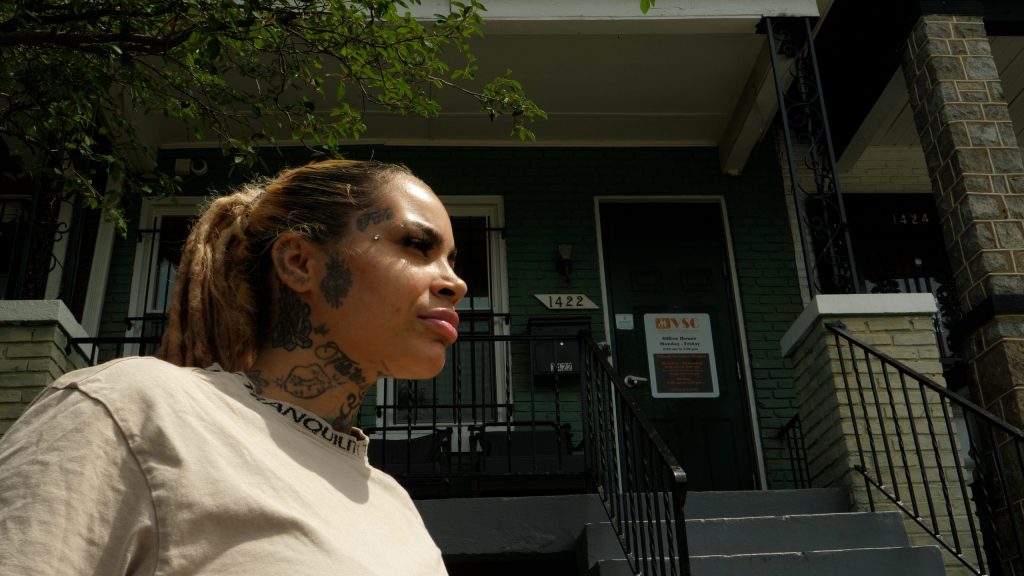
We’re here in Washington DC, Massachusetts Avenue at Voices for a Second Chance. We’re talking about Congresses introducing certain bills to roll back progressive laws that impact District of Columbia residents. One such law is the Second Chance Act. The Second Chance Act has been very instrumental in allowing people to get out of prison after they demonstrate they have changed, but Congress want to change that. You’ll hear different testimonies today about how these things impact everyday citizens, people that want to do right. Stay tuned. Joining me today is Chelsea Canterbury. Chelsea Canterbury, welcome to Rattling the Bars. Hi,
Chelsea Canterbury:
Hi. Welcome. Thank you. All
Mansa Musa:
Right. So today we are in front of Voices for a Second Chance service organization in the District of Columbia. And full disclosure, I actually work here. Chelsea Canterbury is, and I’ll call her Chelsea from here on out. Chelsea is a case manager here
by Taya Graham and Stephen Janis | Jul 31, 2026 | First Amendment, livestream, Police Accountability Report, Politics and Movements: US, Prisons and Policing, video
Police auditors, better known as “copwatchers,” have become both famous and notorious for using cell phone cameras and YouTube channels to monitor police activity, confront cops who are breaking the law, and fight for accountability and reform. But is copwatching a form of citizen journalism, or is it just provocation masquerading as accountability?
In this special Police Accountability Report livestream, (in)famous copwatcher Sean Paul Reyes, better known as Long Island Audit, joins hosts Taya Graham and Stephen Janis for a lively, candid debate about one of the most popular and controversial forms of police accountability today.
Credits:
Pre-Production; Stephen Janis, Taya Graham
Production: Stephen Janis, Taya Graham, David Hebden, Ryan Johnson, Maximillian Alvarez
Transcript
The following is a rushed transcript and may contain errors. It will be updated.
Taya Graham:
My name is Taya Graham and welcome to the Police Accountability Report livestream, the great American Copwatcher debate edition. Tonight, we are going to be exploring the controversy surrounding a popular Copwatcher, Long Island audit, specifically his encounter with Suffolk County Police Union officials that was the subject of our last episode. Now, a confrontation that started with Sean showing up at union headquarters to ask questions and then escalated when union officials stormed out of the building and put Sean Paul into handcuffs. Let’s just watch a few seconds of the encounter to set the scene.
Sean Paul Reyes (Long Island Audit):
Have you seen me leaving? I immediately began to leave. Lucivillo, would you like to come on? I am leaving. Would you like to come on the channel? I’m leaving. I am leaving. You seem to leave me? I am leaving. I’m leaving. I’m leaving. Lucivillo, you
by Renée Feltz, Truthout | Jul 30, 2026 | Article, Political Prisoners, Politics and Movements: International, Politics and Movements: US, Prisons and Policing, Reprint
This article was originally published by Truthout on July 28, 2026. It is shared here under a Creative Commons (CC BY-NC-ND 4.0) license.
World-renowned political prisoner Mumia Abu-Jamal is 72 years old, suffering multiple health problems, and may die in prison, say legal advocates in a new request they filed today that asks the United Nations to support his release. Abu-Jamal’s legal team decided to appeal to the UN after having exhausted nearly every legal avenue for relief available in the United States.
Abu-Jamal was a Black Panther and journalist when he was convicted of the 1981 murder of Philadelphia police officer Daniel Faulkner, and he has always maintained his innocence. His death sentence was overturned in 2001, and in 2011, Pennsylvania resentenced him to life without parole. Since then, “each attempt to secure Mr. Abu-Jamal a new and fair trial has been rejected,” argues a submission his lawyer Bret Grote and others made on his behalf to the UN’s Working Group on Arbitrary Detention.
Grote told Truthout the filing, which UN rules limit to 20 pages, attempts to summarize nearly a half-century of the “failures of the criminal legal system” in Abu-Jamal’s case, including an “unfair trial, a biased appellate process, decades of surveillance and censorship, and a death by incarceration sentence that has been recognized by the United Nations as violating international human rights standards.”
The UN determination of whether someone faces “arbitrary detention” is interpreted “more broadly” than simply being “against the law.” It also considers “elements of inappropriateness, injustice, lack of predictability and due process of law.”
Abu-Jamal’s lawyers say he was in “continuous solitary confinement” from 1983 to 2011 on Pennsylvania’s death row, before being transferred to the
by Mansa Musa | Jul 27, 2026 | prison reform, Prisons and Policing, Rattling the Bars, Trump, video, Washington
Republicans in Congress are attempting to push policies in the District of Columbia that would charge 14-year-olds as adults, increase mandatory minimum sentences, repeal the Second Look Act, and re-institute cash bail, which was banned in 1992. In this week’s episode of Rattling the Bars, host Mansa Musa reports from U Street and sits down with Bethany Young and Darby Hickey from the DC Justice Lab to discuss how the GOP is using Washington, DC, as a laboratory to wage a national crusade against decades of criminal justice reforms.
This is part one of a two-part series. Subscribe to TRNN and stay tuned for Part 2 next week.
Additional links/info:
DC Justice Lab website, Facebook page, X page, and Instagram
Sarah Staudt, Prison Policy Initiative, “Bad Omens: Reform rollbacks in Washington D.C. are a warning sign for state-level advocates”
Credits:
Producer / Videographer / Editor: Cameron Granadino
Transcript
The following is a rushed transcript and may contain errors. It will be updated.
Mansa Musa: Welcome to this edition of Rattling the Bars. We’re here in the historical part of the District of Columbia, U Street, 14th and U, 13th and U, 11th and U, 12th and U, all historic. Lincoln Theater and Benz Chillibo. We’re here today to talk to two representatives from DC Justice Lab about current legislation that Congress is attempting to pass to minimize the DC City Council’s ability to pass laws to govern this District of Columbia. Stay tuned for this interview. The District of Columbia has become the testing ground for Congress in terms of reforming so-called reform of laws that the city council has passed. So let’s talk about cash bill, what’s going