by Ashley Smith | Apr 10, 2026 | Article, Economy, Economy and Inequality, Iran, Politics and Movements: International, Politics and Movements: US, Reprint, War
This article was originally published by Truthout on April 09, 2026. It is shared here under a Creative Commons (CC BY-NC-ND 4.0) license.
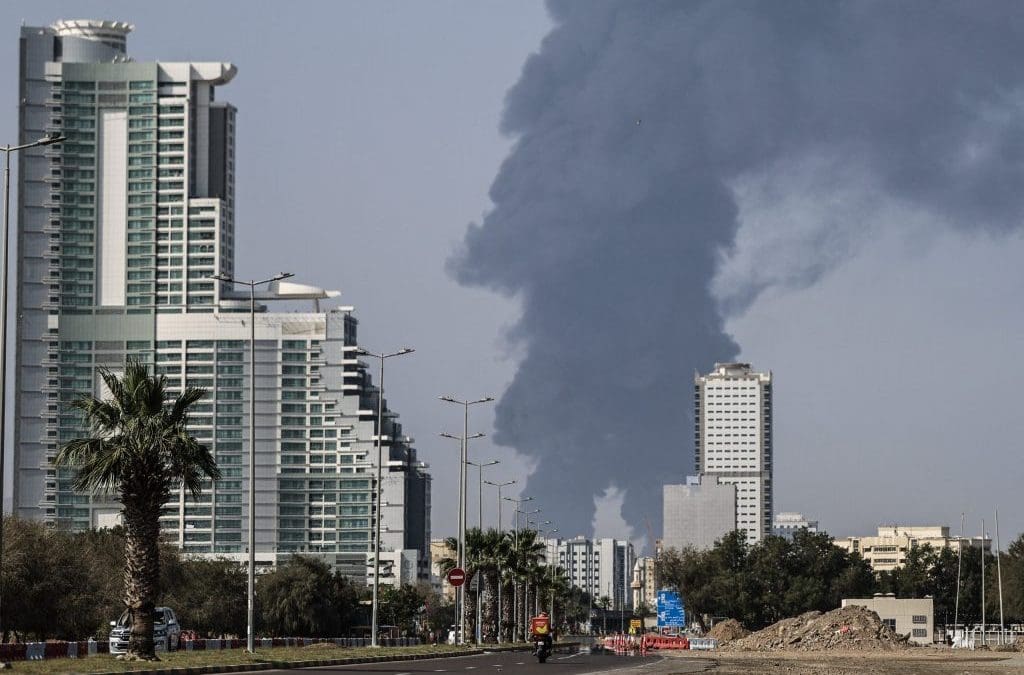
On February 28, the U.S. and Israel expanded their joint genocidal war on Gaza onto Iran as well as Lebanon. After weeks of assassinations and bombing, President Donald Trump agreed to a ceasefire on April 7. This war of aggression by the U.S. and Israel is part of a continued attempt to wipe out any and all opposition to their dominance over the Middle East and its strategic energy reserves.
But they underestimated the capacity of the Iranian state. In addition to launching missile and drone attacks throughout the region, Iran blockaded the Strait of Hormuz, disrupting the production and shipment not only of fossil fuels but also an array of other commodities vital to global capitalism. With fossil fuel prices spiking and stocks crashing, Trump called off his threat to wipe out Iranian civilization and agreed to a ceasefire with Iran.
But Israel has already violated it, Iran has re-closed the Strait of Hormuz, and the ceasefire seems in jeopardy on the eve of negotiations for a settlement of the conflict in Pakistan. As a result, the world stands at the precipice of a multidimensional economic crisis.
In this interview for Truthout, Adam Hanieh discusses the U.S. and Israel’s imperialist goals, the war’s impact on the economies of the Global North and Global South, and its consequences for the geopolitical order as well as class and social struggles in the region and around the world. Hanieh is a professor in development studies and director of the SOAS Middle East Institute, University of London.
by Maximillian Alvarez | Apr 9, 2026 | Economy, ICE, immigration, Politics and Movements: US, Prisons and Policing, video
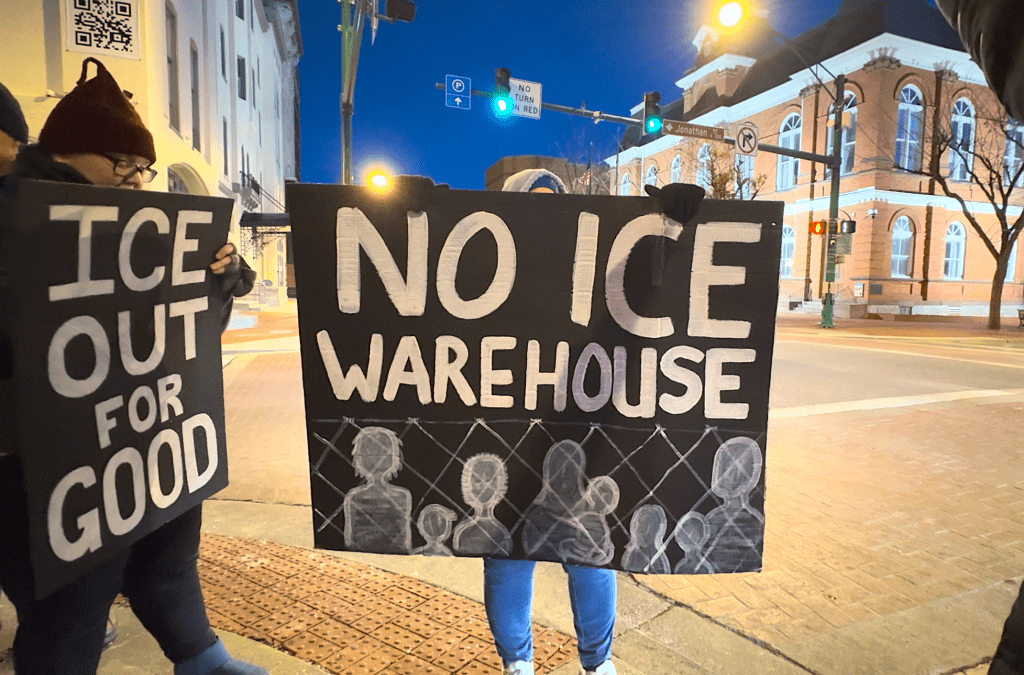
To execute its mass deportation campaign, the Trump administration has big plans for small-town America. In the rural town of Williamsport, Maryland, just next to Hagerstown, the Department of Homeland Security recently purchased a massive shipping warehouse for over $100 million and plans to convert the facility into an immigrant detention center that will hold upwards of 1,500 human beings per day. In this on-the-ground report, TRNN takes you to the site of the proposed ICE detention facility and speaks with local residents who are fighting back and demanding more transparency and accountability from the government.
Additional links/info:
Hagerstown Rapid Response Network website, Facebook page, Bluesky page, and Instagram
Washington County Indivisible website
Project Salt Box Substack, Bluesky page, TikTok, and Instagram
Maximillian Alvarez, TRNN, “The chilling truth behind ICE’s detention warehouses”
Maximillian Alvarez, TRNN, “Meet the data analysts exposing ICE’s plans
ACLU of Maryland, “Community leaders, elected officials, and civil rights organizations challenge DHS’s secret, rushed plan to convert Hagerstown warehouse into mass immigration detention center”
Credits:
Videographer: Maximillian Alvarez
Post-Production: Maximillian Alvarez, Cameron Granadino
Transcript
The following is a rushed transcript and may contain errors. A proofread version will be made available as soon as possible.
Claire Connor:
We are on the outskirts of Hagerstown very close to Williamsport, Maryland, and we are standing in front of a gargantuan warehouse facility that has recently been purchased by DHS for use of detention center.
Laura Spivak:
We were recently informed actually by the Washington Post via some leak documents that an ICE facility was planned for our county. We were not informed by any of our local politicians. We were not informed by the federal government. And the community
Claire Connor:
In light of this has been
by Michael Fox | Apr 9, 2026 | Latin America, Podcast, Politics and Movements: International, Politics and Movements: US, Under the Shadow, war on drugs
The US has funneled billions into its allies in Latin America under the guise of fighting the drug traffickers. It has ripped apart countries. And the violence has only gotten worse. Decades of fighting, with little to show for it except human rights abuses, displacement, and tens of thousands of dead and disappeared.
In the last episode, host Michael Fox took you to Mexico City to walk through Mexico’s Museum of Interventions to witness firsthand the long history of foreign and, in particular, US intervention in the country.
Today, he brings listeners up to the present, diving head-first into the US-backed drug war in Mexico, which has overtaken the country in recent decades and fueled an epidemic of violence that has disappeared more than 100,000 people over the last 20 years. We’ll look at Trump’s threats and the repercussions they are having in the country, and we’ll also hear the voices of Mexicans who are standing up.
This is Episode 10 of Under the Shadow, Season 2.
Under the Shadow is an investigative narrative podcast series that walks back in time, telling the story of the past by visiting momentous places in the present. Season 2 responds in real time to the Trump administration’s onslaught on Latin America.
Hosted by Latin America-based journalist Michael Fox.
This podcast is produced in partnership between The Real News Network and NACLA.
Theme music by Michael Fox’s band, Monte Perdido. Monte Perdido’s 2024 album Ofrenda is available on Spotify, Deezer, Apple Music, YouTube or wherever you listen to music.
Other music from Blue Dot Sessions and Epidemic Sound.
Script editing by Heather Gies. Hosted, written, produced, mixed, and edited by Michael Fox.
Many thanks to the Mexico-based journalists
by Maximillian Alvarez | Apr 8, 2026 | Economy, Economy and Inequality, health care, labor, Podcast, Politics and Movements: US, Unions, Working People
Nearly a year after workers voted to authorize a strike, non-union city and commercially contracted security officers in Baltimore, MD, will walk off the job on April 9 in an Unfair Labor Practice strike against their employer, Abacus Corporation. In their yearslong effort to unionize and secure more job security, better pay, accessible healthcare, and safer working conditions, workers at Abacus have reported rampant union busting and violations of their labor rights. In this episode, we speak with Laura Dixon, a veteran security officer and Abacus employee, and Jaimie Contreras, executive vice president of the Service Employees International Union, Local 32BJ.
Additional links/info:
SEIU Local 32BJ website, Facebook page, and Instagram
Katherine Wilson, Baltimore Sun, “Baltimore contract security officers at city properties prepare to strike”
Featured Music:
Jules Taylor, Working People Theme Song
Credits:
Audio Post-Production: Jules Taylor
Transcript
The following is a rushed transcript and may contain errors. A proofread version will be made available as soon as possible.
Maximillian Alvarez:
All right. Welcome everyone to Working People, a podcast about the lives, jobs, dreams, and struggles of the working class today. Working People is a proud member of the Labor Radio Podcast Network and is brought to you in partnership with In These Times Magazine and the Real News Network. This show is produced by Jules Taylor and made possible by the support of listeners like you. My name is Maximillian Alvarez, and today we are going back to the picket line. We’ve got another strike update episode for you guys, and this time we’re talking about a strike that’s happening right here in our hometown of Baltimore. As stated in a press release from the Service Employees International
by Qassam Muaddi | Apr 8, 2026 | Article, Iran, Israel, Lebanon, Politics and Movements: International, Politics and Movements: US, Reprint, War
This story originally appeared in Mondoweiss on April 08, 2026. It is shared here with permission.
The U.S.-Israeli war on Iran has temporarily halted, but Israel’s onslaught in Lebanon grinds on. Late on Tuesday, two hours before U.S. President Donald Trump’s ultimatum to Iran that the U.S. would obliterate the country’s “entire civilization,” a temporary two-week ceasefire was announced by Pakistan’s Prime Minister, Shehbaz Sharif, who mediated the deal. Sharif stated that the terms of the ceasefire would also include Israel’s war on Lebanon, but on Wednesday morning, Israel launched a massive bombing campaign across Lebanon, killing over 300 people, according to local sources. The Israeli escalation leaves the state of the ceasefire uncertain, with Iran reportedly threatening to withdraw from the agreement if Israel does not halt its attacks, according to Tasnim News Agency.
The Israeli bombing campaign, targeting multiple towns in the Baalbek region as well as the capital, Beirut, continued through the height of the midday rush hour. Lebanon’s Health Minister told Reuters that Lebanese hospitals are “crowded with victims,” and hospitals have called upon citizens to donate blood, while a state of emergency was declared across multiple parts of the country. The escalation on the Lebanese front is central to understanding the stakes of each side in the ceasefire, and it is already putting the prospects of a permanent agreement at risk.
Both Iran and the U.S. announced the deal with notably different narratives, each claiming victory. Although Israel is a main party to the conflict, it was not mentioned by either side, which makes its part in the ceasefire uncertain. What is also uncertain is whether the war will permanently
by Jake Johnson | Apr 7, 2026 | Article, Iran, Politics and Movements: International, Politics and Movements: US, Reprint, War