

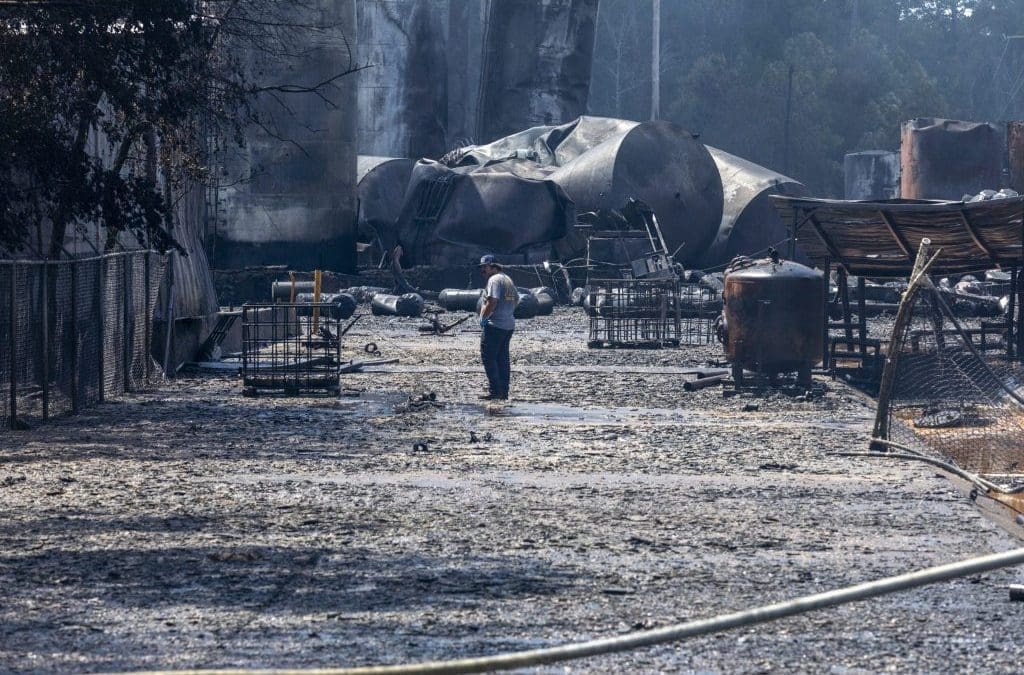
‘The rain was black’: A plant explosion set off a toxic bomb in this Louisiana town
On Aug. 22, 2025, the small-town lives of residents living near the Smitty’s Supply facility in Roseland, Louisiana, changed forever when an explosion occurred at the automotive lubricant plant. The explosion and ensuing fire, which burned for days, triggered evacuations across the area, blanketing homes and businesses with smoke, soot, and oily residue, while spilling petroleum products from the plant into area waterways, including several adjacent ponds and the Tangipahoa River. While the Environmental Protection Agency claims that the area is safe, according to the agency’s own chemical monitoring, residents say they’ve been left behind and kept in the dark as they develop negative health symptoms and their homes remain covered in toxic substances. In this episode, we speak with Arlene Bankston, a farmer and resident of Roseland, and Allie Ponvelle, who lives one town over in Amite, about the slow-moving nightmare they’ve been living in ever since the massive explosion and chemical fire at Smitty’s Supply.
Additional links/info:
Alene Bankston’s Facebook page
Allie Ponvelle’s Facebook page
Petition to Close Roseland Montessori School Due to Toxic Contamination
Chemically Impacted Communities Coalition (CICC) website
Wesley Muller, Louisiana Illuminator, “Smitty’s Supply neighbors still wary of fire fallout despite assurances from Landry, EPA”
Whitney Miller, WWL Louisiana, “What was in the air and water after the Smitty’s Supply fire? Testing under new scrutiny”
”Maximillian Alvarez, The Real News Network, “America’s toxic future looks like East Palestine, Ohio, today”
Featured Music:
Jules Taylor, Working People Theme Song
Credits:
Audio Post-Production: Jules Taylor
Transcript
The following is a rushed transcript and may contain errors. A proofread version will be made available as soon as possible.
Maximillian Alvarez:
All right. Welcome everyone to Working People, a podcast about the lives, jobs, dreams,
State Department pushes human rights watchdog to ignore deadly, illegal boat strike campaign
This story originally appeared in Common Dreams on April 14, 2026. It is shared here under a Creative Commons (CC BY-NC-ND 3.0) license.
The former president of a top international human rights watchdog views the United States’ monthslong campaign of bombing boats in the Caribbean Sea and eastern Pacific Ocean as a clear-cut case of “murder,” he told The Intercept Monday, but he warned that pressure from the Trump administration may stop the body from investigating the Pentagon’s actions.
Juan Méndez, a former president of the Inter-American Commission on Human Rights, noted that a month after the IACHR held a hearing on the boat bombing campaign, officials “may well feel that this is a very delicate situation, and if they take the initiative, they’re going to incur the wrath of the United States.”
The hearing last month was the first of its kind and included testimonies from the ACLU, the Center for Constitutional Rights, International Crisis Group, and Ben Saul, the United Nations special rapporteur on counterterrorism and human rights. The groups presented evidence that the US has been violating both domestic and international law by bombing vessels that it has claimed—without making any evidence publicly available—are involved in drug trafficking. Nearly 170 people have been killed in dozens of strikes, and legal experts worldwide have asserted the US is violating international law and has committed extrajudicial killings—potentially making those involved in the strikes liable for murder.
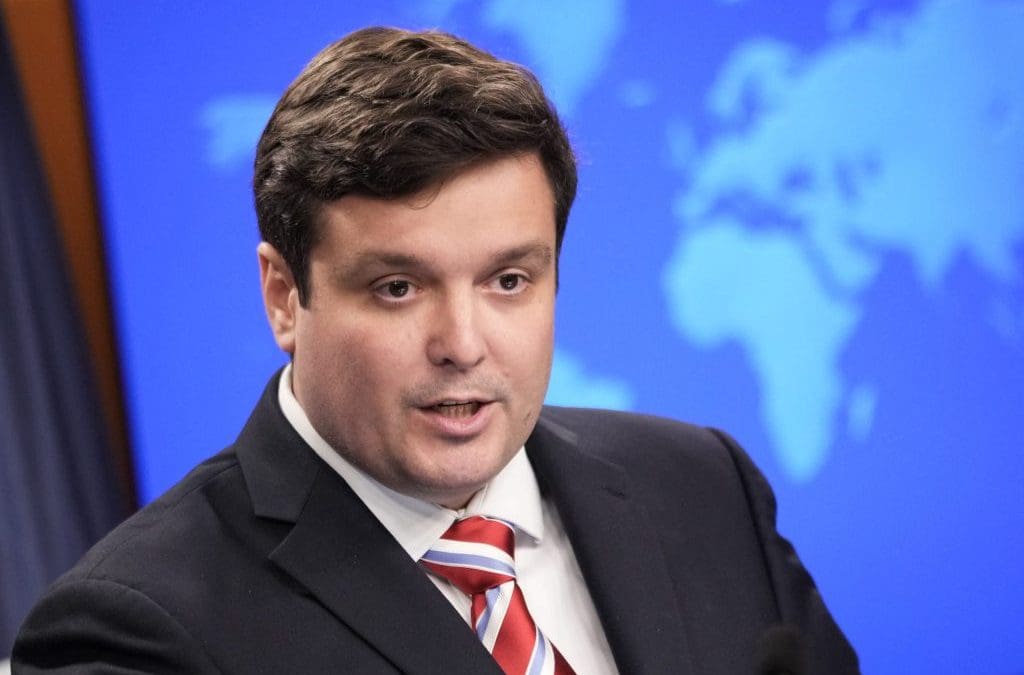
The hearing was followed by a statement from Tommy Pigott, a State Department spokesperson, who said the IACHR had “strayed far outside its mandate” by looking into the boat attacks—as the family of one man killed in a bombing requested it to—and accused the ACLU of trying to manipulate the body.
“The United States calls on the

Everyone knows Israel is sabotaging the Iran ceasefire—even the Trump administration
Hours after a temporary ceasefire deal between the US and Iran was announced last week, Israel unleashed a massive, deadly bombing campaign on Lebanon. In this episode of The Marc Steiner Show, Marc speaks with award-winning Iranian-Canadian journalist Samira Mohyeddin about the reality that Israel is a rogue state intent on pursuing more war, not diplomacy or peace, and that the US-Israeli war on Iran was never about nuclear threats but about weakening Iran’s economic and regional power—at devastating costs to civilians.
Guests:
Samira Mohyeddin is an award winning producer and broadcaster based in Toronto. For nearly a decade, she was a producer and host at Canada’s National Broadcaster, CBC Radio. Mohyeddin is the founder of On The Line Media and she was the 2024 – 2025 journalism fellow at the Women and Gender Studies Institute at the University of Toronto
Additional links/info:
Qassam Muaddi, Mondoweiss / TRNN, “As U.S. and Iran agree to a temporary ceasefire, Israel launches ‘massacre’ in Lebanon, threatening entire deal”
Jake Johnson, Common Dreams / TRNN, “Iran’s top diplomat says Trump team sabotaged talks with deal ‘inches away’”
Credits:
Producer: Rosette Sewali
Studio Production: Cameron Granadino
Audio Post-Production: Stephen Frank
Transcript
The following is a rushed transcript and may contain errors. A proofread version will be made available as soon as possible.
Marc Steiner:
Welcome to the Marc Steiner Show here on The Real News. I’m Marc Steiner. It’s great to have you all with us. And as we begin this conversation today, the beginnings of a ceasefire seems to be taking place in the US-Israeli war on Iran, though Israel continues its bombing campaign. And joining us once again with her insightful analysis is the award-winning Iranian

Iran’s top diplomat says Trump team sabotaged talks with deal ‘inches away’
A lack of democracy in the United Farm Workers gave Chavez immunity
This story originally appeared in Labor Notes on April 6, 2026. It is shared here with permission.
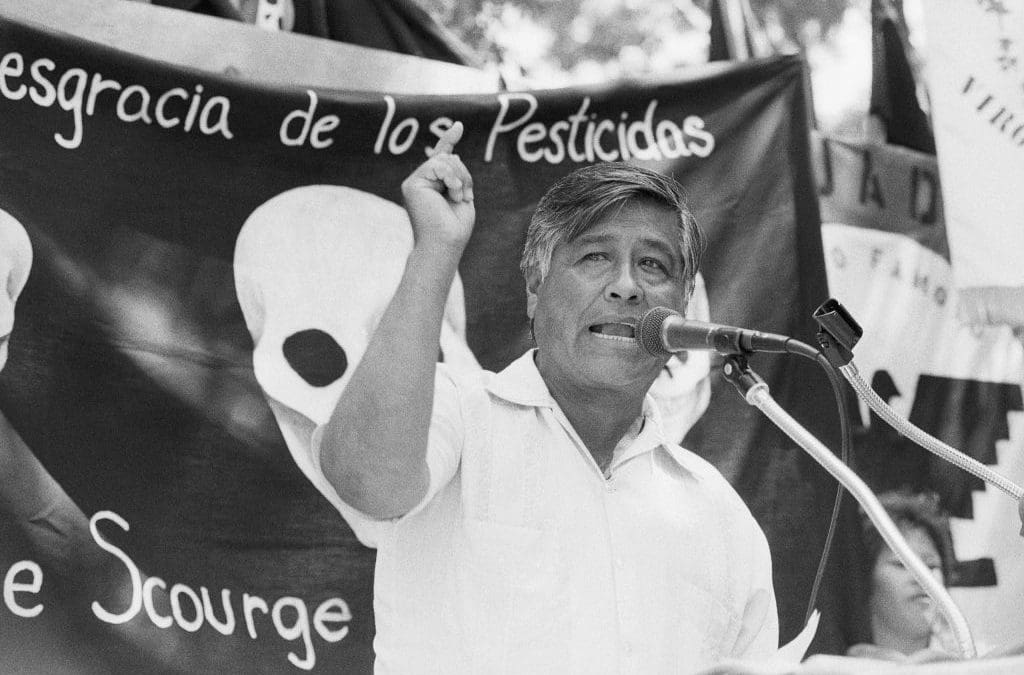
In 2011 Frank Bardacke published an 800-page history of the Farm Workers union: Trampling Out the Vintage: Cesar Chavez and the Two Souls of the United Farm Workers. It opened many eyes to the reasons the UFW became a shadow of its former self.
Bardacke starts the book with an epigraph, a quote from Shakespeare’s Julius Caesar: “O what a fall was there, my countrymen! Then I, and you, and all of us fell down…”
Bardacke was a farmworker in the fields of the Salinas Valley for six seasons in the 1970s. When he decided to write his book years later, he went back to his carpool co-workers, finding them still at work in the fields. In 1994, the union had been thoroughly defeated for nearly 10 years—but his old friends were afraid even to mention its name where the foreman might hear.
I interviewed Frank Bardacke after a New York Times investigation revealed evidence that Chavez had sexually abused young girls who were volunteering with the union, and the allegation that he had also assaulted union co-founder Dolores Huerta. –Jane Slaughter
Jane Slaughter: The revelations about Cesar Chavez as a sexual predator: many people have said they were “surprised but not shocked” or “shocked but not surprised.” How did you react?
Frank Bardacke: The abuse of Ana Murguia was rumored at the time among UFW staff, primarily at the La Paz headquarters. Many of the rumors originated with Ana’s stepmother, Kathy Murguia. But people just didn’t want to hear it. They didn’t want to look into it very deeply because Cesar was one of these