by Marianne Dhenin | Apr 21, 2026 | Article, Israel, Palestine, Politics and Movements: International, Politics and Movements: US, Reprint
This article was originally published by Truthout on April 20, 2026. It is shared here under a Creative Commons (CC BY-NC-ND 4.0) license.
A reckoning could be coming for pro-Israel groups known for doxxing Palestine advocates. In March, the Chicago chapter of the Council on American-Islamic Relations (CAIR-Chicago) filed a class-action lawsuit in Illinois state court against the organizations Canary Mission and StopAntisemitism, as well as groups and individuals identified as their funders or board members.
“This case represents addressing a broader harm caused by organized doxxing and harassment campaigns,” Laila Ali, a Chicago-based artist and activist and one of six named plaintiffs in the lawsuit, told Truthout. “I’m hoping that it’ll establish clear consequences for those who engage in those tactics.”
StopAntisemitism and Canary Mission have histories of systematically posting the personal information of individuals (known as doxxing or doxing) who engage in pro-Palestine speech, or criticize Israel’s assaults on Palestine and the United States’ involvement, on their websites and social media channels to whip up attack campaigns. Many of those targeted have been Arab, Muslim, or Palestinian young professionals who have faced backlash on university campuses or in their workplaces, as well as online harassment and threats to their personal safety.
Alongside Ali, the named plaintiffs in the new case include two physicians, an IT professional, a former University of Illinois Urbana-Champaign student organizer, and an English lecturer at Loyola University Chicago. The class includes anyone residing in Illinois who has had their personal information shared by StopAntisemitism or Canary Mission without their consent and experienced harm as a result. CAIR-Chicago Staff Attorney Noah Halpern told Truthout his organization expects the group to include about 300 people. The organization is still soliciting outreach from Illinois residents
by Derek Seidman | Apr 20, 2026 | AI, Article, Economy, Economy and Inequality, Politics and Movements: US, Reprint
This article was originally published by Truthout on April 19, 2026. It is shared here under a Creative Commons (CC BY-NC-ND 4.0) license.
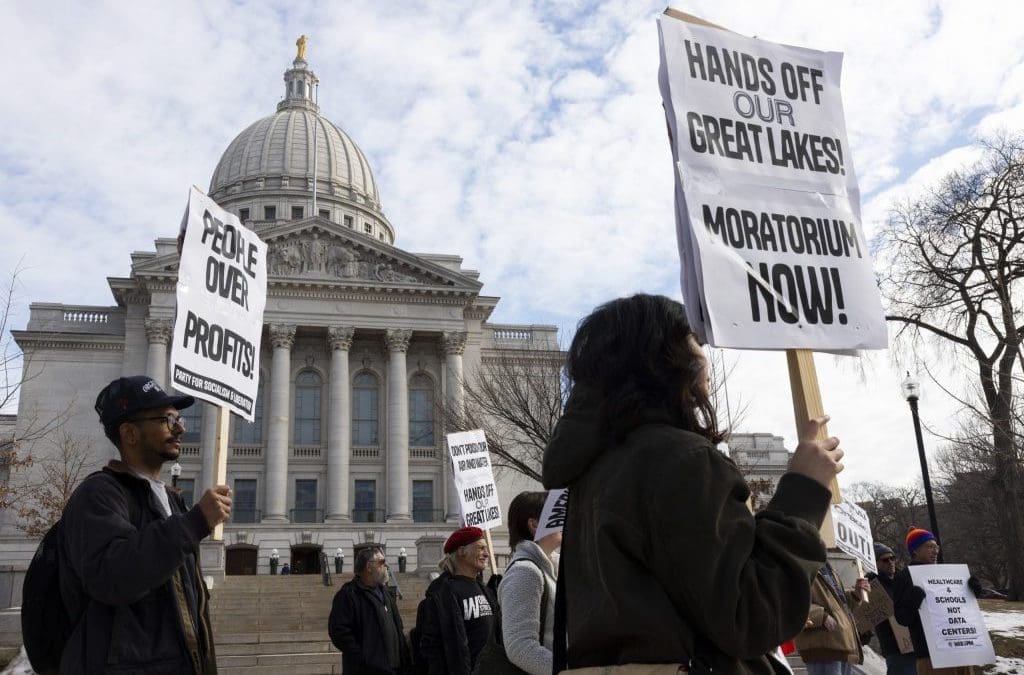
The prolific construction of massive data centers that house the physical computing power for artificial intelligence (AI) is galvanizing resistance in localities across the United States. Communities are fighting back against the billionaire tech and financial power behind these projects and their numerous harms, from their noise and pollution to their hyperconsumption of water and electricity.
Truthout has been covering the corporate interests behind the data center boom and local resistance to data centers. In this roundtable, we brought together representatives from three campaigns across the U.S. to share their experiences and lessons from taking on data centers and AI infrastructure in their areas.
KeShaun Pearson is the leader of Memphis Community Against Pollution (MCAP), based in Memphis, Tennessee, which is focused on fighting for environmental and climate justice in the predominantly Black community of southwest Memphis that’s most impacted by the concentrated pollution from nearby toxic release facilities. MCAP is currently campaigning against Elon Musk’s polluting xAI Colossus supercomputer. Tricia Boehlke is an organizer with No Data Center in DeForest, which recently succeeded in halting a proposed data center that was pushed by a private equity-owned company in a small town outside of Madison, Wisconsin. Lee Ziesche organizes with the Tucson Democratic Socialists of America and the No Desert Data Center Coalition, which has been taking on Project Blue, a huge data center proposed in the Tucson, Arizona, area. The campaign against Project Blue won a victory when Amazon recently pulled out of the project, but its developers are again trying to advance it.
This roundtable has been lightly edited for length and clarity.
Derek
by Qassam Muaddi | Apr 20, 2026 | Article, Iran, Israel, Politics and Movements: International, Politics and Movements: US, Reprint, War, west bank
This story originally appeared in Mondoweiss on April 19, 2026. It is shared here with permission.
The Israeli cabinet approved the construction of 34 new West Bank settlements last week, bringing the total number approved by the ruling coalition led by Israeli Prime Minister Benjamin Netanyahu up to 103. The cabinet decision is the largest batch of new settlements approved in decades, breaking the record set by a previous landmark decision in June 2025, which approved 22 new settlements.
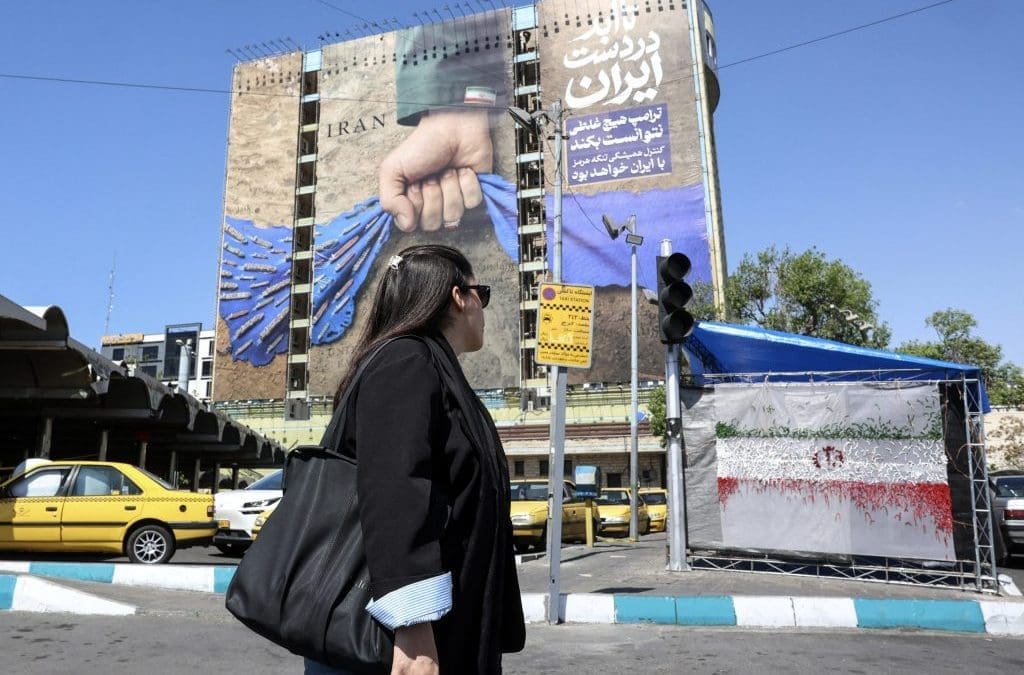
While the latest decision has been overshadowed by the regional conflagrations related to the U.S.-Israeli war on Iran, its timing indicates that Israel perceives a closing window for its ability to entrench its colonial project in its own backyard — the West Bank — in light of shifting realities that might see Iran emerging from the war intact and in a strengthened position regionally.
These developments come as Israel has reportedly been “coerced” to halt its onslaught against Lebanon by U.S. President Donald Trump, forcing it to accept a ceasefire with Hezbollah. Meanwhile, the very fact that the U.S. agreed to a temporary ceasefire with Iran was condemned by the entirety of the Israeli political establishment, both from within Netanyahu’s camp and from the Israeli opposition, who lambasted Netanyahu’s “failure” to overthrow the Iranian government.
While Israel will attempt to use the ceasefire in Lebanon to force the hand of the Lebanese government to accept the ongoing occupation of the southern part of the country, little military progress has been made against Hezbollah, which has reportedly rebuilt its military capabilities since it was bloodied by Israel in October 2024. Iran has also continued to show strength in the region through exerting control over the Straits of Hormuz,
by Taya Graham and Stephen Janis | Apr 17, 2026 | AI, Economy and Inequality, Inequality, Inequality Watch, Politics and Movements: US, video
Welcome to Inequality Watch React, where we don’t just talk about inequality, we go straight to the source.
This week, we take you inside the National Press Club, where we spoke with Congressman Ro Khanna about the future of the Democratic Party, economic patriotism, and the growing divide between the powerful and everyone else.
From why Democrats struggle to win, to the unanswered questions surrounding the Epstein files, to whether Silicon Valley is creating a new class of untouchable elites, we break it all down.
Because this isn’t just about politics. It’s about power, and who it protects.
And the big question: can we protect ourselves from its excess and its consequences? Independent journalists Taya Graham and Stephen Janis head down to Capitol Hill to ask these questions. And if you have a question you want us to ask, please leave it in the comments!
Credits:
Written by: Stephen Janis
Produced by: Taya Graham, Stephen Janis
Studio / Post-Production: Cameron Granadino
Transcript
The following is a rushed transcript and may contain errors. A proofread version will be made available as soon as possible.
Taya Graham:
Hello, my name is Taya Graham and welcome to our Inequality Watch React, the show where we discuss not just how this country is ruled by billionaires, but how and why. Reporting that seeks to hold the American aristocracy accountable for the destructive effect unimaginable wealth has had on our politics and on our lives. Now, unlike other YouTubers, we go right to the source to report back to you on America’s historic wealth imbalance, namely our nation’s capital, Washington DC. That’s where my reporting partner and I, hello, Steven.
Stephen Janis:
Hey, how you doing, Taya?
Taya Graham:
We often
by Brett Wilkins | Apr 17, 2026 | Article, Economy, Economy and Inequality, Iran, Oil, Politics and Movements: International, Politics and Movements: US, Reprint, Trump, War
by Adam Johnson | Apr 16, 2026 | Article, Iran, Israel, Military, Opinion, Politics and Movements: International, Politics and Movements: US, War
Over the weekend, some progressive pundits declared victory as influential liberal zionist organization J Street appeared to announce a major break with the pro-Israel consensus in the Democratic Party. The organization said on Twitter/X it is “calling for the U.S. to end unconditional financial military subsidies to Israel and to move towards a relationship where we treat Israel like any other ally.”
“’No More Exceptions’: J Street Backs Phasing Out All U.S. Aid to Israel by 2028,” reads a Haaretz headline. “However you feel about J Street, anyone who is still saying that they are indistinguishable from AIPAC is either unintelligent or a bad faith actor,” wrote pollster Adam Carlson. “Democrats [are] coalescing around ending military aid to Israel,” boasted Executive Vice President of Center for International Policy Matt Duss.
At first glance, this move may seem like a major shift left for the liberal think tank and the broader Democratic Party consensus around Israel. But upon closer inspection, it’s clear this talking point is mostly a sieve, a PR tactic that provides a pseudo-break from Israel but does little to alter the material reality of apartheid and genocide, all while buying time for a Democratic leadership increasingly at odds with their base—71% of whom now support cutting off military aid to Israel.
This narrative that J Street and leading Democrats more broadly are all getting behind “cutting military aid,” while strictly accurate under certain interpretations of the word “aid,” is deeply misleading. The effort is explicitly aligned with a broader right-wing program to move from direct funding of the military to “co-development and co-production of weapons,” and is designed to provide zionist