

Venetoulis Institute ‘saves’ the Pittsburgh Post-Gazette by purging union members who went on strike
After members of the Newspaper Guild of Pittsburgh won their strike at the Pittsburgh Post-Gazette in late 2025, which had lasted for over 3 years, they were notified in January that the paper’s wealthy owners, the Block family and Block Communications Inc., were shutting down operations. Then, in a stunning turn of events, the Post-Gazette was purchased in April by the Venetoulis Institute for Local Journalism, which also owns the Baltimore Banner in Maryland. While Post-Gazette workers were cautiously optimistic about the news, the union learned last week that the Venetoulis Institute is cutting at least 40% of its staff, including 80% of the union workers who participated in the recently ended strike.
In this episode of Working People, we speak with a panel of union members and former Post-Gazette employees about what will happen to them and their coworkers, to the Post-Gazette itself, and to journalism in the Steel City. Panelists include: Andrew Goldstein, a now-former Post-Gazette education reporter and still-acting president of the Newspaper Guild of Pittsburgh; Helen Fallon, a longtime copyeditor for the Post-Gazette and professor emerita at Point Park University in Pittsburgh; and Erin Hebert, a now-former copyeditor and designer for the Post-Gazette and First Vice President of the Newspaper Guild of Pittsburgh.
Additional links/info:
Pittsburgh Alliance for People-Empowered Reporting (PAPER) website
Newspaper Guild of Pittsburgh website, Facebook page, and Instagram
Newspaper Guild of Pittsburgh: “Incoming Post-Gazette ownership slashes staff, purges former strikers”
Riddhi Setty, Columbia Journalism Review, “The Venetoulis Institute goes to Pittsburgh”
Maximillian Alvarez, Working People / TRNN, “They won their strike fair and square. Now their rich bosses are closing up shop”
Maximillian Alvarez, Working People / TRNN, “The longest-running strike

‘Epic insider trading’: nearly $1 billion in crude oil shorts taken just before report of US-Iran peace deal

Justice Jackson condemns Supreme Court’s decision to fast-track Louisiana electoral map ruling
This story originally appeared in Common Dreams on May 05, 2026. It is shared here under a Creative Commons (CC BY-NC-ND 3.0) license.
Warning that the US Supreme Court’s right-wing majority was appearing to give its approval of Louisiana’s decision to suspend federal primary elections in the state following the court’s ruling on the state’s congressional map last week, Justice Ketanji Brown Jackson on Monday evening was the lone dissenter as the court agreed to immediately finalize the ruling instead of waiting the customary 32 days.
By expediting the ruling, suggested Jackson, the court was taking an obviously political stance in support of efforts to ensure Louisiana Republicans can quickly redraw the state’s congressional map to yield more electoral wins for the GOP.
“The court’s decision to buck our usual practice,” wrote Jackson, “is tantamount to an approval of Louisiana’s rush to pause the ongoing election in order to pass a new map.”
Ordinarily, the court would wait 32 days to transmit an opinion to the lower courts, giving the losing party time to request that the justices reconsider the case.
In a brief, unsigned opinion Monday evening, the court said that the Black voters who had defended the state’s 2024 congressional map at the center of Louisiana v. Callais had “not expressed any intent to ask this court to reconsider its judgment.”
In Louisiana v. Callais last week, the court ruled along ideological lines that the 2024 map—which was drawn to better represent the population of Louisiana, where one-third of residents are Black—was an unconstitutional racial gerrymander. The ruling effectively struck down the last remaining provision of Section 2 of the Voting Rights Act, which held that voters of color can challenge racially discriminatory electoral maps.
The map that was struck down ensured there were two majority-minority districts in
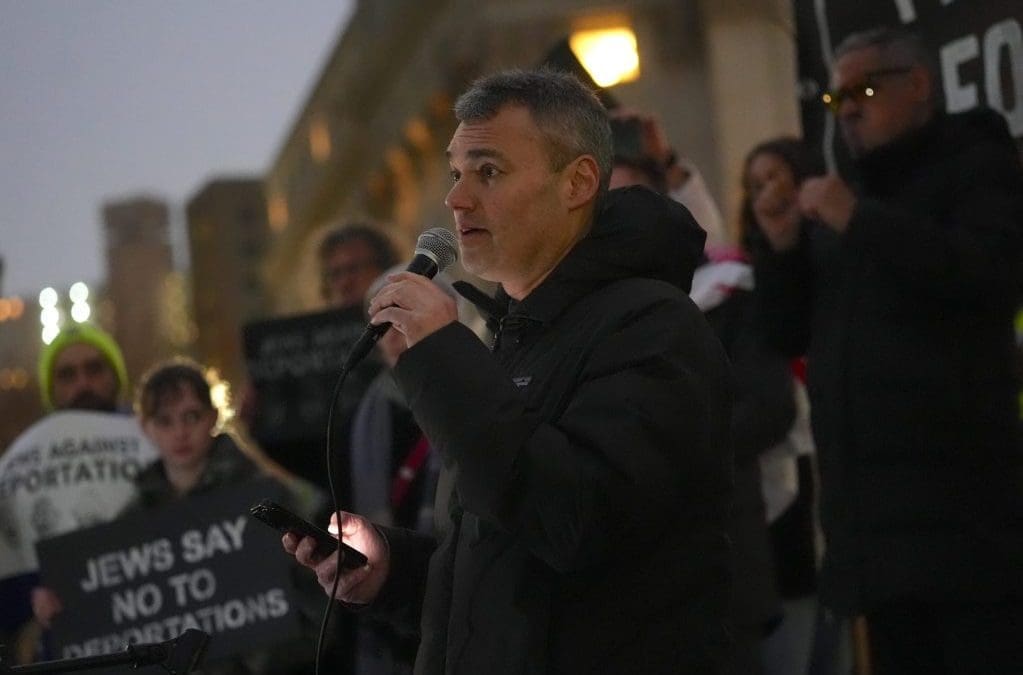
Peter Beinart: What does it mean to be Jewish after the destruction of Gaza?
Amid Israel’s ongoing destruction of Gaza, its illegal annexation of land in the Occupied West Bank, and belligerent warmaking in Iran and Lebanon, antisemitism around the globe is rising—but so is an international chorus of anti-Zionist Jews speaking out against Israel’s crimes. In this episode of The Marc Steiner Show, Marc speaks with renowned author and commentator Peter Beinart about his new book, Being Jewish After the Destruction of Gaza, and about the “civil war” within the Jewish world over Israel.
Guests:
Peter Beinart is a renowned author, professor, and analyst whose commentary regularly appears in The New York Times and MSNBC. Beinart is a professor of journalism and political science at the Craig Newmark Graduate School of Journalism at CUNY, and he is the editor at large of Jewish Currents. Beinart is the author of numerous books, including his most recent work, Being Jewish After the Destruction of Gaza: A Reckoning. He lives with his family in New York City and writes regularly for his Substack, The Beinart Notebook.
Credits:
Producer: Rosette Sewali
Studio Production: David Hebden
Audio Post-Production: Stephen Frank
Transcript
The following is a rushed transcript and may contain errors. A proofread version will be made available as soon as possible.
Marc Steiner:
Welcome to the Marc Steiner Show here on The Real News. I’m Marc Steiner. It’s great to have you all with us. And once again, we’re joined by Peter Beinart. He’s jumped with an incredible writing recently. He’s the 2026 Pan America Literary Award for nonfiction, his atest book being Jewish after the discussion of Gaza, a reckoning, which I encourage everyone to read and wrestle with. He’s a professor of journalism, political science
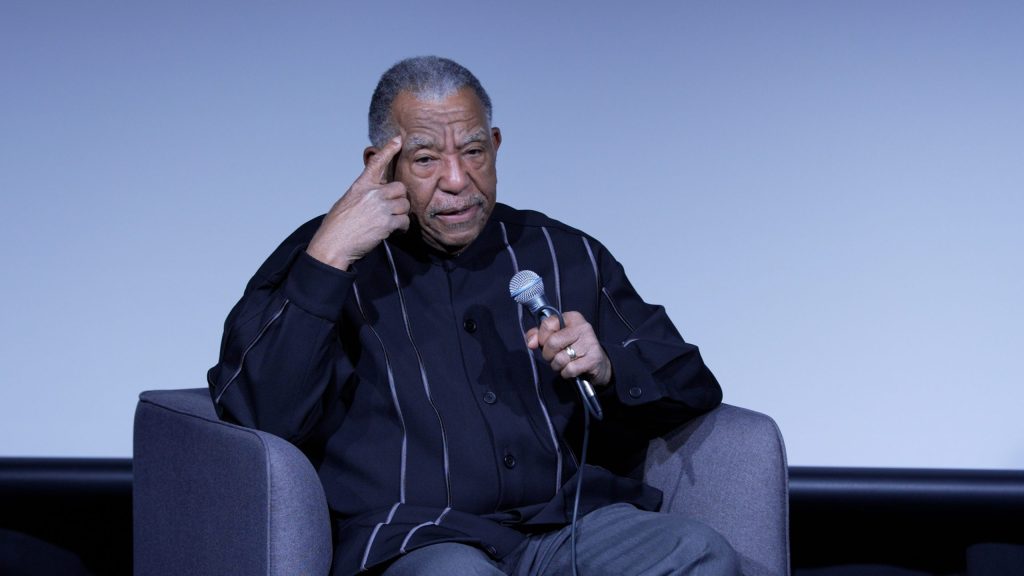
Do books have a future? Do we have a future without them? A conversation with radical publisher Paul Coates
From the dawn of the digital age to the current era of “artificial intelligence,” the future of literacy, reading, and book publishing is facing an existential threat. But Paul Coates—legendary activist, publisher, former Baltimore Black Panther Party member, and founder of Black Classic Press—has some critical wisdom to share in these perilous times about the revolutionary necessity of books. At a live event organized by Tubman House and Eddie’s Front Porch and recorded at the TRNN studio in Baltimore, MD, on March 6, 2026, community organizer and creator of Healing Justices Erica Woodland sits down with Coates for a wide-ranging discussion about propaganda, publishing, Black literary production, and the past and present of revolutionary politics.
Guests:
W. Paul Coates is the founder of Black Classic Press and BCP Digital Printing. Black Classic Press, established in 1978, specializes in republishing obscure and significant works by and about people of African descent. A former member of the Black Panther Party, Coates led the effort to establish the Black Panther Archives at Howard University.
Credits:
Producer / Editor: Cameron Granadino
Videographer: Phil Glaser
Transcript
The following is a rushed transcript and may contain errors. A proofread version will be made available as soon as possible.
Maximillian Alvarez:
Thank you all so much for being here. I am Maximillian Alvarez. I’m the editor in chief and co-executive director of the Real News Network and on behalf of our whole team, many of which are here over there in the back room or the back table. We just wanted to welcome you all here to the Real News Network Studio. Thank you so much for being here. Nuestra Casa Esu Casa. And we are