by Maximillian Alvarez | Jun 18, 2026 | big tech, Fascism, labor, Podcast, Politics and Movements: US, Working People
Transcript
The following is a rushed transcript and may contain errors. It will be updated as soon as possible.
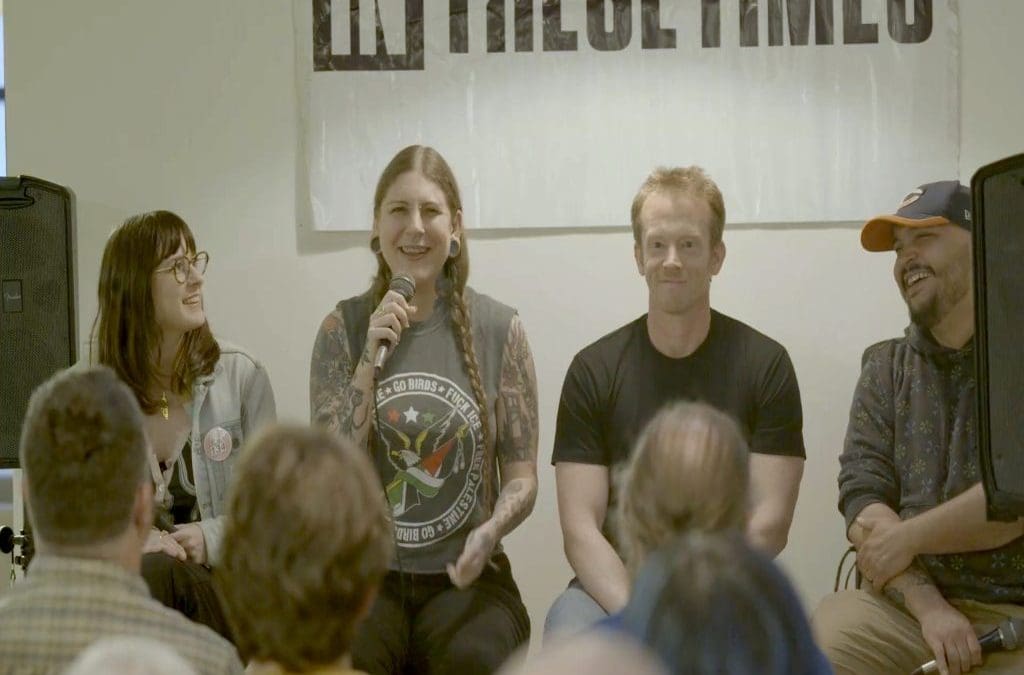
Maximillian Alvarez:All right, well welcome Chicago to this live edition of Working People, a podcast about the lives, jobs, dreams, and struggles of the working class today, brought to you in partnership with the Real News Network and in these Times Magazine, let’s give it up for in these times. And we are of course sitting here in the historic in these times building where so many incredible labor reporters have done so much important work, history shaping work over the decades. And I have the honor of sitting next to people who are doing just that now. And I want to ask everyone to give them a big round of applause as I introduce them because for everyone listening, we got here to my right the OG labor journalist, the guy who yells at all of us when we’re being too soft about how hard it is today. Hamilton Nolan, everybody, give it up for Hamilton.Go get Hamilton’s book, The Hammer. It’s incredible. Speaking of incredible books, Sister Kim Kelly has an incredible book called Fight Like Hell: The Untold History of American Labor. You know her, you love her. You’ve read her in Team Vogue. You’ve seen her on More Perfect Union in the Real News Network. Everyone give it up for Kim Kelly. And here at the end of our incredible panel, we have the one, the only Alex Press of Jacobin and so much more. She’s not only an incredible trailblazing writer, labor reporter, analyst of our political moment,
by Mansa Musa | Jun 17, 2026 | Fascism, history, Politics and Movements: International, Politics and Movements: US, Rattling the Bars, Trump, video
In Part 2 of a conversation between Mansa Musa (former political prisoner and Black Panther) and Alberto Toscano (professor of critical theory and author of Late Fascism), the two discuss how consent and coercion operate within US civil society and abroad. They specifically unpack how Donald Trump’s domestic and foreign platforms animate white nationalism—relying on the explicit promise of state violence against targeted populations.
Guests:
Alberto Toscano is a renowned Italian cultural critic, social theorist, philosopher, translator, and adjunct professor at the Simon Fraser University School of Communication. Toscano is a columnist at In These Times and the (co-)author of numerous books, including: Late Fascism: Race, Capitalism and the Politics of Crisis; and Fanaticism: On the Uses of an Idea.
Credits:
Producer / Videographer / Editor: Cameron Granadino
Transcript
The following rushed transcript may contain errors. It will be updated as soon as possible.
Mansa Musa:
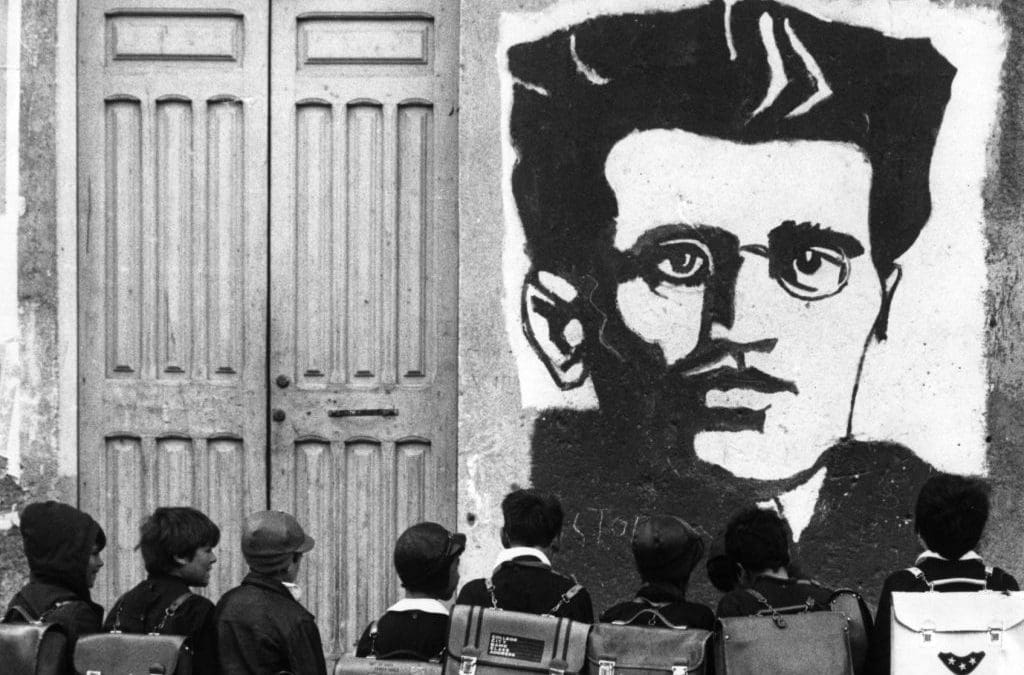
Gramsci wrote about consent and coercion. Talk about the difference when it comes to a targeted population of prisons and policing.
Alberto Toscano:
Yeah. So that relationship between consent and coercion or in Gramsci’s terms also hegemony and domination or consent and force is really crucial. Gramsci was enough of a realist about politics. After all, he was also a very brilliant reader of Machiavelli that he never thought that force or coercion could be eliminated from politics altogether, but he was very interested in looking both at the past and the present to think about the mix of force and coercion, hegemony and consent. That’s also why he was so interested in the question of policing and of how to conceive of the police. And on could argue that the expansion of repression and incarceration is always a
by Andrew Lee | Jun 15, 2026 | affordability, Climate Crisis, Environmental Justice, EPA, Fascism, Hunger Strike, ICE, Militarism, Op-Ed, Organizing, Palestine, Philadelphia, Sunrise Movement
On May 21, activists with the Philadelphia chapter of the youth-led environmental justice group Sunrise Movement began a protracted hunger strike, vowing to starve themselves until Mayor Cherelle Parker committed to spending an extraordinary $1.19 billion municipal budget surplus on community programs. They were demanding investments in renewable energy alongside demands not traditionally…
Source
by Brad Reed | Jun 15, 2026 | Article, Fascism, ICE, Minneapolis, Politics and Movements: US, Prisons and Policing, Reprint
This story originally appeared in Common Dreams on June 15, 2026. It is shared here under a Creative Commons (CC BY-NC-ND 3.0) license.
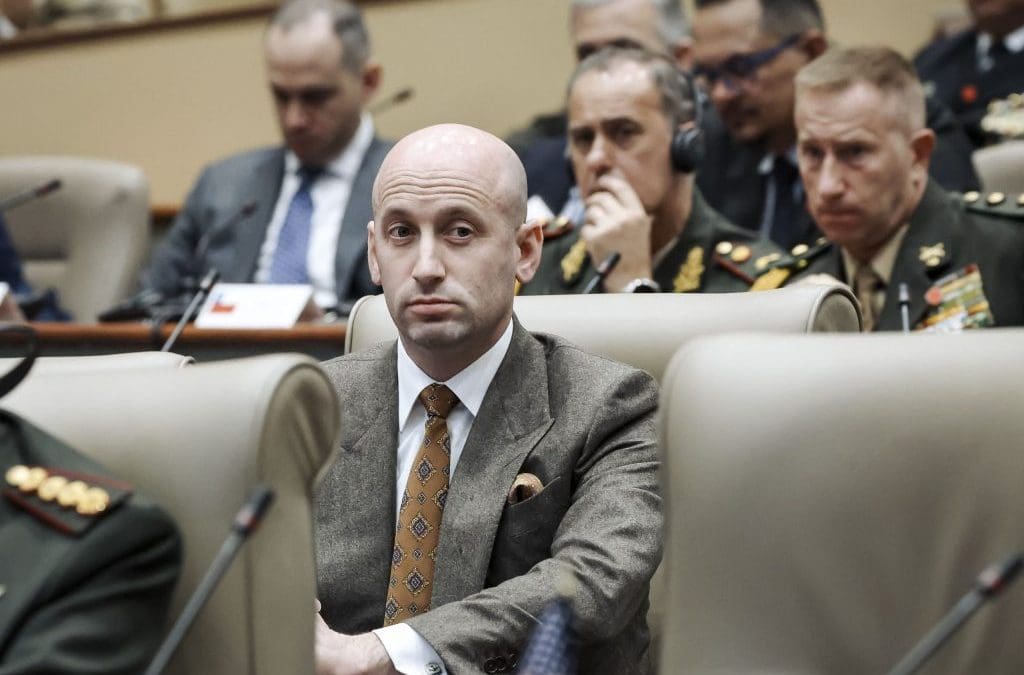
A Monday report in The New York Times revealed what it described as the “alarm” felt by some White House lawyers at proposals made earlier this year by Vice President JD Vance and Trump adviser Stephen Miller as the administration was forced to contend with widespread anger over its anti-immigration agenda.
Among other things, the Times reported that Vance pushed for President Donald Trump to invoke the Insurrection Act, which would allow for the US military to be deployed on American streets, in an effort to shut down mass protests in Minnesota against federal immigration enforcement operations in the state.
A few days after US Immigration and Customs Enforcement (ICE) officers fatally shot demonstrator Alex Pretti in the streets of Minneapolis, the Times reported that Vance—who had also elevated a baseless claim by Miller that Pretti had been a “would-be assassin”—said invoking the Insurrection Act was necessary “to crush the unrest in Minnesota.”
Vance also believed invoking the law would send a “message” that “paid agitators could not get away with disrupting ICE operations”—even though, as the Times noted, there is no evidence that Pretti; demonstrator Renee Good, who was also killed by federal agents; or any other organizers in Minnesota or elsewhere received any money in exchange for protesting.
However, right-wing attorney Will Scharf quickly shot down Vance’s suggestion, noting that the Insurrection Act is an instrument aimed at putting down armed rebellions rather than groups of citizens blowing whistles at ICE officers.
Former White House Deputy Chief of Staff James Blair then made the political case against invoking the Insurrection Act.
“The scenes of federal agents in Minnesota already looked chaotic, he said, and the public was recoiling,” reported the
by Kelly Hayes | May 28, 2026 | CoreCivic, Donald Trump, Fascism, ICE, immigration, immigration jails, Interview, Organizing, Podcast
“The immigration camp, it really depends on a lot of local infrastructure. It is not this untouchable federal abstraction. It is up to us, neighbors, community members, and we have the actual power to shut them down,” says journalist John Washington. In this episode of Movement Memos, Washington joins host Kelly Hayes to discuss his book How to Close a Camp: Dispatches from the Fight Against…
Source
by Mansa Musa | May 27, 2026 | Democratic Party, Fascism, Politics and Movements: US, Rattling the Bars, video
In 2026, fascism in the US is rising while “the left” descends further into powerlessness, goofiness, and irrelevance—but, author William C. Anderson argues, it doesn’t have to stay that way. In this episode of Rattling the Bars, Anderson returns to the show for an unflinching conversation with former political prisoner and host Mansa Musa about the state of the political left today and the lessons organizers and everyday people can learn from the Black Liberation Movement and figures like the late Russell Maroon Shoatz.
Editor’s Note: This conversation was recorded on May 1, 2026.
Guests:
William C. Anderson is a writer and activist from Birmingham, AL. His work has appeared in outlets ranging from The Guardian, MTV, Truthout, British Journal of Photography, to Pitchfork. He is the author of The Nation on No Map: Black Anarchism and Abolition, and co-author of As Black as Resistance: Finding the Conditions for Liberation. He’s also the co-founder of Offshoot Journal and provides creative direction as a producer of the Black Autonomy Podcast.
Additional links/info:
William C. Anderson, Prism / TRNN, “Another Way Out: We need a mosaic movement, not fragmented ‘leftism’”
Credits:
Producer / Videographer / Editor: Cameron Granadino
Transcript
The following is a rushed transcript and may contain errors. A proofread version will be made available as soon as possible.
Mansa Musa:
Joining us today again is William C. Anderson, author and columnist of Prism. If you missed our first conversation where we explore how Black citizenship has historically been called into question, you can find it on our YouTube channel. The history feels especially urgent this week following the United States Supreme Court’s ruling gutting the Voting Rights Act. This is clearly