

We ask five musicians: Can anyone ‘make it’ in today’s music industry?
https://rss.libsyn.com/shows/126614/destinations/757400.xml
The 20th-century days of vinyl records, tape decks, CDs, Tower Records, and MTV have given way to our 21st-century age of MP3s and music streaming, Spotify, Amazon, YouTube, TikTok, and Ticketmaster. While certain people and certain companies in the music industry are making more money than ever, working musicians are finding it increasingly impossible to pay the bills and make a living from their art. In this episode of Working People, we speak with all four members of veteran Chicago rock band The Empty Pockets about the work that goes into being a professional musician, and the realities of working and trying to make a living in the music industry today.
Additional links/info:
The Empty Pockets website, Facebook page, Instagram, YouTube channel, and Spotify channel
Josh Solomon, Hypebot, “We stopped waiting to be chosen and mailed 100,000 CDs instead”
Jules Taylor Music website, Facebook page, Instagram, and Spotify channel
Featured Music:
Jules Taylor, Working People Theme Song
Credits:
Audio Post-Production: Jules Taylor
Transcript
The following is a rushed transcript and may contain errors. It will be updated.
Maximillian Alvarez:
Alright. Welcome everyone to Working People, a podcast about the lives, jobs, dreams, and struggles of the working class today. My name is Maximillian Alvarez.
Jules Taylor:
And I’m Jules Taylor.
Maximillian Alvarez:
So you guys all know Jules as the producer of this podcast, but let me tell you something about brother Jules here. Jules is a renaissance man. He is a podcaster himself, as many of you know. He’s a writer, a music producer, a poet, and a brilliant musician in his own right. And he does all the music for working people as well. And that’s why I really, really wanted us to host
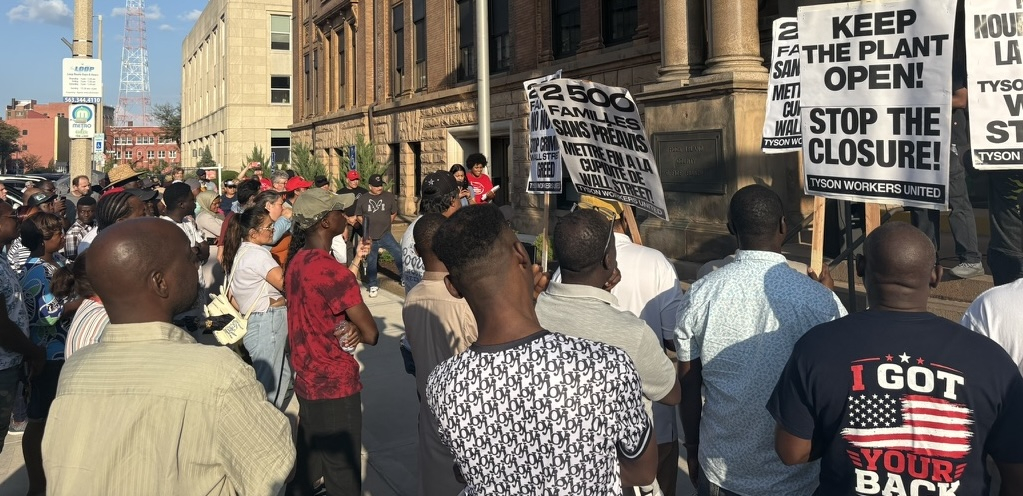
‘Treated worse than cattle’: 2,500 Tyson workers laid off, plant shutters overnight
This story originally appeared in Labor Notes on Sept. 01, 2026. It is shared here with permission.
Ouano Tante worked the afternoon shift at the Tyson beef plant in Joslin, Illinois, for five years. But when she and hundreds of her co-workers arrived at work on August 13, they found the plant closed.
They speculated that someone on the morning shift might have gotten injured. Then two mid-level supervisors came outside in tears. Plant supervisors told workers the plant was closing permanently, effective immediately.
Inside, the early-morning shift had just ended when the workers were informed it would be their last. The cafeteria erupted into chaos. Plant supervisors stood guard by the doors, workers said, while everyone received their closure paperwork.
“People were crying, shaking,” Tante said. “When we were leaving the parking lot, there were so many car accidents. People were so upset.”
“They gave no reason, nothing,” said Ahoro Asselissime. “People have no job. No money to pay our bills. For 11 years, I made money for them. And now they’re not doing anything for me.”
DISASTER FOR COMMUNITY
Joslin is home to just 56 residents. But 2,500 workers from Africa, Latin America, and Burma toiled at the meatpacking plant there, butchering cattle for Tyson, one of the world’s largest meatpacking companies. The workers were represented by Food and Commercial Workers (UFCW) Local 1546.
Most of the workers live in the Quad Cities, clustered around the Illinois-Iowa border 160 miles west of Chicago. Everyone there knows someone who works at Tyson, the area’s ninth-largest employer. The closure announcement sent the community into a tailspin.
Tante, originally from Togo, had the job of determining the age of cattle by
Why the stories working people tell ourselves about ourselves matter
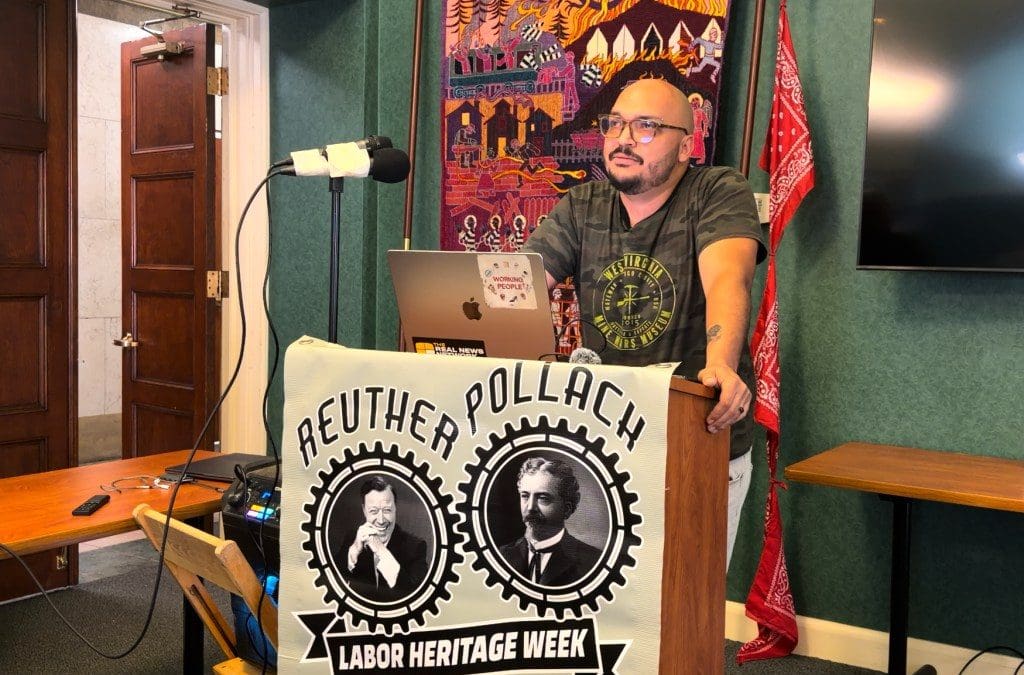
Over the 2026 Labor Day weekend, I had the honor of speaking at the Reuther-Pollack Labor History Symposium in Wheeling, West Virginia, organized by the Wheeling Academy of Law & Science (WALS) Foundation. The symposium takes place in Wheeling every year and adopts a different theme each year; this year, the theme was “The Art of Labor.” I got to represent TRNN and speak alongside a truly incredible lineup of artists and working-class warriors, including: Tabitha Arnold, the great textile artist and tapestry maker; Erik Ruin, printmaker and shadow puppeteer; and Shaun Slifer, a multidisciplinary artist and the Creative Director for the West Virginia Mine Wars Museum.
The text below is a transcript of the talk I gave at this year’s Symposium, which has been lightly edited for clarity and readability. You can also listen to the audio recording of my speech on The Real News Network podcast feed.
https://www.spreaker.com/show/2952221/episodes/feed
Thank you. It is genuinely an honor to be here on these hallowed grounds with all of you in Wheeling, West Virginia. It really, really means a lot to me to be here with all of you.
I also have to say: I really appreciate it when Vince or anyone else tells me that that first-ever Working People interview I recorded with my dad, Jesus Alvarez, meant something to them—because it meant everything to me. It started everything.
I didn’t start out to become a labor journalist or to do the kinds of interviews I do with working people. I didn’t set out to make a life reporting on working-class struggles from working-class areas around the country, on the front lines of a class war

What Trump’s new obsession with small-dollar fraud reveals
President Donald Trump always seems to be cooking up some new scheme to profit off the presidency. And yet his administration is escalating its efforts to crack down on suspected small-scale fraud involving government-funded programs. Trump’s inordinate focus on relatively minor offenses should be understood as a bid to vilify programs meant to help vulnerable people. It also serves as a tool to distract from the misbehavior of him and his cronies.
The New York Times pointed out the Justice Department’s new and unusual focus on small-dollar fraud. A food truck in Santa Ana, California, caught prosecutors’ attention because of a suspiciously large proportion of transactions using Supplemental Nutrition Assistance Program cards. A cashier at a Los Angeles grocery store was accused of accepting about $10,000 worth of SNAP (food stamps) cards as payment and giving undercover federal immigration officers cash for them.
Trump himself is exploiting the extraordinary power of the presidency in ways that constitute a defrauding of the public.
These are striking low-level cases for federal law enforcement. As the Times notes, federal prosecutors have “generally observed minimum-dollar thresholds in fraud cases, and in many U.S. attorney’s offices in large cities, “the threshold sits around half a million dollars.” Jacqueline Kelly, a former federal prosecutor, told the Times that a food truck “is not the kind of case you would typically see federal law enforcement resources being poured into.” Such cases are typically handled by state or local officials.
One thing that stands out about these cases, beyond how relatively minor they seem, is that they involve people allegedly misusing SNAP benefits. Fraud using SNAP benefits is rare. But in the
Layoffs, long waits, obscene prices: How corporate administrators mismanaged Vermont’s flagship health network into a historic crisis
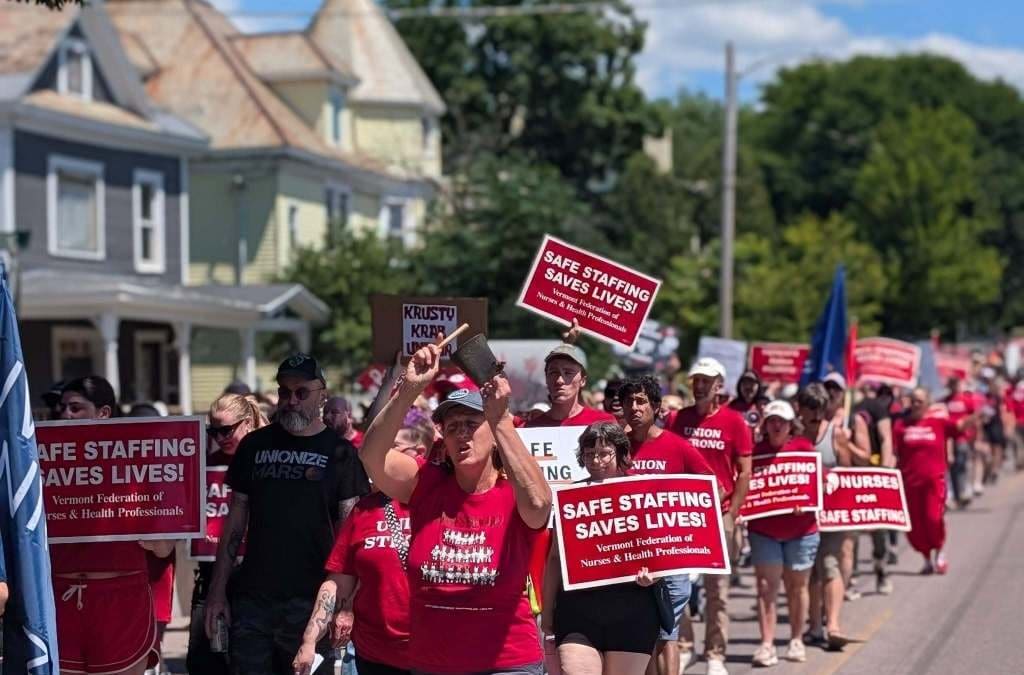
Frontline healthcare workers and the patients they serve are facing a major crisis at the University of Vermont Health network—the state’s leading healthcare provider. “In June, UVM Health eliminated over 140 positions across its network, a third of which were union positions,” Matt More reports at The Rake Vermont. “The cuts, which the hospital estimated will save $9.5 million, comes as the network faces a $300 million budget shortfall… Later that month, UVM Health handed down a speed-up order to its Medical Group, which includes outpatient clinics and more than 1,000 physicians, which practitioners say will result in briefer appointments with patients.”
How did Vermont’s flagship health network end up in this crisis? How is it affecting healthcare workers and their patients? And what can be done to fix it? In this episode of Working People, we speak with Melissa Lavallee, secretary of UVMMC Support Staff United and VP of healthcare for AFT-Vermont; and Teagan Cook, lead outpatient chemotherapy scheduler at her hospital and a chief steward in UVMMC Support Staff United.
Additional links/info:
UVMMC Support Staff Unitedwebsite, Facebook page, and Instagram
AFT-Vermont website, Facebook page, and Instagram
Matt Moore, The Rake Vermont, “UVM Health’s unions fight hospital cuts to protect their patients’ healthcare and their working conditions”
Town Meeting TV, “Put workers and patients first! – Solidarity town hall meeting with UVM Medical Center unions”
Olivia Gieger, VT Digger, “UVM Health cuts 142 jobs — an estimated $9.5 million in staff positions”
Featured Music:
Jules Taylor, Working People Theme Song
Credits:
Audio Post-Production: Jules Taylor
Transcript
Maximillian Alvarez:
Alright. Welcome everyone to Working People, a podcast about the lives, jobs, dreams, and struggles of the working class today. Working People is a proud