by Taya Graham and Stephen Janis | Oct 31, 2025 | Article, Democrats, Economy, Economy and Inequality, Inequality, Inequality Watch, Politics and Movements: US, Republicans
There’s a popular and recurring chant that echoed throughout the recent No Kings protests several weeks ago: “This is what democracy looks like.”
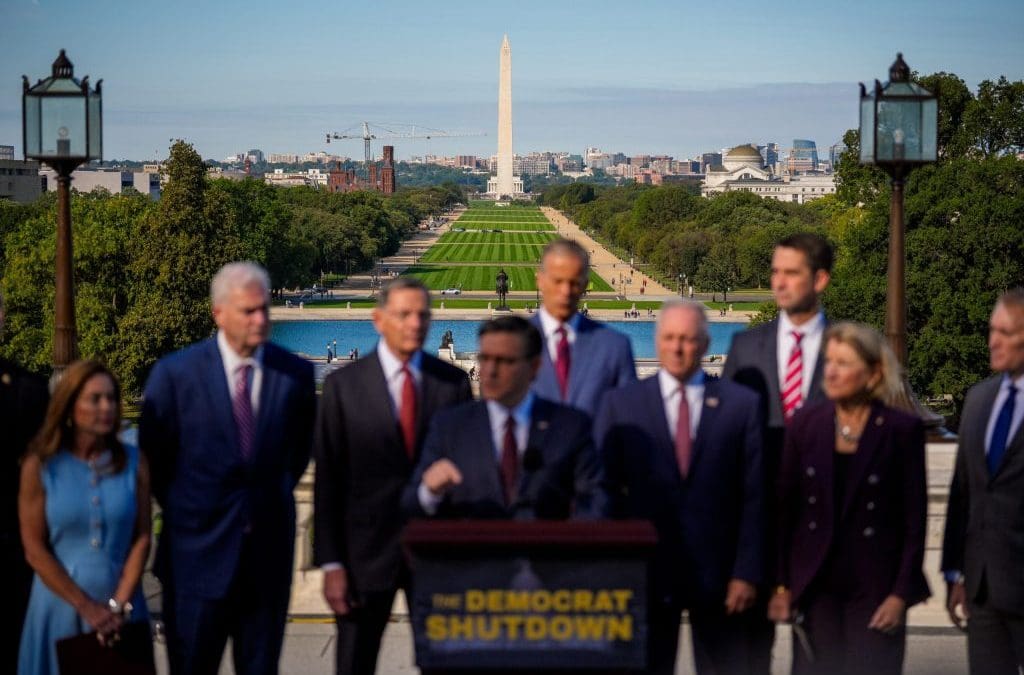
But on Capitol Hill over the past four weeks, during a protracted government shutdown, Republicans have been displaying the opposite.
The quiet, moribund center of American government looks anything but like a democracy. The deserted hallways and empty offices portend something radically different: a future where the messy work of legislating on behalf of the public is replaced by the whims of a ruling oligarchy.
In other words, Republicans are showing us what autocracy looks like.
To understand why, and the implications for the body politic, it’s critical to recount how their handling of the ongoing shutdown has been remarkably anti-democratic.
It began when Democrats refused to vote for a continuing resolution to fund the government last month. Democrats wanted Republicans to reauthorize expiring Obamacare tax credits, subsidies enacted during the pandemic to make insurance premiums more affordable for millions of Americans. Republicans allowed them to lapse in the so-called “Big Beautiful Bill.”
Democrats have called the end of these credits a crisis. The Congressional Budget Office estimates that 2.2 million people will lose health insurance if the subsidies aren’t renewed.
But instead of getting to work and negotiating, House Speaker Mike Johnson sent the entire legislative body home. It was not just an impractical move; it made the possibility of brokering any kind of deal exponentially more difficult.
Importantly, many of Johnson’s own constituents depend on the very programs his party has refused to fund. His district has one of the highest percentage of Medicaid recipients for a Republican controlled district in the country.
by Sharon Zhang | Oct 31, 2025 | Article, Economy and Inequality, Politics and Movements: International, Reprint, Sudan
by D Watkins | Oct 30, 2025 | Article, baltimore, Prison Industrial Complex, prison reform, Prisons and Policing, Reprint, The Cultural Front
This story originally appeared in Baltimore Beat on Oct. 28, 2025. It is shared here with permission.
Poet, actor, and playwright Liza Jessie Peterson is bringing her one-woman play “The Peculiar Patriot” to Baltimore Center Stage. The Philly native believes it’s the right place and the right time for this story.
“There’s an energy here that just feels familiar, like home,” Peterson said. “I love bringing this piece here because I know that it’s a Black Mecca. The play speaks to our people in a real way. I’m excited to see how Baltimore is going to receive it.”
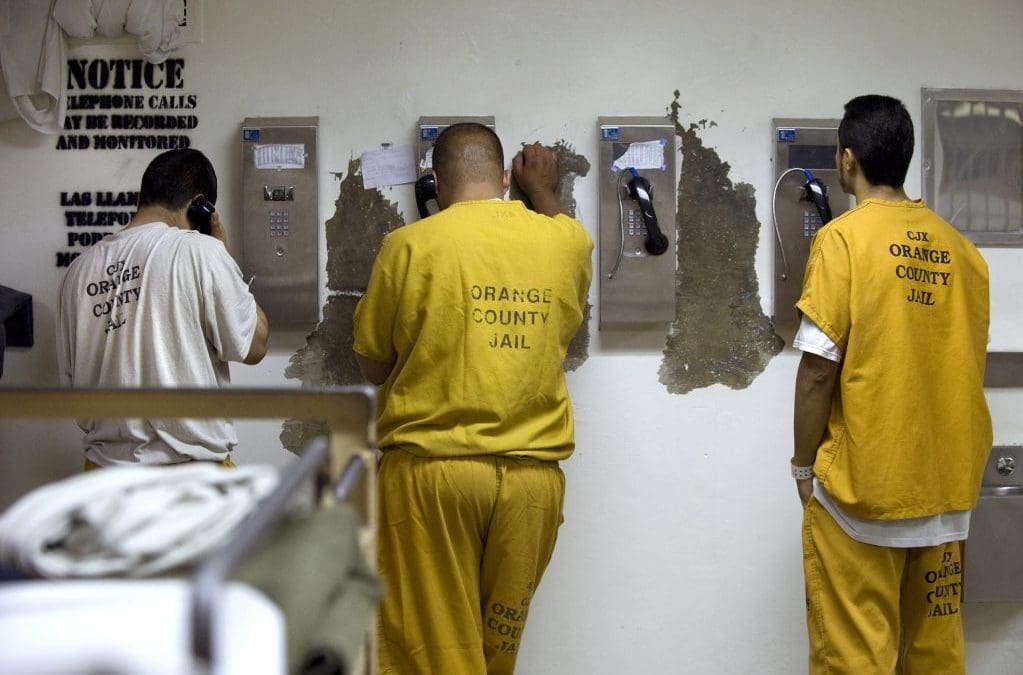
“The Peculiar Patriot” taps into the deep humanity that exists within the confines of mass incarceration. In it, Peterson portrays Betsy Laquanda Ross, who regularly visits her incarcerated best friend Joanne. The play takes place over a series of wild conversations between the women. Ross keeps her friend updated about what’s happening in the neighborhood, her own life, and in the outside world. The play is inspired by the 20 years Peterson spent working with teens at New York’s notorious Rikers Island.
Liza Jessie Peterson Credit: Devin Allen.
At Rikers, Peterson served as a poetry and GED teacher, program counselor, and re-entry specialist. Her time at Rikers not only taught her about the evils of the prison industrial complex, and the great capacity all people have for change — but it served as a creative catalyst. Out of it came a memoir, “All Day,” which Peterson published in 2017. She also wrote monologues that later evolved into this play.Peterson originally intended to debut the play off-Broadway, but like many Black artists who dare to aim mirrors at
by Jake Johnson | Oct 30, 2025 | Article, Politics and Movements: US, Prison Industrial Complex, prison reform, Prisons and Policing, Reprint
by Stephen Prager | Oct 28, 2025 | Article, ICE, Politics and Movements: US, Prisons and Policing, Reprint, Trump
This story originally appeared in Common Dreams on Oct. 28, 2025. It is shared here under a Creative Commons (CC BY-NC-ND 3.0) license.
In an effort to further ratchet up its already brutal and indiscriminate mass deportation campaign, the Trump administration has begun a sweeping purge of Immigration and Customs Enforcement leadership across US cities. The agency’s leaders are expected to be replaced with even more aggressive officials from the Border Patrol and Customs and Border Protection.
In what was dubbed a “midnight massacre,” the Washington Examiner reported that over the weekend, the Department of Homeland Security (DHS) quietly relieved the ICE field office directors in five US cities—Denver, Los Angeles, Philadelphia, Phoenix, and San Diego—of their duties.
It is expected to be just the beginning of a broader overhaul, carried out “in hopes of netting more arrests and ratcheting up its flashy, high-profile deportation campaign.” Fox News national correspondent Bill Melugin later reported that up to 12 of the agency’s 24 regional directors may be replaced, including those in El Paso, Seattle, Portland, and New Orleans.
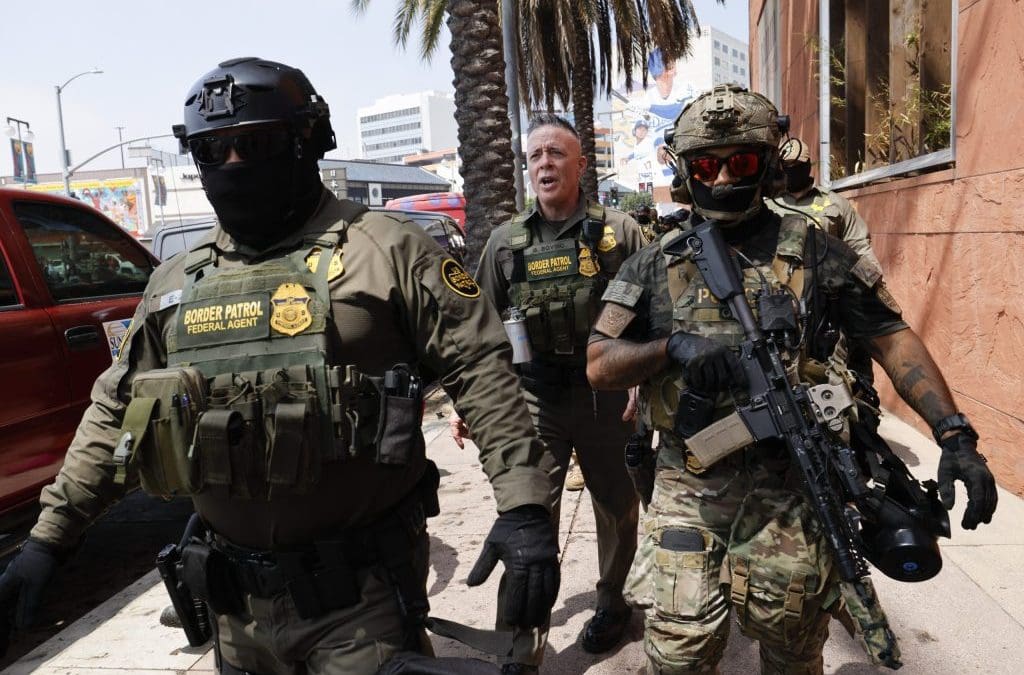
The replacements are expected to come from the ranks of the US Border Patrol, which—to an even greater extent than ICE—has carried out indiscriminate mass arrests of immigrants, regardless of whether they have criminal records.
Many of the replacements are expected to be handpicked by Gregory Bovino, the Border Patrol commander currently leading President Donald Trump’s “Operation Midway Blitz” in Chicago, where he’s faced widespread criticism for his ruthless tactics against protesters and for his apparent authorization of explicit racial profiling when carrying out arrests.
Under his watch, federal immigration enforcement carried out the infamous overnight raid on a South Shore apartment building earlier this month in which agents rappelled from Black Hawk helicopters and indiscriminately broke down residents’ doors, smashed furniture and belongings, and dragged dozens
by Julia Conley | Oct 21, 2025 | Article, Economy, Economy and Inequality, ICE, Politics and Movements: US, Reprint, Trump
This story originally appeared in Common Dreams on Oct. 20, 2025. It is shared here under a Creative Commons (CC BY-NC-ND 3.0) license.
The $170 billion in new funding for immigration enforcement operations that the Republican Party included in the One Big Beautiful Bill Act earlier this year led some to warn that the Trump administration was ramping up spending at anti-immigration agencies not just to fund its attacks on migrants, but to deploy federal forces against anyone it wanted to across US communities.
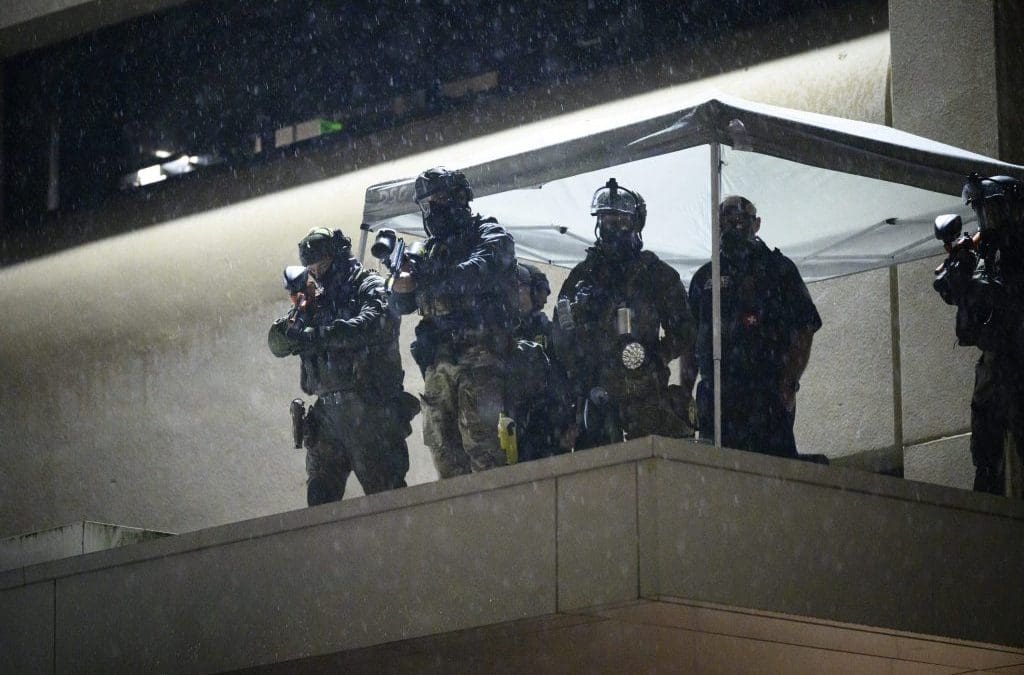
New reporting on Monday detailed just how much US Immigration and Customs Enforcement has spent on weaponry since President Donald Trump took office—weapons that have been purchased as the administration has turned federal agents on US cities such as Chicago and Portland, illustrating how the president is treating increasingly armed ICE officers as his “private military,” as one progressive critic said.
As images spread online of immigration agents deploying pepper spray and tear gas at nonviolent protesters, Judd Legum at Popular Information recently delved into government contracting records from the Federal Procurement Data System and found that ICE has increased its spending on “small arms, ordnance, and ordnance accessories manufacturing” by 700% this year compared to 2024 numbers.
The agency spent $71,515,762 on small arms from January 20—the day Trump began his second term—through October 18.
The number dwarfs ICE’s spending during the first Trump term, during which the agency spent about $8.4 million annually on small arms, and during President Joe Biden’s administration.
The type of weaponry purchased by ICE also raised alarm Monday, with Legum reporting that while most of the agency’s spending was on guns and armor, “there have also been significant purchases of chemical weapons and ‘guided missile warheads and explosive components.’”
“If the immigration enforcement apparatus of the United States were its own national military,