by Petala Ironcloud | Nov 2, 2026 | AI, Article, Climate, Climate Crisis, Politics and Movements: US, Reprint
This article was originally published by Truthout on Oct. 26, 2026. It is shared here under a Creative Commons (CC BY-NC-ND 4.0) license.
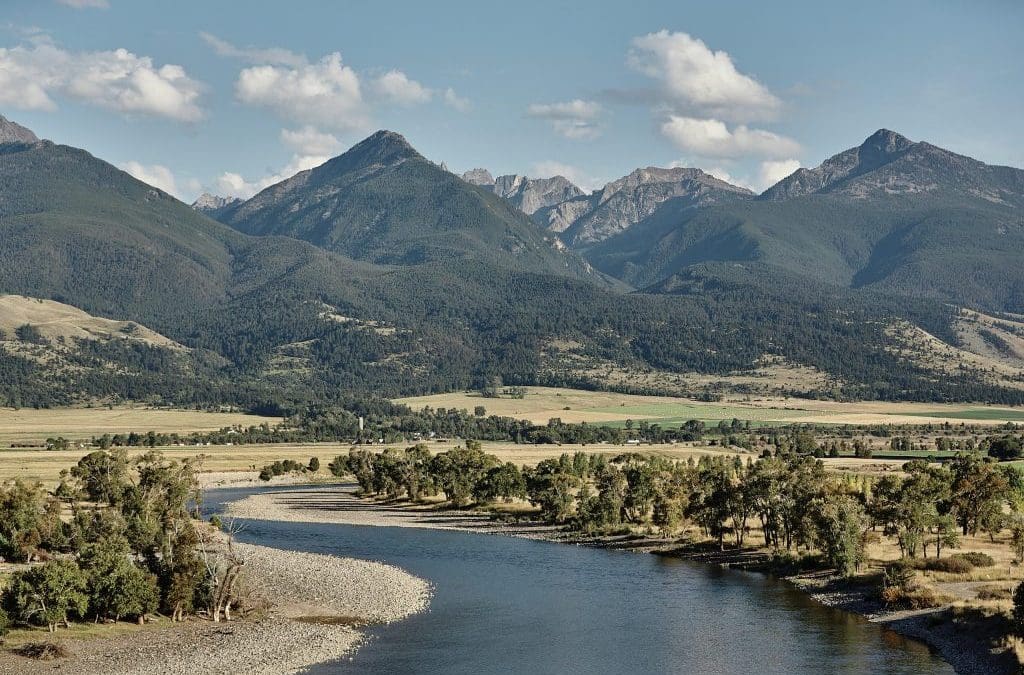
The Northern Cheyenne Tribal Council voted unanimously this October to ban data centers on tribal land in Montana. The ban follows a decision in August by the Fort Peck Tribes to bar officials from projects involving data center developers.
But Montana’s Tribes are now split. Next door to the Northern Cheyenne, the Apsáalooke, or Crow Tribe, has not taken an official position and remains open to hearing proposals from companies, according to Shane Doyle, an Apsáalooke tribal member and The Nature Conservancy’s Indigenous right relations director. Doyle grew up on the Crow Reservation and has consistently advocated for reciprocity with the land, rendering him a voice in the dissent, whether he intends to be or not.
The stakes are highest in Crow country. In the small city of Hardin, at the Crow Indian Reservation’s northern edge, a former cryptocurrency mine is being actively converted into an AI data center. About 14 miles northwest of the reservation, Texas-based Quantica Infrastructure plans to build its Big Sky campus on nearly eight square miles of ranchland near the town of Broadview, north of Billings, Montana’s most populous city. As it’s currently planned, the data center would rank among the largest data centers in the world. The Yellowstone River Valley is “the heart of the Crow Nation,” Doyle said.
Krystal Two Bulls, who is Oglala Lakota and Northern Cheyenne, has been tracking these data centers closely. As the executive director of Honor the Earth, a nonprofit tracking data centers on or near reservation lands, she
by Adam Johnson | Nov 2, 2026 | Article, Iran, Israel, midterms, Politics and Movements: International, Politics and Movements: US, Trump
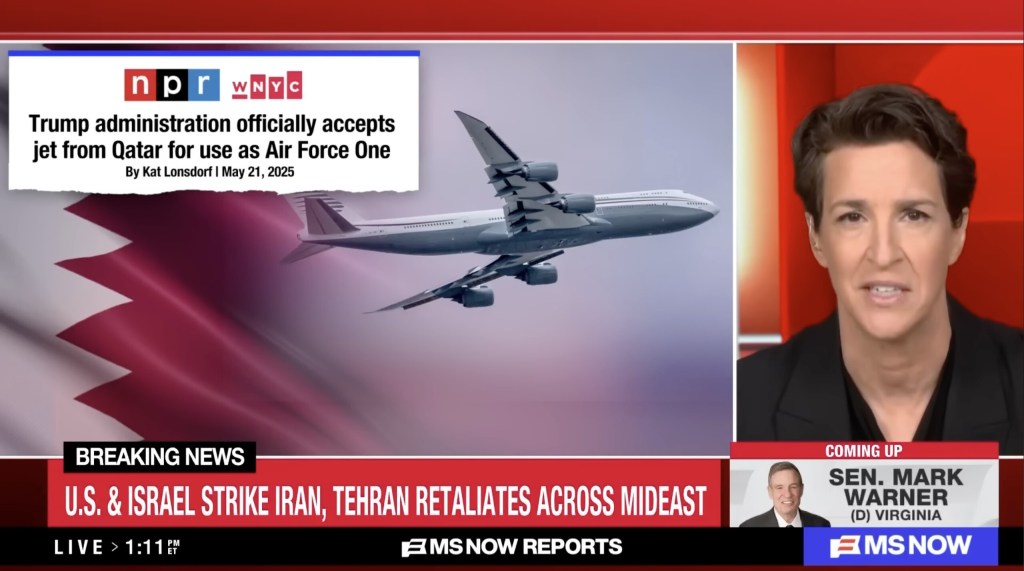
If there’s one story MSNOW’s Rachel Maddow is known for, it’s her tenacious, years-long focus on a broad theory that Trump is a compromised agent of Russian intelligence installed by Russia via a shady patchwork of direct funding, loose connections, opaque meetings, election interference, Facebook ads, innuendo, and genuinely strange behaviors. From 2016 to 2025, Maddow mentioned Russia 6,126 times on her primetime program The Rachel Maddow Show.
This analysis isn’t a commentary on the validity of the “Russiagate” story, as such. I think it was inflated, and served the ends of some of the worst elements in the US security state, but there was certainly an element of truth to it. (Trump is brazenly venal, and would presumably take bribes from anyone). At the same time, the conspiracy mongering veered into Loose Change territory and was, ultimately, contradicted by Trump’s own policies which—while rhetorically critical of Ukraine—have largely continued to arm and support the country in its four-year-and-a-half war against Russia’s aggression.
The state of Israel is running what could very well be construed as GOTV commercials for the Republican Party during an election season.
What’s noteworthy is less that Maddow has covered Trump’s connections with Russia, and the associated seemingly weekly breathless developments. It’s that, over the past two years in particular, she has very conspicuously avoided a major story about another country influencing domestic politics in service of Trump and a pernicious reactionary agenda: that of Israel’s influence over the president, and its broader attempts to influence politics in the US. A report in Zeteo last week details how Israel is directly funding ads in swing states that not only
by Emanuela Godoy | Nov 2, 2026 | Article, bolsonaro, brazil, Politics and Movements: International, Politics and Movements: US, Reprint, Trump
by Julia Conley | Nov 2, 2026 | Article, Economy and Inequality, labor, Politics and Movements: US, Reprint
This story originally appeared in Common Dreams on Oct. 28, 2026. It is shared here under a Creative Commons (CC BY-NC-ND 3.0) license.
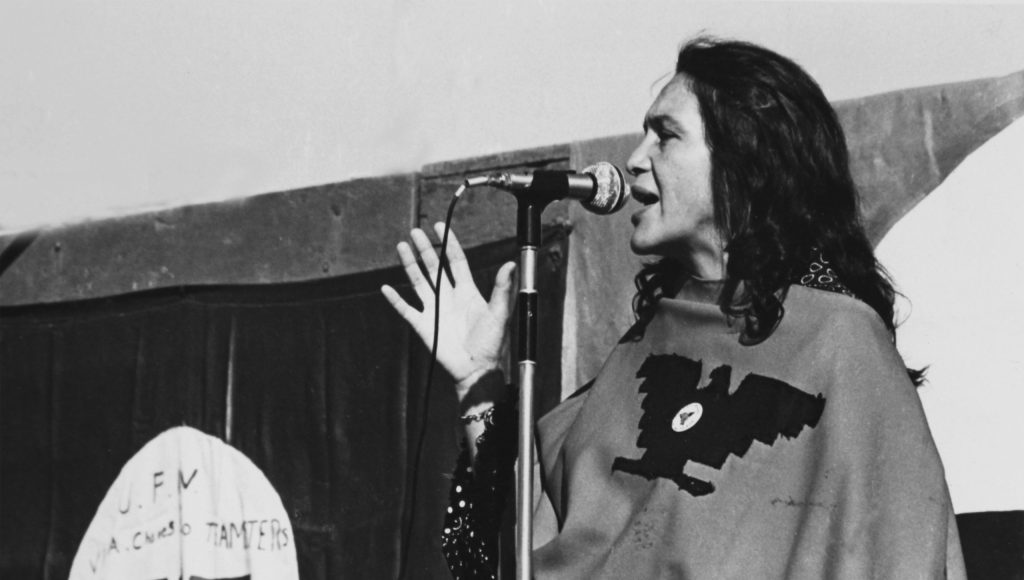
Labor advocates and Democratic lawmakers called on Americans to honor the legacy of the legendary union organizer Dolores Huerta, who died Wednesday at age 96, by “continuing to fight for her dream” of justice for all.
A spokesperson for Huerta’s family said she died of cancer, and her family members said they would share plans “to recognize and celebrate her incredible life and legacy” at a later date.
“We know that many of you around the world share in our mourning,” said her family, including her 13 children who survive her.
Huerta became a hero to workers across the world in the 1960s when she joined Cesar Chavez to establish the National Farm Workers Association, which became known as the United Farm Workers in 1972.
She helped lead a strike by Filipino workers in the grape-growing industry in Southern California, as well as boycotts of companies that paid migrant workers low wages, while exposing them to toxic chemicals and providing no job security.
Huerta faced violence by strikebreakers and police, 22 arrests for her nonviolent protests, and surveillance by the FBI, which suspected her and Chavez of Communist ties—but nevertheless organized one of the most successful produce boycotts in US history in 1968, garnering support from 17 million households and thousands of grocery stores that pledged not to purchase California table grapes due to growers’ abuse of workers.
Dolores Huerta has passed away from cancer at 96. She was a founder of what became the United Farm Workers and an inspiration for generations of organizers.Her courageous
by Theia Chatelle | Nov 2, 2026 | Article, elections, Israel, Palestine, Politics and Movements: International, Reprint
This article was originally published by Truthout on Oct. 28, 2026. It is shared here under a Creative Commons (CC BY-NC-ND 4.0) license.
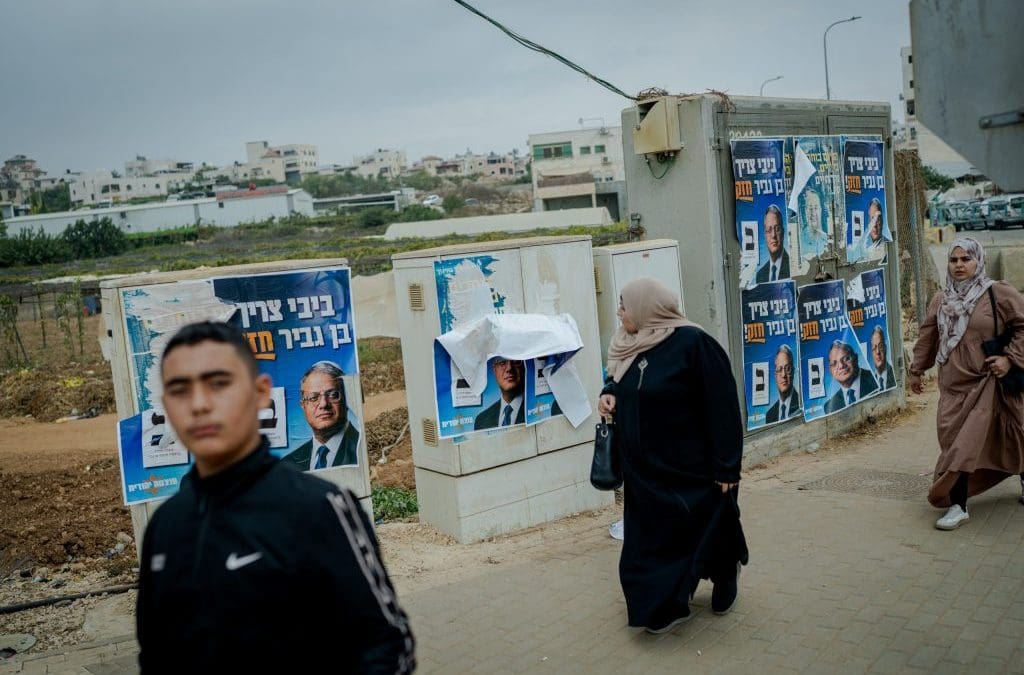
Jaffa, Israel — Outside of Ahva Elementary School in Ajami, a historic Palestinian neighborhood just south of central Tel Aviv, the mood was defiant on October 27, the day of Israel’s national elections. “We fear that if we do not get this government out of power, we will lose everything,” one Palestinian voter told me after casting her ballot.
It came as no surprise that she, like most of the Palestinian citizens of Israel I interviewed on Election Day, asked not to be named. Since October 7, 2023, more than 400 Palestinian citizens of Israel have been investigated by police for “incitement,” often over social media posts, according to the legal rights group Adalah.
During the 1948 war, which Palestinians call the Nakba, most of Jaffa’s nearly 100,000 Palestinian residents fled or were expelled. The fewer than 4,000 who remained were concentrated in Ajami, fenced in with barbed wire, where they lived under Israeli military rule until 1949.
Just weeks ago, it was not clear that the parties most Palestinian citizens of Israel vote for would even appear on the ballot. In September, Israel’s Central Elections Committee, a body of party representatives, voted to disqualify both Arab parties — which are led by and draw most of their votes from Palestinian citizens of Israel — from running in the election. The Joint List is an alliance of three parties running together to clear the 3.25 percent threshold needed to enter the Knesset.
Hadash, a left-wing party with roots in Israel’s Communist Party,
by Jake Johnson | Nov 2, 2026 | Article, Economy and Inequality, Gaza, labor, Politics and Movements: International, Reprint, Unions
This story originally appeared in Common Dreams on Oct. 30, 2026. It is shared here under a Creative Commons (CC BY-NC-ND 3.0) license.
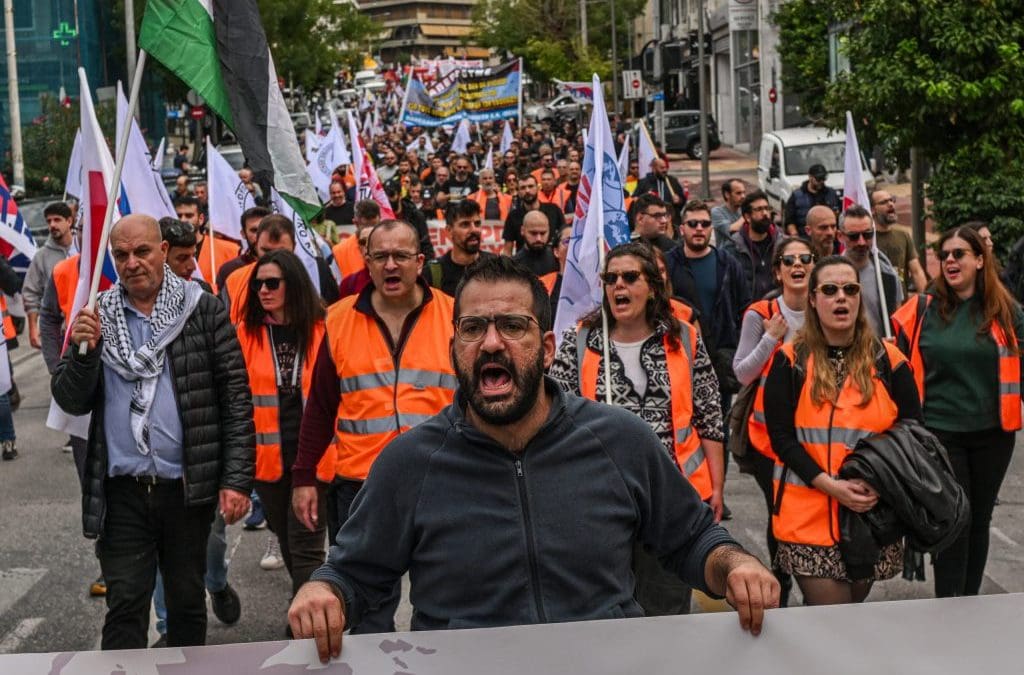
Dockworkers in more than 20 countries—from France to India to Greece—are withholding their labor on Friday to demand an end to Israel’s genocidal assault on Gaza and highlight the role that commercial ports play in fueling deadly militarism worldwide.
Organizers said the work stoppages, led by dockworkers’ unions at 113 ports across 22 countries, would be the “largest coordinated port action ever,” easily surpassing the international day of action held in February. No Harbour for Genocide, a collective of trade unions and others supporting the day of action, said $2.8 billion worth of cargo will be halted at Mediterranean ports, where workers are planning to strike for 24 hours.
“A cargo refused in one port sails on to the next,” said No Harbour for Genocide. “Refused in every port, it stops, and the workers have enforced the embargo that governments announced and did not.”
In a joint statement last month announcing the day of action, dockworkers’ unions from Türkiye, Morocco, Italy, France, Greece, Italy, and Basque Country laid out their demands:
An immediate end to the genocide of the Palestinian people and the opening of safe corridor for humanitarian aid.. An end of colonization, occupation and apartheid imposed to Palestinian People and the recognition of an independent Palestinian state recognized by the international community on the 1967 borders, with East Jerusalem as its capital.
An end to the war in the Middle East. No support, no facilitation, no participation in the US-Israeli war against Iran, Lebanon or any other imperialist intervention. Military fleets and bases