by Sharon Zhang | Apr 30, 2026 | Article, Israel, Media Criticism, Politics and Movements: International, Politics and Movements: US, Reprint
This article was originally published by Truthout on April 29, 2026. It is shared here under a Creative Commons (CC BY-NC-ND 4.0) license.
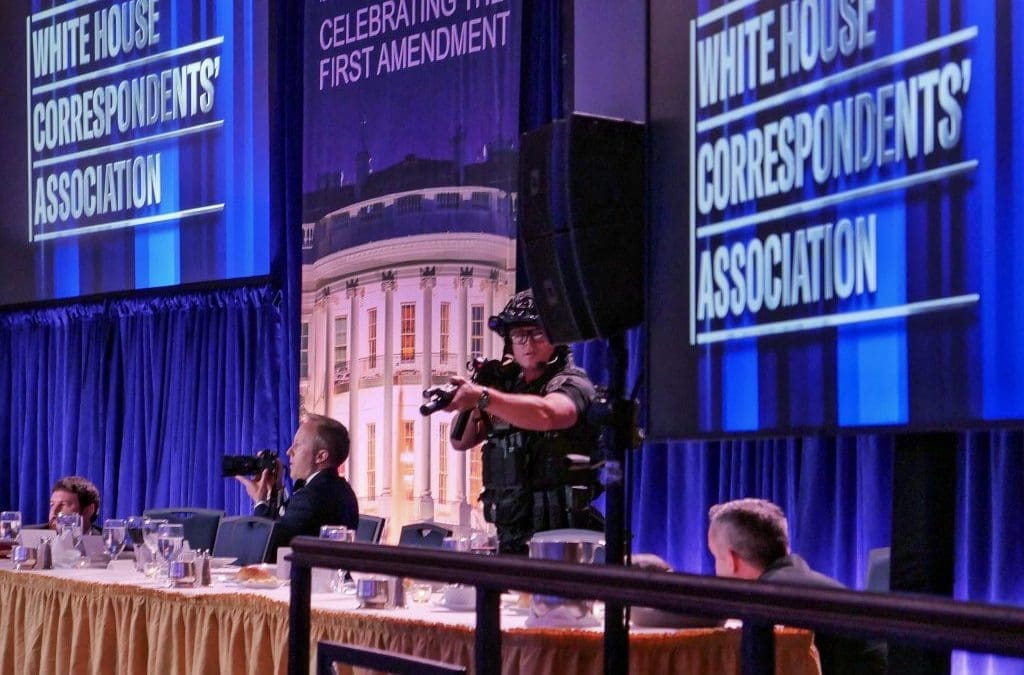
The CEO for the parent company of Politico reportedly told editorial staff at the outlet this week that they should wholly embrace the company’s corporate “values,” which include support for Israel, or find work elsewhere, new reporting reveals.
Jewish Insider reported on the meeting held this week between Axel Springer CEO Mathias Döpfner and Politico staffers and executives.
He told staff on the call that “nobody should work for Axel Springer despite the essentials or in disagreement with one of the essentials.” Appearing to suggest that staff should find work elsewhere if they disagree, he went on to note that “there are many options where values do not play such a role — or where other values play a role.”
The CEO is referring to a set of corporate values, which it calls the “Essentials,” written by German founder Axel Springer in 1967. According to the company’s website, the second of the company’s five values is: “We support the right of existence of the State of Israel and oppose all forms of antisemitism.” Other values include that the company works to “uphold the principles of a free market economy.”
The meeting came after Politico staffers sent a letter on Friday to their new editor-in-chief and former Politico executive, Jonathan Greenberger, expressing concerns over Döpfner’s “repeated use of POLITICO to promote his political agenda.”
The letter, per Semafor, referred to two recent op-eds by Döpfner for Politico Magazine. One, in March, cheered on the U.S. and Israel’s war on Iran and called for European states to take action against the “terrorist state,” which he claims aims for “the destruction of Israel and all
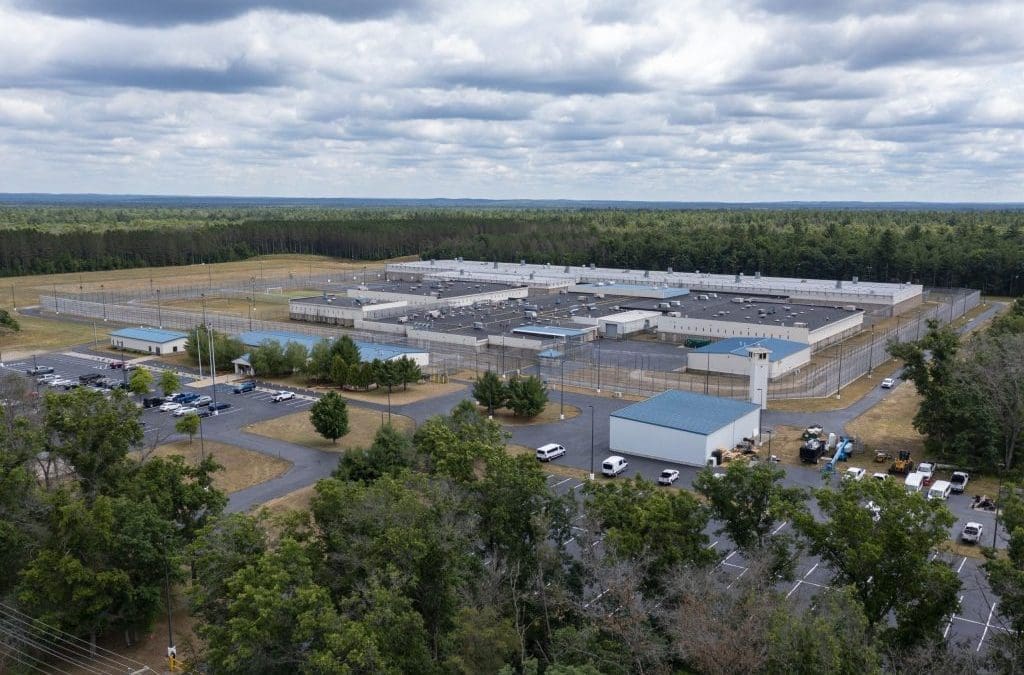
by October Krausch | Apr 30, 2026 | Article, immigration, Politics and Movements: US, prison reform, Prisons and Policing, Reprint
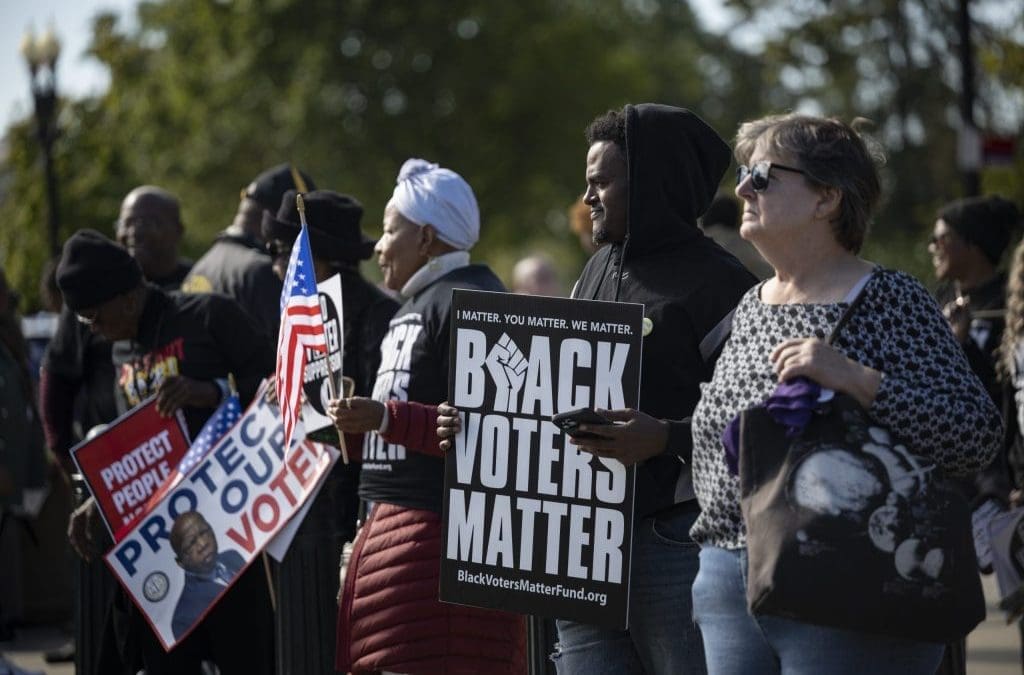
by Brett Wilkins | Apr 29, 2026 | Article, elections, midterms, Politics and Movements: US, Racial Justice, Reprint, Voting Rights
This story originally appeared in Common Dreams on April 29, 2026. It is shared here under a Creative Commons (CC BY-NC-ND 3.0) license.
The US Supreme Court ruled Wednesday that Louisiana must redraw its 2024 congressional map—which created a second majority-Black district to mitigate persistent barriers to equal representation—in a decision that further guts the already tattered Voting Rights Act.
The justices ruled 6-3 along ideological lines in Louisiana v. Callais that the state’s map is “an unconstitutional racial gerrymander,” effectively voiding the last remaining provision of Section 2 of the 1965 Voting Rights Act (VRA), which allows voters of color to challenge racially discriminatory electoral maps in court.
The case centers on the redrawing of Louisiana’s six congressional districts to better reflect the population of a state in which one-third of the people are Black, as Section 2 states that minority voters should have the same chance as others to elect candidates of their choice.
Civil and voting rights advocates challenged Louisiana’s Republican-drawn and racially rigged congressional map. In 2022, a federal judge agreed that the map likely violated Section 2, and the 5th US Circuit Court of Appeals upheld that ruling, ordering Louisiana to draw a new map by January 2024.
Louisiana complied. But a group of non-Black voters challenged the new map, claiming it was a racially rigged creation that violated the 14th Amendment. The Trump administration supported the challengers, arguing that Black voters had no right to a second majority-minority district.
The Supreme Court’s right-wing justices—three of whom were nominated by Trump—agreed in Wednesday’s decision.
“Allowing race to play any part in government decision-making represents a departure from the constitutional rule that applies in almost every other context,” Justice Samuel Alito wrote for the right-wing majority. “Compliance with Section 2 thus could not justify
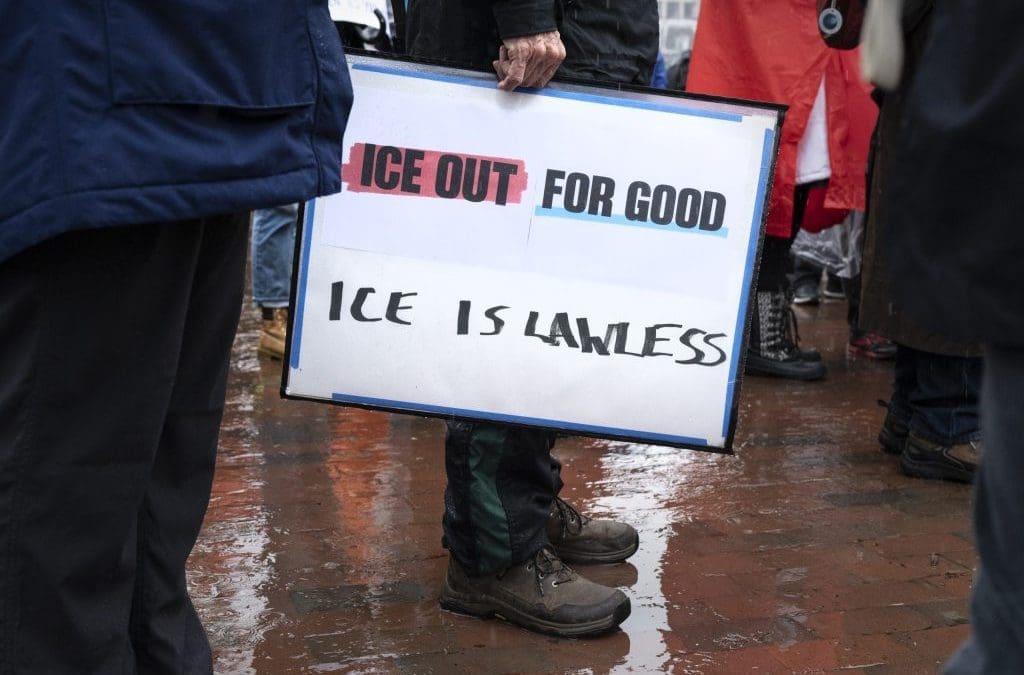
by Marianne Dhenin | Apr 27, 2026 | Article, ICE, immigration, Politics and Movements: US, Prisons and Policing, Reprint
This article was originally published by Truthout on April 26, 2026. It is shared here under a Creative Commons (CC BY-NC-ND 4.0) license.
Grassroots coalitions in a growing number of states are working to pass legislation to cut municipal or state ties to Immigration and Customs Enforcement (ICE). The efforts are gaining momentum as the Trump administration’s mass deportation agenda throws long-standing problems with the nation’s immigration regime into sharp relief.
“We see a tremendous upswelling of this type of legislation being proposed in different states across the country,” Rebecca Sheff, a staff attorney at the American Civil Liberties Union of New Mexico, told Truthout. “I think it speaks to the moment that it’s really a time to make the most of the political willingness to take bold action in light of how aggressive ICE has become.”
Sheff helped draft New Mexico’s Immigrant Safety Act, which Gov. Michelle Lujan Grisham signed into law in February. The law prohibits state and local governments from entering into agreements to detain individuals for civil immigration violations, stops the use of public land for immigration detention, and bans agreements that turn local law enforcement into immigration agents. It will come into force in May.
Comparable laws to curb civil immigration detention are already on the books in at least half a dozen other states, including New Jersey, California, Washington, Illinois, Colorado, and Maryland. Many have been passed under the banner “Dignity, Not Detention,” following a national campaign launched in 2010 by the Detention Watch Network and hundreds of supporting organizations nationwide. California was the first to pass its Dignity, Not Detention legislation seven years later. New Mexico’s is the most recent.
Elsewhere, organizers are still hard at work on similar bills. Tania Mattos, executive director
by Julia Conley | Apr 27, 2026 | Article, government surveillance, Politics and Movements: US, Prisons and Policing, Reprint
by Jon Queally | Apr 27, 2026 | Article, Central America, Latin America, Politics and Movements: International, Politics and Movements: US, Prisons and Policing, Reprint, Trump, war on drugs
This story originally appeared in Common Dreams on April 27, 2026. It is shared here under a Creative Commons (CC BY-NC-ND 3.0) license.
The murder spree being conducted by the US government under the direction of President Donald Trump and Secretary of Defense Pete Hegseth climbed to an estimated 185 people on Sunday after the Pentagon announced another bombing of a boat it claims was trafficking illegal narcotics.
“On April 26, at the direction of SOUTHCOM commander Gen. Francis L. Donovan, Joint Task Force Southern Spear conducted a lethal kinetic strike on a vessel operated by Designated Terrorist Organizations,” the US military stated in a social media post. “Intelligence confirmed the vessel was transiting along known narco-trafficking routes in the Eastern Pacific and was engaged in narco-trafficking operations. Three male narco-terrorists were killed during this action. No US military forces were harmed.”
While no specific evidence was provided publicly to back up the claims made by SOUTHCOM about Sunday’s strike, human rights experts and legal scholars have made clear for months that such lethal operations at sea—whether or not those targeted are in fact trafficking drugs—have no justification under international maritime law and that the extrajudicial killings should be seen for what they are: cold-blooded murder.
Footage released by SOUTHCOM showed the moment the vessel was attacked, and those aboard were killed:
On April 26, at the direction of #SOUTHCOM commander Gen. Francis L. Donovan, Joint Task Force Southern Spear conducted a lethal kinetic strike on a vessel operated by Designated Terrorist Organizations. Intelligence confirmed the vessel was transiting along known… pic.twitter.com/br2znnUM1x— U.S. Southern Command (@Southcom) April 27, 2026
In a separate attack on April 24, also carried out by SOUTHCOM, two other individuals were murdered when their boat, filmed stationary in the