by Taya Graham and Stephen Janis | May 8, 2026 | Article, Economy and Inequality, Inequality, Inequality Watch, Opinion, Politics and Movements: US, Prisons and Policing
The press conference for Epstein survivors we covered earlier this year felt claustrophobic.
It was the afternoon before President Donald Trump’s State of the Union address in February. The women who had suffered at the hands of the world’s most infamous predator were crammed into a small meeting room in the Cannon House Office Building in Washington, DC.
They had gathered to demand acknowledgement that evening from both Congress and the President. The venue was so tiny, there was barely room for the survivors to gather around the podium.
The assemblage stood in stark contrast to what we found in the emails we had been poring over after the Justice Department released an often-opaque database of documents gathered during several investigations of the historic sex predator.
Based on what we’ve read, Epstein and his associates inhabited a world of material and social abundance. They weren’t constrained or forced to plead for anything. Their lives were full of easily obtained wealth, which afforded plenty of space to commit crimes.
This contrast reveals what this scandal is ultimately about: not just one man’s crimes, but the unimaginable inequality that made asking for tens of millions of dollars as easy as writing a poorly worded email. In fact, all Epstein had to do to enrich himself was to ask.
Consider what Epstein sent to media mogul Mortimer Zuckerman in July of 2014:
I’m happy to hear from you, happy to see your stock at the 120 level. an increase in over 100
million in new net worth in only a few months. (how long did it take for the first 100?) I
assume, by your email, that as I predicted, you have
by Jake Johnson | May 8, 2026 | Article, elections, midterms, Politics and Movements: US, Racial Justice, Reprint, Voting Rights
This story originally appeared in Common Dreams on May 07, 2026. It is shared here under a Creative Commons (CC BY-NC-ND 3.0) license.
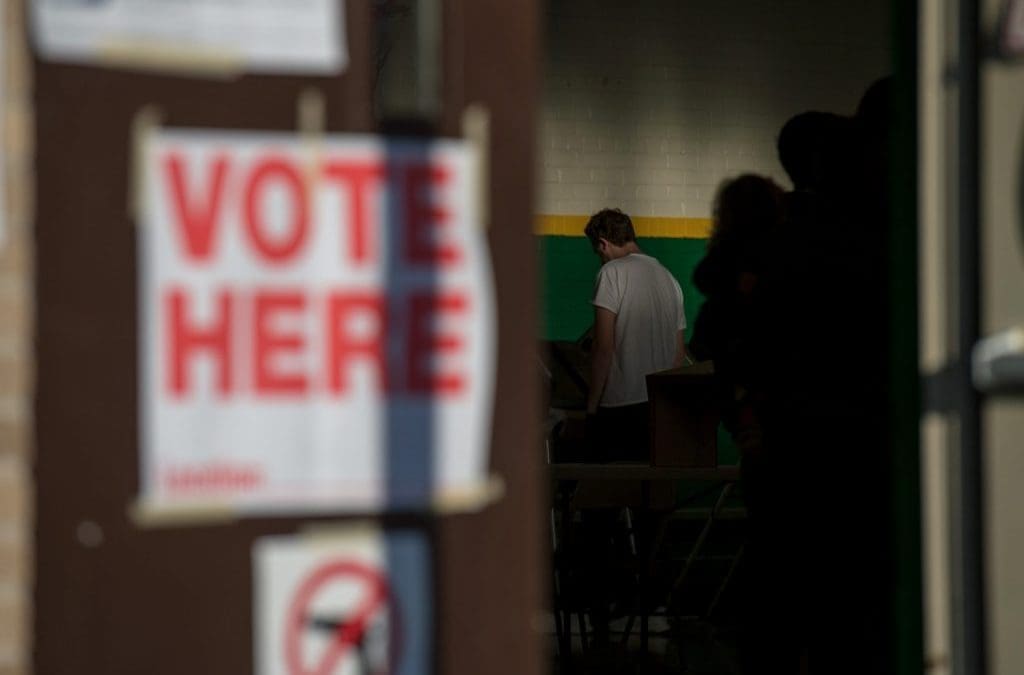
Republicans in the Tennessee House of Representatives voted during a special session on Thursday to adopt a new congressional map that would carve up the state’s lone majority-Black district, a move that came amid raucous protests from angry residents and Democratic lawmakers.
The special session was called by GOP Gov. Bill Lee at the behest of President Donald Trump, whose aggressive gerrymandering push across the country was supercharged by the US Supreme Court’s decision last week gutting the 1965 Voting Rights Act’s protections against racial discrimination. One Tennessee Republican—state Rep. Todd Warner (R-92)—walked into the House chamber for Thursday’s vote wearing a Trump 2024 flag as a cape.
The Tennessee House approved the new congressional map, which would likely draw the only Democrat in Tennessee’s US congressional delegation out of his seat, by a party-line vote of 64 to 25. Following the vote, The Tennessean reported that “Democrats linked arms and walked out of the room. Seconds later, the chamber adjourned.”
Shouts of rage flooded the Tennessee House chamber after the map passed, and protesters booed and jeered Republican lawmakers as they exited.
⚡️ WATCH — JUST NOW — 99% white Tennessee House Republicans pass a racist 9-0 map stripping majority Black Memphis of congressional representation pic.twitter.com/OYwTWZK2i1— The Tennessee Holler (@TheTNHoller) May 7, 2026
House passage of the map came after lawmakers voted to repeal a 1972 ban on mid-decade redistricting after limited debate, clearing the way for approval of the new district lines, which are expected to draw US Rep. Steve Cohen (D-Tenn.)—the only Democrat in Tennessee’s congressional delegation—out of his seat.
The Tennessee Senate is expected to approve
by Sharon Zhang | May 7, 2026 | Article, Iran, Israel, Politics and Movements: International, Politics and Movements: US, Reprint, War
by Stephen Prager | May 6, 2026 | Article, Economy and Inequality, Inequality, Iran, Oil, Politics and Movements: International, Politics and Movements: US, Reprint, War
by Julia Conley | May 5, 2026 | Article, elections, midterms, Politics and Movements: US, Racial Justice, Reprint, Voting Rights
This story originally appeared in Common Dreams on May 05, 2026. It is shared here under a Creative Commons (CC BY-NC-ND 3.0) license.
Warning that the US Supreme Court’s right-wing majority was appearing to give its approval of Louisiana’s decision to suspend federal primary elections in the state following the court’s ruling on the state’s congressional map last week, Justice Ketanji Brown Jackson on Monday evening was the lone dissenter as the court agreed to immediately finalize the ruling instead of waiting the customary 32 days.
By expediting the ruling, suggested Jackson, the court was taking an obviously political stance in support of efforts to ensure Louisiana Republicans can quickly redraw the state’s congressional map to yield more electoral wins for the GOP.
“The court’s decision to buck our usual practice,” wrote Jackson, “is tantamount to an approval of Louisiana’s rush to pause the ongoing election in order to pass a new map.”
Ordinarily, the court would wait 32 days to transmit an opinion to the lower courts, giving the losing party time to request that the justices reconsider the case.
In a brief, unsigned opinion Monday evening, the court said that the Black voters who had defended the state’s 2024 congressional map at the center of Louisiana v. Callais had “not expressed any intent to ask this court to reconsider its judgment.”
In Louisiana v. Callais last week, the court ruled along ideological lines that the 2024 map—which was drawn to better represent the population of Louisiana, where one-third of residents are Black—was an unconstitutional racial gerrymander. The ruling effectively struck down the last remaining provision of Section 2 of the Voting Rights Act, which held that voters of color can challenge racially discriminatory electoral maps.
The map that was struck down ensured there were two majority-minority districts in
by Taya Graham and Stephen Janis | May 4, 2026 | Article, Democracy, ICE, Politics and Movements: US
Last week, Republicans in Congress passed a framework for a proposed round of funding for ICE and Border Patrol. The measure was intended to end an impasse over Department of Homeland Security funding, which lapsed over 10 weeks ago.
But the budgetary framework, which includes $70 billion for both agencies, came with a twist: No Democratic input needed.
Republicans bypassed the normal budget process in a move The Hill said sets a “dangerous precedent” and could lead to one-sided steamrolling to secure unilateral funding for unpopular policies like continuing the US-Israeli War with Iran.
To secure funding without a single vote from any Congressional Democrat, Republicans have invoked an arcane procedure known as “reconciliation,” a legislative maneuver that allows a bill to bypass the Senate filibuster, provided it meets certain criteria. Their reason for deploying it? To sidestep opposition from Democrats, who had declined to fund ICE or CBP without reforms, and the democratic process altogether.
Democrats have been demanding ICE and CBP agents stop wearing masks, use body cameras, and discontinue raids on homes without warrants, among other stipulations, in exchange for funding the Department of Homeland Security. Republicans refused to concede on any of these issues, and a 76-day shutdown ensued.
But this week, Republicans decided to go it alone, and their effort may be successful. As a result, the passage of the budget framework through the reconciliation process is an alarming move for a party that has already demonstrated a clear willingness to discard democratic norms, processes, and guardrails.
The framework also left a lot of questions unanswered, including: Why the additional money for controversial agencies that already received nearly $140 billion from