

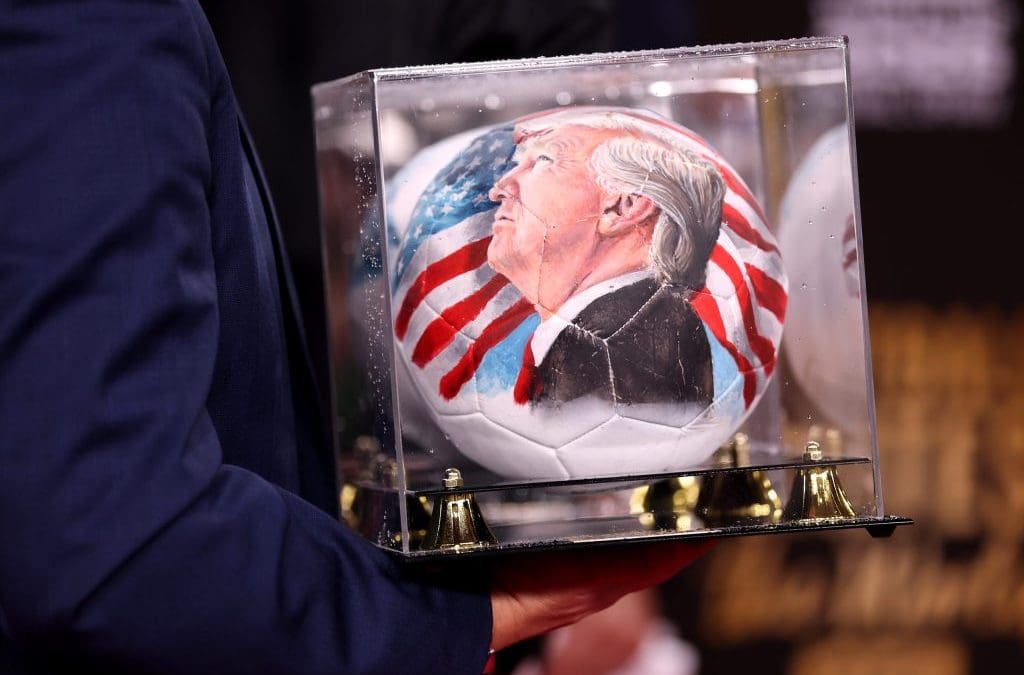
How Trump’s World Cup echoes dictatorships of the past
The 2026 World Cup has captured the world’s attention.
The highs and lows. The surprises. The United States’ defeat of Paraguay 4-1 in their first game. Cabo Verde’s tie with Spain. Ecuador’s defeat of Germany. Fans cried in the stadium and around the world from joy and disbelief.
Here in Brazil, it is an obsession. Around-the-clock coverage. Watch parties on huge screens in cities across the country. People glued to their TVs.
But the 2026 games in the United States, Mexico, and Canada have also been overshadowed by US President Donald Trump’s administration—specifically, his anti-immigration crackdown and authoritarian backslide.
Fans, players, and even world-class referees have been barred from entering the United States for the World Cup. Players have been detained, questioned, and had their luggage searched by dogs. Videos have gone viral of African players facing extended searches and security checks. The Democratic Republic of Congo’s most avid supporter was forced to return home after he failed to obtain a visa.
US officials forced Iran’s team to stay in Mexico, even though their games were played in the United States. Their logistics people were blocked from entering the US at all because they couldn’t get visas.
“This is a disaster World Cup,” Mehdi Taremi, the Iran National Team captain, said in a press conference. “We can’t stay in the country and have to travel every time we play without any recovery. Now we can’t stay in Seattle and have to return to Tijuana. This is not fair.”
The captain of Iran’s National Team, Mehdi Taremi, calls out FIFA and the U.S.:“This is a disaster World Cup. We can’t stay in the country and have to travel
Trump should foot the bill for rebuilding Venezuela after earthquake disaster
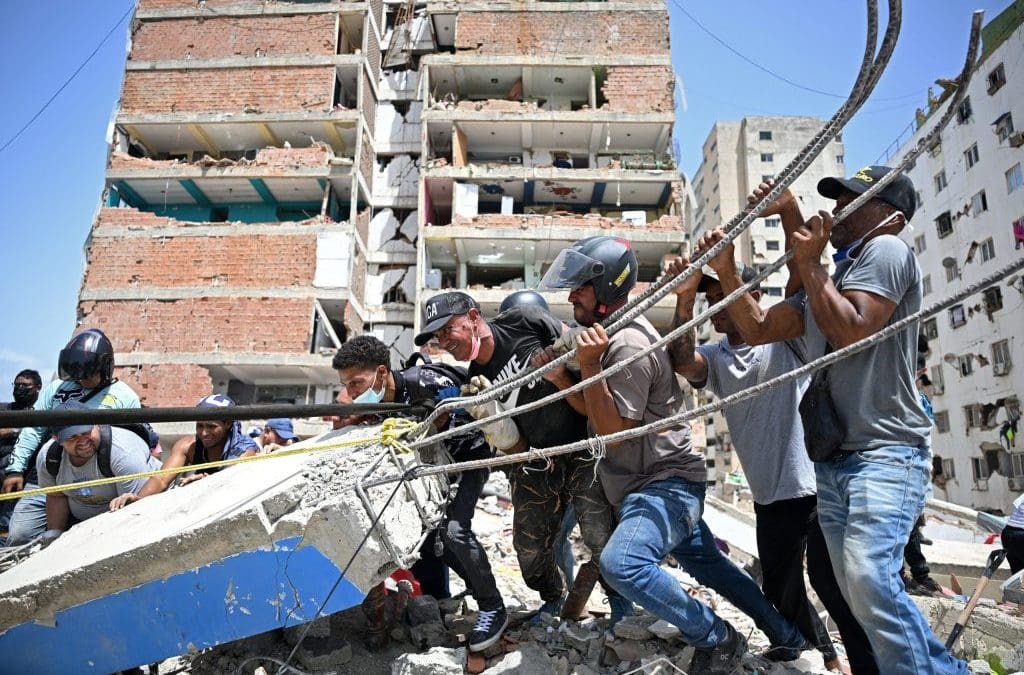
The images are harrowing: whole neighborhood blocks in rubble. Buildings collapsed. Rescue workers climbing over mountains of concrete debris fighting to find the survivors, working through the night.
A country already in crisis and shock after the Jan. 3 US invasion has been hit with another catastrophe.
A pair of back-to-back earthquakes hit Venezuela at 6:04PM local time on Wednesday, June 24. The first registered 7.2. The second struck just 38 seconds later. It was a magnitude of 7.5.
The epicenter of the quake was roughly 100 miles west of Caracas, Venezuela’s capital, but was felt as far away as Colombia and Manaus, Brazil. Reports say it was the largest earthquake to hit the country in more than a century.
Videos taken during the earthquakes show buildings rocking, the concourse of the country’s main airport shaking and crumbling as people run. The airport is now closed.
As of Friday afternoon, the death toll had risen to 920 people, with more than 3,300 people injured. Reports say the death count could rise to anywhere between 10,000 and 100,000 people.
More than 200 aftershocks have rumbled through Caracas. Many people slept outside in the streets Wednesday night for fear of the aftershocks and the structural integrity of their buildings.
The country is in a state of emergency.
La Guaira, the coastal city just north of Caracas where Venezuela’s main airport is located, has been devastated. It has been declared a “disaster zone” because of the number of buildings knocked to the ground.
#Venezuela | La Guaira suffered huge damage after a series of strong earthquakes on June 24.Aerial images taken on June 25 reveal a high level of destruction in many

Shot, jailed, deported: Inside Trump’s crackdown on journalists | Ep. 4
Transcript
Audio Clip: By late morning, it was clear. June 6th would be no ordinary Friday in LA.
Michael Fox: June 6th, 2025. Ice officers raid a garment factory in downtown Los Angeles. There’s another raid at a Home Depot. They detained dozens of people. The same day Los Angeles explodes in protests in response. They ripple across the city for more than a week. The first big response to the immigration crackdown in Trump’s second term. Photojournalist Nick Stern was there.
Nick Stern: I’ve been a photojournalist for around 30 years initially in the UK and 2007, I moved to the US and became a citizen in 2019.
Michael Fox: I spoke with him recently. He’s worked in 50 countries covering stuff like this, big protests, civil unrest. So June 6th last year, Nick said the protest was loud, noisy.
Nick Stern: I got pepper sprayed, pepper gassed in my face, which was pretty horrific.
Michael Fox: The next day is a Saturday. There are more ice raids and a big protest that carries into the evening, Nick’s back on the streets and he’s there throughout the day.
Nick Stern: It was a Saturday. It was June the 7th and it was about 10 to 90 in the evening.
Michael Fox: He told me there were a few stragglers in the protest. He was off to the side, kind of parallel with the police. And you can even see this in some cell phone footage shot and posted online from that night. Suddenly an officer turns and fires at him with a less lethal projectile.
Nick Stern: What’s called a flashbang, which is an explosive, which embedded in

Big Tech’s assault on free speech: Mergers, social media, AI, and censorship
Transcript
The following rushed transcript may contain errors. It will be updated as soon as possible.
On the day of Donald Trump’s inauguration—January 20, 2025—the heads of many of Silicon Valley’s most powerful tech firms sat in the rows just behind Trump. It was a sign of Trump’s deep ties to the industry and to these powerful individuals who are transforming how we communicate, and not for the better.
In this episode, Michael Fox visits Silicon Valley to try to understand the stranglehold that tech has over our media and our airwaves. Hosts Michael Fox and Marc Steiner dig into the ways media consolidation, social media, and AI are strangling our free speech, even as they claim to be liberating it—and us—with incredible insight from professors Todd Wolfson, Mary Anne Franks, Fara Dabhoiwala, Ramesh Srinivasan, and Jeff Cohen, the founder of the organization Fairness and Accuracy in Reporting, FAIR.
The Battle for Free Speech is a production of The Real News Network.
Hosted by Michael Fox and Marc Steiner. Theme music by Michael Fox, Jordan Klein and Daniel Nuñez. Other music from Blue Dot Sessions and Epidemic Sound. Production and Sound Design by Michael Fox and Stephen Frank. Editorial support by Kayla Rivara and Heather Gies. Research by Ben Schweiger.
Guests
Todd Wolfson
Mary Anne Franks
Fara Dabhoiwala
Jeff Cohen
Ramesh Srinivasan
Resources
Mary Anne Franks’ book, Fearless Speech: Breaking Free from the First Amendment
Fara Dabhoiwala’s book, What Is Free Speech?: The History of a Dangerous Idea
Todd Wolfson’s Digital Rebellion: The Birth of the Cyber Left
Marc Steiner’s Interview with Jeff Cohen, “How Democrats set the stage for Trump’s assault on free speech”
You can hear Ramesh Srinivasan’s Utopias Podcast here, or wherever you get your
‘Gaining consent by promising force’: Late fascism and Gramsci
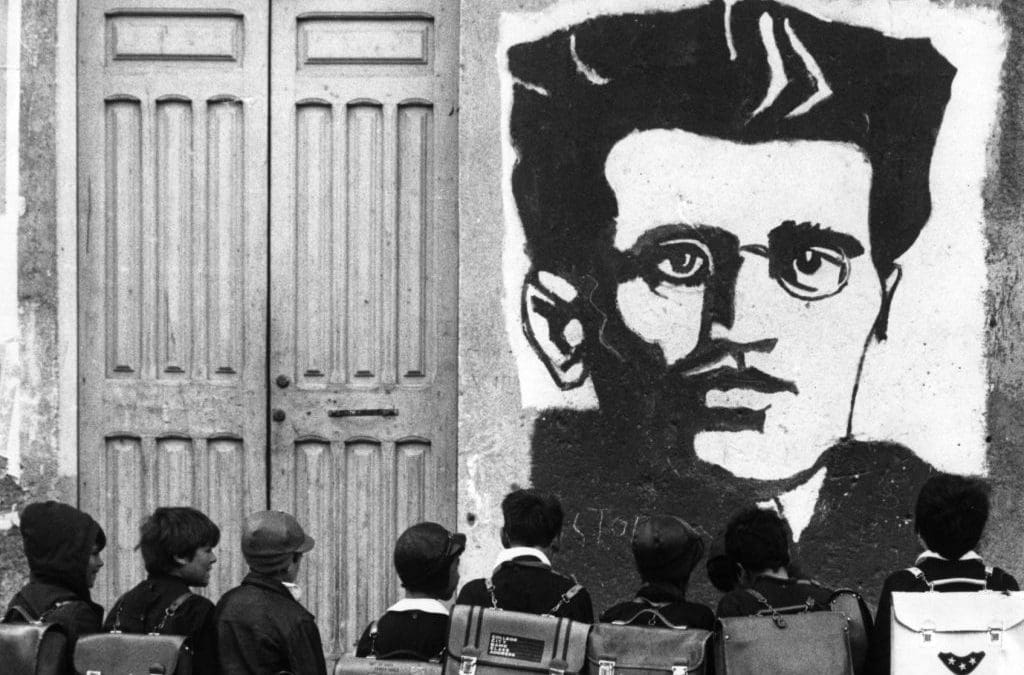
In Part 2 of a conversation between Mansa Musa (former political prisoner and Black Panther) and Alberto Toscano (professor of critical theory and author of Late Fascism), the two discuss how consent and coercion operate within US civil society and abroad. They specifically unpack how Donald Trump’s domestic and foreign platforms animate white nationalism—relying on the explicit promise of state violence against targeted populations.
Guests:
Alberto Toscano is a renowned Italian cultural critic, social theorist, philosopher, translator, and adjunct professor at the Simon Fraser University School of Communication. Toscano is a columnist at In These Times and the (co-)author of numerous books, including: Late Fascism: Race, Capitalism and the Politics of Crisis; and Fanaticism: On the Uses of an Idea.
Credits:
Producer / Videographer / Editor: Cameron Granadino
Transcript
The following rushed transcript may contain errors. It will be updated as soon as possible.
Mansa Musa:
Gramsci wrote about consent and coercion. Talk about the difference when it comes to a targeted population of prisons and policing.
Alberto Toscano:
Yeah. So that relationship between consent and coercion or in Gramsci’s terms also hegemony and domination or consent and force is really crucial. Gramsci was enough of a realist about politics. After all, he was also a very brilliant reader of Machiavelli that he never thought that force or coercion could be eliminated from politics altogether, but he was very interested in looking both at the past and the present to think about the mix of force and coercion, hegemony and consent. That’s also why he was so interested in the question of policing and of how to conceive of the police. And on could argue that the expansion of repression and incarceration is always a