by Mansa Musa | Jan 20, 2026 | Economy, labor, Politics and Movements: US, Prison Industrial Complex, prison reform, Prisons and Policing, Rattling the Bars, video
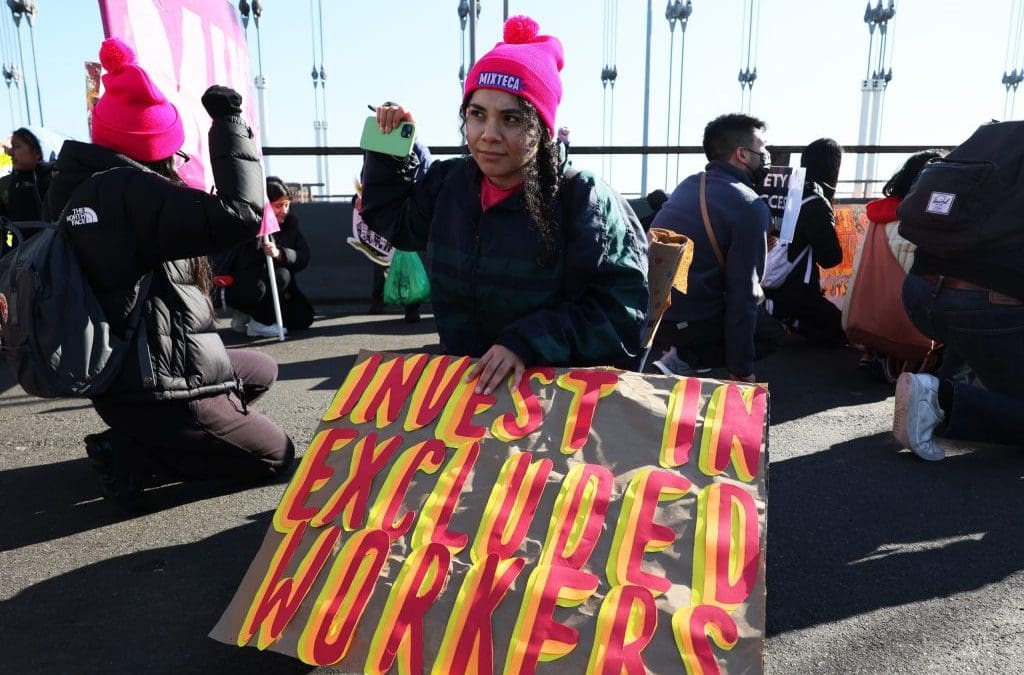
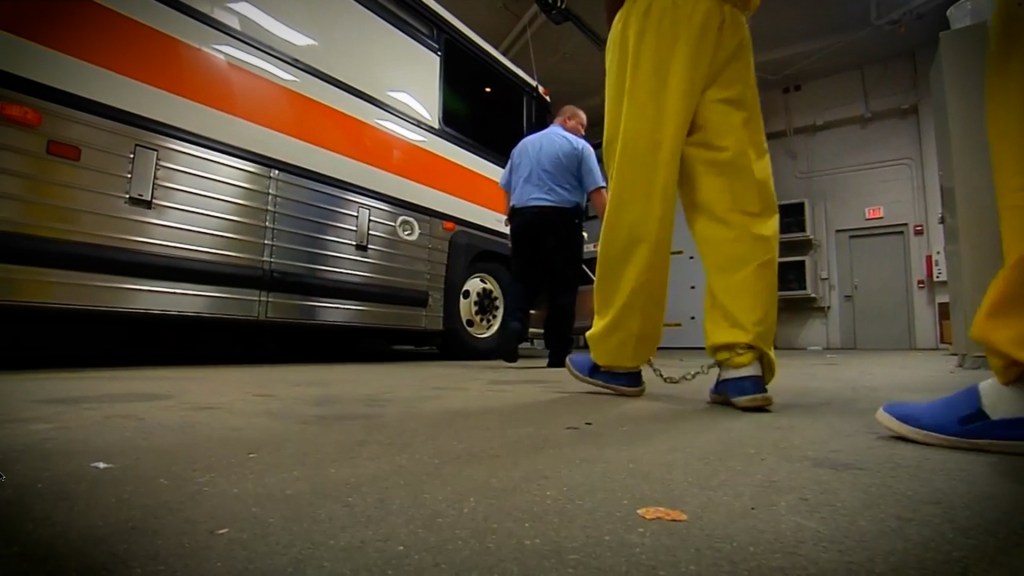
Returning citizens are being funneled into exploitative temp jobs that pay poverty wages, deny them basic labor protections, and deepen the state’s control over their lives long after they’ve served their time. This week, Mansa Musa speaks with Katherine Passley and Maya Ragsdale, co-executive directors of Beyond the Bars, about how Florida’s temp industry traps the most vulnerable workers and operates as a profitable and punishing extension of the prison system.Guests:
Maya Ragsdale is the founder and co-executive director of Beyond the Bars, a worker center in South Florida building the social and economic power of workers with criminal records and their families.
Katherine Passley is co-executive director of Beyond the Bars. Passley was named the 2025 Labor Organizer of the Year by In These Times magazine.
Additional links/info:
Beyond the Bars website, Substack, and Instagram
Beyond the Bars, The Temp Trap Report
Credits:
Producer / Videographer / Post-Production: Cameron Granadino
Transcript
The following is a rushed transcript and may contain errors. It will be updated.
Mansa Musa:
Returning citizens are routinely pushed out of permanent jobs and instead pushed into temporary work often for the same role. According to the Prison Policy Initiative, 27% of formerly incarcerated individuals are unemployed, a rate higher than the Great Depression. Temp agencies often circumvent anti-discrimination laws and workforce protections, fueling exploitation and instability for vulnerable workers. A new report, The Temp Trap by Beyond the Bar’s co-director Maya Ragsdale and Katherine Passley argues that the state supervision and workforce discrimination keeps returning citizens trapped. The authors say it’s as if returning citizens are still doing time. Maya and Katherine joins us today to discuss their finding from two years of research. Welcome to
by Mansa Musa | Dec 22, 2025 | holidays, Prison Industrial Complex, Prisons and Policing, Rattling the Bars, video
For incarcerated people and their families, the holidays are the most painful time of year. In this episode of Rattling the Bars, host Mansa Musa and TRNN Editor-in-Chief Maximillian Alvarez speak frankly about what it’s like to be locked up during the holidays, why inmate suicides, violence, and depression spike this time of year, and about the life-saving and society-improving steps we can take this holiday season to help prisoners maintain contact with the outside world.
Content Warning: Discussion of suicide and depression.
Producer / Videographer / Post-Production: Cameron Granadino
Transcript
The following is a rushed transcript and may contain errors. A proofread version will be made available as soon as possible.
Mansa Musa:
Welcome to Rattling the Bars. I’m your host, Mansa Musa.
Maximillian Alvarez:
And I’m Maximillian Alvarez, editor-in-chief of the Real News Network. As we reach the end of an impossibly long year, all of us here at the Real News want to wish you and yours a happy holiday season. Whether you celebrate or not, we hope that this time of year at least provides some time and space for you to rest and to be with the ones that you love. But of course, as we do every single year here, we also want to take this moment to remind y’all and to remind ourselves that there are so many people in this country right now who will not be able to be with their loved ones this year. The nearly two million human beings who are locked up in the United States of America right now. The tens of thousands of immigrants who have been sitting and rotting in ice detention, the vast
by Mansa Musa | Dec 8, 2025 | Prison Industrial Complex, prison reform, Prisons and Policing, Rattling the Bars, video
Fifty years into the era of mass incarceration, states like Arkansas, Montana, California, and Colorado are pushing to build new prisons and expand immigrant detention. In this episode of Rattling the Bars, host Mansa Musa talks with Nicole Porter of The Sentencing Project about how federal and state governments are doubling down on new prison construction and ICE contracts to expand the prison-industrial complex, what sets the US criminal justice system apart from other countries around the world, and how organizers are fighting for real prison population reductions instead of more cages.
Guest:
Nicole D. Porter, named a “New Civil Rights Leader” by Essence Magazine for her work to challenge mass incarceration, manages The Sentencing Project’s state and local advocacy efforts on sentencing reform, voting rights, and confronting racial disparities in the criminal legal system. Since joining The Sentencing Project in 2009, Porter’s advocacy and findings have supported criminal legal reforms in several states including Kentucky, Maryland Missouri, California, Texas and the District of Columbia. Porter’s areas of expertise include research and grassroots support around challenging racial disparities, felony disenfranchisement, in addition to prison closures and prison reuse. Her research has been cited in several major media outlets including Salon and the Washington Post, and she has appeared in the New York Times, Washington Post, and on National Public Radio and MSNBC.
Additional links/info:
The Sentencing Project website, Facebook page, and Instagram
Lisa Armstrong, Essence, “The new Civil Rights leaders”
Credits:
Producer / Videographer / Post-Production: Cameron Granadino
Transcript
The following is a rushed transcript and may contain errors. A proofread version will be made available as soon as possible.
Mansa Musa:
Welcome to this edition of Rattling the Bars. I’m your host, Mansa Musa. Today we have with us Nicole Porter.
by Mansa Musa | Dec 1, 2025 | baltimore, Fascism, ICE, Politics and Movements: US, Prisons and Policing, Rattling the Bars, video
ICE raids and the expanded use of expedited removal are tearing apart immigrant families and neighborhoods in Baltimore. In this episode of Rattling the Bars, host Mansa Musa speaks with Baltimore reporter Kori Skillman about how lack of democratic oversight and collusion between local government and federal law enforcement have enabled ICE’s lawless tactics and left Baltimore’s immigrant communities living in constant fear, economic precariousness, and social isolation.
Guest:
Kori Skillman is a Report for America Corps Member covering justice and accountability for Baltimore Beat. Skillman investigates policing, incarceration, and civil rights in Baltimore. Most recently, she worked on ABC News’ assignment desk, covering breaking news and editing for live broadcasts. A Bay Area native, Skillman holds a dual B.A. in journalism and international business from San Diego State University, with a focus on the Middle East and North Africa, and an M.S. from Columbia Journalism School.
Additional links/info:
Kori Skillman, Baltimore Beat, “Indiscriminate ICE arrests have left Baltimore’s immigrant communities in a constant state of fear and anxiety”
Kori Skillman, Baltimore Beat, “Lack of ICE oversight shows how Baltimore has long been at the mercy of outside powers”
Credits:
Producer / Videographer / Post-Production: Cameron Granadino
Transcript
The following is a rushed transcript and may contain errors. A proofread version will be made available as soon as possible.
Mansa Musa:
Welcome to this edition of Rattling the Bars, I’m your host Mansa Musa. In this country, United States of America, we have laws that protect the citizens of the United States. What constitute a citizen of the United States? If you were born here or you receive your citizenship through the immigration naturalization process, lately we’ve seen our country shift into a period much like
by Mansa Musa | Dec 1, 2025 | Economy, Economy and Inequality, labor, Podcast, prison reform, Prisons and Policing, Rattling the Bars
In this episode of Rattling the Bars, host Mansa Musa speaks with Miami-based organizer Katherine Passley about how prison labor, temp agencies, and the 13th Amendment have created a system that traps formerly incarcerated people in unending cycles of cheap, hyper-exploited work. Passley, co-executive director of Beyond the Bars, also talks with Musa about how her organization is fighting to win free jail phone calls, erase millions of dollars in fines and fees for systems-impacted people, and build powerful bridges between the prison abolition movement and the labor movement in Florida.
Guest:
Katherine Passley is co-executive director of Beyond the Bars, a worker center in South Florida building the social and economic power of workers with criminal records and their families. Passley was named the 2025 Labor Organizer of the Year by In These Times magazine.
Additional links/info:
Kim Kelly, In These Times, “Building bridges and erasing jail debt: Katherine Passley“
Mansa Musa, The Real News Network, “America is built on prison labor. When will the labor movement defend prisoners?“
Credits:
Producer / Videographer / Post-Production: Cameron Granadino
Transcript
The following is a rushed transcript and may contain errors. A proofread version will be made available as soon as possible.
Mansa Musa:
My name is Mansa Musa. I’m a former political prisoner, member of the Black Panther Party. And prior to being released from prison, I served 48 years. Now I’m the host of rallying the bars on the Real News Network when we think of labor and labor movement in this country. More importantly, when we think of the quote from Marxist, when Marx say, workers of the world Unite. Was Marx talking about only workers of a certain ethnic group? Was Marx talking about all
by Mansa Musa | Nov 24, 2025 | Politics and Movements: US, prison reform, Prisons and Policing, Rattling the Bars, video, Wisconsin
Wisconsin’s much-touted prison overhaul plan promises to close crumbling facilities like Green Bay Correctional Institution, but people locked up inside these facilities may have to wait years for relief they desperately need now. In this episode of Rattling the Bars, formerly incarcerated organizer Sean Wilson joins host Mansa Musa to discuss whether Wisconsin’s bipartisan prison plan will deliver real transformation to a broken justice system, or if it simply amounts to a construction project that leaves that system intact.
Guest:
Sean Wilson is the senior director of organizing and partnerships at Dream.Org. In his role, he is responsible for overseeing capacity building, leadership development programs, and grassroots partnerships. Over the past two and a half years, Sean has led the team in building one of the most transformational training programs in the nation — the Dream Justice Cohort — as part of the justice program. Sean was born and raised in Milwaukee, Wisconsin, and has organized at the state and local level around policy change related to youth justice, voting rights, police reform, and criminal justice.
Additional links/info:
Sean Wilson, Wisconsin Examiner, “I lived inside Green Bay Correctional. Wisconsin can’t wait another four years”
Credits:Producer / Videographer / Post-Production: Cameron Granadino
Transcript
The following is a rushed transcript and may contain errors. An updated version will be made available as soon as possible.
Mansa Musa:Welcome to this edition of Rattling the Bars. I’m your host, Mansa Musa. October the 28th. Wisconsin State legislators on both sides of the aisle voted in favor of a sweeping proposal by governor of Wisconsin, Tony Evers, to overhaul the state correctional facilities in this overhaul package. In theory, the governor want to