by Shane Burley | Jan 22, 2026 | Article, ICE, Politics and Movements: US, Portland, Prisons and Policing
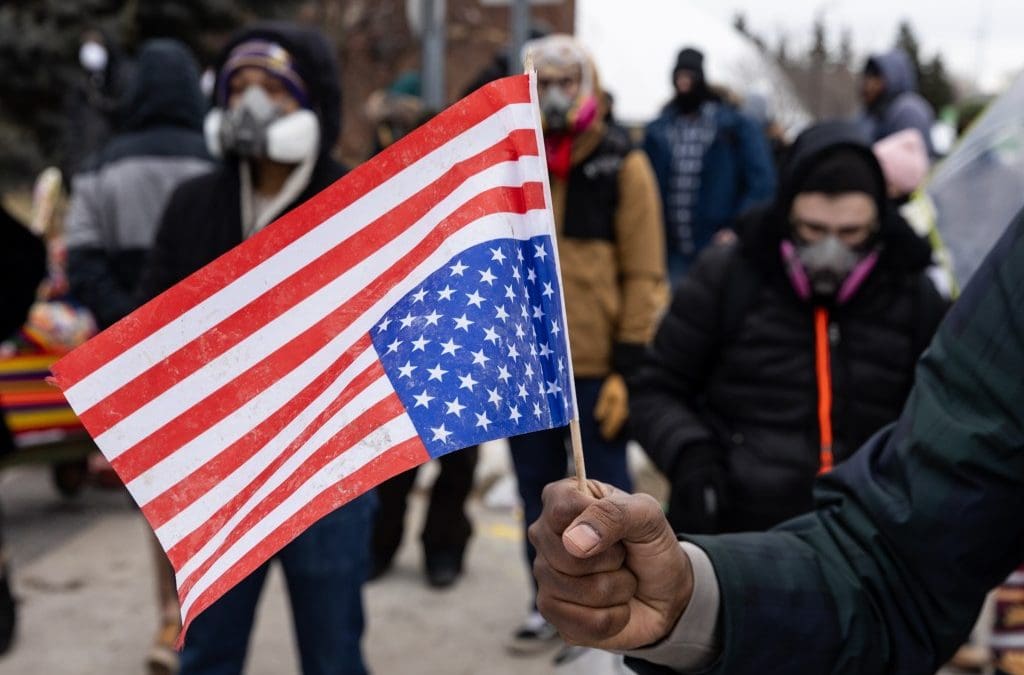
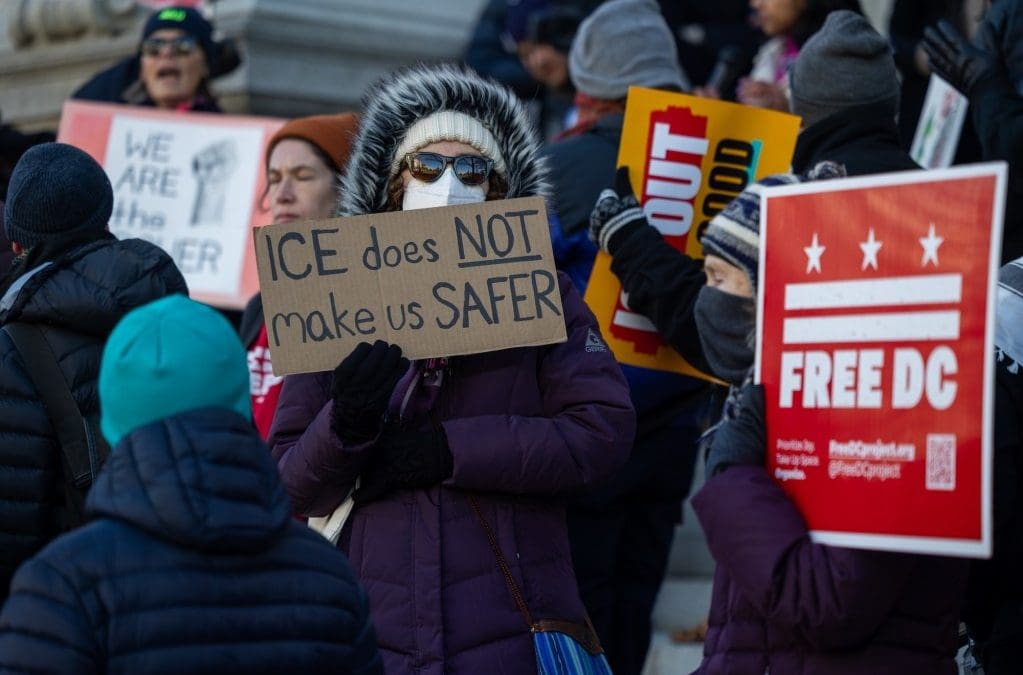
While protests have been continuous in Portland, Oregon—and around much of the country—over the last year, crowds have flooded city streets as a reaction to shocking moments of ICE violence. On Wednesday, January 7, ICE agents shot and killed a Minneapolis legal observer, Renee Good. The community response was swift as protests filled the icy streets of the Twin Cities, and Mayor Jacob Frey vocally demanded ICE “Get the fuck out of Minneapolis.” The federal government’s response was to have the FBI take over the investigation of the shooting, blocking local and state law enforcement. The White House blamed Good’s death on a “left-wing conspiracy” and lied about the events that took place.
The following day, two people were shot by ICE officers in their vehicle near Adventist Health hospital in the southeast side of Portland. ICE claims, like the officers did in Minneapolis, that the two alleged Venezuelan migrants had “weaponized their vehicle.” After being shot the two fled in their vehicle three miles to an apartment complex parking lot where they ultimately made an emergency medical call and were subsequently arrested and sent to separate critical care hospitals. DHS then went to social media to post photos of the alleged arrestees, saying, without providing evidence, that they were associates of the Tren de Aragua gang and involved in sex crimes.
“This is Oregon. We do not need you. You’re not welcome. And you need to get the hell out of our community,” said Oregon State Senator Casey Jama, himself a former refugee from Somalia, at a press conference just hours after the shooting.
Within hours, organizations called for demonstrations. Labor unions
by Adam Johnson | Jan 22, 2026 | Article, ICE, Minneapolis, Opinion, Politics and Movements: US, Prisons and Policing
In response to the January 7 ICE murder of Renee Good and the broader, untenable ICE terror campaign Trump unleashed on Minneapolis—and other major US cities—congressional Democrats are under increasing grassroots pressure to do something, anything, to fight back against the lawlessness and brazen violence of Trump’s deportation machine.
Democratic leadership, who yesterday refused to fund an upcoming DHS bill because it did not “do enough to rein in ICE,” have spent the past few weeks establishing their line in the sand. And what they appear to have settled on is a typical suite of pseudo-reforms, cosmetic PR and HR tweaks, body-worn cameras, and more money for “training,” all of which will do nothing to meaningfully alter the calculus for the Trump White House or ICE. Democrats are running through the motions of opposition in exchange for “guardrails” that will do little to nothing to address the central issues, while refusing to meaningfully tackle the source of ICE’s power—namely, its immunity from prosecution and obscene funding levels. Put another way: Democrats are responding to the killing of Renee Good by pushing reforms that would have done nothing to prevent the killing of Renee Good, and thus will do nothing to prevent future killings of other Renee Goods.
Democrats are running through the motions of opposition in exchange for “guardrails” that will do little to nothing to address the central issues, while refusing to meaningfully tackle the source of ICE’s power—namely, its immunity from prosecution and obscene funding levels.
The exact prescriptions offered by Democrats are difficult to pin down. House Minority Leader Hakeem Jeffries, in particular, has remained vague about what his demands
by Maximillian Alvarez | Jan 22, 2026 | ICE, labor, Podcast, Politics and Movements: US, Prisons and Policing, Racial Justice, Trump, Working People
by Mansa Musa | Jan 20, 2026 | Economy, labor, Politics and Movements: US, Prison Industrial Complex, prison reform, Prisons and Policing, Rattling the Bars, video
Returning citizens are being funneled into exploitative temp jobs that pay poverty wages, deny them basic labor protections, and deepen the state’s control over their lives long after they’ve served their time. This week, Mansa Musa speaks with Katherine Passley and Maya Ragsdale, co-executive directors of Beyond the Bars, about how Florida’s temp industry traps the most vulnerable workers and operates as a profitable and punishing extension of the prison system.Guests:
Maya Ragsdale is the founder and co-executive director of Beyond the Bars, a worker center in South Florida building the social and economic power of workers with criminal records and their families.
Katherine Passley is co-executive director of Beyond the Bars. Passley was named the 2025 Labor Organizer of the Year by In These Times magazine.
Additional links/info:
Beyond the Bars website, Substack, and Instagram
Beyond the Bars, The Temp Trap Report
Credits:
Producer / Videographer / Post-Production: Cameron Granadino
Transcript
The following is a rushed transcript and may contain errors. It will be updated.
Mansa Musa:
Returning citizens are routinely pushed out of permanent jobs and instead pushed into temporary work often for the same role. According to the Prison Policy Initiative, 27% of formerly incarcerated individuals are unemployed, a rate higher than the Great Depression. Temp agencies often circumvent anti-discrimination laws and workforce protections, fueling exploitation and instability for vulnerable workers. A new report, The Temp Trap by Beyond the Bar’s co-director Maya Ragsdale and Katherine Passley argues that the state supervision and workforce discrimination keeps returning citizens trapped. The authors say it’s as if returning citizens are still doing time. Maya and Katherine joins us today to discuss their finding from two years of research. Welcome to
by Jake Johnson | Jan 16, 2026 | Article, ICE, immigration, Politics and Movements: US, Prisons and Policing, Reprint
This story originally appeared in Common Dreams on Jan. 16, 2026. It is shared here under a Creative Commons (CC BY-NC-ND 3.0) license.
A Texas medical examiner is reportedly planning to classify the recent death of Geraldo Lunas Campos, who was detained by Immigration and Customs Enforcement last summer, as a homicide, marking the latest apparent abuse at the hands of an agency that has been rampaging lawlessly through US communities at the behest of President Donald Trump.
As the Washington Post reported Friday, “An employee of El Paso County’s Office of the Medical Examiner told Lunas Campos’ daughter this week that, subject to results of a toxicology report, the office is likely to classify the death as a homicide, according to a recording of the conversation.”
“The employee said a doctor there ‘is listing the preliminary cause of death as asphyxia due to neck and chest compression,’ which means Lunas Campos did not get enough oxygen because of pressure on his neck and chest,” the newspaper added.
In an interview with the Post, one detainee at the sprawling El Paso detention center known as Camp East Montana said he witnessed “at least five guards struggling with Lunas Campos after he refused to enter the segregation unit, complaining that he didn’t have his medications.”
The eyewitness, according to the Post, “said he saw guards choking Lunas Campos and heard Lunas Campos repeatedly saying, ‘No puedo respirar’—Spanish for ‘I can’t breathe.’ Medical staff tried to resuscitate him for an hour, after which they took his body away.”
Jeanette Pagan Lopez, the mother of two of Lunas Campos’ children, told the Post that she was contacted by agents from the
by Sharon Zhang | Jan 16, 2026 | Article, ICE, Palestine, Politics and Movements: US, Prisons and Policing, Reprint
This story was originally published on Truthout on Jan. 15, 2026. It is shared here under a Creative Commons (CC BY-NC-ND 4.0) license.
A federal appeals court has reversed a June court decision to release pro-Palestine activist Mahmoud Khalil from immigration detention, marking a major win for the Trump administration amid its ongoing push to deport him.
In a two-to-one decision on Thursday, the 3rd U.S. Circuit Court of Appeals in Philadelphia ruled that the lower federal court did not have jurisdiction over the immigration matters in the case, and instructed it to dismiss the lawsuit filed by Khalil that freed him on a temporary basis.
“The scheme Congress enacted governing immigration proceedings provides Khalil a meaningful forum in which to raise his claims later on — in a petition for review of a final order of removal,” or a PFR, the panel’s majority wrote in the judgment.
“The immigration laws enacted by Congress ordinarily require an alien to challenge his deportation in a PFR — unless he raises questions that a court of appeals could not meaningfully review in that context. That scheme ensures that petitioners get just one bite at the apple — not zero or two,” the decision goes on. “But it also means that some petitioners, like Khalil, will have to wait to seek relief for allegedly unlawful government conduct.”
The order reversed by the panel had found that Khalil’s detention and removal were likely unconstitutional, with his detention causing irreparable harm to the Columbia University activist. Khalil missed the birth of his first child while in prison, after Immigration and Customs Enforcement (ICE) denied his request to be present with his wife.
Khalil’s legal team said that the order does not go into effect immediately, as the