by Maximillian Alvarez | Nov 2, 2026 | Article, elections, midterms, Opinion, Politics and Movements: US, Trump
It’s been 4,154 days since Donald Trump came down that golden escalator in 2015 to announce he was running to be president of the United States of America. Looking back, I think it’s safe to say that none of us fully understood then all that was coming our way.
After the 2016 election, we knew that the world as we knew it then was going to change, but I don’t think any of us knew how much. None of us grasped at the time how much of ourselves and our society we would lose over the next decade; if we had, I gotta believe we would have done more to avoid ending up where we’ve ended up now, but I could be wrong.
More than anything—as a journalist and media pundit, as TRNN’s editor-in-chief, but also just as a person in the world—these last 10 years have taught me the hard way to be extremely humble when it comes to making predictions about our political future.
From Trump 1.0 to Trump 2.0; from Covid-19 to January 6; from the war in Ukraine and the genocide in Gaza to the invasion of Venezuela; from the techno-fascists and (wannabe) trillionaire oligarchs taking everything over and shoving AI down our throats to the total, gangsterish dismantling of the administrative state and the rule of law in the USA; from ICE’s war of terror on the public to the US-Israeli war on Iran; anyone who tells you they saw all this coming is lying (to you and to themselves). And so is anyone who tells you they know exactly how things are going to shake out with
by Michael Steele | Nov 2, 2026 | Opinion
There was a moment in Barack Obama’s 2015 State of the Union address when he said, “I have no more campaigns to run.” Republicans in the audience responded to the statement with a cheeky round of applause.
While they would never admit it, I believe many of them are now feeling that same sense of relief about Donald Trump.
As the president free-associates through hourslong rallies exalting men’s posteriors, embraces long-debunked election lies, obsesses over ballrooms and triumphal archs and tells supporters to pretend he’s on the ballot, many Republicans are consoling themselves with the knowledge that this era will be coming to an end soon.
But while Trump himself may go away in two years, he’s leaving behind a long list of troubled Republican nominees who either lost winnable races or put typically safe states at risk. Republicans need to figure out how to solve that problem or it will outlast him.
Look at Texas, where Republicans have pumped at least $268 million into propping up embattled state Attorney General Ken Paxton in the Senate race against Democrat James Talarico. The seat had been held since 2002 by Sen. John Cornyn, a stalwart conservative who debased himself several times to prove his loyalty to Trump. It was not enough and the president endorsed Paxton in the primary.
Talarico has a good shot to become the first Democrat elected senator in Texas in nearly 40 years. Even if Paxton wins, it will have taken valuable resources from other states and saddled the Republican Senate conference with a six-year migraine in the form of continuing ethics problems, scandals and other controversies.
It’s tempting for Republicans to cast
by Adam Johnson | Nov 2, 2026 | Article, Democratic Party, Media Criticism, midterms, Opinion, Politics and Movements: US
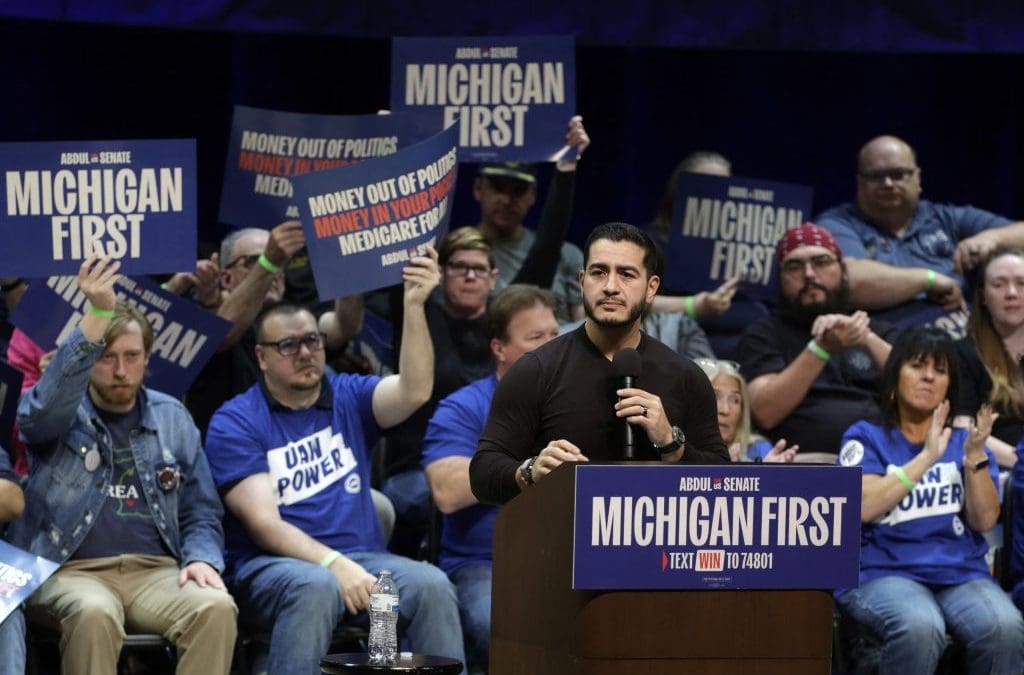
You may have heard that Michigan Democratic Senate nominee Abdul El-Sayed is “having a lot of trouble putting [the Democratic] coalition back together,” or that “Democrats [are] struggling to unite behind El-Sayed,” or that “Democrats are still struggling to unite behind El-Sayed,” or that “El-Sayed faces resistance from some voters who would ordinarily be inclined to support a Democrat,” or that “Democratic divisions could hurt El-Sayed.” It’s a prominent narrative that is driving political discourse in the closing weeks of the tight Michigan Senate race.
There’s only one problem with this narrative: It has zero empirical basis. It’s a total confection of US media and the pro-Israel lobby that isn’t supported by any data whatsoever. Two recent polls, one from Marist and one from RedBox Research, make it clear that El-Sayed’s support among Democratic voters in Michigan is both extremely high (95%) and the exact same percentage as Republican candidate Mike Rogers’ support with Republicans. And a new poll from Mitchell Research CBS complicates the narrative even further, finding that support for El-Sayed among Democrats is, in fact, 3 points higher than Rogers is among Republicans, at 94% versus 91%, respectively.
If El-Sayed and Rogers have the exact same percent of party dissent—or, as is the case in the CBS Detroit poll, Rogers has more—then why are there countless stories highlighting, handwringing, and scandalizing the trivially small dissent for only one of the candidates? Where are the breathless profiles of Republicans refusing to vote for Rogers? Where are the NPR and CNN segments focusing on “Republican divisions”?
There, of course, aren’t any, because this narrative wouldn’t advance an ideological agenda.
The “Michigan Democrats are
by Maximillian Alvarez | Nov 2, 2026 | Capitalism, Economy, Economy and Inequality, labor, Opinion, Politics and Movements: International, Politics and Movements: US, Socialism, video
With a global capitalist system that is wreaking havoc on the planet, pushing most of humanity into poverty, and enabling a small number of billionaire and trillionaire oligarchs to accumulate more money and power than nation-states, more people around the US and beyond are asking: “Could socialism be the solution?” But can socialism actually work in the real world? Can it actually help create a better world than the one capitalism has created?
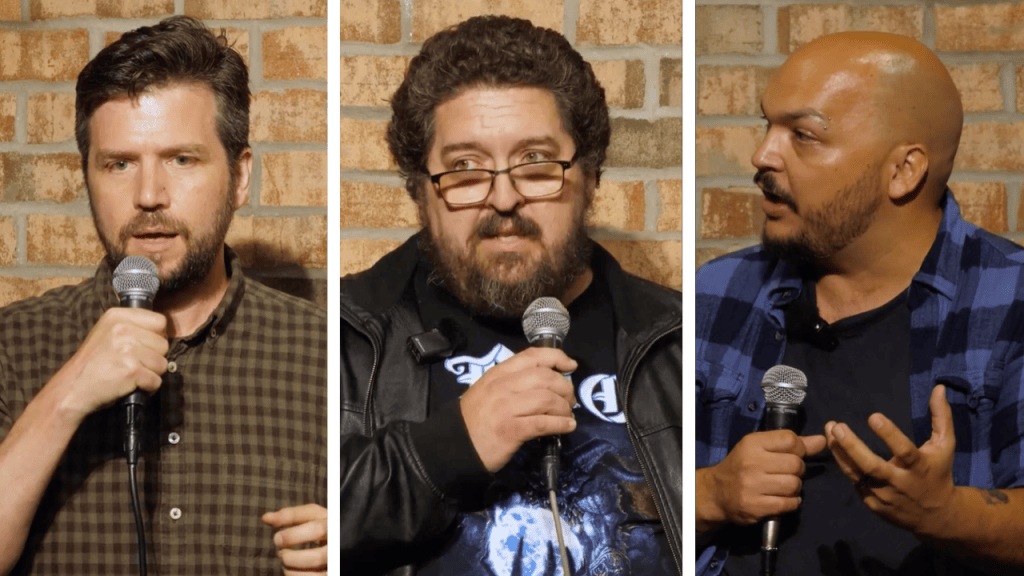
In this live-event discussion, hosted at Red Emma’s Cooperative Bookstore and Coffeehouse in Baltimore, Maryland, TRNN Editor-in-Chief Maximillian Alvarez speaks with Ben Burgis and Mike Beggs about their new book, co-authored with Bhaskar Sankara, The Blueprint: How Socialism Can Work in the Real World.
Credits:
Production/Post-production: Cameron Granadino
Transcript
The following is a rushed transcript and may contain errors. It will be updated.
Maximillian Alvarez:
So we’re here at Red Emma’s Cooperative Bookstore and Coffee House in Baltimore, and I am really excited to be sitting with two of the three co-authors of the vital new book, The Blueprint: How Socialism Can Work in the Real World. Ben Burgis and Mike Beggs. Give it up, everyone. Hell yeah. Welcome to Baltimore, guys. So let’s talk about the S word, right? I mean, we’re here. The world’s on fire. Life continues to get harder and scarier year after year for working people everywhere. The masked jackbooted thugs that we were warned about are in our streets, hunting and disappearing our neighbors. Endless war and genocide and profiteering are ripping our world and our people apart. And everything is being run or taken over by these psychopathic, self-serving, greedy, society destroying, profit seeking, oligarchs, end times,
by Molly Claflin | Oct 6, 2026 | Congress, Opinion
Democrats are already planning how they will use their new oversight powers should they win back one or both houses of Congress in November. The first step in any plan, of course, is sending a slew of subpoenas to the White House. But there are additional, likely more productive ways to hold the Trump administration accountable. Congressional Democrats need to take a page from the Watergate investigation and follow the money.
That means investigating the ties between Trump and corporate America – and probing the companies themselves. “Some Democrats are cautioning that the party shouldn’t use investigative authority too broadly against corporate America to avoid steering into retribution,” Politico reported Monday. That caution is mistaken. In fact, congressional investigators may find the most effective oversight targets sit not in the White House, but on Wall Street.
Many in corporate America have realized that Trump’s pay-to-play administration has created opportunities for profitability.
Trump officials have reportedly spent months building up a legal strategy for congressional oversight after the midterms. The administration’s strategy is centered on invoking executive privilege and defying congressional oversight — including subpoenas — even going so far as issuing a new Justice Department memo purporting to shield non-governmental “outside advisors” from responding to oversight subpoenas.
Many in corporate America have realized that Trump’s pay-to-play administration has created opportunities for profitability. While making several multimillion-dollar contributions to the president’s projects, Chevron has gained the rights to vast oil reserves in Venezuela while families pay more than $4 at the pump.
Play
The Depths of Trump’s Corruption
October 3, 2026 / 10:29
Tobacco company Reynolds donated millions to a pro-Trump super PAC, including $5 million just before the
by Hayes Brown | Oct 6, 2026 | elections, Opinion, White House
President Donald Trump reportedly demanded that a series of ads promoting his presidency be paid for with taxpayer money instead of his own massive political war chest. An understandable response after a cumulative five years and nine months of Trump’s narcissistic behavior in office would be a weary “of course he did.” But the $20 million in funding set aside to bring MAGA propaganda to millions of American households should not be treated as just another example Trumpian self-aggrandizement, especially given how many supposed adults in the room signed off on what seems to be blatant public corruption.
The Wall Street Journal first reported last week that the ads, each of which discloses that it was “paid for by the U.S. government,” were funded out of the Department of Homeland Security. The New York Times reported Saturday that the president “personally instructed” Office of Management and Budget Director Russell Vought to “come up with the money” for the ads “from within the government.”
The $20 million in funding set aside to bring MAGA propaganda to millions of American households should not be treated as just another example Trumpian self-aggrandizement.
According to the Times, Vought then shifted the money to U.S. Customs and Border Protection under “a budget category called One Big Beautiful Bill Commemorative Events.” Federal contracting records showed that, a day later, a Maryland-based firm called LMD was hired to produce the ads. CNN reports that LMD has a total of 12 ads in the hopper, though only three had aired as of Monday, while the Times also reported that another firm, LMO, purchased the airtime used to disseminate them.
As I