by Paul Waldman | Oct 5, 2026 | Economy, Opinion, White House
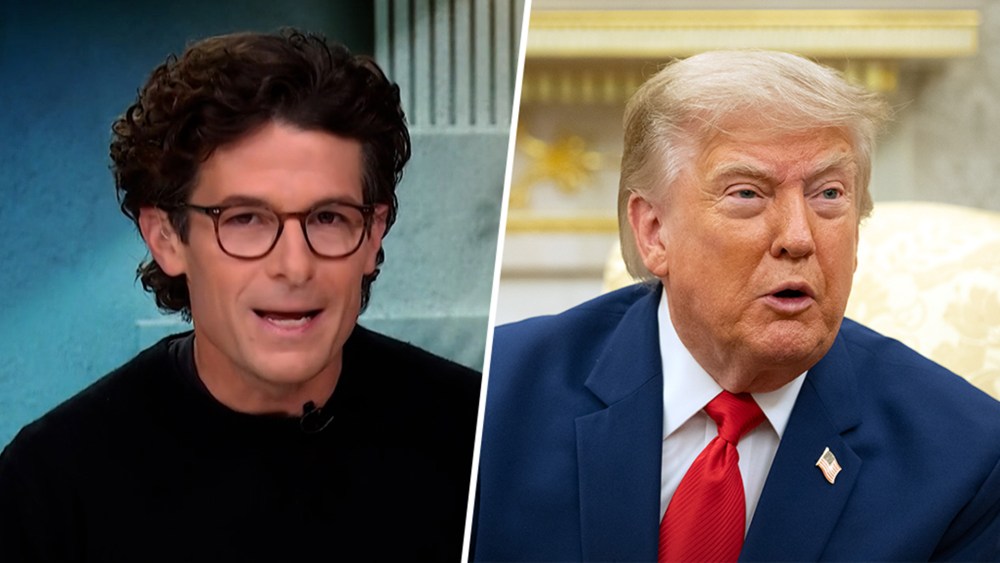
The latest jobs report from the Bureau of Labor Statistics fell far short of expectations: just 29,000 jobs created in September. Though not many people are losing their jobs, it is a bad time to be looking for one (just ask any graduating senior). And critically, wage growth was again lower than inflation, meaning that on average, Americans continue to fall behind on affording the necessities of life.
To look at President Donald Trump’s poll ratings, one would think we’re in the middle of an outright depression, not just a mediocre economy that isn’t providing the kind of security and opportunity people want. That may be explained by a yawning gap between what Trump promised and what he has delivered — especially for those people, including young men, who put the greatest hope in him to improve their lives.
It was clearly a mistake for Trump to say on the campaign trail in 2024, “When I win, I will immediately bring prices down, starting on Day One.” But that’s not all he hasn’t been able to deliver.
Begin with the big picture, which could hardly be worse for Trump. His average approval on the economy is in the low 30s. On inflation — or “the cost of living” in some surveys — it’s even worse. Last week’s AP/NORC poll showed his approval on the cost of living at just 17%, the same number as in the most recent Reuters/Ipsos poll. Perhaps most shocking of all, in both polls, most Republicans said they disapprove of the president’s handling of the issue.
It was clearly a mistake for Trump to say on the campaign trail in
by Ryan Teague Beckwith | Oct 4, 2026 | Opinion
For 40 years, classic rock was more or less the same.
Starting in the mid-1980s, classic rock became a distinct national radio format: a familiar, heavily male, guitar-centered library of music from the 1960s and ’70s. Since then, the essential canon of 300 to 400 songs hasn’t changed much.
At the center, like the Bach-Brahms-Beethoven trinity in classical music, was The Beatles, The Rolling Stones and Led Zeppelin, followed by Pink Floyd, The Who and Queen. Mixed into the rotation were second-tier bands like Boston, Lynyrd Skynrd and The Allman Brothers.
When Generation X came of age, softer 1970s staples like Steely Dan and Chicago were pushed aside for bands like Nirvana and Pearl Jam, but the concept remained the same: guitar-driven rock, mostly by white men. Millennials did the same, adding pop-punk and garage-rock revivalists like Green Day and The Strokes and breathing new life into overlooked anthems through video games like “Guitar Hero” without changing the formula.
Now, Gen Z is rewriting the rules entirely.
With neither first-hand nor second-hand nostalgia for classic rock, younger listeners are picking and choosing from all different eras of rock ‘n’ roll, adding songs to a generational playlist based on little more than vibes.
The result is a new canon that is more eclectic, with more women and gay artists and more attuned to a momentary mood than the album-oriented rock long favored by baby boomers and their gatekeepers in the music industry.
I first realized this shift was happening when my teenage daughter began spontaneously singing along to Supertramp’s “Breakfast in America” in the car one day. Her younger brother then asked his guitar teacher if he could
by Zeeshan Aleem | Oct 4, 2026 | culture, Opinion, White House, World
When I learned that Israeli Prime Minister Benjamin Netanyahu had called for passing a law aimed at revoking the citizenship of two Israeli directors who made a new documentary about the war in Gaza, I figured that he was engaging in his typical flair for dramatics. But when I saw the film for myself, I immediately understood why he felt so threatened by it.
“NAZA,” which is set to release in theaters across the U.S. in the coming weeks, is a jaw-dropping indictment of Netanyahu’s military operation. Directors Yuval Abraham and Rachel Szor interview 24 Israeli intelligence officers and soldiers — whose appearances and voices are digitally altered to provide them with anonymity — to reveal vivid, often horrifying details of the Israeli military’s incursion into Gaza in response to Hamas’ Oct. 7 war crimes.
One might wonder what’s left to learn or condemn after Gazans have documented so much of Israel’s brutal treatment of civilians through videos that have, at times, made social media feeds almost unwatchably grim. Moreover, many human rights organizations and scholars of genocide have for years characterized Israel’s ongoing operation as genocidal.
Yet even if you follow the conflict fairly closely, “NAZA” will likely reveal new information to you about how the Israeli military dominates Gaza and internally rationalizes its brutalization. And if you’re unconvinced that Israel’s military operation is beyond the pale, this might just be the thing that changes your mind.
What might frighten Netanyahu more than anything is some of the interviewees’ ultimate assessment of what they participated in.
“NAZA,” which is a Hebrew military acronym that means “collateral damage,” shreds the myth that the Israeli military
by Matthew Bartlett | Oct 4, 2026 | elections, Opinion
The 2026 midterm campaign is 35 days away from ending, which means the 2028 presidential campaign is 36 days away from beginning.
Currently, the debate among Republicans is not whether the November elections will go badly, but how badly it will go. “We’re gonna get crushed,” one House Republican told MS NOW. “The only question is by how much.”
Senate Republicans’ top super political action committee has already pulled out of North Carolina and moved resources to Kansas, which hasn’t elected a Democrat to the Senate in nearly a century.
Yet the Republican with the most on the line come Election Day may not even be on the ballot: Vice President JD Vance.
Even if Trump’s approval rating is in the 30s, that dwindling group will make up the Republican primary electorate in 2028 — and its members seem to have already chosen the vice president.
“Politically, there’s just a recognition that it’s always going to be hard to win a midterm when you have the White House, the Senate and the House,” Vance told NBC News last week.
But his party’s problems are greater than historical trends. When the ship goes down, it’s the anchor that usually goes first, as Trump’s average approval ratings have dropped to the mid-30s. Democrats’ lead in the generic ballot keeps growing. The Iran war is stalled. Prices remain persistently high. Many voters who joined Trump’s winning 2024 coalition have fled, while fissures widen among those who stayed. There is little prospect that these trends reverse before Election Day, but there is concern they could grow worse.
Trump’s polls are reminiscent of George W. Bush’s second term, and the Democratic
by Cedric Alexander | Oct 3, 2026 | immigration, Opinion, Politics, White House
The lawsuits filed this week by the survivors of Renee Good, who was shot dead Jan. 7 by Immigration and Customs Enforcement agent Jonathan Ross in Minneapolis, make the general claim that Ross had no reason for killing the 37-year-old mother of three. But plaintiffs make two more specific allegations that particularly trouble me as a 40-year law enforcement veteran who trained other officers.
The lawsuits say at least one ICE agent told Good, who was in the driver’s seat of an SUV, that she could leave the scene where ICE agents were working at about the same time other agents were ordering her out of her car. The lawsuits also allege that agents at the scene not only failed to provide aid to Good after she was shot but also stopped a doctor from trying to help her.
These are but allegations. The government has claimed Ross fired in self-defense because he feared she was about to run over him with her vehicle, and a court may eventually decide whether he was justified. But the allegations that Good was given conflicting orders and denied medical aid after she’d been shot describe failures I’ve seen before and know have no place in professional policing.
The allegations that Good was given conflicting orders and denied medical aid after she’d been shot describe failures I’ve seen before and know have no place in professional policing.
As someone who has led police officers, I have defended them when they are right. I know a vehicle can kill an officer as surely as a gun can, and agents are right to respect that. But that’s why sound
by Keith Reed | Oct 3, 2026 | Congress, Opinion, Politics, Sports
The Protect College Sports Act, sponsored by Sen. Ted Cruz, R-Texas, and passed by the Senate this week, is ostensibly an effort to bring common-sense reform to an NCAA that, in pursuit of the almighty dollar, has abandoned all pretense of developing college athletes academically and personally. It’s hard to pinpoint when the cries to fix college sports got so loud, but one especially hears it everywhere NCAA Division I football teams compete on Saturdays.
But no matter how it looks on its face, the bill is a deeply flawed attempt at reforming college sports “because its framework confers consequential legal and economic benefits on institutions that already exercise enormous power,” NAACP President Derrick Johnson wrote to Senate leaders in August. Johnson argued that the bill could be catastrophic for Black student-athletes, who make up the majority of FBS football and Division I men’s basketball rosters and have already suffered decades of economic harm under the NCAA’s former rules.
It’s hard to pinpoint when the cries to fix college sports got so loud, but one especially hears it everywhere NCAA Division I football teams compete on Saturdays.
Among other things, the Congressional Research Service’s summary of Cruz’s bill notes that it would require agents representing college athletes to register with at least one state and caps their compensation for negotiating Name, Image, and Likeness deals at 5% of a contract’s value. It bans the NCAA and its member institutions from limiting what student-athletes can make from such deals and establishes a reporting requirement for any deal worth more than $600.The bill would also bar colleges and NIL collectives from paying athletes in ways