

Trump Admin Report: Pre-Iran War Gas Prices Won’t Return Until After 2027
In a Fox News interview earlier this week, President Donald Trump appeared to acknowledge that the war on Iran he started in late February would have economic consequences, including higher gas and oil prices for the foreseeable future. While higher prices are detrimentally affecting millions of Americans at gas pumps across the country, Trump — who campaigned on lowering costs to below $2…
Source

‘Shameful’: $4,049 of average US taxpayer’s bill last year went to war and weaponry
This story originally appeared in Common Dreams on April 09, 2026. It is shared here under a Creative Commons (CC BY-NC-ND 3.0) license.
A new analysis released Thursday estimates that the average American taxpayer shelled out over $4,000 to the federal government last year “for militarism and its support systems” such as the Pentagon, whose already-massive annual budget is poised to surge to $1.5 trillion if President Donald Trump gets his way.
The National Priorities Project (NPP) at the Institute for Policy Studies found in its latest annual Tax Receipt report that, through their federal taxes, the average US taxpayer contributed $4,049.35 to Pentagon contractors, military personnel, nuclear weapons, aid to foreign militaries, and last year’s bombing of Iran’s nuclear energy facilities. That’s significantly more than the average US taxpayer contributed to healthcare for low-income Americans through Medicaid—$2,492.
NPP’s estimated militarism sum for last year does not include costs related to the current, massively unpopular US-Israeli war on Iran, which began on February 28, 2026 and has already cost Americans billions at the pump.
“But if we place the 2026 Iran war costs in the context of our 2025 tax receipt and put the cost at $35 billion—a line the US is likely on the verge of crossing—the average taxpayer will have paid $130 for the war on Iran, eight times more than the $16 the average taxpayer paid for a full year of home heating and energy assistance in 2025,” NPP said.
The $1,870 that the average US taxpayer paid toward Pentagon contractors in 2025 was “fifteen times as much as the $124 the average taxpayer paid for school lunches and other nutrition programs,” the analysis found.
“It’s shameful that our tax dollars are doing more to bomb children in Iran and other countries than to feed
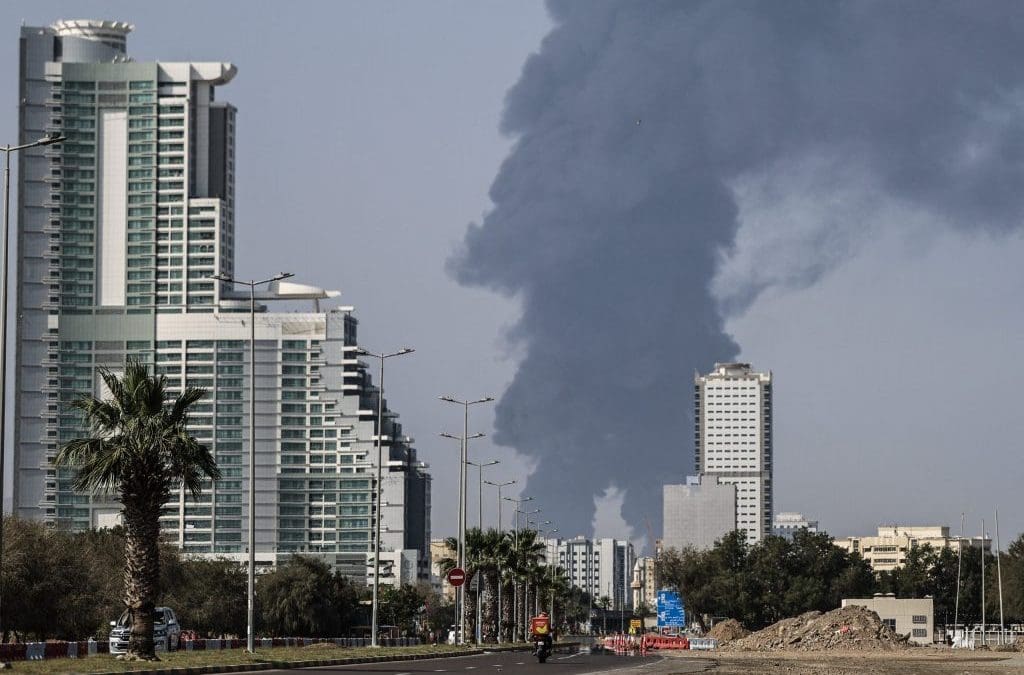
US-Israeli war on Iran is intensifying all of global capitalism’s problems
This article was originally published by Truthout on April 09, 2026. It is shared here under a Creative Commons (CC BY-NC-ND 4.0) license.
On February 28, the U.S. and Israel expanded their joint genocidal war on Gaza onto Iran as well as Lebanon. After weeks of assassinations and bombing, President Donald Trump agreed to a ceasefire on April 7. This war of aggression by the U.S. and Israel is part of a continued attempt to wipe out any and all opposition to their dominance over the Middle East and its strategic energy reserves.
But they underestimated the capacity of the Iranian state. In addition to launching missile and drone attacks throughout the region, Iran blockaded the Strait of Hormuz, disrupting the production and shipment not only of fossil fuels but also an array of other commodities vital to global capitalism. With fossil fuel prices spiking and stocks crashing, Trump called off his threat to wipe out Iranian civilization and agreed to a ceasefire with Iran.
But Israel has already violated it, Iran has re-closed the Strait of Hormuz, and the ceasefire seems in jeopardy on the eve of negotiations for a settlement of the conflict in Pakistan. As a result, the world stands at the precipice of a multidimensional economic crisis.
In this interview for Truthout, Adam Hanieh discusses the U.S. and Israel’s imperialist goals, the war’s impact on the economies of the Global North and Global South, and its consequences for the geopolitical order as well as class and social struggles in the region and around the world. Hanieh is a professor in development studies and director of the SOAS Middle East Institute, University of London.
U.S. inflation surged in March, pushed higher by the effects of the war in Iran
A week ago, during his address to the nation about the war in Iran, Donald Trump took a moment to repeat familiar and false claims about the U.S. economy. The president said Americans are currently enjoying “the strongest” economic conditions “in history” (a spectacularly wrong assertion) and that there’s “no inflation.”
Even at the time, the suggestion that there’s been “no inflation” in his second term was immediately recognized as an absurdity, but a week later, one of the Republican’s favorite lies suddenly looks even more ridiculous.
On Thursday, core personal consumption expenditures price index, which is closely watched by the Federal Reserve to gauge inflation, offered more discouraging news. On Friday morning, things looked even worse. CNBC reported:
Consumer prices spiked in March as the Iran war sent energy costs soaring and took the Federal Reserve further from its inflation target, according to a Bureau of Labor Statistics report Friday. Underlying inflation, however, was relatively tame.
The consumer price index increased a seasonally adjusted 0.9% for the month, putting the annual inflation rate at 3.3%, pushed by a 10.9% surge in energy costs.
The data was entirely in line with expectations, but that won’t matter much to American consumers who are struggling with the highest CPI in two years. What’s more, inflation in March showed the highest one-month increase in prices in roughly four years, when oil prices spiked following Russia’s invasion of Ukraine.
The price of gasoline, meanwhile, saw its largest one-month increase since 1967.
In fairness, it’s worth emphasizing that core prices, excluding food and energy, showed a far more modest increase.
The trouble is, the cost of food and energy count.
A national CNN poll
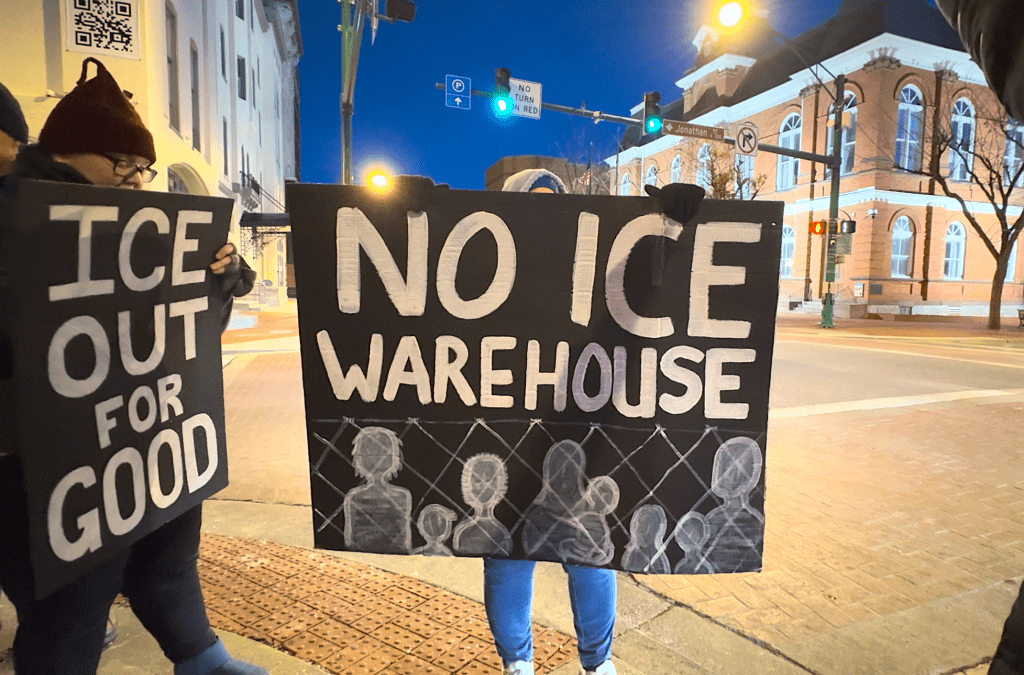
‘A black site concentration camp’: Residents fight ICE detention warehouse in rural Maryland
To execute its mass deportation campaign, the Trump administration has big plans for small-town America. In the rural town of Williamsport, Maryland, just next to Hagerstown, the Department of Homeland Security recently purchased a massive shipping warehouse for over $100 million and plans to convert the facility into an immigrant detention center that will hold upwards of 1,500 human beings per day. In this on-the-ground report, TRNN takes you to the site of the proposed ICE detention facility and speaks with local residents who are fighting back and demanding more transparency and accountability from the government.
Additional links/info:
Hagerstown Rapid Response Network website, Facebook page, Bluesky page, and Instagram
Washington County Indivisible website
Project Salt Box Substack, Bluesky page, TikTok, and Instagram
Maximillian Alvarez, TRNN, “The chilling truth behind ICE’s detention warehouses”
Maximillian Alvarez, TRNN, “Meet the data analysts exposing ICE’s plans
ACLU of Maryland, “Community leaders, elected officials, and civil rights organizations challenge DHS’s secret, rushed plan to convert Hagerstown warehouse into mass immigration detention center”
Credits:
Videographer: Maximillian Alvarez
Post-Production: Maximillian Alvarez, Cameron Granadino
Transcript
The following is a rushed transcript and may contain errors. A proofread version will be made available as soon as possible.
Claire Connor:
We are on the outskirts of Hagerstown very close to Williamsport, Maryland, and we are standing in front of a gargantuan warehouse facility that has recently been purchased by DHS for use of detention center.
Laura Spivak:
We were recently informed actually by the Washington Post via some leak documents that an ICE facility was planned for our county. We were not informed by any of our local politicians. We were not informed by the federal government. And the community
Claire Connor:
In light of this has been