by Adam Johnson | Nov 5, 2026 | Article, Democratic Party, elections, Israel, midterms, Politics and Movements: International, Politics and Movements: US
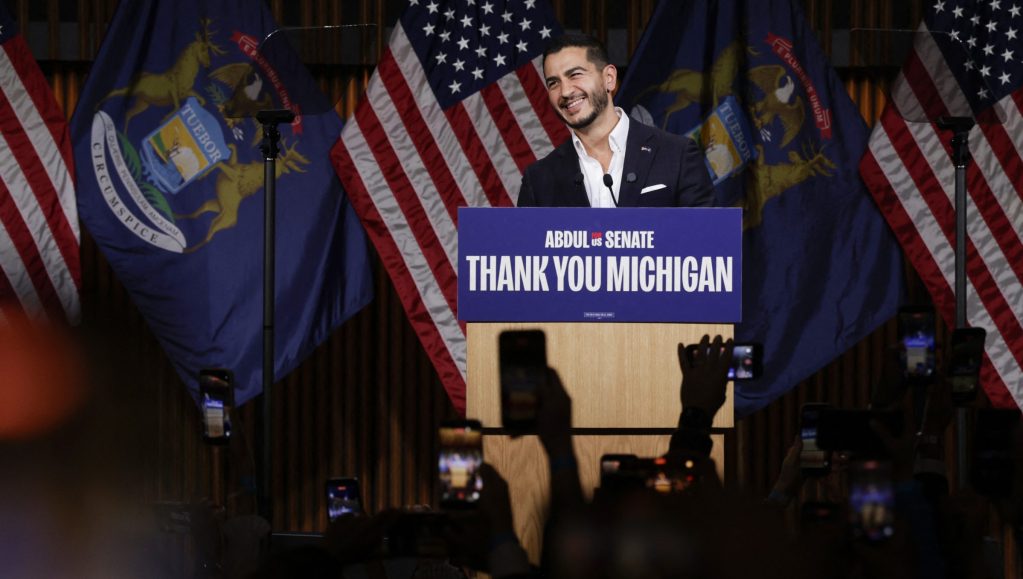
As the tide recedes on the Democrats’ “Blue tsunami” this past Tuesday, before the votes were even tallied, the internecine fight over The Narrative among the US center-left began in earnest. Centrist ideological curators, as is their function, came out strongly to paint the historic drubbing of Republicans as evidence that centrists are more electable than progressives. And progressives, likewise, have made the opposite argument, buoyed by the 7-point swing state victory of progressive and strong Israel critic Abdul El-Sayed in Michigan.
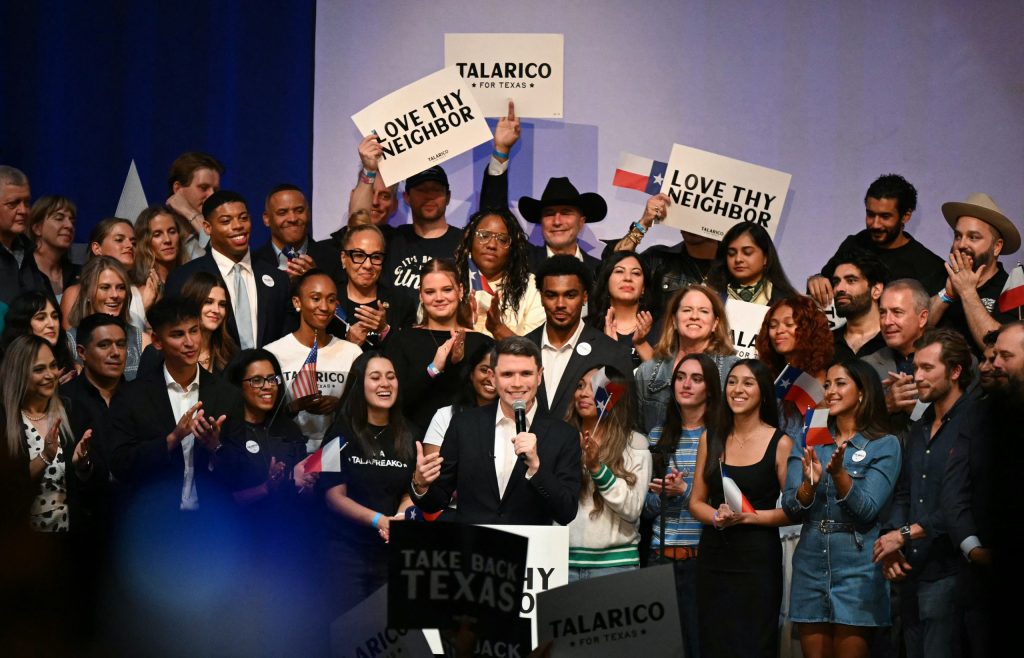
This piece won’t litigate the empirical question as such (though pollster G. Elliot Morris does an excellent job debunking the “centrists overperformed” conventional wisdom), but will highlight instead how many of the “El-Sayed is toxic and can’t win middle America” narratives completely evaporated Tuesday night, and how those pushing them will, of course, never be held to account nor asked to explain why so many outright lies were advanced about the Democratic nominee. El-Sayed won by roughly 340,000 votes despite being subject to nonstop intra-party, intra-liberal attacks emanating from everyone from the president of the most influential liberal think tank in the US, to key Democrats in Congress such as House Speaker Emerita Nancy Pelosi, Jim Clyburn, and Debbie Wasserman Schultz, to influential liberal media outlets The Atlantic magazine and The New York Times, to his largely Republican-funded primary opponent Hayley Stevens, who––unlike the others––at least had the courtesy to break kayfabe and come out in support of Republican Mike Rogers explicitly. Unlike genetic white media darlings Roy Cooper and James Talarico who, the centrist wonk expects insists, Covered The Spread, El-Sayed was subject to one of the most
by Chris Walker | Nov 5, 2026 | Article, Democratic Party, elections, midterms, Politics and Movements: US, Reprint, Voting Rights
This article was originally published by Truthout on Nov. 04, 2026. It is shared here under a Creative Commons (CC BY-NC-ND 4.0) license.
Several statewide and state legislative contests in this week’s midterm elections have resulted in new Democratic Party “trifecta” governments — places where the party is now in control of both houses of the state legislature as well as the governor’s office.
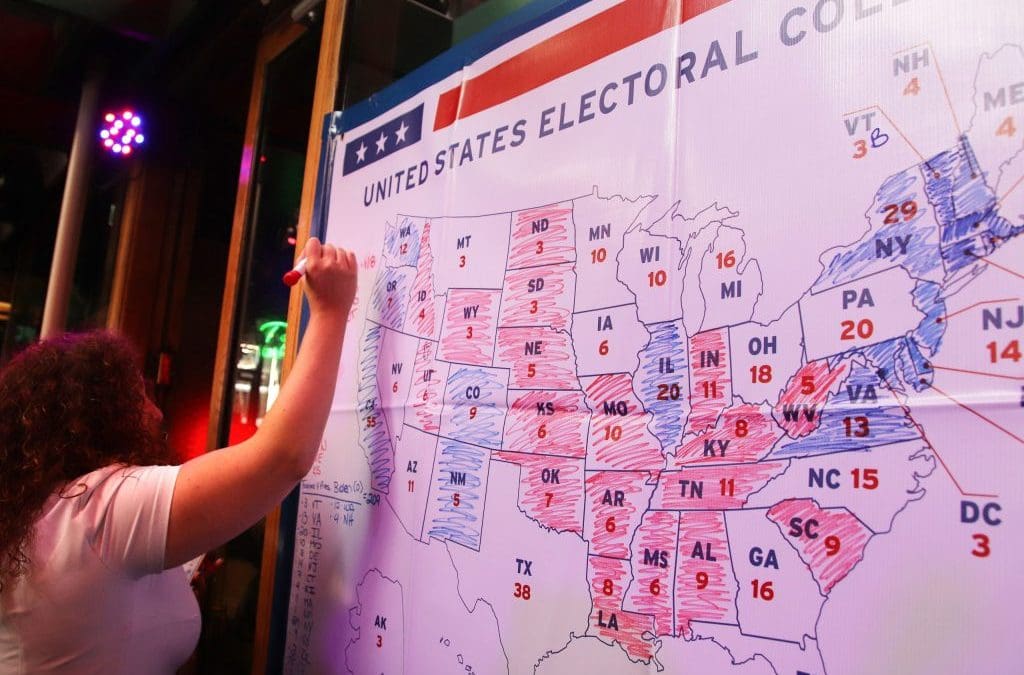
With these new wins, Democrats have the opportunity to do something once considered nearly impossible: implement a popular vote model for electing future presidents of the United States, to replace the archaic and unpopular Electoral College.
Due to the mechanics of the Electoral College, five presidential “winners” in U.S. history have taken office who did not win the approval of most voters, including twice over the past three decades. While a constitutional amendment would be needed to formally abolish the Electoral College — which is unlikely to happen anytime soon, even after this week’s “blue wave” — there is a workaround called the National Popular Vote Interstate Compact, which doesn’t require such an amendment.
Per Article II of the U.S. Constitution, each state is mandated to appoint, “in such manner as the Legislature thereof may direct, a number of electors, equal to the whole number of Senators and Representatives to which the State may be entitled in the Congress.” These electors end up voting for president and vice president.
All states today direct their electors to vote based on their own results in presidential races. If a Democratic candidate wins in California, for example, all 54 of its electors are people chosen to support that candidate in the Electoral College.
But under
by Robert Reich | Nov 4, 2026 | Article, Democrats, Economy, Economy and Inequality, elections, midterms, Opinion, Politics and Movements: US, Reprint, Trump
This story originally appeared in Common Dreams on Nov. 04, 2026. It is shared here under a Creative Commons (CC BY-NC-ND 3.0) license.
The great sleeping giant of America has awakened, taken a hard look at what’s become of the nation, and roared a thunderous “NO!”
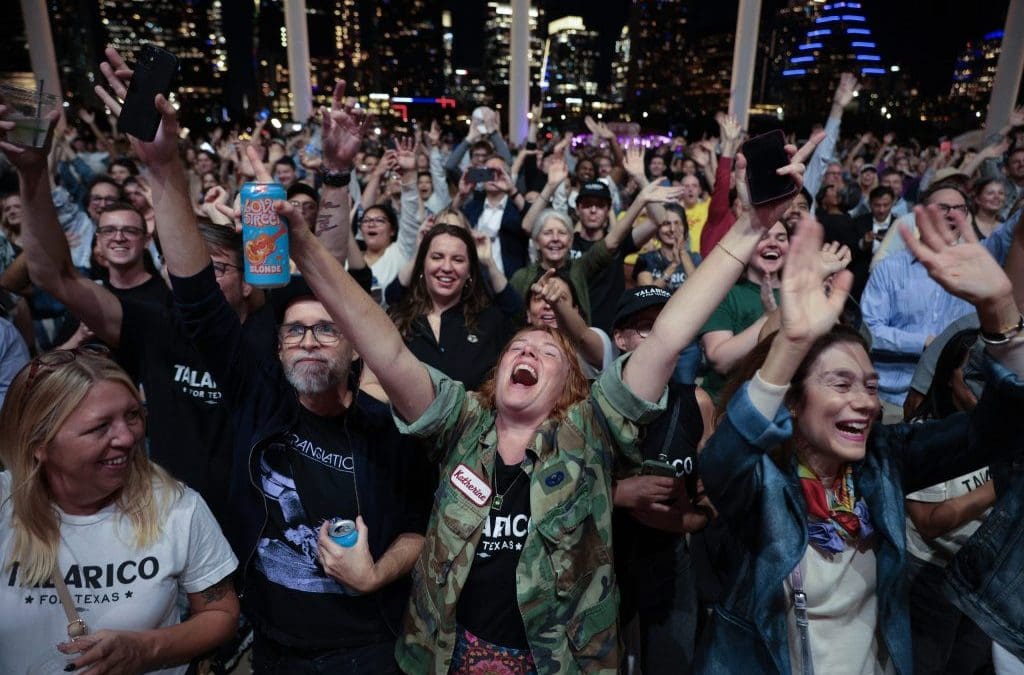
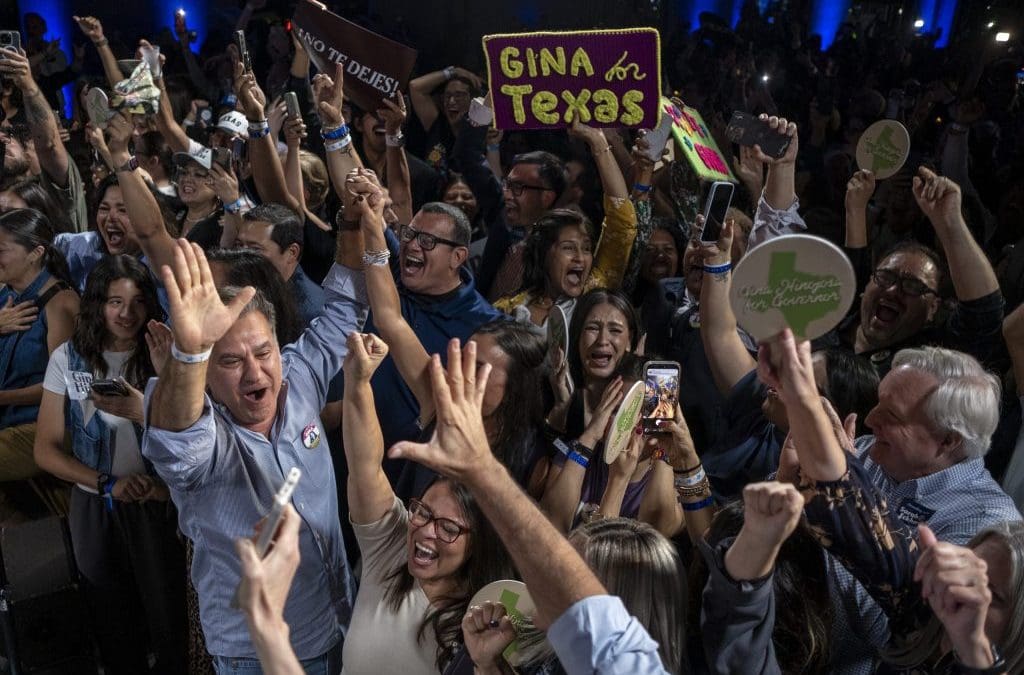
What occurred yesterday was not—as some are saying—the inevitable mid-term swing of the pendulum against the party in power. Texas hasn’t elected a Democratic senator since 1988. The last time Kansas elected a Democratic senator was 1932.
Nor was it just the economy. Americans are unhappy with inflation, but the country is not in a depression or recession. Unemployment remains quite low.
Nor, finally, was it all due to Trump. Despite Trump’s repeated efforts to get voters to “pretend” he was on the ballot, he was not. Most Republican candidates barely mentioned him and many Democratic candidates stressed local or statewide issues rather than fixate on him.
Something much larger is responsible for what occurred: anti-establishment populism. It’s burst forth against the mammoth corporations that have scored record profits while most Americans have had to pay more. Against the mega donors and super PACs that have flooded American politics with more campaign money—legalized bribes—than ever before. And against the Big Tech billionaires who have become the most powerful force in the American economy and society—as well as Trump’s and the Republican Party’s most visible backers.
The irony is that anti-establishment anger propelled Trump into the presidency in 2016 and again in 2024. Many Americans had found his politically-incorrect rants and “America first” nativism to reflect their own anger at being disrespected or left behind. “I am your warrior,” he told supporters when
by Florestan Fernandes Jr. | Nov 4, 2026 | Article, bolsonaro, brazil, elections, midterms, Opinion, Politics and Movements: International, Politics and Movements: US, Reprint, Trump
This story originally appeared in Panamerican Dispatch on Nov. 04, 2026, and is shared here with permission.
President Donald Trump’s crushing defeat in the U.S. midterm elections and President Luiz Inácio Lula da Silva’s historic victory in Brazil mean much more than two election results. They send an enormous political message to the world. In the two largest and most important countries in the Americas, voters are saying they do not accept a unipolar world order. They reject the ideology of white supremacy. They say no to political projects that turn immigrants into enemies by persecuting them, criminalizing them and denying them fundamental rights.
But the message is broader. People want peace. They want an end to wars, military threats and unilateral sanctions that undermine free trade and relations among nations. They want a world where dialogue and diplomacy prevail over force, intimidation and one power imposing its interests on all others.
The results are also excellent news for the United Nations, which Trump’s foreign policy has treated with contempt. The UN now has a chance to regain a leading role. It can advance the reforms needed to play a truly central part in building a new international order. That order would be more democratic, multipolar and committed to peace, the sovereignty of peoples and cooperation among nations.
Another phenomenon is even more significant. A wave of popular mobilization is growing in Brazil, the United States and several European countries. It brings together young people, workers and broad sectors of society. Street demonstrations have outpaced traditional parties and political leaders, and often their ability to respond. The rise of autocratic governments and projects, threats
by Jake Johnson | Nov 4, 2026 | Article, Economy, Economy and Inequality, elections, midterms, Politics and Movements: US, Reprint, Texas
by Brett Wilkins | Nov 3, 2026 | Article, Israel, midterms, Politics and Movements: International, Politics and Movements: US, Reprint, Trump