by Maximillian Alvarez | Feb 2, 2026 | Climate Crisis, east palestine, Economy and Inequality, Podcast, sacrifice zones, video
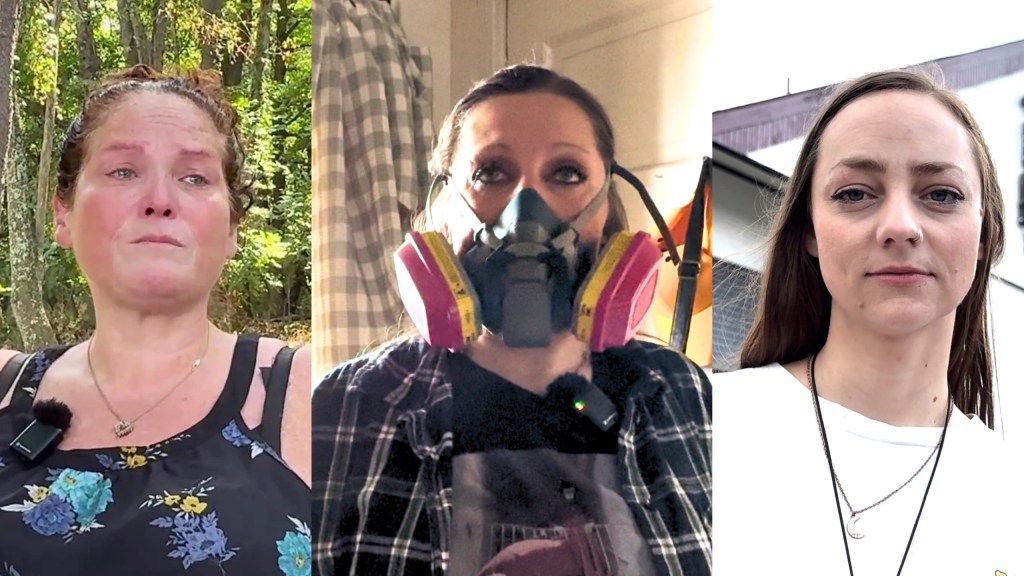
It’s been three years since a Norfolk Southern “bomb train” carrying toxic chemicals derailed in the small town of East Palestine, OH, on the night of Feb. 3, 2023. Three days later, Norfolk Southern pressured local authorities to make the disastrous and completely unnecessary decision to empty five giant carloads of vinyl chloride into a ditch and set the contents on fire. The “controlled burn” of vinyl chloride released a massive black chemical plume into the air and exposed residents in East Palestine and the surrounding areas to deadly toxins in one of the worst industrial disasters in US history. Three years later, residents in East Palestine and the surrounding area are still suffering the toxic fallout.
While Norfolk Southern, opportunistic politicians, sensationalist media outlets, and most of the public have moved on and forgotten about the mass poisoning of these residents, we at TRNN have not forgotten them, and we won’t give up on them. I’ve been interviewing and filming reports with residents in and around East Palestine for the past three years, including for our Izzy-Award-winning documentary Trainwreck in ‘Trump Country’: Partisan politics hasn’t helped East Palestine, OH. To commemorate the three-year anniversary, I have compiled here all of my original reporting for TRNN on the Norfolk Southern train derailment and chemical disaster in East Palestine.
Please I beg you, don’t forget about the people affected by this disaster. Listen to their testimonies, share their stories everywhere you can, keep fighting to hold their poisoners accountable. Because what happened to them is a national tragedy and a humanitarian outrage. Because they are working people just like you and me, they
by Maximillian Alvarez | Feb 2, 2026 | ICE, Minneapolis, Podcast, Politics and Movements: US, Prisons and Policing, video, Working People
Transcript
The following is a rushed transcript and may contain errors. A proofread version will be made available as soon as possible.
Speaker 1:
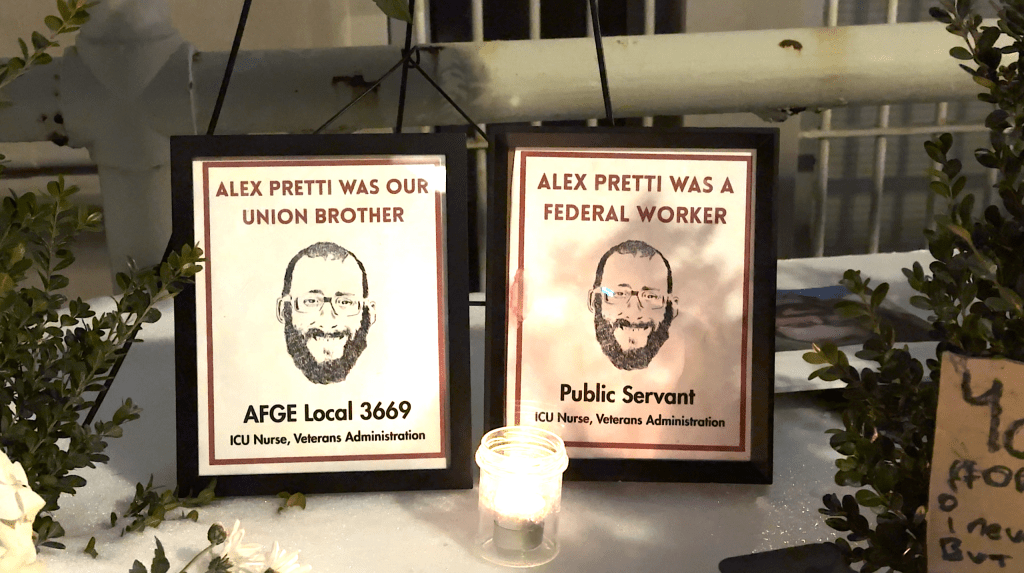
Alex Pretti was murdered while showing his humanity in the most clear way, helping another human. We ask for justice now. We demand eyes out of our communities. We demand investment in our future and not our capture. We demand that no money is invested in a machine that clearly threat to public justice and will murder with impunity.
Speaker 2:
Alex, he came to the rescue. I saw the video like 50 times like everybody else. A woman was being pushed down by a large man who was armed and he went to her rescue. He was beaten, he was sprayed, he was put to the ground and he was shot 10 times. And Alex’s boss is in that building right over there. And what did he do? He sends out a freaking tweet or whatever the hell it was. It was a political tweet saying, we acknowledge he worked for us. Shame. Yes, shame. What did Secretary Collins convey to over 450,000 VA employees? He doesn’t give a shit about any of ’em. I would say that Alex is a hero. He will be remembered as a hero, and we should all be very proud that he was a VA employee, that he was a federal employee. Thank you. We
Speaker 3:
Don’t want to stand idly by as our families are torn apart and our comrades are murdered, especially when our own institutions are profiting from this injustice. And as we mourn and grieve the tragic loss of our organizers,
by Mansa Musa | Jan 26, 2026 | Politics and Movements: US, Prison Industrial Complex, prison reform, Prisons and Policing, Racial Justice, Rattling the Bars, video
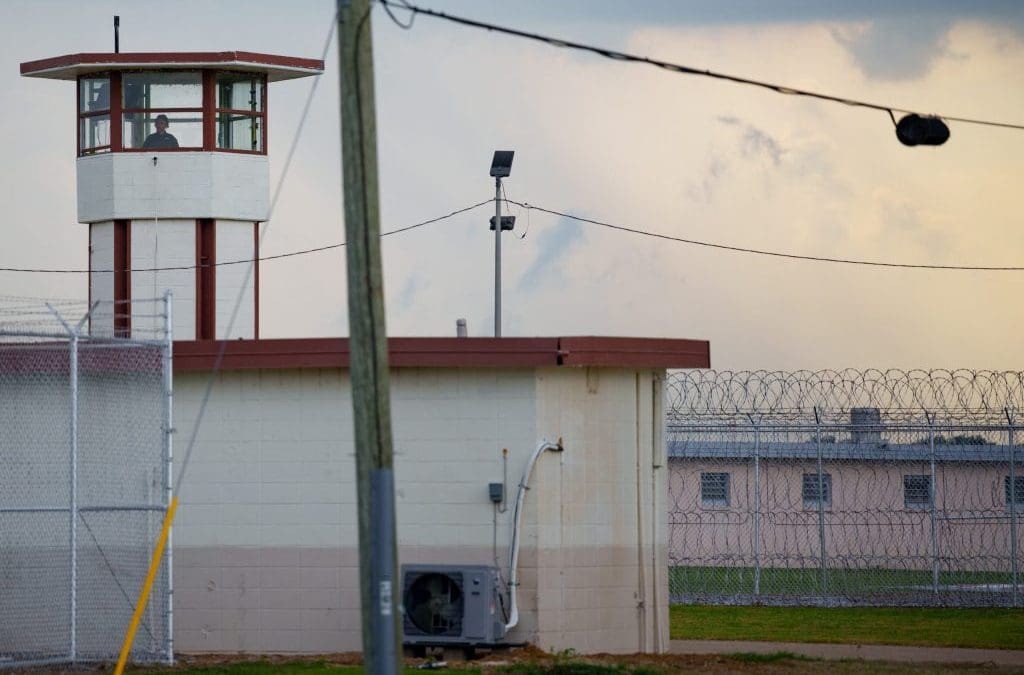
Non-unanimous jury verdicts were a Jim Crow–era policy designed to silence Black jurors and secure convictions even when the state failed to prove its case. In 2026, over 1,000 people remain imprisoned in Louisiana after being convicted by non-unanimous juries. In this episode of Rattling the Bars, Mansa Musa speaks with Erica Navalance, Associate Director of Strategic Criminal Litigation at the Promise of Justice Initiative, about the case of Lloyd Gray and why the state of Louisiana continues to uphold unconstitutional convictions.
Guest:
Erica Navalance has worked with both Capital Appeals Project and Promise of Justice Initiative (PIJ) since 2015, but joined PJI full time in 2021 as a senior staff attorney for the Strategic Defense Litigation project, focusing on combatting excessive sentences, capital punishment, and other injustices in the criminal system.
Additional links/info:
Richard A. Webster, Verite News / ProPublica, What one man’s 45-year-old case tells us about the “Jim Crow juries” haunting Louisiana
Promise of Justice Initiative, Swastika found on DA file introduced into court, judge grants hearing for PJI client incarcerated for 45 Years
Credits:
Producer / Videographer / Post-Production: Cameron Granadino
Transcript
The following is a rushed transcript and may contain errors. A proofread version will be made available as soon as possible.
Mansa Musa:
Welcome to Rattling the Bars. This is the court of public opinion. And when justice fails to show up in America’s courtroom, we bring the truth here before the people convicted in 1980 at the age of 19, Lloyd Gray was sent to prison even though prosecutors failed to meet their burden and two black jurors refused to vote guilty in almost any other state that would have meant a hung jury,
by Maximillian Alvarez | Jan 26, 2026 | baltimore, ICE, Minneapolis, Politics and Movements: US, video
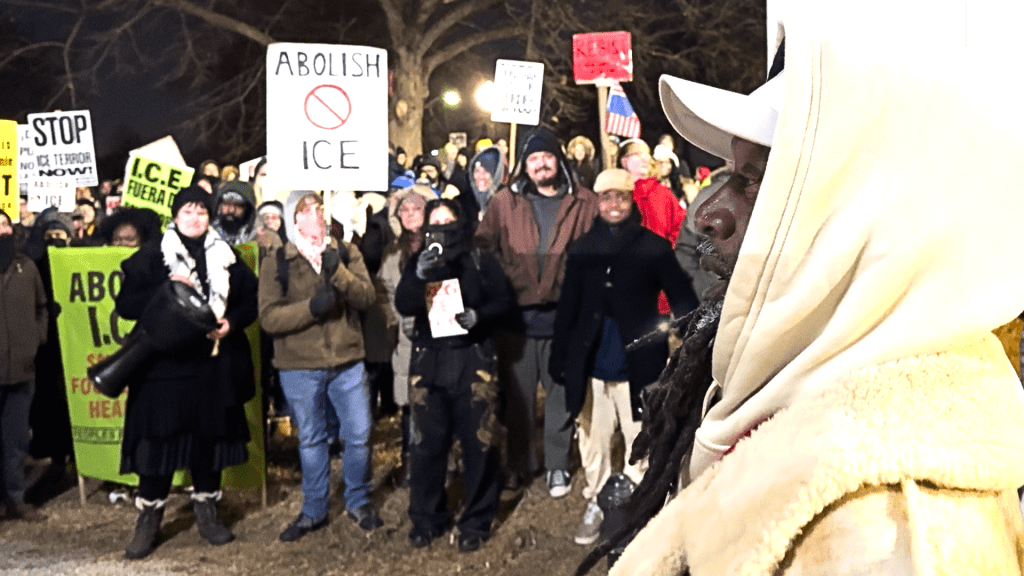
As tens of thousands of Minnesotans launched a massive general strike in Minneapolis, MN, Baltimoreans have joined other cities and towns around the US to rally and march in solidarity with Minnesota and to protest ICE terror and Trump authoritarianism. In collaboration with the Baltimore Beat, TRNN takes you into the heart of recent protests in Baltimore, MD, and speaks directly with residents standing up to ICE. Here’s what they said…“We stand with Minneapolis”: Baltimore marches against ICE (Jan. 23, 2026)
Transcript
The following is a rushed transcript and may contain errors. A proofread version will be made available as soon as possible.
Speaker 1:
Sistance is are occupied,
Speaker 2:
Resistance is justified. I’m Becky. I’m a lifelong Baltimore resident and I’m out here today because we’ve got a real crisis in this country with ice. We’ve all seen what the goons are doing in Minnesota, and we definitely don’t want them to come here to Baltimore though they’re really actually already here. They’ve been seen at the Towson Mall, they’ve been seen in Waverly, and they’re breaking the law every single day. They’re killing people. Renee good here. They are acting in a completely lawless manner. They have to be stopped. It’s sort of amazing that they still are allowed to do what they’re allowed to do. So we just got to get out here and show our anti-ice sentiment strongly. They cannot do this to Baltimore.
Speaker 3:
My name is Guard Marquee Deba. I am a member of the DC Sisters of Perpetual Indulgence. I am here with my fellow sisters and the citizens of Baltimore, Maryland and it’s surrounding communities and cities. Because
by Mansa Musa | Jan 20, 2026 | Economy, labor, Politics and Movements: US, Prison Industrial Complex, prison reform, Prisons and Policing, Rattling the Bars, video
Returning citizens are being funneled into exploitative temp jobs that pay poverty wages, deny them basic labor protections, and deepen the state’s control over their lives long after they’ve served their time. This week, Mansa Musa speaks with Katherine Passley and Maya Ragsdale, co-executive directors of Beyond the Bars, about how Florida’s temp industry traps the most vulnerable workers and operates as a profitable and punishing extension of the prison system.Guests:
Maya Ragsdale is the founder and co-executive director of Beyond the Bars, a worker center in South Florida building the social and economic power of workers with criminal records and their families.
Katherine Passley is co-executive director of Beyond the Bars. Passley was named the 2025 Labor Organizer of the Year by In These Times magazine.
Additional links/info:
Beyond the Bars website, Substack, and Instagram
Beyond the Bars, The Temp Trap Report
Credits:
Producer / Videographer / Post-Production: Cameron Granadino
Transcript
The following is a rushed transcript and may contain errors. It will be updated.
Mansa Musa:
Returning citizens are routinely pushed out of permanent jobs and instead pushed into temporary work often for the same role. According to the Prison Policy Initiative, 27% of formerly incarcerated individuals are unemployed, a rate higher than the Great Depression. Temp agencies often circumvent anti-discrimination laws and workforce protections, fueling exploitation and instability for vulnerable workers. A new report, The Temp Trap by Beyond the Bar’s co-director Maya Ragsdale and Katherine Passley argues that the state supervision and workforce discrimination keeps returning citizens trapped. The authors say it’s as if returning citizens are still doing time. Maya and Katherine joins us today to discuss their finding from two years of research. Welcome to
by Maximillian Alvarez | Jan 15, 2026 | Iran, Politics and Movements: International, video
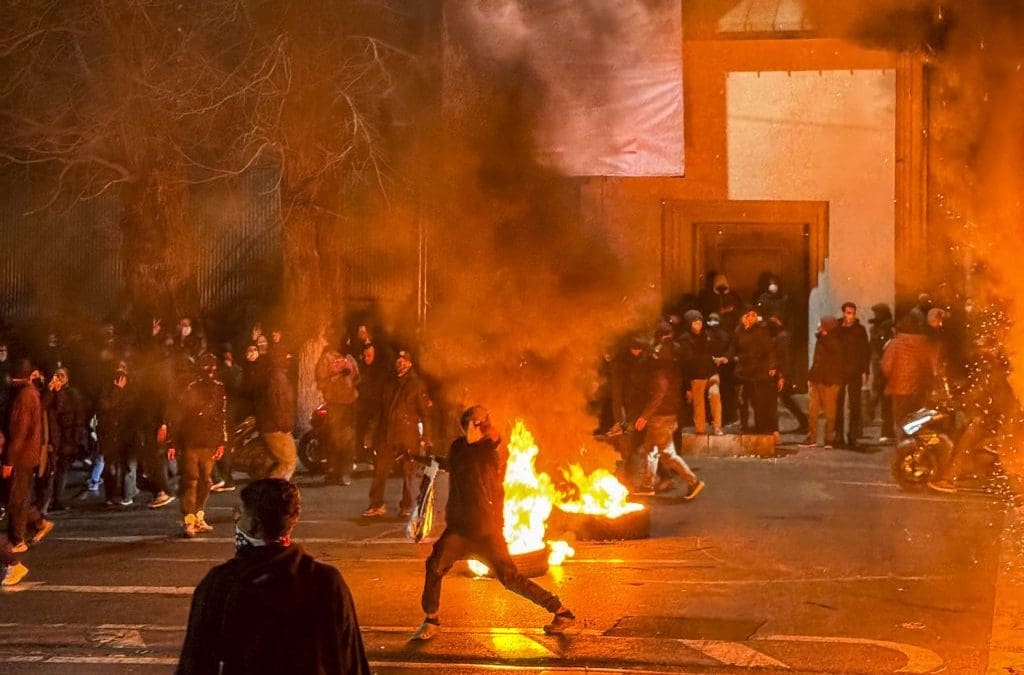
People continue to take to the streets all across Iran, even as state forces massacre protestors and the US ramps up sanctions and threatens military intervention. While a total internet blackout remains in effect in the country, TRNN Editor-in-Chief Maximillian Alvarez speaks with award-winning Iranian-Canadian journalist Samira Mohyeddin about what we do and don’t know about the crisis unfolding in Iran right now.
Credits:
Studio Production / Post-Production: David Hebden
Transcript
The following is a rushed transcript and may contain errors. It will be updated.
Maximillian Alvarez:
Samira Mohyeddin, can you please break down for us what we know about what’s happening in Iran right now, what we don’t know, and why specifically we don’t and can’t know more right now?
Samira Mohyeddin:
Iran has been under what is now past 130 hours of a nationwide internet blackout imposed by the state. What we are getting out are some reports from people who have Starlink and then also what we know leading up to the internet blackout. So protests against the dropping of Iran’s currency, which has dropped to its all time low, has really began on December 28th with the merchants in Tehhran’s grand bazaar. Those protests quickly escalated and spread to every single province in Iran. So it was not just confined to Tehran anymore. And it wasn’t just the merchant class, a wide demographic of people out on the streets. And they’re not just calling for economic reprieve or anything like that. This is now an existential problem for the Iranian government. They are calling for the downfall of the regime. They’re calling for the killing, the death of Khamenei, which is Iran’s supreme leader.
And you’re