by Mansa Musa | Feb 18, 2026 | baltimore, Prison Industrial Complex, prison reform, Prisons and Policing, Rattling the Bars, video
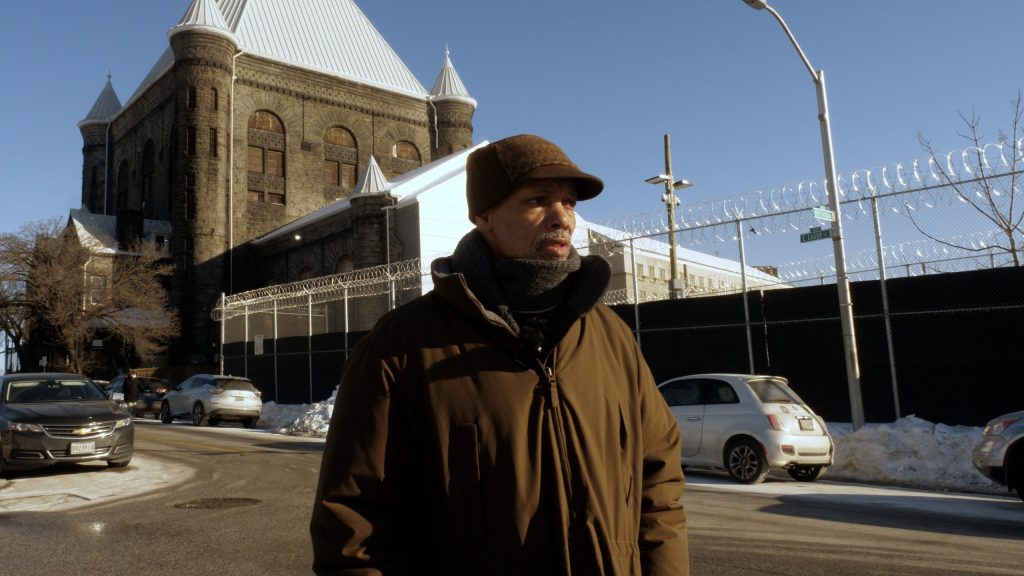
A coalition of more than 31 organizations—including the Legal Defense Fund, Leaders of a Beautiful Struggle, Maryland Justice Project, and the prison guard union AFSCME—are uniting to oppose Maryland’s proposed $1 billion “therapeutic” jail. If approved, the project would be the most expensive in state history, according to reporting by Ben Conarck and Pamela Wood for The Baltimore Banner. Coalition advocates are urging lawmakers to halt the project and instead invest in a long-overdue women’s pre-release center in Baltimore. Monica Cooper, founder of the Maryland Justice Project, highlights that the decade-long fight for a transitional space for incarcerated women remains unresolved, calling the state’s inaction a violation of law and gender equity. In a 30-minute documentary report, Rattling the Bars host and former political prisoner Mansa Musa speaks with coalition members and Baltimore residents about alternatives to the $1 billion jail.
Resource links:
How Maryland discriminates against women prisoners
‘It is torture’: Women in Maryland’s prisons have nowhere to turn
Thinking Outside the Box: Do More Humane Prisons Exist?
Credits:
Producer/Videographer/Post-Production: Cameron Granadino
Transcript
The following is a rushed transcript and may contain errors. A proofread version will be made available as soon as possible.
Mansa Musa:
Welcome to this edition of Rattling the Bars with host Mansa Musa. We’re standing outside of Brentwood and Eagle Street, which behind me is the grounds for building a new detention center that’s going to house many and women. The name of this detention center, according to legislators, is therapeutic. The problem with this is one, it’s a detention center, but the more important the problem is, it’s going to cost a billion dollars if built. This will be Maryland’s most expensive project
by Taya Graham and Stephen Janis | Feb 13, 2026 | ICE, police accountability, Police Accountability Report, Politics and Movements: US, Prisons and Policing, video
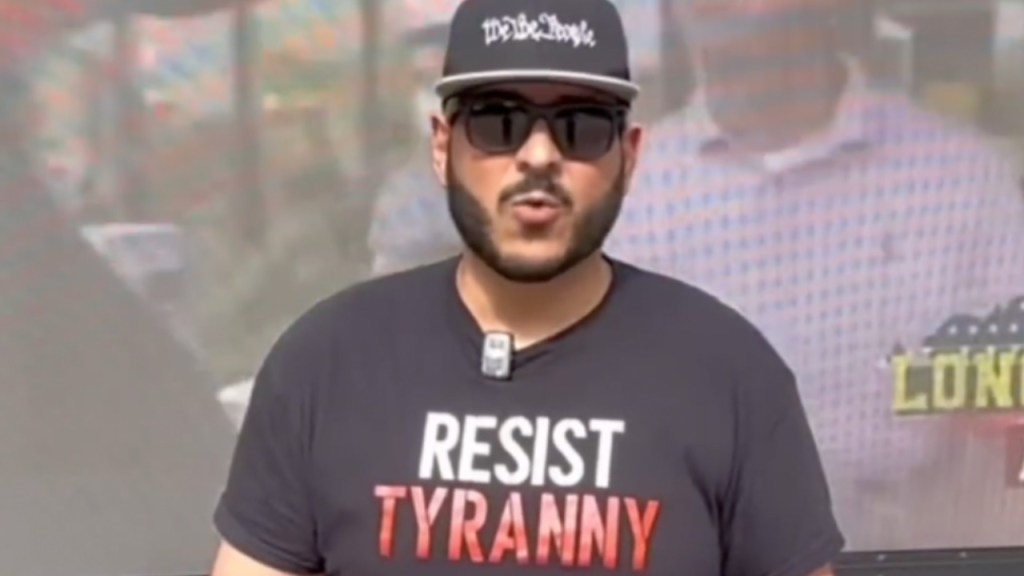
Taya Graham and Stephen Janis speak with Sean-Paul Reyes, better known as Long Island Audit on YouTube, about his choice to risk detention and stand up for his constitutional rights at a Texas checkpoint. We think you can guess which he chose. Reyes explains the difficulties and dangers in cop watching federal law enforcement officers like those with Immigration and Customs Enforcement (ICE) and Customs and Border Protection (CBP).
Credits:
Written by: Stephen Janis
Produced by: Stephen Janis, Taya Graham
Transcript
The following is a rushed transcript and may contain errors. A proofread version will be made available as soon as possible.
Taya Graham:
Hello, my name is Taya Graham and welcome to the Police Accountability Report. As I always make clear, this show has a single purpose holding the politically powerful institution of policing accountable. And to do so, we don’t just focus on the bad behavior of individual cops. Instead, we examine the system that makes bad policing possible. And today, we will achieve this goal by talking to popular cop watcher Long Island audits about his recent battles with federal authorities. He is one of the fiercest defenders of First Amendment rights and a fearless advocate for police accountability. And today he will be breaking down for us his recent encounters with federal officers and border patrol agents. Shocking video that shows just how tenuous our rights are and why it is vitally important that auditors like Sean are on the streets defending them. But before we get started, I don’t have a sponsor.
We don’t run any ads on our channel. All that we ask is that you like the video, share it and
by Ross Domoney | Feb 5, 2026 | documentary, Politics and Movements: International, Rojava, Syria, video
In the chaos of Syria’s war, in a region called Rojava, a revolution took shape. Women some of whom were within the SDF (Syria Defense Forces) built a radically different political system based on gender equality and collective decision-making, and formed all-female armed units known as the YPJ (Yekîneyên Parastina Jin) that helped defeat ISIS. But after the fall of Bashar al-Assad’s regime, Syria’s new governing forces moved to unify the country under a single national army and centralized rule. That push placed Rojava’s women-led project in direct ideological conflict with the state, as pressure mounted and the region faced the growing prospect of war.
TRNN was granted rare access to a YPJ commander at a hidden base in northeast Syria, offering a ground-level view of a women’s revolution as Rojava was preparing for war. Since filming, an agreement between the government in Damascus and Rojava’s governing authorities has brought the entire region under central government control. It is unclear if conflict will erupt between the two sides.
Credits:Produced by The Real News Network and Shadowgraph Media Filming, editing, and script writing by Ross Domoney Voice over by Nadia Péridot Local producer: Ossama Mohammad Translations by Sherin Yusif Special thanks to the Rojava Film Commune
Transcript
The following is a rushed transcript and may contain errors. A proofread version will be made available as soon as possible.
Narration:
After the fall of the regime of Bashar Al-Assad, Syria’s people are forming the foundations of a new state.
Through years of war, every person has made sacrifices in this ancient, multi-ethnic land.
But as rebuilding begins, control becomes the next battle.
From the capital, Damascus, Syria is now governed by
by Taya Graham and Stephen Janis | Feb 4, 2026 | Economy, Economy and Inequality, Inequality Watch, labor, Oil, Politics and Movements: US, Venezuela, video
In this episode of Inequality Watch, investigative journalists Taya Graham and Stephen Janis are joined by renowned economist Dr. Richard Wolff to break down how extreme wealth inequality is reshaping politics, economics, and democracy itself. First, Dr. Wolff explains how extractive economies concentrate wealth, fuel authoritarianism, and lock societies into destructive systems that benefit the ultra-rich while leaving working people behind. He then examines questions about the future of AI—can an economy still survive when millions are displaced from work? Who benefits and who pays the price?
Credits:
Written by: Stephen Janis
Produced by: Taya Graham, Stephen Janis
Post-Production: David Hebden
Transcript
The following is a rushed transcript and may contain errors. A proofread version will be made available as soon as possible.
Taya Graham:
Hello, my name is Taya Graham and welcome to the Inequality Watch, our show that reveals how extreme wealth inequality defines how we live while holding the people who hoard that wealth accountable. And today, we will be unpacking two topics that are critical to understanding how inequality defines and affects our lives and politics. Specifically, we’ll be breaking down how a highly politicized resource and the political economy it creates facilitates an authoritarian grip on our society in unseen ways. And then we will be breaking down how all of this leads to a frightening consolidation of power that threatens the very existence of our democracy. And to do so, we’re going to be joined by one of the most brilliant thinkers and popular analysts on the intersections of politics and economics on YouTube, Dr. Richard Wolff. But before we get to him, I want to break down an outline of our
by Maximillian Alvarez | Feb 3, 2026 | east palestine, Economy and Inequality, Politics and Movements: US, sacrifice zones, video
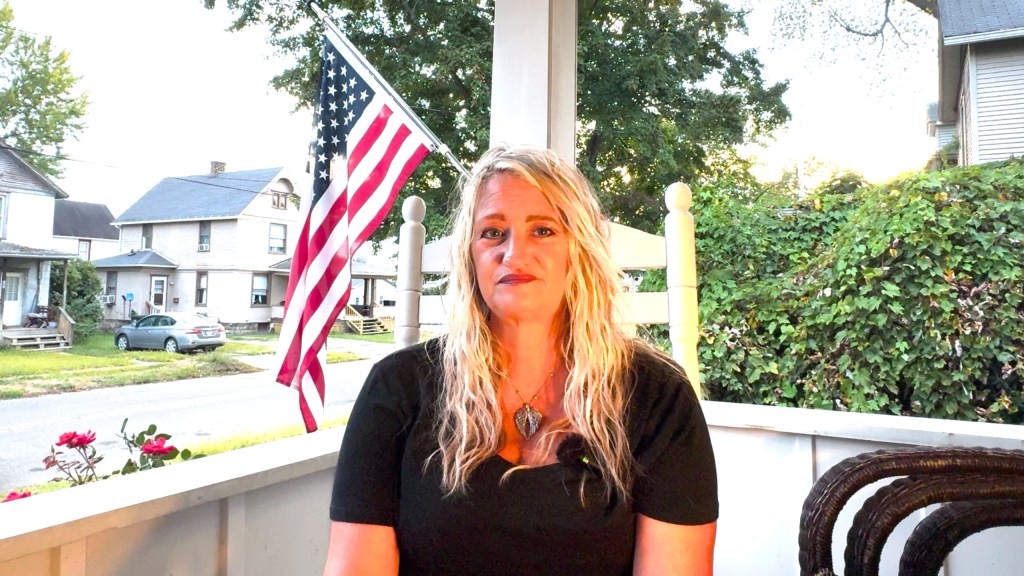
Everything changed for Laurie Harmon and her neighbors on Feb. 3, 2023, when a Norfolk Southern “bomb train” carrying hazardous chemicals derailed less than a mile away from her home in the small town of East Palestine, Ohio. Three days later, Norfolk Southern pressured local authorities to dump and burn five tanker cars full of vinyl chloride, blasting a massive chemical plume into the air and exposing residents to toxins that have poisoned their bodies and homes. Three years later, Harmon and other residents are still suffering the toxic fallout from one of the worst industrial disasters in US history.
Additional links/info:
Laurie Harmon Facebook page
Maximillian Alvarez, The Real News Network, “Residents in this small town ‘left for dead’ after industrial disaster”
Maximillian Alvarez, The Real News Network, “An industrial disaster wrecked my home. Now I’m living out of a hotel”
Maximillian Alvarez, The Real News Network, “A billion-dollar company poisoned my home and destroyed my town”
Maximillian Alvarez, The Real News Network, “They poisoned a whole community. The EPA helped cover it up”
Credits:Filmed and edited by Maximillian Alvarez
Transcript
The following is a rushed transcript and may contain errors. A proofread version will be made available as soon as possible.
Laurie Harmon:
Anybody who lives far away and you watch some of the major news stations and you read things on Facebook, everything’s fine here and everything is not fine. I’m telling you this from experience.
Speaker 2:
We are following breaking news as we come on the air. This morning. A trained derailment forces hundreds from their home in Ohio,
Speaker 3:
Date of emergency in Ohio, after a train derailment and massive fire, some of the cars were carrying hazardous
by Mansa Musa | Feb 3, 2026 | Prison Industrial Complex, prison reform, Prisons and Policing, Rattling the Bars, video
Judge Brian Jackson of the US District Court for the Middle District of Louisiana has certified a class in a lawsuit against Angola Prison on behalf of men forced to perform punitive farm labor under unconstitutional conditions and in violation of the Americans with Disabilities Act (ADA). Under this ruling, the court certified two specific groups: a primary class encompassing all persons currently or potentially assigned to the Louisiana State Penitentiary (LSP) Farm Line, and a specialized subclass for those with disabilities assigned to the same labor. In his findings, Judge Jackson noted that nearly every individual arriving at the facility is assigned to the Farm Line upon entry, with the majority remaining at risk of reassignment as a disciplinary measure.
Guest:
Samantha Pourciau is a Senior Staff Attorney at The Promise of Justice Initiative based out of New Orleans, Louisiana.
Credits:
Producer/Videographer/Post-Production: Cameron Granadino
Resource links:
Incarcerated Men Forced to Work on Angola Prison’s Farm Line Win Class Certification
‘Purposefully simulating chattel slavery’: Prisoners sue over ‘inhumane’ conditions on Angola’s brutal Farm Line
‘Prisons are akin to chattel slavery’: Inside the big business of prison farms and ‘agricarceral’ slave labor
Louisiana still imprisons people convicted by ‘Jim Crow juries’
Transcript
The following is a rushed transcript and may contain errors. A proofread version will be made available as soon as possible.
Mansa Musa:
Welcome to this edition of Rattling the Bars. I’m your host Mansa Musa. We’re doing a followup on the story that we did earlier about a class action suit that was filed in Louisiana dealing with they call a farm line. And basically it’s a suit that’s talk about the inhumane conditions that prisoners are subjected to that serving