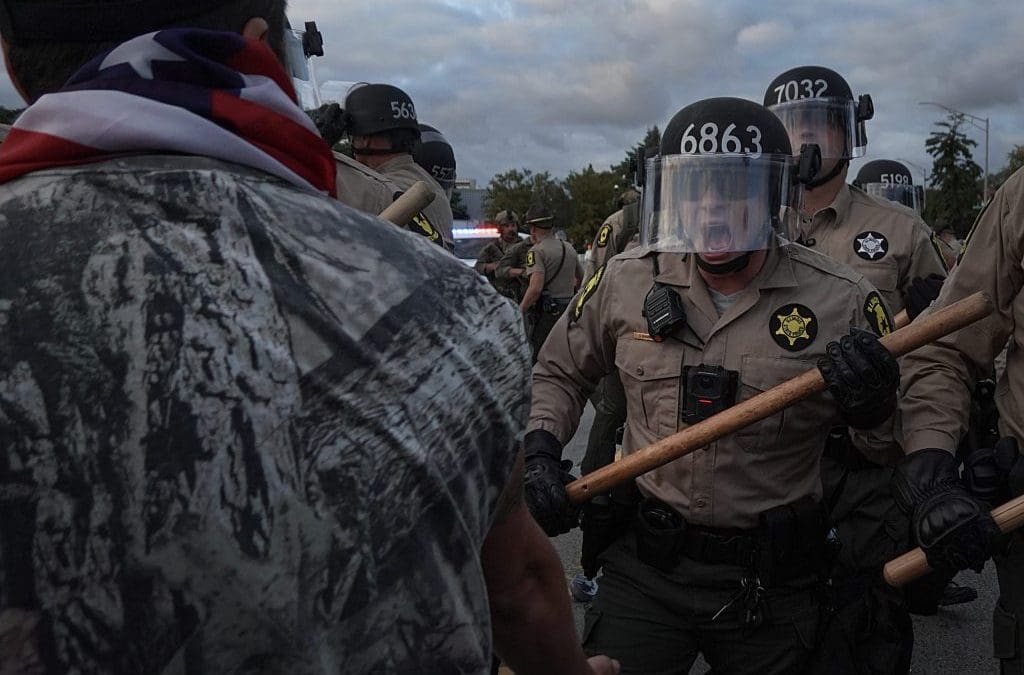
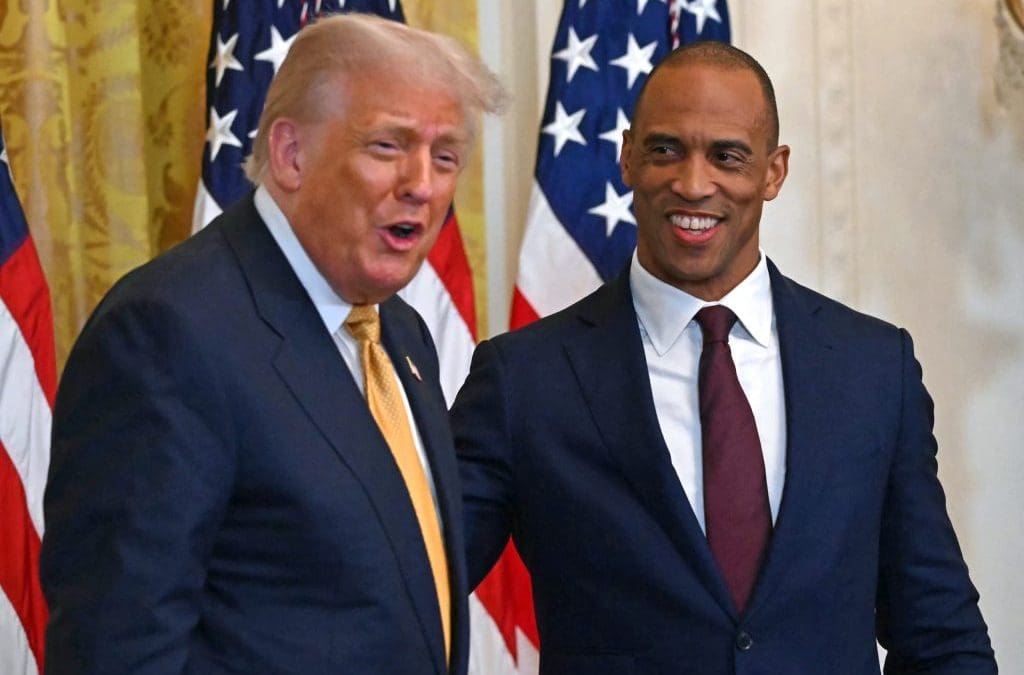
There are two primary federal agencies tasked with immigration detention: ICE, which is well known, and the US Marshal Service. Under the Trump administration, the US Marshals have dramatically increased their role in detaining and incarcerating undocumented immigrants, using their federal power to override restrictions on immigrant detention in local jails around the country. In this episode of Rattling the Bars, host Mansa Musa speaks with Wanda Bertram, communications strategist for the Prison Policy Initiative, about how the Trump administration is weaponizing legal loopholes and the US Marshal Service to execute the mass incarceration of immigrants.
Transcript
The following is a rushed transcript and may contain errors. A proofread version will be made available as soon as possible.
Mansa Musa:
Welcome to the edition of Rattling the Bars. I’m your host, Mansa Musa. We’ve been hearing terms like deportation, immigration, arrest, ice, the federal marshals. When we hear these terms, we hear ’em relative to people. People that’s undocumented in this country under the pretense that they’re committed a crime in this country, that they’re being arrested. But the reality is they’re being rounded up. They’re being rounded up like slaves was rounded up. They’re being rounded up like the Japanese was being rounded up and placed in tournament camps. Joining me today is Wanda Bertram, communication strategist with the Prison Policy Initiative at one of the most reliable research hubs for Data on Incarceration. A recent report by the Prison Policy Initiative titled Hiding in Plain Sight Revealed how local jails are central to Trump’s deportation. Wanda, welcome to Rallying the Bars.
Wanda Bertram:
I’m happy to be here. Thanks for having me.
Mansa Musa:
And so let’s start here. Explain to our audience the loophole that the Trump administration is using to bypass city and county sanctuary policies. Unpack that for our audience.
Wanda Bertram:
So I think the place to start is that there are two main federal agencies that are tasked with immigration detention, and one of them is ice, which most people have heard of Immigration and Customs Enforcement. And then the other one, which is a little bit less well known is called the US Marshall Service. And the Marshall Service does things that are not immigration too. They’re generally speaking, the federal agency that handles pretrial detention. And in our report, one of the things we did was we gave an estimate of how many people are in ICE detention and US Marshals detention because a lot of people don’t think about the US Marshals. Right. And then one of the other things we did was we pointed out this loophole that you mentioned and what we call the loophole is just the fact that lots of local jails, including many that have said, we are not going to cooperate with ice,
Have contracts with the US Marshals to house, to detain immigrants who are under the jurisdiction of that agency. And actually, ICE can also piggyback off those US marshals contracts. So whether someone is under the jurisdiction of the US Marshals, and I can explain the difference between that and ice, whether someone is under the jurisdiction of the US Marshals or with ice, hundreds of local jails across the country are making room for those detainees to be held. So there are thousands and thousands of detainees who are being held in local jails that are run by sheriffs that the people left.
Mansa Musa:
Right. Okay. So in terms of the difference between ICE and the Federal marshals, because I think we was talking off camera, when you think of a person being detained by the Federal Marshals, we’re thinking about actually a crime has actually been committed a crime in form of like a gun violation of a federal statute violate of federal criminal code, violate of federal law. I’m in possession of large quantities of drugs. I’m doing counterfeit, I’m in possession of weapons. I think they had in Baltimore City, they had passed this law saying that anyone court, in order to get control over what they dubbed as a serious possession of guns in the city, they created this law where they say that anyone arrested with a gun in Baltimore, they federalized it. So they called it, I’m trying to think if they had a term that they was using. But everybody that got caught with federal guns got caught with guns during that time was arrested and put under Federal Marshall jurisdiction. At that time, I was in Supermax in Baltimore City and they took a whole section and specifically design it for that. So talk about that. Talk about the difference between the two and why it’s important that people understand that.
Wanda Bertram:
Yeah, I’m really glad you brought that up. The US Marshals, like you’re saying, when I think of the US Marshals, I think about people being charged with gun related crimes, with drug related crimes. Sometimes with federal violent offenses, the federal government has a wide latitude to choose to prosecute certain cases. And once they bring someone under their jurisdiction, or if they arrest someone, obviously they can also bring people who are under state or local jurisdiction into their jurisdiction through these state and local agreements. So the long and short of it is if you are charged with a federal crime, you are under the US Marshal’s jurisdiction. The rub here is that there, there’s been an increase in several thousand people since Trump took office in January who were under US Marshals, who were booked into US Marshalls jurisdiction for immigration related crimes. And what is an immigration crime? Come on. That can be as simple as just being undocumented illegal entry or illegal reentry. I think most people think, okay, if you’re under US Marshalls’ jurisdiction, you must have committed some horrible crime. But there’s a lot of people there who are just undocumented and their cases are becoming criminalized.
Mansa Musa:
And I was talking to one of the staff members here and I was telling that, and this is my thinking, right, the criminal element that will be under the Federal Marshals, they be like, in their mind they like, hurry up, hurry up and get me out. Send me to wherever you want to send me at so I can hurry up and get back in the country. A person that’s a person that’s committed immigration crime or whatever these terms they’re using, these people know the threat that they represent is, I’m a threat because I’m working hard, I’m paying taxes. But talk about how local jails specifically playing Trumps mass deportation program, both in terms of scale and conservation and immigration arrest, and you spoke on it earlier about how many people being arrested and being detained, but talk about how it’s planned out.
Wanda Bertram:
We know. So we estimate that on any given day, currently there’s about 83,000 people, immigrants being held for ice. And the US Marshals, I can break down how we got to that number, but of those, we know that about 10,000, a little over 10,000 people are being held in local jails for ice. We unfortunately can’t tell how many people are being held in local jails for the Marshall who just don’t have that granular data. But we actually, I will say one more thing. I’ll throw out one more statistic, which is that between January and May of this year, the number of people held for immigration reasons grew more in local jails than it did in privately run detention centers. I’m throwing this out there just to say that jails play an essential role in housing immigrants for these agencies.
I think a lot of people think about ICE as having tons of detention centers, its own detention centers around the country. And it’s true, there are several, but these agencies depend on local facilities that can hold people temporarily or for a longer time after they’re arrested. In fact, in 26 states, jails provide the sole detention capacity to ice US marshals. So a lot of people think, okay, sure. This is going on in Texas, it’s going on in Florida with alligator Alcatraz. It’s not happening where I live. You might be wrong. It might be happening where you live. A lot of jails caught up in this.
Mansa Musa:
Right? And that right there, the impact, talk about the impact that have on the population because I know if I’m a state and I’m outsourcing or I’m contracting with the federal government, I’m contracting with ICE to provide so many bids for immigration or a section for immigration, then how does that play out in terms of the way that particular detention center function overall? Because now I have to allocate staff, I have to allocate extra money, I have to allocate. And in terms of what they’re entitled to versus what people that’s is entitled to have Y, is it a problem with that or from your investigation and your study, have you seen this being problematic?
Wanda Bertram:
Well, I think we need to start talking about the money. That’s the reason that ICE and the Marshals, or excuse me, that’s the reason that local jails have these agreements in the first place. Jails are keen to bring in money from the federal government that they get in exchange for housing people, and they get somewhere anywhere between 50 and a hundred dollars per person. So it’s thousands of dollars that come in just every month for a local jail. And importantly, we have very little transparency into what that money is used
Mansa Musa:
For.
Wanda Bertram:
But some jails have been open about saying, we are using this to pay our staff. We’re using it to cover costs of the jail.
It ties into a very toxic pattern that we’ve seen over the last couple of decades, which is that counties will build, actually, they will build bigger jails anticipating that they’ll be able to allocate some of their new jail space to renting to the federal government or to their state prison system. And where there’s two ways that this all goes wrong, one is that oftentimes these jails are already understaffed. They don’t have the staff to care for their own populations, much less an additional influx of immigrants or people held by the US Marshal for any reason. And then the second thing, the second way this goes haywire is that these populations, these populations that come in from the feds, they flux, right? They come and go. And when those populations, when that source of revenue dries up for the jail,
Mansa Musa:
They’re
Wanda Bertram:
Going to need to justify the existence of such a large facility in other ways, and that’s going to lead to more local incarceration. We like to say that if you build it, they will fill it. And when counties build bigger jails anticipating renting beds to ICE or the Feds in some other capacity, they find a way to fill those beds, whether it’s with federal detainees or their own community members.
Mansa Musa:
And then in some states like California, Massachusetts, New York and Illinois have laws that restrict local law enforcement from collaborating with ice. But that’s like when you do a comparison versus the amount of money that y’all talked about how this past great, beautiful nightmare of a bill that they passed, they allocated a lot of money to ICE and a lot of money to the federal government. So how do you see the pushback, or what can states do to eliminate this nightmare? Because as you said, at the end game, the end game, the state going to be holding the bag and the end game, they’re going to have to come with some way to fill themselves, and that’s going to be at the expense of the citizens of their particular state or county. Talk about that.
Wanda Bertram:
Yeah. One thing in the report that we really hammer on is that communities have, in so far as communities are providing some of the backbone of detention. They also have the power to be a real thorn in the side of the Trump administration by resisting that. Like you pointed out, some states and several counties have instituted sanctuary city policies, and often that means, or sanctuary state policies, and that limits the jail’s. Collaborations of ICE communities also need to cancel their contracts at the US Marshals, because as I said, at the top, ICE can piggyback off of the US marshals. They can put people in jails through a US Marshals contract, and those often go overlooked. Again, the marshals are not an agency most people think about. So that’s a step that counties have been able to take to several years. They can do it now and they should do it now.
I think the other thing is on a longer timeframe, being critical of your local government, when they talk about building a new and bigger jail, just to throw something out there, this is not related to immigration at all, but about 80% of people in local jails are their pretrial. Now, this is another thing that Trump has been trying to attack is bail reform. But when counties are facing overcrowded or understaffed jails and they have these large pretrial populations, one thing that most places most counties have not tried is decarceration, right? Pursuing bail reform, pursuing cashless bail as a way of decreasing their jail populations. Instead, what many counties will do is they will try to build a bigger jail thinking it’s going to solve the problem.
And sometimes that’s what gets counties into this pickle with the federal government is they build this big new jail, and then they have a big tab to cover. And it’s very helpful if the federal government comes in and says, well, we can offset some of your costs. You just have to house some people for us. So I mean, definitely to anyone listening who’s wondering, what can I do in my community? I definitely would say being critical, being skeptical of any plans to expand your county jail and show up to city council meetings about that. Be a sticky wheel, because that’s how this happens. That’s how it starts.
Mansa Musa:
Okay. And thank you wa tell our audience how they can stay in touch with you or stay aware of some of the work that you’re doing with Prison Policy Initiative as we close out.
Wanda Bertram:
Well, no. I mean, first, thank you so much for having me. I think it’s great to be able to come on and talk about this stuff. Our website is www prison policy.org. We have a newsletter. If you sign up for that, you’ll get everything that we publish. It’s about a once a week newsletter. We also have social media. If you go to basically whatever social media you’re on, we’re at slash prison policy.
Mansa Musa:
Thank you. And as we close out, we thank you and appreciate all the work that y’all are doing at Prison Policy Initiative. And we want to tell our audience, remind our audiences that we deal with evidence, and it’s based on the statistics that the Prison Policy Initiative has offered us, that you can fact check ’em to get a clear understanding. But what we do know is this here, we know that people are being rounded up. We know that agencies that supposed to protect, serve and protect people’s rights are being used to help aid and assist in rounding people up. We know that people are being housed in astronomical numbers, in inhumane environments for one reason and one reason only. All because they’re undocumented in this country. They haven’t committed no crimes. To the extent that’s being perpetuated by the Trump administration, they’re here, they’re undocumented, and the most crime that they committed is driving without license or picking tomatoes. We ask that you continue to support real news and rallying bars. We ask that you continue to evaluate this information. We ask that you weigh in on what you think about this information, but more importantly, we ask that you make a decision on what you think should be done and do that. Thank you.