by Eleanor J. Bader | Apr 2, 2026 | Article, Economy and Inequality, education, labor, Politics and Movements: US, Reprint, Unions
This article was originally published by Truthout on April 01, 2026. It is shared here under a Creative Commons (CC BY-NC-ND 4.0) license.
Sixty-two years ago, St. John’s University (SJU) in New York City became the site of the first major faculty strike in U.S. history — a year-long conflict that followed the firing of 33 teachers, including three priests, without due process. Now, the struggle over labor conditions has forced the faculty to once again mobilize, a move precipitated by the current college administration’s abrupt announcement that it will no longer recognize two faculty unions or continue negotiations to hash out a new contract.
St. John’s president, Rev. Brian J. Shanley, and Provost and Senior Vice President Simon Geir Møller, told the National Catholic Reporter (NCR) that the move was necessary to give the college “the flexibility required to innovate … and deliver on our promise to our students.”
But faculty members, who had been demanding improved wages and greater transparency in how their share of health insurance premiums are calculated, call it union busting.
And while the university’s administrators did not respond to Truthout’s multiple requests for an interview, they told NCR that the decision rests on a 2020 decision promulgated by the National Labor Relations Board (NLRB). That decision, Bethany College, 369 NLRB No. 98, removed NLRB jurisdiction over most of the 849 religiously affiliated colleges and universities in the country and prompted at least eight predominantly Catholic schools — Bethany and Boston Colleges, and Duquesne, Edward Waters, Loyola Marymount, Marquette, St. Leo and Wilberforce universities — to end union recognition on campus.
Critics see this as part of a general rightward trend in higher education.
“The anti-union arguments that have emerged coincide
by Julia Conley | Apr 2, 2026 | Article, Economy, Economy and Inequality, health care, Iran, Politics and Movements: International, Politics and Movements: US, Reprint, War
This story originally appeared in Common Dreams on April 02, 2026. It is shared here under a Creative Commons (CC BY-NC-ND 3.0) license.
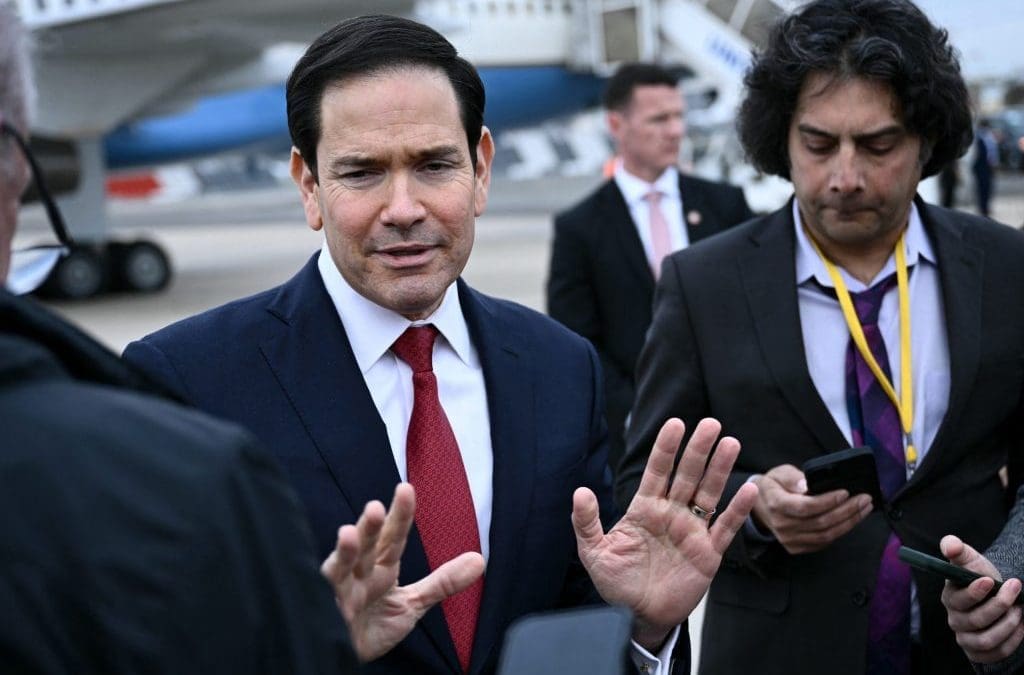
Two days after Secretary of State Marco Rubio unironically advised Iran to spend its public funds “helping the people of Iran” instead of on weapons, President Donald Trump announced that the US government has “to take care of one thing: military protection” and isn’t able to provide people in the US with necessities like healthcare and childcare.
“Oh wow, he actually admitted it,” said US Rap. Yassamin Ansari (D-Ariz.) in response.
At an Easter lunch at the White House Wednesday, the president said that “the United States can’t take care of daycare” and demanded that states fully fund childcare programs.
“We’re fighting wars. We can’t take care of daycare. You gotta let a state take care of daycare, and they should pay for it too,” said Trump. “It’s not possible for us to take care of daycare, Medicaid, Medicare, all these individual things.”
Trump: We can’t take care of daycare. We’re a big country. We’re fighting wars. It’s not possible for us to take care of daycare, Medicaid, Medicare, all these things. pic.twitter.com/vLGpp7KJnm— FactPost (@factpostnews) April 1, 2026
The wars the president has waged and threatened to wage since taking office last year include his invasion of Venezuela in January and the abduction of President Nicolás Maduro; the killing of more than 160 people in boat bombings in the Caribbean Sea and eastern Pacific Ocean; an oil blockade on Cuba that’s left tens of thousands of people waiting for surgeries and unable to access essential medications, with Trump threatening to take over the country by force; and the current US-Israeli war on Iran.
The conflicts that Trump said Americans must sacrifice federal funding for public programs in order to continue are opposed by a majority of Americans, according to polls. All have been called violations
by Sharon Zhang | Apr 1, 2026 | Article, Economy, Economy and Inequality, Iran, Military Industrial Complex, Politics and Movements: International, Politics and Movements: US, Reprint, War
by Jessica Corbett | Apr 1, 2026 | Article, elections, Politics and Movements: US, Reprint, Trump, Voting Rights
This story originally appeared in Common Dreams on Mar. 31, 2026. It is shared here under a Creative Commons (CC BY-NC-ND 3.0) license.
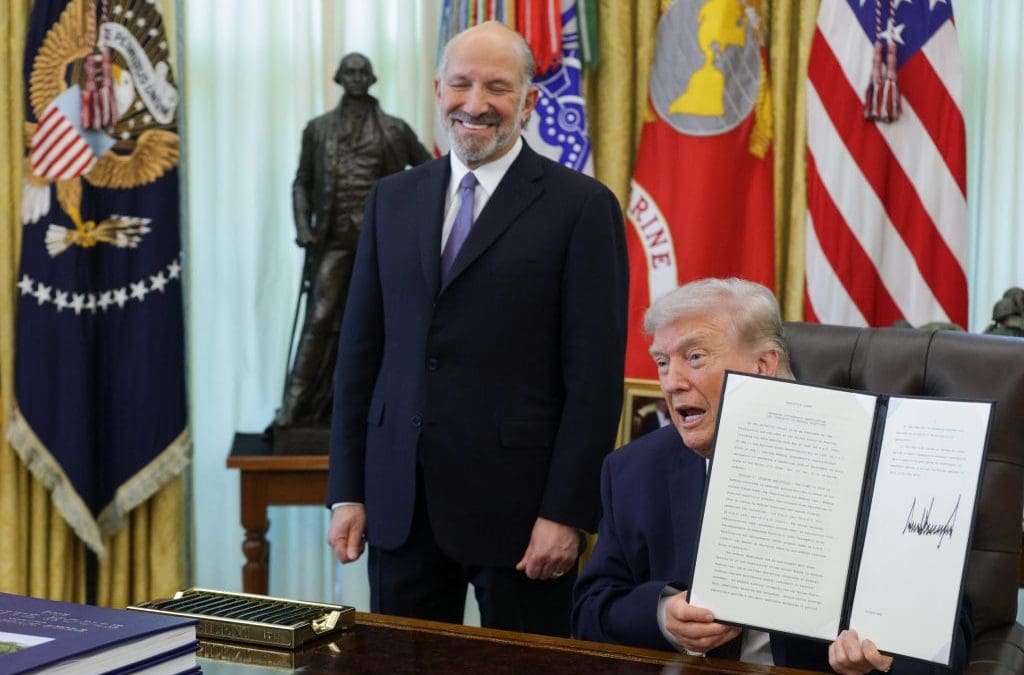
Just days after the GOP-controlled Senate skipped town once they failed to send a voter suppression bill to President Donald Trump’s desk, the Republican on Tuesday signed an executive order to create a nationwide list of US voters and crack down on voting by mail—which is how he voted in Florida’s most recent election.
The order, Ensuring Citizenship Verification and Integrity in Federal Elections, was first reported by the Daily Caller, a right-wing outlet. It requires the secretary of homeland security to establish a “citizenship list” of verified eligible voters in each state, using Social Security Administration records and other federal databases.
Trump—who has repeatedly spread lies about election fraud, including his unfounded claim that Democrats stole the 2020 election from him, which led to his supporters storming the Capitol on January 6, 2021—also directed the postmaster general to craft rules for absentee ballots sent through the US Postal Service.
Legal experts expect the order will be swiftly challenged in court as unconstitutional. David Becker, a former US Department of Justice lawyer who now leads the Center for Election Innovation and Research, told Democracy Docket that “it’s obvious the president didn’t learn anything from his first failed executive order.”
“This is unconstitutional on its face. The Constitution clearly gives the president no power over elections,” he said. “I expect that this will be blocked by multiple federal courts in a very short period of time and have no legal effect whatsoever.”
Becker also noted that “after the Department of Justice has been telling courts they’re not creating a national voter list, this appears to confirm exactly what courts were concerned about.”
Marc Elias, founder of Democracy
by Tina Vasquez | Mar 31, 2026 | Article, labor, Politics and Movements: US, Reprint
This story originally appeared in Prism on March 23, 2026.
Real journalists wrote and edited this (not AI)—independent, community-driven journalism survives because you back it. Donate to sustain Prism’s mission and the humans behind it.
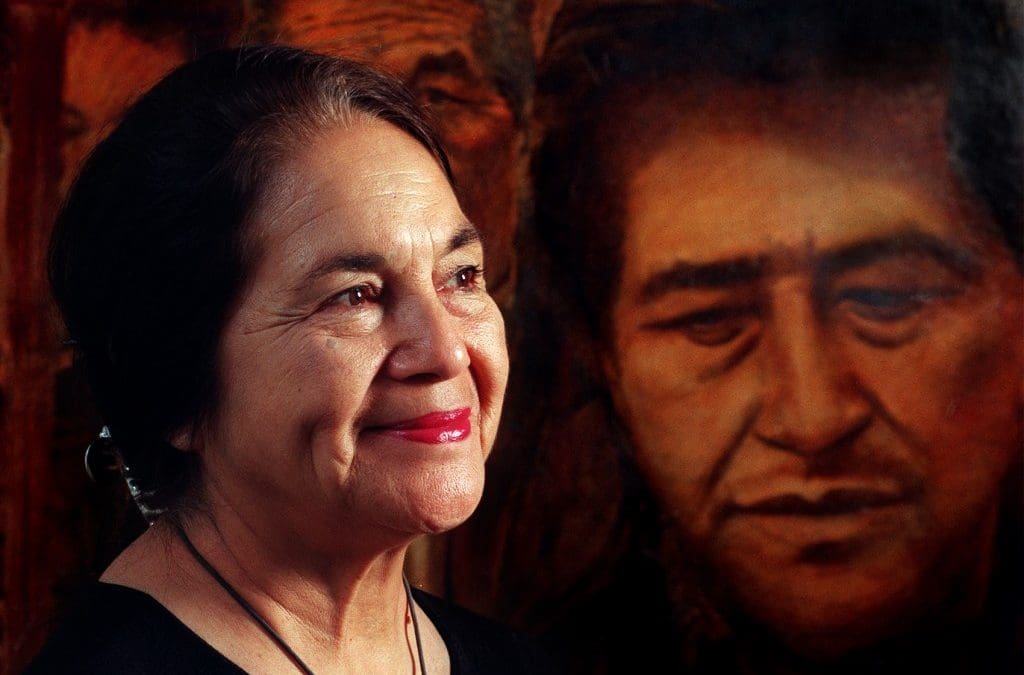
Like many others, I’ve spent the last few days looking at the many iconic photos of Dolores Huerta, the renowned feminist, labor organizer, and powerhouse co-founder of the United Farm Workers (UFW) Union. In one of my favorites taken in Salinas, California, Huerta gently holds a microphone up to her mouth with a slight smile on her face, her other hand in the air commanding the attention of the room.
The photo was taken during a UFW rally in 1970, just a few years after Huerta said she was raped by Chicano civil rights leader and union co-founder, César Chávez. For Latinos nationwide grappling with Huerta’s recent revelation, Chávez’s legacy is forever fragmented: the time before and the time after we learned he was a rapist.
As part of an investigation by The New York Times published March 18, Huerta for the first time publicly disclosed the sexual and emotional abuse she experienced at the hands of her comrade while they were the public faces of the Latino-led farmworker organizing movement. Together, they helped obtain union contracts, higher wages, and more dignified working conditions for farmworkers, in part by organizing a grape boycott. It was also in a secluded grape field where Chávez raped Huerta—a tactic commonly deployed by other rapists against their unsuspecting compañeras in agriculture who toil alongside them.
While Chávez died in 1993 at the age of 66, Huerta, now 95, said she felt forced to keep the abuse a secret for fear no one would believe her, and
by Jake Johnson | Mar 30, 2026 | Article, cuba, Oil, Politics and Movements: International, Politics and Movements: US, Reprint, Russia, Trump
This story originally appeared in Common Dreams on Mar. 30, 2026. It is shared here under a Creative Commons (CC BY-NC-ND 3.0) license.
President Donald Trump said Sunday that his administration would let a Russia-owned tanker carrying an estimated 730,000 barrels of oil to reach Cuba, loosening the illegal fuel blockade that has intensified the island’s already-grave humanitarian crisis.
Speaking to reporters aboard Air Force One, Trump said that “if a country wants to send some oil into Cuba right now, I have no problem,” backing off his previous threat to tariff any nation that supplied the besieged island with fuel. Cuba has not received any oil imports since January 9, sparking nationwide blackouts and food shortages and leaving hospitals without critical supplies—with deadly consequences for patients.
Trump insisted that the oil on the Russian tanker—which experts say is enough to buy Cuba at least several weeks of energy—is “not going to have an impact,” declaring, “Cuba is finished.”
“They have a bad regime, and they have very bad and corrupt leadership,” added Trump, who presides over what analysts have deemed the most corrupt administration in US history. “Whether or not they get a boat of oil is not going to matter.”
Reporter: There’s a report that the US is going to let a Russian oil tanker go to Cuba? Trump: If a country wants to send some oil into Cuba, I have no problem with that.Reporter: Do you worry that that helps Putin?Trump: It doesn’t help him. He loses one boatload of oil.… pic.twitter.com/8Vh6gHwaxs— Acyn (@Acyn) March 30, 2026
Trump’s comments came after The New York Times reported that, “barring orders instructing it otherwise,” the US Coast Guard would not intercept the Russian tanker as it approached Cuba.
The Russian vessel, known