by Forum Staff | Sep 14, 2026 | Authoritarian Influence, China, Forum, Forum Publications, impunity, information operations, lawfare, News, Russia, Surveillance, transnational repression
“Congress shall make no law respecting an establishment of religion, or prohibiting the free exercise thereof; or abridging the freedom of speech, or of the press; or the right of the people peaceably to assemble, and to petition the Government for a redress of grievances.” In setting out the words of the First Amendment to the Constitution, America’s founders also laid a milestone in the…
Source
by The Associated Press | Aug 11, 2026 | News, Russia, World
Russia released an American military veteran on Tuesday, allowing his return to the U.S. after four years of what his family and U.S. officials allege was wrongful incarceration and abusive treatment that left him near death.
Robert Gilman, a 32-year-old Massachusetts teacher and former Marine, was freed after President Donald Trump said he spoke with Russian President Vladimir Putin about his release, which Trump said was “very much on a Humanitarian Basis.”
“We appreciate this decision, and the fact that Russia asked for no one in return — No exchange took place,” Trump said on his Truth Social platform.
A State Department spokesperson called Gilman’s release “a welcome step that we hope leads to the release of Americans unjustly held in Russia, such as wrongful detainee Stephen Hubbard.” Hubbard, a retired teacher, was arrested in Ukraine in 2022 and accused of fighting for the country in the war with Russia. In 2024, a Russian court sentenced him to nearly seven years in prison. The State Department has said the charges are false.
Arrests of Americans have become increasingly common in Russia in recent years. Concern has risen that Russia could be targeting U.S. nationals to use later as bargaining chips in talks to bring back Russians convicted of crimes in the U.S. and Europe. Five other Americans remain imprisoned in Russia with deteriorating medical issues, according to a news release from Global Reach, a group that’s been working to free them.
Secretary of State Marco Rubio posted a photo on social media of a gaunt-looking Gilman draped in an American flag and surrounded by his family aboard an airplane.
“While we appreciate this positive step, we are still

by Richard D. Wolff | Aug 6, 2026 | Article, Economy and Inequality, Europe, Politics and Movements: International, Reprint, Russia, War
This story originally appeared in Professor Richard Wolff’s Substack on July 21, 2026. It is shared here with permission.
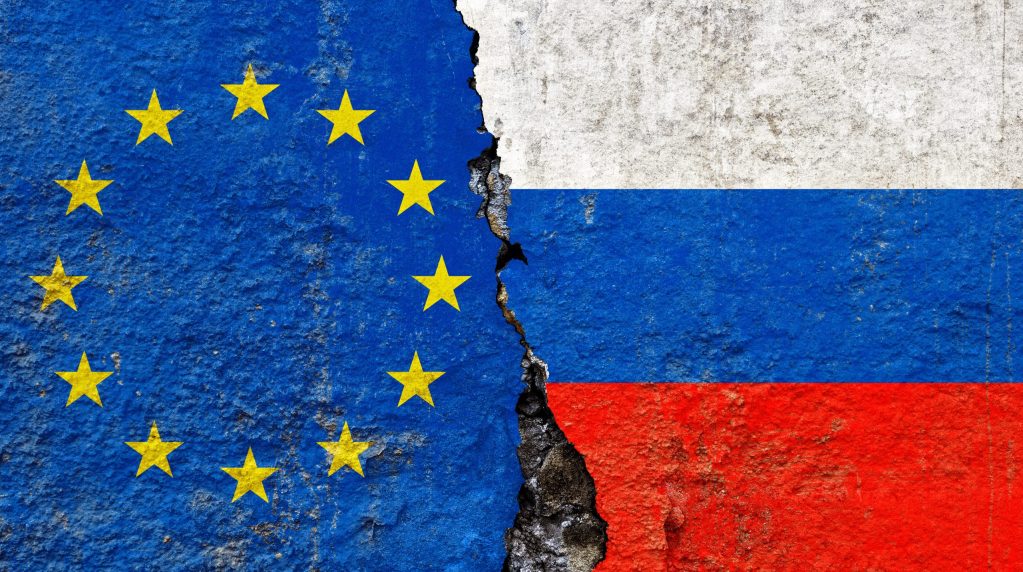
Deeply divided by nationalism and deprived of its vast colonies by the last century’s catastrophic two world wars, Western Europe has been in decline ever since. Recently, that decline has become drastic and desperate as Western Europe falls ever further behind — economically, militarily, and politically — today’s two superpowers: the US and China. Mediocre and unpopular leaders reflect Western European decline. They bet and built their careers on accepting junior partner positions vis-à-vis the United States. But Europe’s decline now threatens to split Europe apart. Inside each nation, rich and powerful minorities use their social positions to sustain their wealth and power while the masses bear most of the burdens of decline offloaded onto them by the rich and powerful. The problems flowing from these cumulative developments are approaching points of social explosion. Despite the lessons taught by the two world wars, many Western European leaders once again provoke and prepare for a war, this time against Russia, notwithstanding the awful risks of nuclear weapons. One key question to ask: why is this happening?
From 1945 to 1990, Cold War set Western European nations against the USSR and its Eastern European allies in many ways and on many levels. Yet that war remained cold. In 2026, after more than three decades of post-Cold War peace, a military war between a largely unified Europe (East and West) and post-Soviet Russia seems imminent. Such a war has been prepared by NATO’s growth, its moving eastward toward Russian borders since 1990; by Russia’s 2022 invasion
by Daniel Falcone | Jul 29, 2026 | Benjamin Netanyahu, Boycotts, Christopher Nolan, film, Interview, Israel, Morocco, movie, Russia, The Odyssey, Vladimir Putin, Western Sahara
Western Sahara is a sparsely populated country roughly the size of Colorado, located in northwestern Africa, just south of Morocco. It’s inhabited by a traditionally nomadic people known as Sahrawis, who have a distinct history, culture, and dialect. The land is currently under the occupation of Moroccan forces who moved into Western Sahara in 1975 in violation of a landmark decision by the…
Source
by Forum Staff | Jul 15, 2026 | Authoritarian Influence, China, Forum, Forum Publications, impunity, information operations, lawfare, News, Russia, Surveillance, transnational repression
Executive Summary A New, More Permissive Context for Authoritarian Influence at Scale / Kevin Sheives (NED) China’s Authoritarian Influence: Ambition and Scale Meet Open Doors and New Opportunities / Caroline Costello (Atlantic Council) & William Nee (NED) Losing Allies, but Doubling Down: Russian Authoritarian Influence after the Invasion of Ukraine / Alexander Cooley (Barnard College…
Source
by Sharon Zhang | Jul 7, 2026 | FIFA, International Olympic Committee, Israel, News, Olympics 2016, Russia, Sports, Ukraine
The International Olympic Committee (IOC) announced on Tuesday that it’s lifting its three-year suspension of Russia, paving the way for Russian athletes to compete in future Olympic Games despite the country’s ongoing invasion of Ukraine. The group said in a press release that the decision was made after a “thorough analysis” by its legal arm concluded that the Russian Olympic Committee…
Source