by Julia Conley | Jun 2, 2026 | Article, Climate Change, Climate Crisis, Politics and Movements: US, Reprint
This story originally appeared in Common Dreams on June 02, 2026. It is shared here under a Creative Commons (CC BY-NC-ND 3.0) license.
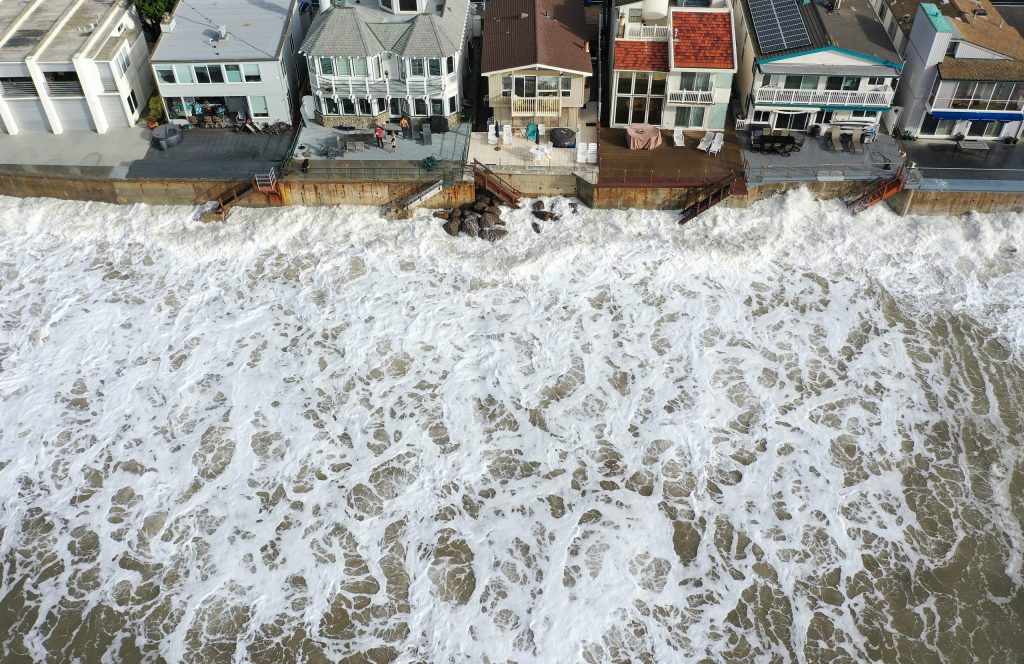
In what a number of scientists suggested was the Trump administration’s latest effort to stop tracking the changing climate in hopes of convincing the public that the climate emergency isn’t happening, the National Science Foundation announced Monday that it was dismantling a crucial deep-ocean monitoring system that for years has helped researchers understand the impacts of the crisis on the world’s oceans.
The NSF said it plans to send ships this month to remove more than 900 instruments, part of a project called the Ocean Observatories Initiative. The project collects data on temperatures, currents, and the ocean’s absorption of carbon dioxide off the coasts of Oregon, Alaska, Washington, and North Carolina, as well as in the Irminger Sea between Iceland and Greenland.
A spokesperson for NSF told The New York Times that the dismantling of the initiative will help the NSF in “prioritizing support for evolving scientific priorities and emerging technologies as well as a deliberate approach to smart life cycle management within its portfolio of research infrastructure.”
The reasoning given for the shuttering of the project, said Tara Blume, a journalist at Oklahoma City NBC affiliate KFOR, was “a master class in obfuscation and doublespeak.”
Genevieve Guenther of the group End Climate Silence shared her own interpretation of why the $368 million ocean observation system is being discontinued, despite the fact that it had been set to collect data for 25 years.
“We need to track ocean currents to assess how close we are to climate tipping points that will essentially destroy the world as we know it,” said Guenther. “The GOP doesn’t want us to be able to do that. That’s why
by Richard D. Wolff | Jun 1, 2026 | Article, Europe, Politics and Movements: International, Politics and Movements: US, Reprint, Russia
This story originally appeared in Professor Richard Wolff’s Substack on May 21, 2026. It is shared here with permission.
By the end of World War 2 in Europe, that continent’s extremely violent self-destruction had killed tens of millions and wrecked many economies. Its politically dominant employer classes had driven their national governments to a clash that had produced those results. By 1945 the war’s outcome had proved far worse than many in those classes had imagined or wanted before the war. Europeans had struggled after 1917/1918 to overcome their self-destruction in World War 1. In the short span between the end of the First and the beginning of the Second World War, Europe destabilized itself via its reparations program, Germany’s staggering inflation, and then global capitalism’s worst ever collapse in 1929. The consequences of those destabilizations ramified across Europe and undermined the League of Nations effort to prevent a second world war.
In 1945, for most Europeans, the greatest urgency attached to recovery from the war. For Europe’s employing classes, more urgent still were defenses against certain immediate threats. Russia’s army had been crucial to defeating the Nazis and to forging Russia’s post-war alliances with Eastern Europe. The mass of the USSR’s military forces, potentially supplemented by those of its new Eastern European allies, struck western Europe’s employer classes as existential threats. After 1945, western Europe’s employer classes smoothly and quickly refocused their hatred from a dead Hitler to the living Stalin and to their nations’ communist parties allied to Stalin.
Western Europe’s employer classes were threatened domestically by communist and socialist political parties whose militants had often led underground anti-fascist or anti-Nazi
by Luis Feliz Leon | May 29, 2026 | Article, ICE, immigration, labor, Politics and Movements: US, Prisons and Policing, Reprint
This story originally appeared in Labor Notes on May 29, 2026. It is shared here with permission.
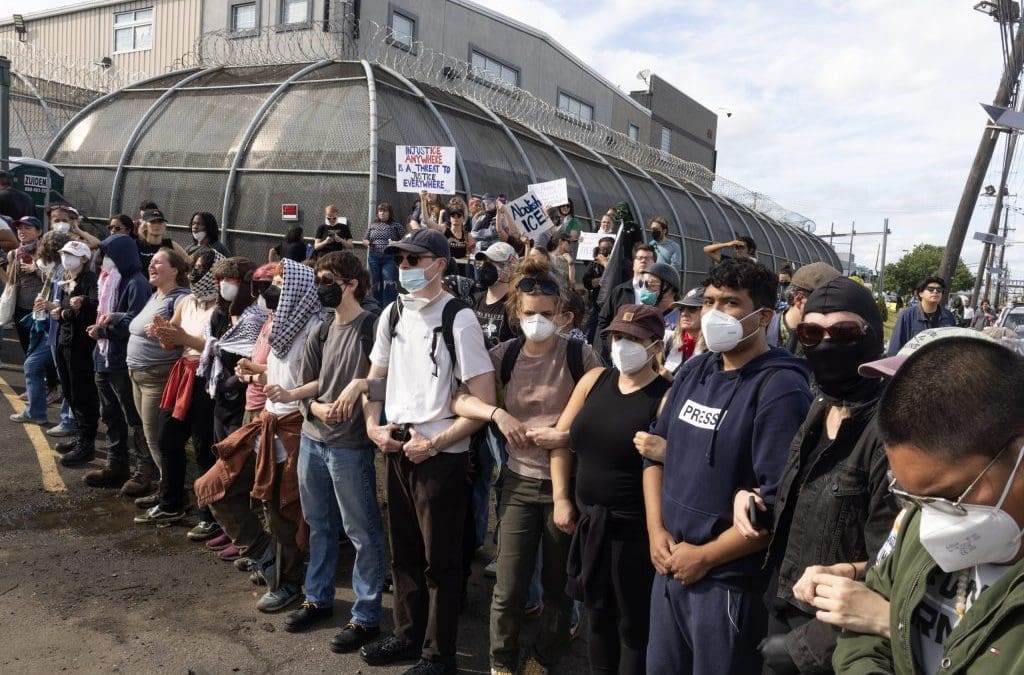
On a patch of sidewalk on a busy industrial corridor in Newark, federal agents with rifles, metal batons, flak vests, and balaclavas faced off against unarmed activists with cardboard signs and a bullhorn. Detained workers could be heard on the soccer field behind the prison walls, shouting in Spanish, “¡Libertad!” (Freedom!)
Since May 22, 300 of them are on a work stoppage and hunger strike. Over video chat, one worker told the crowd outside that they had stopped eating and working for as little as $1 an hour (or no pay at all) to demand an improvement in their living conditions. “But that’s not all we demand,” he said. “We are also doing this to demand freedom. We’re not treated like people. We’re treated like animals.”
The hunger strikers are demanding to meet with the governor, the release of young and elderly detainees and all medically vulnerable people, and ultimately, freedom for all.
For months a group of activists with the ICE Out of NJ coalition, which includes the immigrant rights group Cosecha, the Catholic advocacy group Pax Christi, and the worker center New Labor, has been protesting outside Delaney Hall, a 1,000-bed privately owned detention center where immigrants, mostly Latino, are jailed without due process.
Families and lawyers of the detainees report that Immigration and Customs Enforcement agents and guards with the GEO Group, the private-prison contractor, have been denying them medical care, offering them food swarming with worms, and refusing them bail bond or access to their lawyers. Many were snatched from construction job sites, or still wearing their service-industry work clothes;
by Tareq S. Hajjaj | May 29, 2026 | Article, Gaza, Israel, Palestine, Politics and Movements: International, Reprint
This story originally appeared in Mondoweiss on May 29, 2026. It is shared here with permission.
On May 24, Karam Ismael, 43, received a phone call from someone who identified himself as an Israeli army officer. The caller delivered one message: evacuate your home in 20 minutes before we bomb it. At first, he thought it was another scare tactic, similar to the messages the Israeli army used to send during incursions into neighborhoods. It was one of several calls made to residents of Nuseirat refugee camp in central Gaza, with a warning that covered residential blocks near al-Quds Supermarket and a local UNRWA clinic. The area included dozens of homes that had not previously been bombed throughout the past two years.
Four minutes after receiving his first call, Ismael’s phone rang again. The officer told him they had 10 minutes left, ordering him to evacuate immediately and to notify his neighbors. This time, he took the threat seriously and fled with his neighbors, leaving his belongings behind.
After half an hour, quadcopter drones appeared and hovered above the residential block, followed by the fighter jets. The entire block was leveled.
This was not the first such incident in recent weeks in which the Israeli army warned entire residential areas to evacuate and then bombed their homes. The Israeli army has been following a new pattern during the ceasefire: targeting residential blocks that had not experienced a ground invasion and had not been bombed during the war, remaining intact and still sheltering their owners. Over the past week, the army appears to have escalated this approach by specifically targeting residential blocks that had previously remained
by Sam Carliner | May 29, 2026 | Article, Bolivia, Economy and Inequality, Indigenous communities, Politics and Movements: International, Politics and Movements: US, Reprint
by Shireen Akram-Boshar | May 28, 2026 | Article, ICE, immigration, Politics and Movements: US, Prisons and Policing, Reprint
This article was originally published by Truthout on May 26, 2026. It is shared here under a Creative Commons (CC BY-NC-ND 4.0) license.
Protests erupted on Sunday night outside of the Delaney Hall immigrant jail in Newark, New Jersey, when Immigration and Customs Enforcement (ICE) moved to transfer a strike leader from the jail.
Some 300 detainees launched a hunger and labor strike on Friday in protest of the conditions at the ICE jail. On Sunday, activists and family members learned that the jail was preparing to move Martin Soto, one of the detainees who had announced the strike.
Gabriela Soto, Martin’s wife, saw ICE agents loading Martin into a van, and ran to block the van that held her husband from leaving the site. Other demonstrators joined in blocking the van from leaving the facility, and forced it back to the detention facility. Protestors formed a blockade for hours to prevent Martin Soto from being moved out of the site.
“Free Martin!” the protestors chanted. “Free them all!”
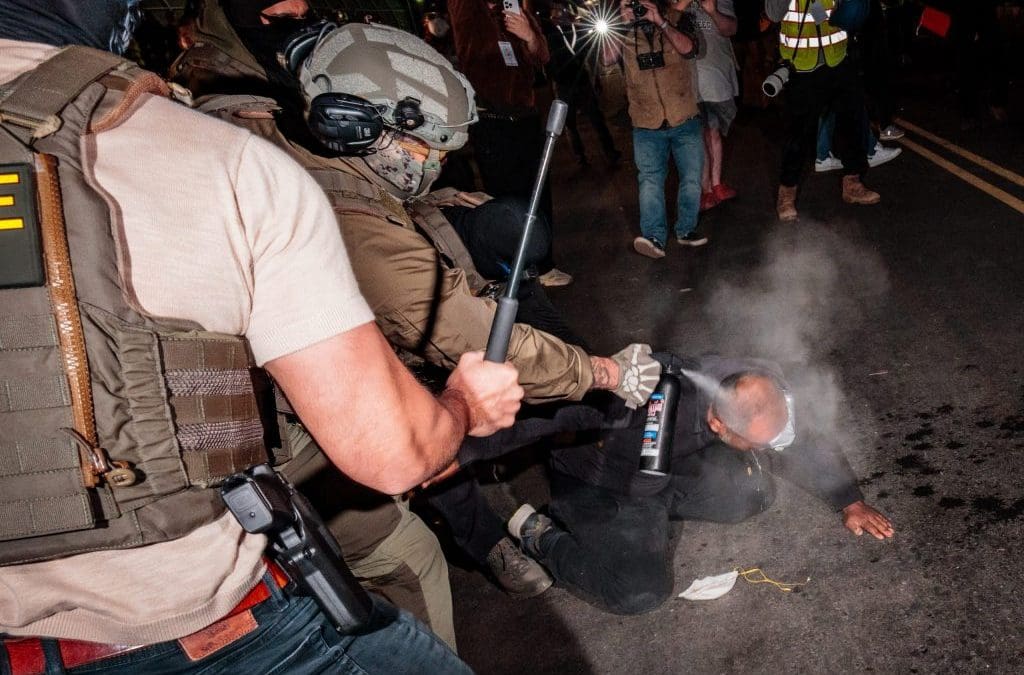
Later, around 1 am on Monday, ICE agents began to move a caravan of vehicles out of the facility, and protestors again attempted to block the vehicles from leaving. ICE agents then shoved aside protestors, pushing them against the sidewalk and against cars, and pepper sprayed at least one protestor.
A Department of Homeland Security (DHS) spokesperson announced on Monday that after “ICE successfully dispersed approximately 70 agitators” it succeeded in transferring Martin to another facility.
Since the start of the hunger strike, family members and supporters have gathered outside of the detention center. Among others, a 10-year-old child spoke about her father, who is currently being imprisoned in the