by October Krausch | Feb 18, 2026 | Article, LGBTQ, Prison Industrial Complex, prison reform, Prisons and Policing, Reprint
This story was originally published on Truthout on Feb. 16, 2026. It is shared here under a Creative Commons (CC BY-NC-ND 4.0) license.
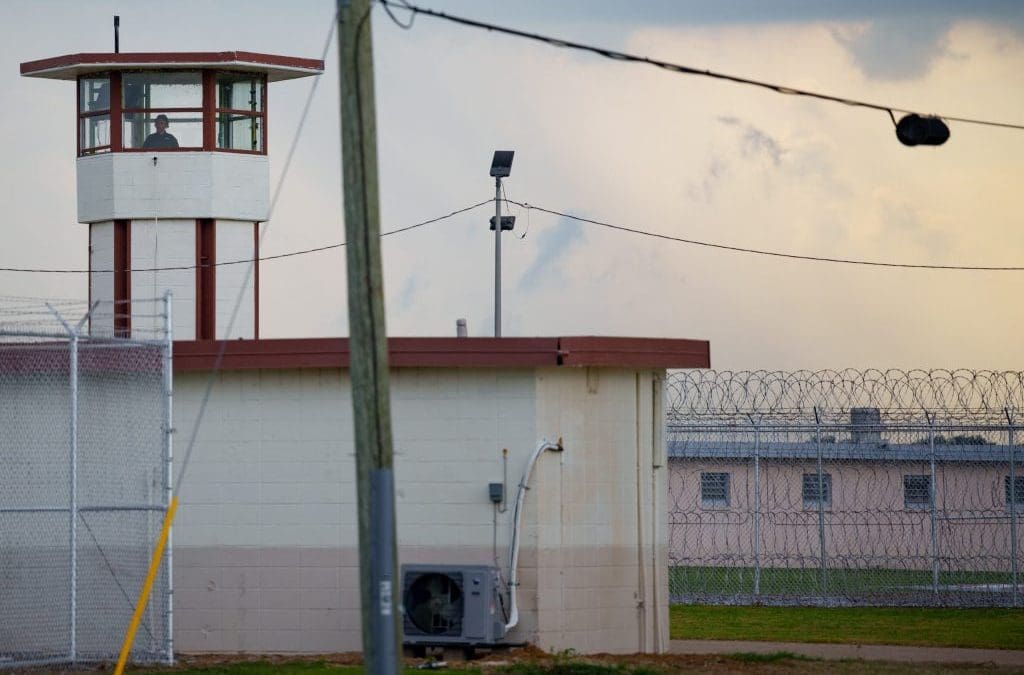
In the United States, it is possible to be unhoused even inside a prison. At the South Central Correctional Center in Tennessee, people sleep in doorways, closets, or even in the showers. “Anywhere that’s pretty much off camera,” said Bishop, a man imprisoned in the facility who chose not to use his last name out of fear of retaliation.
Atticus, another man in the prison, told Truthout he knows at least a couple people living within the prison “who are actually homeless on a more permanent basis, people bouncing around from place to place.” These folks have no bed to sleep in at night, and no place to leave their belongings.
Sources imprisoned at South Central described a different sort of housing crisis, one that takes place inside the walls of the institution that is charged with providing for them. The prison is run by CoreCivic, and, like other CoreCivic prisons in Tennessee, has been the subject of recent investigations because of the rampant violence and extortion that gang members in the prison perpetrate on newer or unaffiliated people. LGBTQ+ people in the prison say this violence often targets them specifically.
Conditions at South Central are just one example of the broader problem that LGBTQ+ people face inside prisons, particularly around housing issues. Although prisons claim to take seriously the safety of the people they confine — CoreCivic’s website highlights that they operate “safe facilities” — the people inside tell a very different story.
Instead, people inside are organizing to protect themselves. Bishop and Atticus are both part of
by Mansa Musa | Feb 18, 2026 | baltimore, Prison Industrial Complex, prison reform, Prisons and Policing, Rattling the Bars, video
A coalition of more than 31 organizations—including the Legal Defense Fund, Leaders of a Beautiful Struggle, Maryland Justice Project, and the prison guard union AFSCME—are uniting to oppose Maryland’s proposed $1 billion “therapeutic” jail. If approved, the project would be the most expensive in state history, according to reporting by Ben Conarck and Pamela Wood for The Baltimore Banner. Coalition advocates are urging lawmakers to halt the project and instead invest in a long-overdue women’s pre-release center in Baltimore. Monica Cooper, founder of the Maryland Justice Project, highlights that the decade-long fight for a transitional space for incarcerated women remains unresolved, calling the state’s inaction a violation of law and gender equity. In a 30-minute documentary report, Rattling the Bars host and former political prisoner Mansa Musa speaks with coalition members and Baltimore residents about alternatives to the $1 billion jail.
Resource links:
How Maryland discriminates against women prisoners
‘It is torture’: Women in Maryland’s prisons have nowhere to turn
Thinking Outside the Box: Do More Humane Prisons Exist?
Credits:
Producer/Videographer/Post-Production: Cameron Granadino
Transcript
The following is a rushed transcript and may contain errors. A proofread version will be made available as soon as possible.
Mansa Musa:
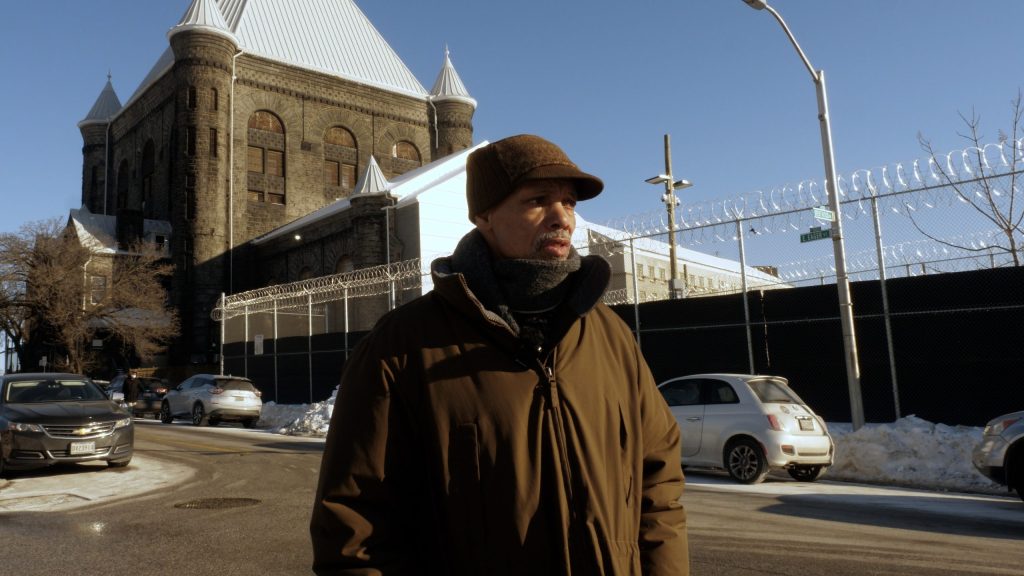
Welcome to this edition of Rattling the Bars with host Mansa Musa. We’re standing outside of Brentwood and Eagle Street, which behind me is the grounds for building a new detention center that’s going to house many and women. The name of this detention center, according to legislators, is therapeutic. The problem with this is one, it’s a detention center, but the more important the problem is, it’s going to cost a billion dollars if built. This will be Maryland’s most expensive project
by Mansa Musa | Feb 3, 2026 | Prison Industrial Complex, prison reform, Prisons and Policing, Rattling the Bars, video
Judge Brian Jackson of the US District Court for the Middle District of Louisiana has certified a class in a lawsuit against Angola Prison on behalf of men forced to perform punitive farm labor under unconstitutional conditions and in violation of the Americans with Disabilities Act (ADA). Under this ruling, the court certified two specific groups: a primary class encompassing all persons currently or potentially assigned to the Louisiana State Penitentiary (LSP) Farm Line, and a specialized subclass for those with disabilities assigned to the same labor. In his findings, Judge Jackson noted that nearly every individual arriving at the facility is assigned to the Farm Line upon entry, with the majority remaining at risk of reassignment as a disciplinary measure.
Guest:
Samantha Pourciau is a Senior Staff Attorney at The Promise of Justice Initiative based out of New Orleans, Louisiana.
Credits:
Producer/Videographer/Post-Production: Cameron Granadino
Resource links:
Incarcerated Men Forced to Work on Angola Prison’s Farm Line Win Class Certification
‘Purposefully simulating chattel slavery’: Prisoners sue over ‘inhumane’ conditions on Angola’s brutal Farm Line
‘Prisons are akin to chattel slavery’: Inside the big business of prison farms and ‘agricarceral’ slave labor
Louisiana still imprisons people convicted by ‘Jim Crow juries’
Transcript
The following is a rushed transcript and may contain errors. A proofread version will be made available as soon as possible.
Mansa Musa:
Welcome to this edition of Rattling the Bars. I’m your host Mansa Musa. We’re doing a followup on the story that we did earlier about a class action suit that was filed in Louisiana dealing with they call a farm line. And basically it’s a suit that’s talk about the inhumane conditions that prisoners are subjected to that serving
by Mansa Musa | Jan 26, 2026 | Politics and Movements: US, Prison Industrial Complex, prison reform, Prisons and Policing, Racial Justice, Rattling the Bars, video
Non-unanimous jury verdicts were a Jim Crow–era policy designed to silence Black jurors and secure convictions even when the state failed to prove its case. In 2026, over 1,000 people remain imprisoned in Louisiana after being convicted by non-unanimous juries. In this episode of Rattling the Bars, Mansa Musa speaks with Erica Navalance, Associate Director of Strategic Criminal Litigation at the Promise of Justice Initiative, about the case of Lloyd Gray and why the state of Louisiana continues to uphold unconstitutional convictions.
Guest:
Erica Navalance has worked with both Capital Appeals Project and Promise of Justice Initiative (PIJ) since 2015, but joined PJI full time in 2021 as a senior staff attorney for the Strategic Defense Litigation project, focusing on combatting excessive sentences, capital punishment, and other injustices in the criminal system.
Additional links/info:
Richard A. Webster, Verite News / ProPublica, What one man’s 45-year-old case tells us about the “Jim Crow juries” haunting Louisiana
Promise of Justice Initiative, Swastika found on DA file introduced into court, judge grants hearing for PJI client incarcerated for 45 Years
Credits:
Producer / Videographer / Post-Production: Cameron Granadino
Transcript
The following is a rushed transcript and may contain errors. A proofread version will be made available as soon as possible.
Mansa Musa:
Welcome to Rattling the Bars. This is the court of public opinion. And when justice fails to show up in America’s courtroom, we bring the truth here before the people convicted in 1980 at the age of 19, Lloyd Gray was sent to prison even though prosecutors failed to meet their burden and two black jurors refused to vote guilty in almost any other state that would have meant a hung jury,
by Mansa Musa | Jan 20, 2026 | Economy, labor, Politics and Movements: US, Prison Industrial Complex, prison reform, Prisons and Policing, Rattling the Bars, video
Returning citizens are being funneled into exploitative temp jobs that pay poverty wages, deny them basic labor protections, and deepen the state’s control over their lives long after they’ve served their time. This week, Mansa Musa speaks with Katherine Passley and Maya Ragsdale, co-executive directors of Beyond the Bars, about how Florida’s temp industry traps the most vulnerable workers and operates as a profitable and punishing extension of the prison system.Guests:
Maya Ragsdale is the founder and co-executive director of Beyond the Bars, a worker center in South Florida building the social and economic power of workers with criminal records and their families.
Katherine Passley is co-executive director of Beyond the Bars. Passley was named the 2025 Labor Organizer of the Year by In These Times magazine.
Additional links/info:
Beyond the Bars website, Substack, and Instagram
Beyond the Bars, The Temp Trap Report
Credits:
Producer / Videographer / Post-Production: Cameron Granadino
Transcript
The following is a rushed transcript and may contain errors. It will be updated.
Mansa Musa:
Returning citizens are routinely pushed out of permanent jobs and instead pushed into temporary work often for the same role. According to the Prison Policy Initiative, 27% of formerly incarcerated individuals are unemployed, a rate higher than the Great Depression. Temp agencies often circumvent anti-discrimination laws and workforce protections, fueling exploitation and instability for vulnerable workers. A new report, The Temp Trap by Beyond the Bar’s co-director Maya Ragsdale and Katherine Passley argues that the state supervision and workforce discrimination keeps returning citizens trapped. The authors say it’s as if returning citizens are still doing time. Maya and Katherine joins us today to discuss their finding from two years of research. Welcome to
by Mansa Musa | Dec 8, 2025 | Prison Industrial Complex, prison reform, Prisons and Policing, Rattling the Bars, video
Fifty years into the era of mass incarceration, states like Arkansas, Montana, California, and Colorado are pushing to build new prisons and expand immigrant detention. In this episode of Rattling the Bars, host Mansa Musa talks with Nicole Porter of The Sentencing Project about how federal and state governments are doubling down on new prison construction and ICE contracts to expand the prison-industrial complex, what sets the US criminal justice system apart from other countries around the world, and how organizers are fighting for real prison population reductions instead of more cages.
Guest:
Nicole D. Porter, named a “New Civil Rights Leader” by Essence Magazine for her work to challenge mass incarceration, manages The Sentencing Project’s state and local advocacy efforts on sentencing reform, voting rights, and confronting racial disparities in the criminal legal system. Since joining The Sentencing Project in 2009, Porter’s advocacy and findings have supported criminal legal reforms in several states including Kentucky, Maryland Missouri, California, Texas and the District of Columbia. Porter’s areas of expertise include research and grassroots support around challenging racial disparities, felony disenfranchisement, in addition to prison closures and prison reuse. Her research has been cited in several major media outlets including Salon and the Washington Post, and she has appeared in the New York Times, Washington Post, and on National Public Radio and MSNBC.
Additional links/info:
The Sentencing Project website, Facebook page, and Instagram
Lisa Armstrong, Essence, “The new Civil Rights leaders”
Credits:
Producer / Videographer / Post-Production: Cameron Granadino
Transcript
The following is a rushed transcript and may contain errors. A proofread version will be made available as soon as possible.
Mansa Musa:
Welcome to this edition of Rattling the Bars. I’m your host, Mansa Musa. Today we have with us Nicole Porter.