‘If I’m killed on this mission…’: Global Sumud Flotilla sets sail for Gaza despite Israel’s threats

‘If I’m killed on this mission…’: Global Sumud Flotilla sets sail for Gaza despite Israel’s threats

The Global Sumud Flotilla sets sail from Barcelona towards Gaza, in Barcelona, Spain, on August 31, 2025. Hundreds gather at Moll de la Fusta to bid farewell to the flotilla, with dozens of boats and thousands of supporters wearing kufiyas (Palestinian scarves) and waving flags. Photo by Albert Llop/NurPhoto via Getty Images

The Global Sumud Flotilla has embarked on the most dangerous leg of its mission to break Israel’s blockade of the Gaza Strip and deliver life-saving aid to Palestinians in the midst of genocide. As of Monday morning, over 40 vessels with delegations of peace activists from around the world are just over 300 nautical miles from Gaza, and will be entering the “high risk” zone within the next 24-48 hours. Naval ships from three countries—Spain, Italy, and Turkey—are now accompanying the humanitarian fleet as a security escort. Calling in from the Mediterranean Sea, flotilla members Iara Modarelli and Leila Hegazy speak with TRNN Editor-in-Chief Maximillian Alvarez about the current status of the Global Sumud Flotilla and the critical days ahead.

Guests:

  • Iara Modarelli  is a broadcast journalist and humanitarian from Spain who is sailing with the Global Sumud Flotilla
  • Leila Hegazy  is a musician and social media creator from the United States who is sailing with the Global Sumud Flotilla.  

Additional Links/Info:

Credits:

  • Studio Production: Maximillian Alvarez
  • Post-Production: Cameron Granadino
  • Audio Post-Production: Stephen Frank
Transcript

The following is a rushed transcript and may contain errors. A proofread version will be made available as soon as possible.

Original

Trump’s loophole for mass-jailing immigrants: The US Marshals

Trump’s loophole for mass-jailing immigrants: The US Marshals

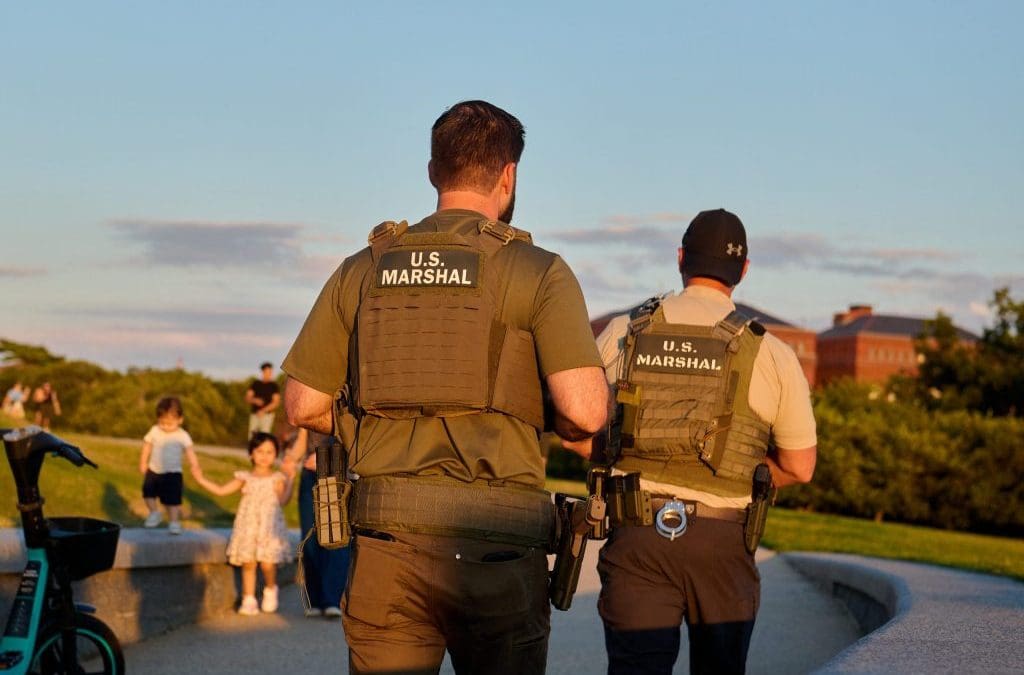
US Marshals patrol The National Mall in Washington D.C. on orders from Pres. Donald Trump, Aug. 25, 2025. Photo by DOMINIC GWINN/Middle East Images/AFP via Getty Images

There are two primary federal agencies tasked with immigration detention: ICE, which is well known, and the US Marshal Service. Under the Trump administration, the US Marshals have dramatically increased their role in detaining and incarcerating undocumented immigrants, using their federal power to override restrictions on immigrant detention in local jails around the country. In this episode of Rattling the Bars, host Mansa Musa speaks with Wanda Bertram, communications strategist for the Prison Policy Initiative, about how the Trump administration is weaponizing legal loopholes and the US Marshal Service to execute the mass incarceration of immigrants.

Guest:

Additional links/info:

Credits:

  • Producer / Videographer / Post-Production: Cameron Granadino
Transcript

The following is a rushed transcript and may contain errors. A proofread version will be made available as soon as possible.

Mansa Musa:

Welcome to the edition of Rattling the Bars. I’m your host, Mansa Musa. We’ve been hearing terms like deportation, immigration, arrest, ice, the federal marshals. When we hear these terms, we hear ’em relative to people. People that’s undocumented in this country under the pretense that they’re committed a crime in this country, that they’re being arrested. But the reality is they’re being rounded up. They’re being rounded up like slaves was rounded up. They’re being rounded up like the Japanese was being rounded up and placed in tournament camps. Joining me today is Wanda Bertram, communication strategist with the Prison Policy Initiative at one of the most reliable research hubs for Data on Incarceration. A recent report by the Prison Policy Initiative titled Hiding in Plain Sight Revealed how local jails are central to Trump’s deportation. Wanda, welcome to Rallying the Bars.

Wanda Bertram:

I’m happy to be here. Thanks for having me.

Mansa Musa:

And so let’s start here. Explain to our audience the loophole that the Trump administration is using to bypass city and county sanctuary policies. Unpack that for our audience.

Wanda Bertram:

So I think the place to start is that there are two main federal agencies that are tasked with immigration detention, and one of them is ice, which most people have heard of Immigration and Customs Enforcement. And then the other one, which is a little bit less well known is called the US Marshall Service. And the Marshall Service does things that are not immigration too. They’re generally speaking, the federal agency that handles pretrial detention. And in our report, one of the things we did was we gave an estimate of how many people are in ICE detention and US Marshals detention because a lot of people don’t think about the US Marshals. Right. And then one of the other things we did was we pointed out this loophole that you mentioned and what we call the loophole is just the fact that lots of local jails, including many that have said, we are not going to cooperate with ice,

Have contracts with the US Marshals to house, to detain immigrants who are under the jurisdiction of that agency. And actually, ICE can also piggyback off those US marshals contracts. So whether someone is under the jurisdiction of the US Marshals, and I can explain the difference between that and ice, whether someone is under the jurisdiction of the US Marshals or with ice, hundreds of local jails across the country are making room for those detainees to be held. So there are thousands and thousands of detainees who are being held in local jails that are run by sheriffs that the people left.

Mansa Musa:

Right. Okay. So in terms of the difference between ICE and the Federal marshals, because I think we was talking off camera, when you think of a person being detained by the Federal Marshals, we’re thinking about actually a crime has actually been committed a crime in form of like a gun violation of a federal statute violate of federal criminal code, violate of federal law. I’m in possession of large quantities of drugs. I’m doing counterfeit, I’m in possession of weapons. I think they had in Baltimore City, they had passed this law saying that anyone court, in order to get control over what they dubbed as a serious possession of guns in the city, they created this law where they say that anyone arrested with a gun in Baltimore, they federalized it. So they called it, I’m trying to think if they had a term that they was using. But everybody that got caught with federal guns got caught with guns during that time was arrested and put under Federal Marshall jurisdiction. At that time, I was in Supermax in Baltimore City and they took a whole section and specifically design it for that. So talk about that. Talk about the difference between the two and why it’s important that people understand that.

Wanda Bertram:

Yeah, I’m really glad you brought that up. The US Marshals, like you’re saying, when I think of the US Marshals, I think about people being charged with gun related crimes, with drug related crimes. Sometimes with federal violent offenses, the federal government has a wide latitude to choose to prosecute certain cases. And once they bring someone under their jurisdiction, or if they arrest someone, obviously they can also bring people who are under state or local jurisdiction into their jurisdiction through these state and local agreements. So the long and short of it is if you are charged with a federal crime, you are under the US Marshal’s jurisdiction. The rub here is that there, there’s been an increase in several thousand people since Trump took office in January who were under US Marshals, who were booked into US Marshalls jurisdiction for immigration related crimes. And what is an immigration crime? Come on. That can be as simple as just being undocumented illegal entry or illegal reentry. I think most people think, okay, if you’re under US Marshalls’ jurisdiction, you must have committed some horrible crime. But there’s a lot of people there who are just undocumented and their cases are becoming criminalized.

Mansa Musa:

And I was talking to one of the staff members here and I was telling that, and this is my thinking, right, the criminal element that will be under the Federal Marshals, they be like, in their mind they like, hurry up, hurry up and get me out. Send me to wherever you want to send me at so I can hurry up and get back in the country. A person that’s a person that’s committed immigration crime or whatever these terms they’re using, these people know the threat that they represent is, I’m a threat because I’m working hard, I’m paying taxes. But talk about how local jails specifically playing Trumps mass deportation program, both in terms of scale and conservation and immigration arrest, and you spoke on it earlier about how many people being arrested and being detained, but talk about how it’s planned out.

Wanda Bertram:

We know. So we estimate that on any given day, currently there’s about 83,000 people, immigrants being held for ice. And the US Marshals, I can break down how we got to that number, but of those, we know that about 10,000, a little over 10,000 people are being held in local jails for ice. We unfortunately can’t tell how many people are being held in local jails for the Marshall who just don’t have that granular data. But we actually, I will say one more thing. I’ll throw out one more statistic, which is that between January and May of this year, the number of people held for immigration reasons grew more in local jails than it did in privately run detention centers. I’m throwing this out there just to say that jails play an essential role in housing immigrants for these agencies.

I think a lot of people think about ICE as having tons of detention centers, its own detention centers around the country. And it’s true, there are several, but these agencies depend on local facilities that can hold people temporarily or for a longer time after they’re arrested. In fact, in 26 states, jails provide the sole detention capacity to ice US marshals. So a lot of people think, okay, sure. This is going on in Texas, it’s going on in Florida with alligator Alcatraz. It’s not happening where I live. You might be wrong. It might be happening where you live. A lot of jails caught up in this.

Mansa Musa:

Right? And that right there, the impact, talk about the impact that have on the population because I know if I’m a state and I’m outsourcing or I’m contracting with the federal government, I’m contracting with ICE to provide so many bids for immigration or a section for immigration, then how does that play out in terms of the way that particular detention center function overall? Because now I have to allocate staff, I have to allocate extra money, I have to allocate. And in terms of what they’re entitled to versus what people that’s is entitled to have Y, is it a problem with that or from your investigation and your study, have you seen this being problematic?

Wanda Bertram:

Well, I think we need to start talking about the money. That’s the reason that ICE and the Marshals, or excuse me, that’s the reason that local jails have these agreements in the first place. Jails are keen to bring in money from the federal government that they get in exchange for housing people, and they get somewhere anywhere between 50 and a hundred dollars per person. So it’s thousands of dollars that come in just every month for a local jail. And importantly, we have very little transparency into what that money is used

Mansa Musa:

For.

Wanda Bertram:

But some jails have been open about saying, we are using this to pay our staff. We’re using it to cover costs of the jail.

It ties into a very toxic pattern that we’ve seen over the last couple of decades, which is that counties will build, actually, they will build bigger jails anticipating that they’ll be able to allocate some of their new jail space to renting to the federal government or to their state prison system. And where there’s two ways that this all goes wrong, one is that oftentimes these jails are already understaffed. They don’t have the staff to care for their own populations, much less an additional influx of immigrants or people held by the US Marshal for any reason. And then the second thing, the second way this goes haywire is that these populations, these populations that come in from the feds, they flux, right? They come and go. And when those populations, when that source of revenue dries up for the jail,

Mansa Musa:

They’re

Wanda Bertram:

Going to need to justify the existence of such a large facility in other ways, and that’s going to lead to more local incarceration. We like to say that if you build it, they will fill it. And when counties build bigger jails anticipating renting beds to ICE or the Feds in some other capacity, they find a way to fill those beds, whether it’s with federal detainees or their own community members.

Mansa Musa:

And then in some states like California, Massachusetts, New York and Illinois have laws that restrict local law enforcement from collaborating with ice. But that’s like when you do a comparison versus the amount of money that y’all talked about how this past great, beautiful nightmare of a bill that they passed, they allocated a lot of money to ICE and a lot of money to the federal government. So how do you see the pushback, or what can states do to eliminate this nightmare? Because as you said, at the end game, the end game, the state going to be holding the bag and the end game, they’re going to have to come with some way to fill themselves, and that’s going to be at the expense of the citizens of their particular state or county. Talk about that.

Wanda Bertram:

Yeah. One thing in the report that we really hammer on is that communities have, in so far as communities are providing some of the backbone of detention. They also have the power to be a real thorn in the side of the Trump administration by resisting that. Like you pointed out, some states and several counties have instituted sanctuary city policies, and often that means, or sanctuary state policies, and that limits the jail’s. Collaborations of ICE communities also need to cancel their contracts at the US Marshals, because as I said, at the top, ICE can piggyback off of the US marshals. They can put people in jails through a US Marshals contract, and those often go overlooked. Again, the marshals are not an agency most people think about. So that’s a step that counties have been able to take to several years. They can do it now and they should do it now.

I think the other thing is on a longer timeframe, being critical of your local government, when they talk about building a new and bigger jail, just to throw something out there, this is not related to immigration at all, but about 80% of people in local jails are their pretrial. Now, this is another thing that Trump has been trying to attack is bail reform. But when counties are facing overcrowded or understaffed jails and they have these large pretrial populations, one thing that most places most counties have not tried is decarceration, right? Pursuing bail reform, pursuing cashless bail as a way of decreasing their jail populations. Instead, what many counties will do is they will try to build a bigger jail thinking it’s going to solve the problem.

And sometimes that’s what gets counties into this pickle with the federal government is they build this big new jail, and then they have a big tab to cover. And it’s very helpful if the federal government comes in and says, well, we can offset some of your costs. You just have to house some people for us. So I mean, definitely to anyone listening who’s wondering, what can I do in my community? I definitely would say being critical, being skeptical of any plans to expand your county jail and show up to city council meetings about that. Be a sticky wheel, because that’s how this happens. That’s how it starts.

Mansa Musa:

Okay. And thank you wa tell our audience how they can stay in touch with you or stay aware of some of the work that you’re doing with Prison Policy Initiative as we close out.

Wanda Bertram:

Well, no. I mean, first, thank you so much for having me. I think it’s great to be able to come on and talk about this stuff. Our website is www prison policy.org. We have a newsletter. If you sign up for that, you’ll get everything that we publish. It’s about a once a week newsletter. We also have social media. If you go to basically whatever social media you’re on, we’re at slash prison policy.

Mansa Musa:

Thank you. And as we close out, we thank you and appreciate all the work that y’all are doing at Prison Policy Initiative. And we want to tell our audience, remind our audiences that we deal with evidence, and it’s based on the statistics that the Prison Policy Initiative has offered us, that you can fact check ’em to get a clear understanding. But what we do know is this here, we know that people are being rounded up. We know that agencies that supposed to protect, serve and protect people’s rights are being used to help aid and assist in rounding people up. We know that people are being housed in astronomical numbers, in inhumane environments for one reason and one reason only. All because they’re undocumented in this country. They haven’t committed no crimes. To the extent that’s being perpetuated by the Trump administration, they’re here, they’re undocumented, and the most crime that they committed is driving without license or picking tomatoes. We ask that you continue to support real news and rallying bars. We ask that you continue to evaluate this information. We ask that you weigh in on what you think about this information, but more importantly, we ask that you make a decision on what you think should be done and do that. Thank you.


Original

Underreported memo is ‘declaration of war’ against Trump opponents

Underreported memo is ‘declaration of war’ against Trump opponents

Protesters hold signs and flags and a large balloon with an image of US President Donald Trump during the nationwide
Common Dreams Logo

This story originally appeared in Common Dreams on Sept. 28, 2025 . It is shared here under a Creative Commons (CC BY-NC-ND 3.0) license.

In between his highly publicized designation  of Antifa as a domestic terror organization and his indictment  of former FBI Director James Comey, US President Donald Trump  signed a little-reported national security memorandum that gives law enforcement new tools to target his critics.

Trump signed  National Security Presidential Memorandum 7 (NSPM-7) on Thursday. The directive, titled “Countering Domestic Terrorism and Organized Political Violence,” focuses exclusively on “anti-fascist” or left-wing activities, and mandates a “national strategy to investigate and disrupt networks, entities, and organizations that foment political violence so that law enforcement can intervene in criminal conspiracies before they result in violent political acts.”

“I don’t want to sound hyperbolic but the plain truth is that NSPM-7 is a declaration of war on anyone who does not support the Trump administration and its agenda,” journalist Ken Klippenstein wrote  in a piece raising alarm about the directive on Saturday.

Klippenstein argued that the memorandum was worrying on several fronts. For one, its focus on preventing crimes before they are committed opens the door to rights violations.

“In other words, they’re targeting pre-crime, to reference Minority Report,” Klippenstein wrote.

For another, the memorandum casts a very wide net, targeting groups, individuals, funders, and “entities” and listing several protected beliefs as “indicia” of extremism.

These include:

  • “Anti-Americanism, anti-capitalism, and anti-Christianity;
  • Support for the overthrow of the United States Government;
  • Extremism on migration, race, and gender; and
  • Hostility towards those who hold traditional American views on family, religion, and morality.”

What’s more, the memorandum entrusts enforcement to the FBI’s over 4,000-strong Joint Terrorism Task Forces (JTTF), which removes the legal challenges to directing the National Guard or other military forces to quash domestic dissent.

“For the Trump White House, the beauty of using an already existing network is that it bypasses Congressional oversight and scrutiny and even obscures federal activity to governors and legislatures at the state level,” Klippenstein wrote.

The types of activities that will be targeted are also quite broad, with the document defining “organized doxing campaigns, swatting, rioting, looting, trespass, assault, destruction of property, threats of violence, and civil disorder” as “domestic terrorist acts.”

The memorandum also targets any individual or group who might fund activity the administration deems terrorism and directs the Internal Revenue Service to “take action to ensure that no tax-exempt entities are directly or indirectly financing political violence or domestic terrorism,” which could be a means of threatening the status of nonprofits.

Finally, as Drop Site News pointed out , the memo authorizes the attorney general to designate domestic groups as terrorist organizations for the first time in US history.

“By targeting beliefs and protest activity, the directive positions dissent itself as a potential crime,” Drop Site wrote.

The Trump administration’s focus on violence associated with left-wing beliefs and groups is not supported by the facts. National Institute of Justice data found  that right-wing violence had led to 520 deaths since 1990 compared with 78 deaths due to left-wing violence. However, the administration removed that study from the Department of Justice website shortly after Charlie Kirk  was killed, The Guardian reported  earlier this month.

The administration’s efforts, while accelerated, build on processes that began during the US response to the September 11 attacks, as Klippenstein explained:

A “pre-crime” endeavor, preventing attacks before they happen, is core to the post-9/11 concept of counterterrorism itself. No longer satisfied to investigate acts of terrorism after the fact to bring terrorists to justice, the Bush administration adopted preemption. Overseas, that led to aerial assassination by drones and “special operations” kill missions. Domestically, it led to a counter-terrorism campaign whose hallmark was excessive and illegal government surveillance and the use of undercover agents and “confidential human sources” to trap (and entrap) would-be terrorists.

However, the Trump administration is expanding the War-on-Terror mandate with fewer guardrails.

“Now, with Donald Trump’s directive retooling the counter-terror apparatus to go after Americans at home, this means monitoring political activity, or speech, as an investigative method to discover ‘radicalism,‘” Klippenstein said, noting that the NSPM-7 breaks with post-Watergate national security documents by failing to mention the First Amendment rights to protest and organize.

White House Deputy Chief of Staff Stephen Miller is already eager to make use of the document.

“We are witnessing domestic terrorist sedition against the federal government,” he wrote  on social media on Friday. “The JTTF has been dispatched by the Attorney General, pursuant to NSPM-7. All necessary resources will be utilized.”

In an interview with Greg Sargent for the New Republic, Trump ally Steve Bannon confirmed  that Miller and others in the administration were preparing to go after left-liberal groups and media whose criticism of Immigration and Customs Enforcement (ICE) could be interpreted as “goading” on violence against the agency.

Referring to Miller’s comments that calling  ICE authoritarian incited violence and terrorism, Bannon responded, “Stephen Miller is correct—more importantly he’s in charge.”

The threats of investigations put liberal and left-leaning organizations in a tough place. On the one hand, they want to prepare as best they can. On the other, they do not want to obey in advance.

“Officials at these groups tell me they must strike a balance between being clear-eyed about how bad this could get while not letting it discourage political activity,” Sargent wrote. “That latter form of surrender is exactly what Trump and Miller want. And under no circumstances should anybody willingly hand it over to them.”

Original

Federal agents are abducting any DC residents who appear Latino, new suit says

Federal agents are abducting any DC residents who appear Latino, new suit says

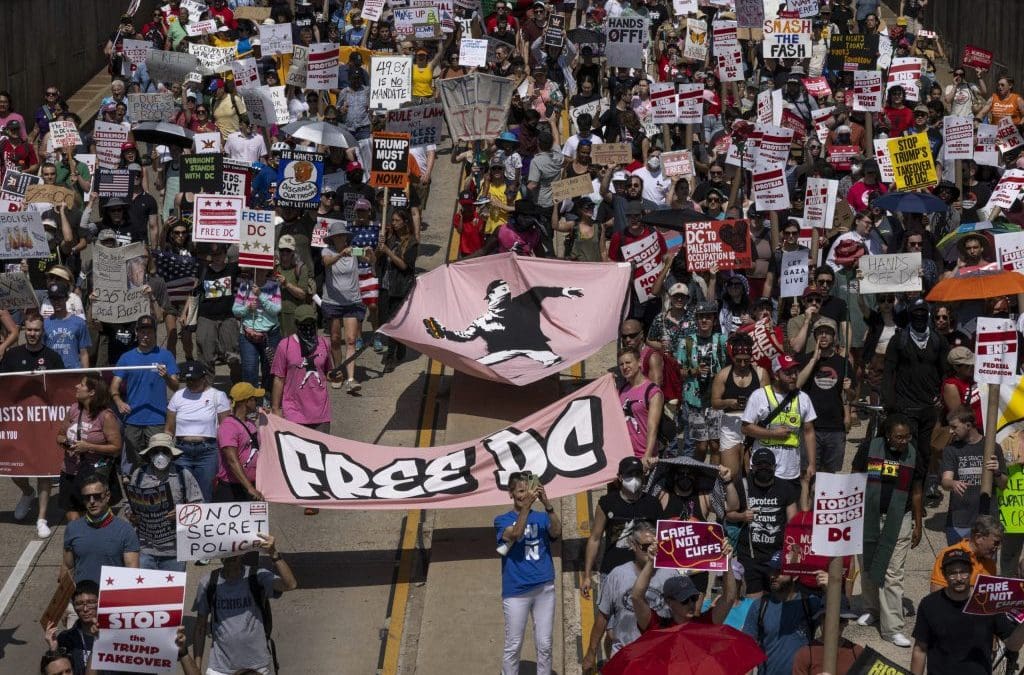
Thousands of demonstrators march from Meridian Hill Park to Freedom Plaza during the

This story was originally published on Truthout on Sept. 26, 2025. It is shared here under a  Creative Commons (CC BY-NC-ND 4.0) license.

Four Washington, D.C. residents, along with the immigration organization CASA, filed a class action suit  against the Trump administration on Thursday, alleging that federal agents have systematically arrested people in the city without warrants or probable cause.

“Over the past month and a half, plain-clothed, masked, and armed federal agents have flooded the streets of the nation’s capital, indiscriminately arresting without warrants and without probable cause District residents whom the agents perceive to be Latino,” says the complaint.

The complaint was filed by the American Civil Liberties Union (ACLU), the ACLU of D.C., the National Immigration Project, and others, on behalf of the plaintiffs.

In August, President Trump declared a crime emergency  in D.C., despite record-low rates of violent crime. During that press conference, Trump made numerous misleading statements about the prevalence of crime in the city, and announced that D.C.  will “no longer be a sanctuary for illegal alien criminals.”

“We will have full, seamless, integrated cooperation at all levels of law enforcement, and we’ll deploy officers across the District with an overwhelming presence,” he said.

A few days later, on August 15, Attorney General Pam Bondi directed D.C.’s mayor to use local resources to assist with “enforcement of federal immigration law,” including “locating, apprehending, and detaining aliens unlawfully present in the United States.”

Between the time of the emergency declaration and September 9, more than 40 percent of the arrests in D.C. were for alleged civil immigration violations, more than any other cause for arrests, according to the suit. The complaint says that federal officers have indiscriminately targeted anyone who appears Latino, including one person who was taking the trash out and another who was walking out of a grocery store.

Agents abducted one resident when he was on his way to dialysis treatment, according to the groups’ press release  announcing the lawsuit. He was detained for over eight hours, without food or his medication.

“They ignored my U.S. driver’s license and left me without critical treatment that day, putting my health in immediate danger,” he said in a statement. “Since then, I have lived in fear that I could be torn from my family and deported to a place where I cannot get the medical care I need to survive.”

All four of the individual plaintiffs in the case were abducted by federal agents who did not have warrants for their arrest.

José Escobar Molina, who has had Temporary Protected Status (TPS) since 2001, was taken by federal agents as he was about to get into his truck and start his work day.

“The agents immediately handcuffed Mr. Escobar Molina, grabbed him by the arms and legs, and called him ‘illegal’ repeatedly,” the suit says. “When he responded that he has ‘papers’ (in other words, immigration status), they replied, ‘No you don’t. You are illegal.’”

After they put him in a vehicle, he told them again he had “papers.”

The driver reportedly yelled at him, “Shut up, bitch! You’re illegal.”

He was detained overnight and released the next day after a supervisor realized Molina had valid TPS.

Federal agents abducted another plaintiff, identified in the complaint as N.S., as he sat in his car in a Home Depot parking lot after he finished shopping.

“The agents pulled N.S. out of the driver’s seat, threw him against the car, handcuffed him, and provided him a clear bag in which to place his belongings, before placing him in the back of a van,” the complaint says.

N.S., who has a pending asylum application, was detained for almost four weeks in detention centers around the country until he was released on his own recognizance.

“His knee is swollen due to being shackled for several hours at a time and sitting on several long flights as he was repeatedly transferred while detained,” the complaint says. “He is unable to sleep through the night. He is scared to walk outside or drive and has stopped driving his grandchildren and youngest son to school.”

In another case, a plaintiff identified as R.S.M. and her husband were driving to work when federal agents surrounded their car. They detained R.S.M for about 10 hours, and released her with an ankle monitor. R.S.M. has a pending asylum application.

Trump’s emergency order expired on September 11, but “mass immigration stops and arrests in D.C. are continuing,” the complaint says.

After D.C. Mayor Muriel Bowser said  local police would stop cooperating with Immigration and Customs Enforcement (ICE) once the emergency declaration expired, Trump lashed out at the mayor, who he had previously praised for her cooperation.

“It has been a beautiful thing to watch but, now, under pressure from the Radical Left Democrats, Mayor Muriel Bowser, who has presided over this violent criminal takeover of our Capital for years, has informed the Federal Government that the Metropolitan Police Department will no longer cooperate with ICE in removing and relocating dangerous illegal aliens,” Trump posted  on Truth Social.

“If I allowed this to happen, CRIME would come roaring back. To the people and businesses of Washington, D.C., DON’T WORRY, I AM WITH YOU, AND WON’T ALLOW THIS TO HAPPEN,” he continued. “I’ll call a National Emergency, and Federalize, if necessary!!!”

Most of the city’s residents, however, are opposed  to the president’s takeover. In August, D.C. resident Sean Dunn, who threw a sandwich at a federal agent, became a folk hero, and a grand jury refused to indict him .

“Fuck you! You fucking facists!” he allegedly yelled before throwing the sandwich. “Why are you here? I don’t want you in my city!”

Original

Harriet Tubman showed how to act bravely in dark times

Harriet Tubman showed how to act bravely in dark times

A portrait of Harriet Tubman (ca. 1820-1913). Tubman, herself an escaped slave, helped hundreds of slaves escape the South by means of the Underground Railroad. She nursed Union troops during the Civil War and took on spying missions at great personal risk. She is known as the

Harriet Tubman is an icon for freedom. She first fled slavery with two brothers on September 17, 1849. By the following year, she was returning to save others. She traveled by night, from safe house to safe house, supported by a network of abolitionists known as the Underground Railroad. Walking north to Pennsylvania—a free state. She would make 13 trips back and forth throughout the 1850s and early 1860s. She rescued roughly 70 people from enslavement. But she didn’t stop there.

This is episode 69 of Stories of Resistance—a podcast produced by The Real News . Each week, we’ll bring you stories of resistance like this. Inspiration for dark times.

BIG NEWS! This podcast is a finalist for this year’s Signal Awards for best history podcast. It’s a huge honor just to get this far. 

And you can help us win. Your vote can make a difference. Anyone can vote.

Here’s the link: vote.signalaward.com/PublicVoting#/2025/shows/genre/history

All you have to do is click on the link. That will take you to a page where you can click on the Stories of Resistance icon. Register your email and you’re all set. 

While you’re there, please also vote for The Real News’s Marc Steiner. He’s in the running for best episode host. You can vote for him here: vote.signalaward.com/PublicVoting#/2025/individual-episodes/craft/best-host

Please consider supporting this podcast and Michael Fox’s reporting on his Patreon account : patreon.com/mfox . There you can also see exclusive pictures, video, and interviews. 

If you like what you hear, please subscribe, like, share, comment, or leave a review. 

And please consider signing up for the Stories of Resistance podcast feed, either in Spotify , Apple Podcasts , Spreaker , or wherever you listen.

Written and produced by Michael Fox .

Transcript

Harriet Tubman. There are few more iconic women in the history of the United States. A woman who not only freed herself from slavery, but who returned again, and again, and again to dangerous lands to help free others. 

So many others. 

Her resistance is legendary, and she is remembered until today. 

Harriet Tubman was born in March 1822 on Maryland’s Eastern Shore. Born into slavery. Her grandmother had been stolen from her home in Africa, and sailed on a terror slave ship across the Atlantic to be sold. 

Harriet Tubman was born with the name Araminta Ross. She was forced to work as a little girl. She was beaten and whipped, and even suffered a traumatic head injury that would affect her throughout her life. Many brothers and sisters were ripped from her mother’s arms and sold to other families. But she also saw her mother’s resistance when they came for her younger brother. Her mother hid him for a month and promised to fight to keep him from them.

In her early 20s, Araminta Ross married. She changed her name to Harriet Tubman. 

In 1849, the patriarch of the estate that owned her died. The descendants planned to sell her and others. To break apart their remaining family. She would not have it. 

She fled slavery with two brothers on September 17, 1849. Her brothers changed their minds and convinced her to turn back. But she had soon fled again. This time there was no going back. 

She boarded the Underground Railroad, a network of people who helped slaves flee the South. Harriet Tubman traveled by night. She fled from safe house to safe house. Walking north to Pennsylvania, a free state. 

The trip was only 90 miles, but on foot., under the darkness of night, it would have taken days or weeks. And she had to be on the lookout for slave catchers who tracked down fugitive slaves and brought them back for ransom.

Finally, Harriet Tubman crossed into Pennsylvania. 

“When I found I had crossed that line,” she later said, “I looked at my hands to see if I was the same person. There was such a glory over everything; the sun came like gold through the trees, and over the fields, and I felt like I was in Heaven.”

But her freedom was not enough. Her loved ones were still enslaved. “I was free,” she would say. “and they should be free.”

And they would be.

Harriet Tubman saved money working odd jobs in Philadelphia and New Jersey, and in late 1850 she traveled back into Maryland, to Baltimore, where she helped her niece and her family flee to Philadelphia.

The next year, Harriet returned to Maryland again. This time she saved her younger brother Moses and two other men. In December 1851, she returned again, helping 11 people escape. And again, and again, and again, she returned with the help of so many others and brought out dozens on the road to freedom. 

Harriet Tubman was devout, and she found in the Bible inspiration and faith in her struggle to free those who were enslaved.

“I have wrought in the day – you in the night,” abolitionist Frederick Douglass would write of her. “The midnight sky and the silent stars have been the witnesses of your devotion to freedom and of your heroism.” 

She would make 13 trips back and forth throughout the 1850s and early 1860s. She rescued roughly 70 people from enslavement. They called her Moses, like the prophet who led the Hebrews from Egypt. 

Harriet Tubman would help people flee to Pennsylvania and then to Canada after the Fugitive Slave Act forced law enforcement in the North to help return runaway slaves to the South. But her resistance didn’t stop there. During the Civil War, she worked with the Union army as a cook, a nurse, a scout, and a spy. She helped the North to free hundreds of enslaved people. She was an icon who even later in life would fight for women’s suffrage — the women’s right to vote. 

Harriet Tubman died in March 1913. Her life and legacy continue to inspire. Resistance against all odds. Resistance in the face of so much injustice. Carrying people to freedom along the footpaths of the Underground Railroad. 

September is Underground Railroad Month in Maryland and other U.S. states. This is the month when both Harriet Tubman and the great abolitionist Frederick Douglass freed themselves from slavery. Their stories and their struggles are as important as ever. 

Hi folks, thanks for listening. I’m your host Michael Fox. Two things before I go. First, I’m adding links to some more background information on Harriet Tubman. You can find those in the show notes. 

Second, I have incredible news. This podcast, Stories of Resistance, is a finalist for this year’s Signal Awards for best history podcast. It’s a huge honor just to get this far. And you can help us win. Your vote can make a difference.

Anyone can vote. It’s fast and easy. The link is in the show notes. All you have to do is click on the link. That will take you to a page where you can click on the Stories of Resistance icon. Register your email and you’re all set. While you’re there, please also vote for The Real News’s Marc Steiner. He’s in the running for best episode host. I’ll add a link to that as well in the show notes. And if you like what we do, please spread the word and tell a friend.

As always, if you enjoy this podcast, I hope you’ll consider becoming a subscriber on my Patreon. It’s only a few dollars a month. I have a ton of exclusive content there, only available to my supporters. And every supporter really makes a difference.

This is the latest episode of Stories of Resistance, a podcast series produced by The Real News. Each week, I bring you stories of resistance and hope like this. Inspiration for dark times. If you like what you hear, please subscribe, like, share, comment, or leave a review.

Thanks for listening. See you next time.

Resources:

Original

‘We have experienced every kind of oppression’: Gaza’s children speak

‘We have experienced every kind of oppression’: Gaza’s children speak

A group of three children in war-torn Gaza look directly at the camera. Still image from TRNN documentary report ‘We have experienced every kind of oppression’: Gaza’s children speak (September, 2025)

For the last two years, Israel’s US-backed genocide has destroyed every facet of normal life in the Gaza Strip. While Palestinians cling to hope that they will live to see the end of the war, the incalculable trauma inflicted on Gaza’s children will leave permanent scars. “In these two years, we have experienced every kind of oppression,” 13-year-old Abdelrahman Bashir Jundia tells TRNN. “From living in tents, to refugee centers that are not fit for living in at all… We have suffered torture, torture, and more torture.” In this on-the-ground report, TRNN speaks with children in Gaza about how the war has forever changed their lives.

Producers: Belal Awad, Leo Erhardt
Videographers: Ruwaida Amer, Mahmoud Al Mashharawi
Video Editor: Leo Erhardt

Transcript

ABDELRAHMAN BASHIR JUNDIA – 13 YEARS OLD: 

In these two years, we have experienced every kind of oppression: From displacement, to living in tents, to refugee centers that are not fit for living in at all. We have endured every form of oppression, from relying on soup kitchens, and depending on water stations, and the water trucks that arrive. We have suffered torture, torture and more torture. I’m Abderahman Bashir Jundiya, I’m 13 years old, in the 8th grade. During the war, I took on the role of an electrical engineer. I started working with electrical appliances that I didn’t know much about before. The war taught me these things. Electrical equipment: we opened a charging station. Electrical equipment, inverters, chargers, [inaudible], fans, batteries, electrical panels, things like that. Before the war, I used to be bigger, but since the war, I’ve lost a lot of weight due to hunger and lack of nutrition. Before the war, my blood was healthy. Now, I have anemia, because of a lack of vitamins and iron. Before the war, we had healthy food, we had buildings and electricity, we had schools—my right to health and education was guaranteed. Now, we’ve been deprived of all of that. 

UM ALAA JUNDIYA – ABDELRAHMAN’S MOTHER: 

They used to be calm—very calm. Honestly, after the war started, it felt like all the children became aggressive. All of them, including my son, Abderahman. He’s become really aggressive, and it’s the same with all the children. Every time I speak to other moms, they say: “My child wasn’t like this before the war.” “I don’t know what’s happened to my child since the war.” “My child used to be calm and relaxed.” And it’s true—I knew these kids. They were calm kids. Now, they say, “My child is very aggressive.” They cause trouble; if anyone speaks to them outside, they immediately start fighting. What should I do? Even when I try to tell him to come meditate or recite the Quran, he refuses. 

ABDELRAHMAN BASHIR JUNDIA – 13 YEARS OLD: 

Before, water and food were always in our homes. Water used to come to our doorstep or be stored in tanks above our houses. Now, we have to collect water and go from soup kitchen to soup kitchen. When the water truck arrives, we run to get drinking water. All of this was available before the war, but now it’s gone. This exhausts us physically, and all the kids are suffering the same way I am. Nowadays, when I feel hungry, I try to distract myself sleeping or playing. I feel like I want to escape how I feel, through sleep or play. 

UM ALAA JUNDIYA – ABDELRAHMAN’S MOTHER: 

Every mom I meet says the same thing about her child: Why? Because all their dreams have been destroyed. Their neighborhoods are in ruins, and they live in tents. Their lives now revolve around soup kitchen—water—soup kitchen—water. It’s either, “I need to get water,” or, “The soup kitchen is here!” Even when we were in the south, there were some tent schools. The kids would go there, but as soon as the soup kitchen arrived, they’d run out of class while the teacher was talking to get food. The teacher would turn around and find the classroom empty. This has become their entire life. They’ll receive a qualification in chasing after water and soup kitchens.

ABDELRAHMAN BASHIR JUNDIA – 13 YEARS OLD: 

Before the war, my friends and I used to meet up at the mosque, in our homes, at the playground, at school—but now, all of that has been cut off. We only see each other occasionally while evacuating, getting water, or at the soup kitchens. Some have been killed, and others have survived, but we can’t reach them. I miss them more and more, because I was really attached to them before the war. Now, we’ve lost them suddenly. Some were martyred—may God rest their souls—and for the others, we pray for their safety. My dream is to live in safety—me and the children. To have a home, to live securely. My right to health, my right to education. To live like any other child in the world: and be able to go to school. To have all the rights that every child deserves. 

UM ALAA JUNDIYA – ABDELRAHMAN’S MOTHER: 

I want to provide everything for my children, but I can’t—I’m out of options, as they say. The grief in my heart—my heart is being torn apart, and my tears never stop falling. My tears say it all. Once, my child Abderahman and I were looking at the phone, and we saw a video of a chef cooking a feast—delicious food, meats, and other dishes. He turned to me and said, “Oh my God, if I die and go to heaven, will I get to eat food like this?” I said, “No, you’ll find even better than this!” Because the wonders of heaven are beyond our imagination. He put his head down and went to sleep. The next day, he woke up and said: “Mom, seriously, will I get food like this in heaven?” We just have to be patient, and we’ll find this in this world and the next, God willing. My heart is breaking—I despair for my child and all the children. You hear all of them saying, “I’m hungry, give me food! I’m hungry, give me food!” But there’s nothing we can do.

Original