by Michael Fox | Oct 13, 2025 | Ecuador, Indigenous communities, Peru, Podcast, Politics and Movements: International, Stories of Resistance
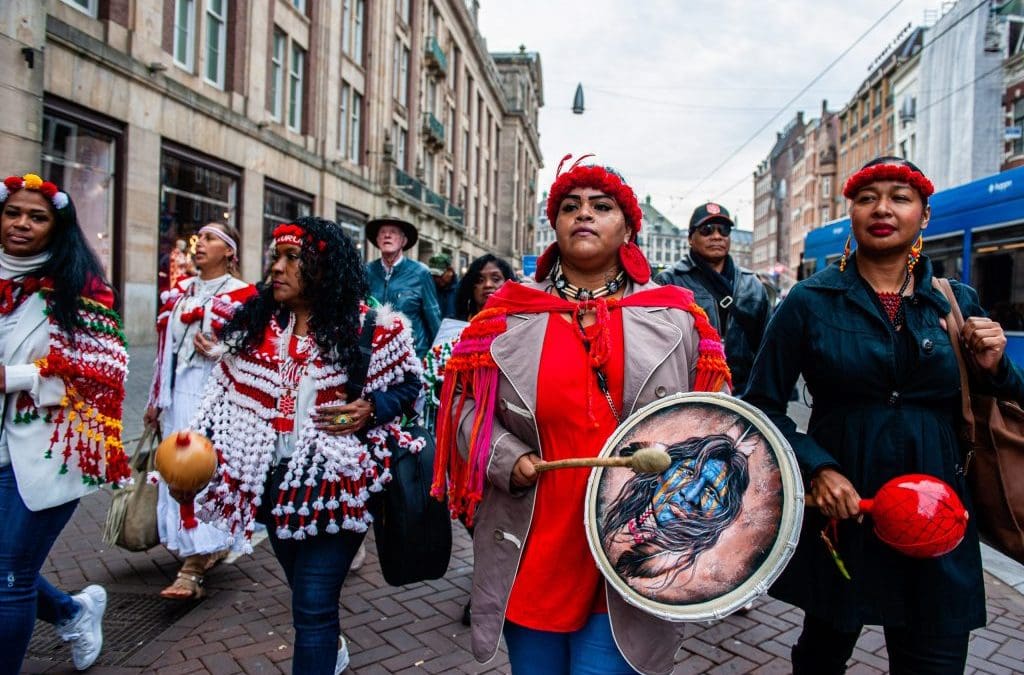
It was once called Columbus Day, and it still is in many parts. A day to celebrate the Italian explorer Christopher Columbus, who supposedly “discovered” America. But America was there long before Columbus came. And so were millions of people up and down the continent. Experts estimate that there were anywhere from 60–90 million people in the Americas at the time. Possibly even more people in the Americas than in Europe at the time.
But disease and successive wars by waves of invading Europeans decimated the local Indigenous populations. Over the next century, roughly 90% of Indigenous peoples in the Western Hemisphere had been wiped out.
But they have constantly resisted to this day.
Please consider supporting this podcast and Michael Fox’s reporting on his Patreon account: patreon.com/mfox. There you can also see exclusive pictures, video, and interviews. If you like what you hear, please subscribe, like, share, comment, or leave a review. And please consider signing up for the Stories of Resistance podcast feed on Spotify, Apple Podcasts, Spreaker, or wherever you listen.Written and produced by Michael Fox.
Stories of Resistance Indigenous resistance episodes:
Episode 4: How Indigenous peoples in Brazil fought COVID-19
Episode 8: Celebrating Indigenous roots in Chile’s Arica carnival
Episode 23: Reforesting the Andes, one tree at a time
Episode 48: Protecting Q’eswachaka, the last Incan rope bridge
Episode 50: Inti Raymi returns as an act of resistance
Episode 54: How Indigenous field hockey is reviving Mapuche culture
Episode 56: Karipuna resistance: Defending the Amazon
Transcript
It was once called Columbus Day, and it still is in many parts. A day to celebrate the Italian explorer Christopher Columbus, who supposedly “discovered” America.
But America was there long before Columbus came. And so were millions of people up and down the
by Mitchell Plitnick | Oct 10, 2025 | Article, Gaza, Israel, October 7: One Year Later, Palestine, Politics and Movements: International, Politics and Movements: US, Reprint
This story originally appeared in Mondoweiss on Oct. 10, 2025. It is shared here with permission.
As the genocide in Gaza began its third year, there was some hope — one can’t really call it optimism — that the end might finally be in sight. Wednesday evening, the United States announced that Hamas and other Palestinian factions had accepted the initial parts of U.S. President Donald Trump’s 20-Point Plan. Specifically, they accepted the exchange of hostages and the first redeployment of Israeli military forces, along with an end to Israel’s offensive actions.
Yet, while Palestinians, especially in Gaza, celebrate, hope is tempered with the experience of two years of temporary pauses, which were just limited downscales of Israel’s violence, after which the slaughter returned with even greater ferocity than before.
Trump’s “20-Point Plan” has some potential for truly ending the genocide. But that potential is limited by its vagueness and its dependence on the United States to apply and maintain pressure on Israel.
Trump’s plan and motivations
Trump’s plan explicitly disregards the rights of the Palestinian people. It establishes foreign rule over an ostensibly Palestinian technocratic administrative apparatus but requires that current Palestinian representatives — in this case, Hamas, a body that has never been, nor ever claimed to be, representative of the entire Palestinian nation — agree to that foreign rule. Vague allusions to the possibility that there might one day be a path to a mythical Palestinian state do little to mitigate this reality.
Ironically, and despite the fact that Hamas has already made it clear that they have neither the authority nor the willingness to agree to such a thing, this demand might be the very reason the
by Julia Conley | Oct 9, 2025 | Article, Gaza, Israel, October 7: One Year Later, Palestine, Politics and Movements: International, Politics and Movements: US, Reprint
This story originally appeared in Common Dreams on Oct. 09, 2025. It is shared here under a Creative Commons (CC BY-NC-ND 3.0) license.
Palestinian civilians and aid groups in Gaza expressed “jubilation” along with underlying caution and “skepticism,” as one local reporter said, on Thursday following the news that Hamas and Israel had come to an agreement to end Israel’s two-year assault on the exclave.
Israel is expected to withdraw troops to an agreed-upon line and to allow an influx of aid into Gaza along with releasing Palestinian prisoners in exchange for Israeli hostages.
The office of Israeli Prime Minister Benjamin Netanyahu said Thursday that a ceasefire would take effect later in the day, “once the government convenes and approves the deal,” but Nour Odeh reported at Al Jazeera that “that is not stopping the celebrations” of the news that Israel’s relentless destruction of Gaza was expected to soon come to a halt.
“People were screaming in the streets, because after two years of bombings and destruction and loss, finally they will sign the ceasefire [deal],” Laila Al Shana, a project manager for Palestinian grassroots aid group Humans To Be in Gaza, told Al Jazeera. “I hope they can maintain this deal.”
Tareq Abu Azzoum, a reporter for the outlet in az-Zawayda, central Gaza, said there was “an undeniable collective sense of relief seen here in Gaza” on Thursday following President Donald Trump’s announcement that Hamas and Israel had reached a deal on the first phase of the 20-point peace plan Trump proposed last week.
Scenes of celebration at Al-Aqsa Martyrs Hospital in central Gaza as news of the ceasefire spread earlier this morning. pic.twitter.com/pjI1FyGImL— Drop Site (@DropSiteNews) October 9, 2025
“People were celebrating, and there were very obvious scenes of jubilation across
by Marc Steiner | Oct 7, 2025 | Gaza, Israel, October 7: One Year Later, Palestine, Podcast, Politics and Movements: International, Politics and Movements: US, The Marc Steiner Show
Intent to destroy all or part of a group is required to meet the criteria of genocide, and Israeli officials have made their intentions towards the people of Gaza explicitly clear, says Phyllis Bennis. In this discussion of her new book, Understanding Palestine & Israel, she explains how other recognized genocides have been defined, the influence of the Holocaust and its aftermath on Zionism and Jewish identity, and why the ceasefire movement indicates a change in the movement for Palestinian rights.
Guests:
Phyllis Bennis is a fellow at the Institute for Policy Studies in Washington, DC, where she also serves as co-director of the New Internationalism Project. She is a founding member of the US Campaign to End Israeli Occupation and served for six years on the national board of Jewish Voice for Peace. She is the author of numerous books, including Understanding Palestine & Israel.
Credits:
Studio Production: Cameron Granadino
Post-Production: Stephen Frank
Transcript
The following is a rushed transcript and may contain errors. A proofread version will be made available as soon as possible.
Marc Steiner:
Welcome to the Marc Steiner Show here in the World News. I’m Marc Steiner. It’s good to have you all with this as we open our program today. Somewhere between 66,000 and 80,000 people have been buried under the rubble and Gaza and killed the majority of women and children. Most of the infrastructure has been destroyed. Over 1.2 million people face starvation and seemingly nothing is being done to end this massacre. Many of the most profound voices and leaders of the fight against the war in Gaza are members of the Jewish community who say not in our name. And today we’re
by Maximillian Alvarez | Oct 6, 2025 | Gaza, Israel, October 7: One Year Later, Palestine, Politics and Movements: International, Politics and Movements: US, video
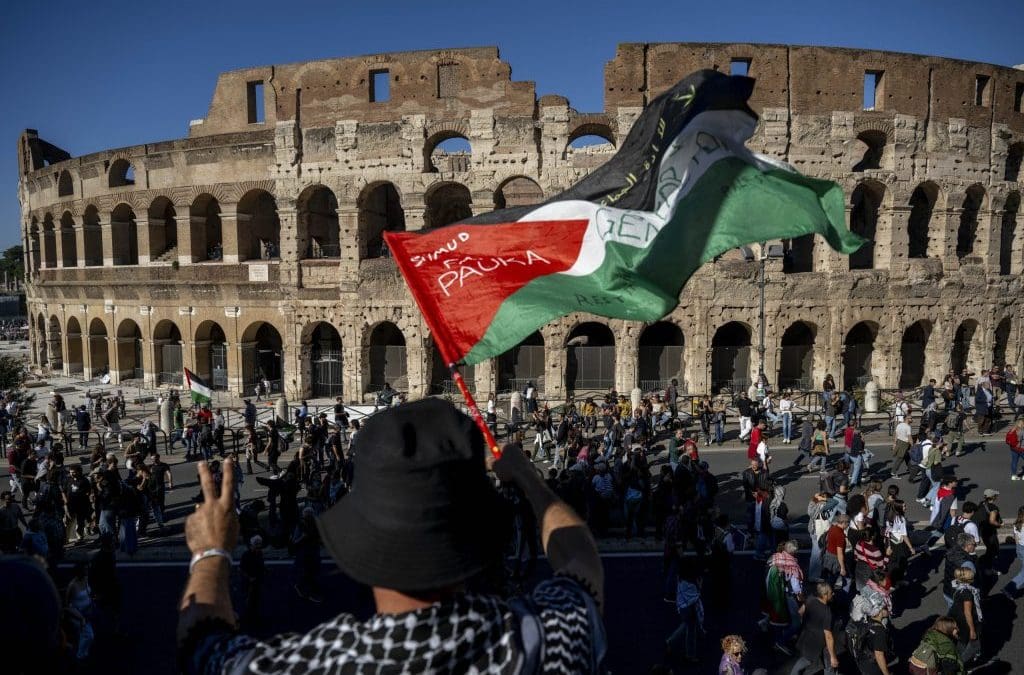
Sparking global outrage and condemnation, Israel has illegally intercepted every vessel and captured every volunteer sailing to Gaza with the Global Sumud Flotilla. Protests over the flotilla’s capture have erupted around the world, from Buenos Aires to Barcelona, and hundreds of thousands took to the streets of Italy in a one-day general strike called by Italian unions in solidarity with the Global Sumud Flotilla. And another, smaller fleet of ships with the Freedom Flotilla Coalition is currently sailing to Gaza. Recorded on Saturday, Oct. 4, TRNN Editor-in-Chief Maximillian Alvarez speaks with Mskwaasin Agnew, a Cree & Dene healthcare worker from the Salt River First Nation, who is sailing with the flotilla on board the Conscience.
Guest:
Mskwaasin Agnew is Cree and Dene from Salt River First Nation, born and raised in Toronto. She is a first responder to people who use drugs and an Indigenous harm reduction practitioner. She is an organizer, land defender, abolitionist, and is well versed in Palestinian and First Nation solidarity.
Additional links/info:
Freedom Flotilla Colation linktree and Instagram
Marc Steiner, The Real News Network, “US veterans’ final message from the Global Sumud Flotilla before being intercepted by Israel”
Maximillian Alvarez, The Real News Network, “‘If I’m killed on this mission…’: Global Sumud Flotilla sets sail for Gaza despite Israel’s threats”
Maximillian Alvarez, The Real News Network, “Why US veterans are sailing to Gaza with the Global Sumud Flotilla”
Credits:
Studio Production / Post Production: Maximillian Alvarez, David Hebden
Transcript
The following is a rushed transcript and may contain errors. A proofread version will be made available as soon as possible.
Maximillian Alvarez:
Sparking global outrage in condemnation. Israel has illegally intercepted every single vessel and captured every volunteer sailing to Gaza with
by Michael Fox | Oct 6, 2025 | Gaza, Israel, Podcast, Politics and Movements: International, Stories of Resistance
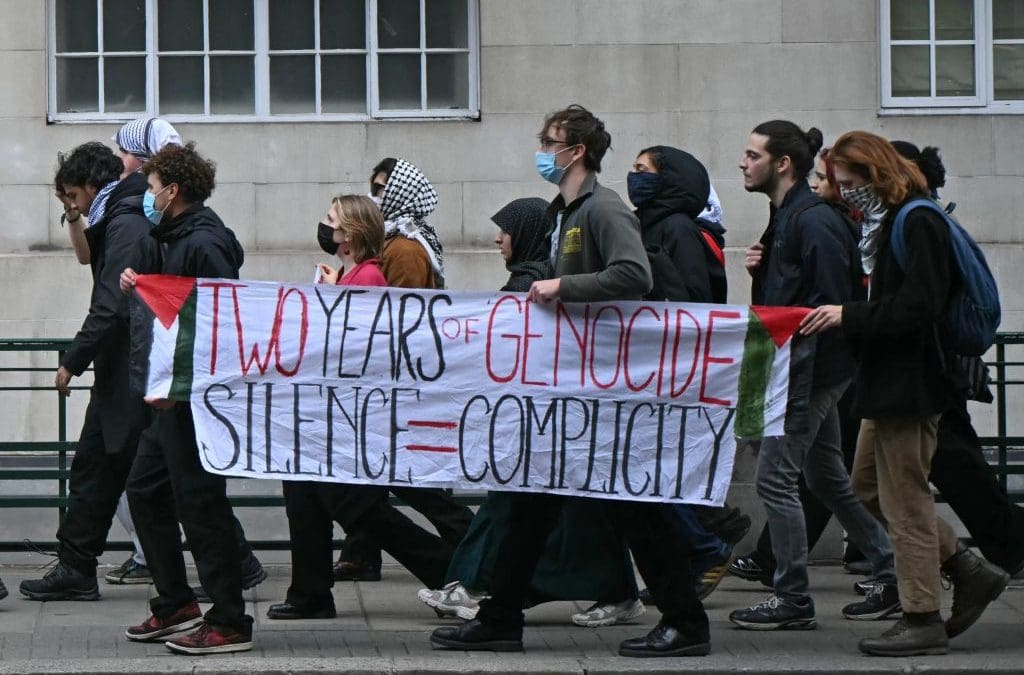
Hundreds of thousands have taken to the streets in recent days. They’ve marched in dozens of cities. They’re demanding respect and safety for the flotilla passengers kidnapped and detained by Israeli forces. They’re demanding an end to the violence in Gaza and an end to their countries’ complicity in the genocide in Palestine.
BIG NEWS! This podcast is a finalist for this year’s Signal Awards for best history podcast. It’s a huge honor just to get this far.
And you can help us win. Your vote can make a difference. Anyone can vote.
Here’s the link: https://vote.signalaward.com/PublicVoting#/2025/shows/genre/history
All you have to do is click on the link. That will take you to a page where you can click on the Stories of Resistance icon. Register your email and you’re all set.
While you’re there, please also vote for The Real News’s Marc Steiner. He’s in the running for best episode host. You can vote for him here: https://vote.signalaward.com/PublicVoting#/2025/individual-episodes/craft/best-host
Please consider supporting this podcast and Michael Fox’s reporting on his Patreon account: patreon.com/mfox. There you can also see exclusive pictures, video, and interviews.
If you like what you hear, please subscribe, like, share, comment, or leave a review.
And please consider signing up for the Stories of Resistance podcast feed, either in Spotify, Apple Podcasts, Spreaker, or wherever you listen.
Written and produced by Michael Fox.
Resources:
“The Freedom Flotilla: Sailing to break Israel’s siege of Gaza,” TRNN
“Palestino: Chile’s soccer club standing in defense of Palestine,” TRNN
“How Italy’s Workers Shut Their Country Down for Gaza,” The Nation
Here is the link to the website for the Global Sumud Flotilla: https://globalsumudflotilla.org/
As of Monday, October 6, Israel had freed 166 passengers of the flotilla. Israel was