by Michael Fox | Nov 4, 2025 | Peru, Podcast, Politics and Movements: International, Stories of Resistance
In the late 1700s, Indigenous peoples in the Spanish colonies of the Andes were forced to work for the Spanish. They tilled the land, worked in the textile mills and the mines. Those that didn’t faced heavy taxes. But in early November 1780, Indigenous Incan leader Tupac Amaru II led an uprising against the Spanish that he hoped would end it all.
It was the largest revolt against colonial Spain. Thousands would join the months-long rebellion. It would inspire uprisings elsewhere across the continent, and independence leaders. South America would gain its freedom from Spain just 40 years later.
BIG NEWS! This podcast has won Gold in this year’s Signal Awards for best history podcast! It’s a huge honor. Thank you so much to everyone who voted and supported.
And please consider signing up for the Stories of Resistance podcast feed on Spotify, Apple Podcasts, Spreaker, or wherever you listen. And please take a moment to rate and review the podcast. A little help goes a long way.
The Real News’s legendary host Marc Steiner has also been in the running for best episode host. And he also won a Gold Signal Award. We are so excited. You can listen and subscribe to the Marc Steiner Show here on Spotify or Apple Podcasts.
Please consider supporting this podcast and Michael Fox’s reporting on his Patreon account: patreon.com/mfox. There you can also see exclusive pictures, video, and interviews.
Written and produced by Michael Fox.
Transcript
In the main square of Yanaoca, Peru, people dance. It’s carnival season. Yanaoca is a small town in the highlands of Peru. Population 1,500 people. But it is best known for rebellion.
See, just
by Michael Fox | Oct 13, 2025 | Ecuador, Indigenous communities, Peru, Podcast, Politics and Movements: International, Stories of Resistance
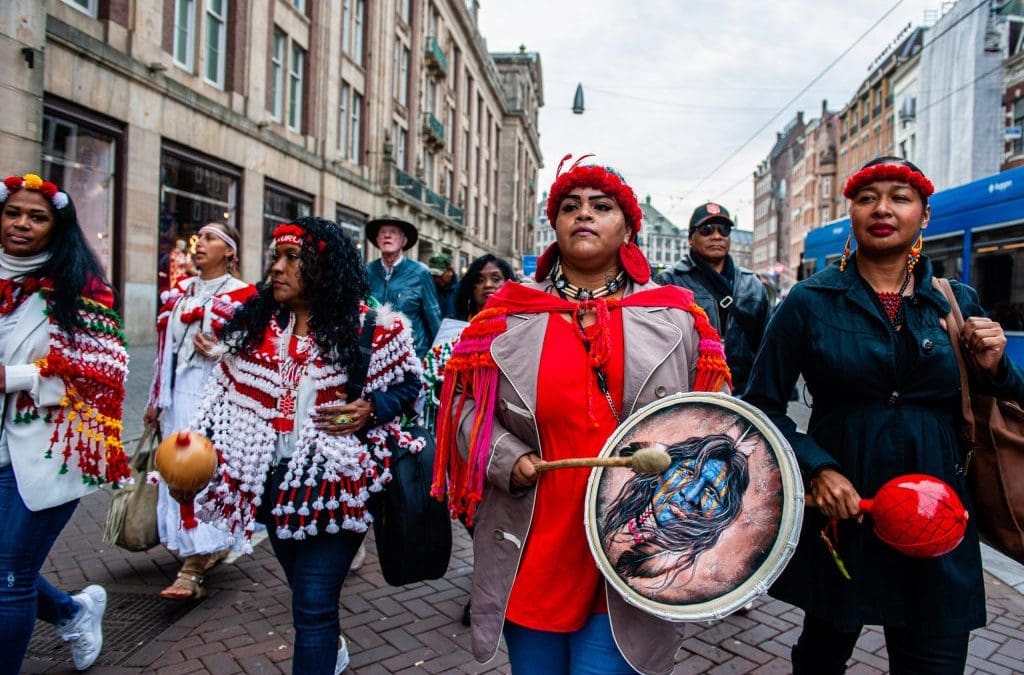
It was once called Columbus Day, and it still is in many parts. A day to celebrate the Italian explorer Christopher Columbus, who supposedly “discovered” America. But America was there long before Columbus came. And so were millions of people up and down the continent. Experts estimate that there were anywhere from 60–90 million people in the Americas at the time. Possibly even more people in the Americas than in Europe at the time.
But disease and successive wars by waves of invading Europeans decimated the local Indigenous populations. Over the next century, roughly 90% of Indigenous peoples in the Western Hemisphere had been wiped out.
But they have constantly resisted to this day.
Please consider supporting this podcast and Michael Fox’s reporting on his Patreon account: patreon.com/mfox. There you can also see exclusive pictures, video, and interviews. If you like what you hear, please subscribe, like, share, comment, or leave a review. And please consider signing up for the Stories of Resistance podcast feed on Spotify, Apple Podcasts, Spreaker, or wherever you listen.Written and produced by Michael Fox.
Stories of Resistance Indigenous resistance episodes:
Episode 4: How Indigenous peoples in Brazil fought COVID-19
Episode 8: Celebrating Indigenous roots in Chile’s Arica carnival
Episode 23: Reforesting the Andes, one tree at a time
Episode 48: Protecting Q’eswachaka, the last Incan rope bridge
Episode 50: Inti Raymi returns as an act of resistance
Episode 54: How Indigenous field hockey is reviving Mapuche culture
Episode 56: Karipuna resistance: Defending the Amazon
Transcript
It was once called Columbus Day, and it still is in many parts. A day to celebrate the Italian explorer Christopher Columbus, who supposedly “discovered” America.
But America was there long before Columbus came. And so were millions of people up and down the