by Marc Steiner | Jan 13, 2026 | Podcast, Politics and Movements: International, Politics and Movements: US, The Marc Steiner Show, Venezuela
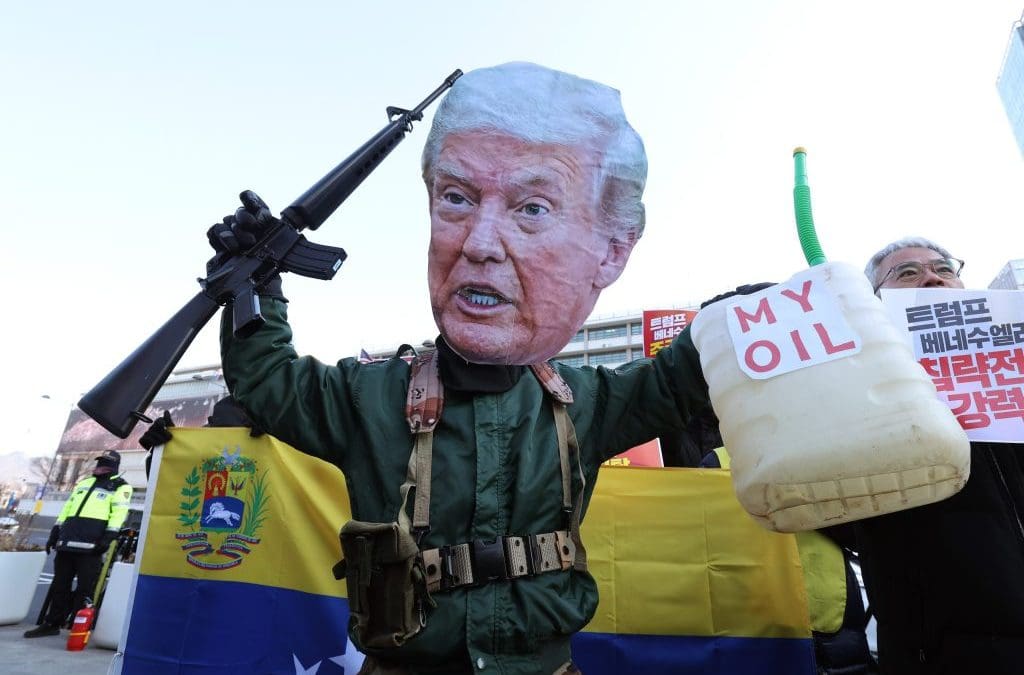
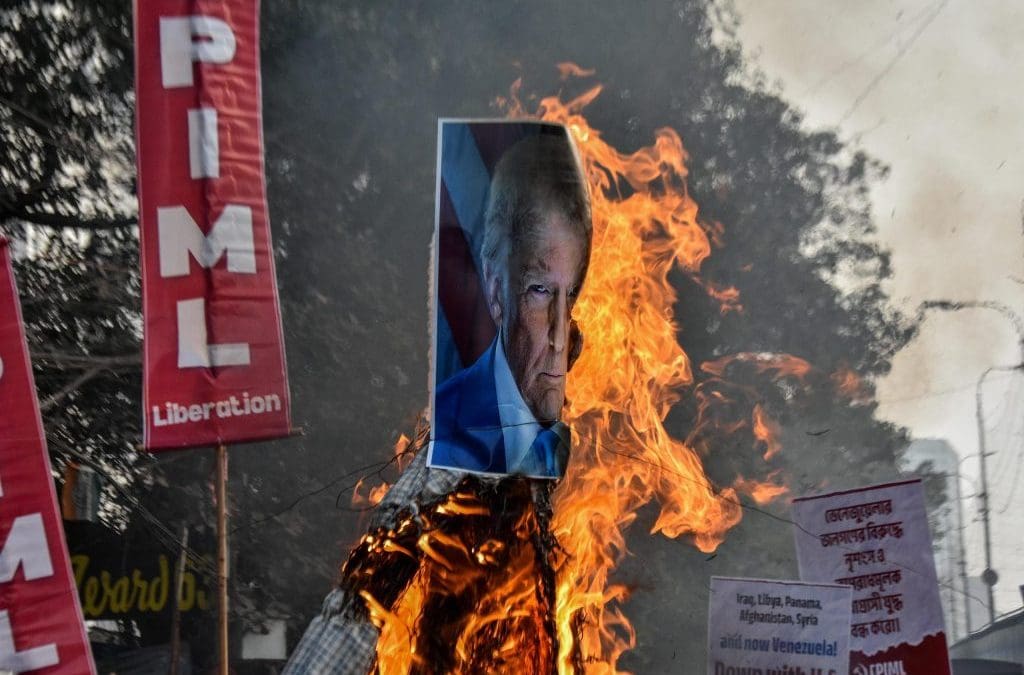
Marc Steiner speaks with Geo Maher, abolitionist scholar and author of We Created Chávez: A People’s History of the Venezuelan Revolution, about the untenable goals behind President Trump’s invasion of Venezuela, and what the US bid to reassert imperial dominance in the Western hemisphere reveals about its declining place on the global stage.
Additional links/info:
Geo Maher Facebook page and Instagram
Geo Maher, Duke University Press, “We Created Chávez: A People’s History of the Venezuelan Revolution”
Geo Maher, Verso Books, “Building the Commune: Radical Democracy in Venezuela”
Mike Fox, Under the Shadow / The Real News Network, “The Americas will never be the same”
Credits:
Production: Cameron Granadino
Audio Post-Production: Stephen Frank
Transcript
The following is a rushed transcript and may contain errors. It will be updated.
Marc Steiner: Welcome to the Marc Steiner Show here on The Real News. I’m Marc Steiner. It’s great to have you all with us. As we begin this conversation, Trump is meeting with all executives from 17 companies. Secretary of State Rubio, Energy Secretary Wright, and Interior Secretary Bergen are looking at a hundred billion dollar investment as US and private corporations are about to seize the oil and the wealth of Venezuela. And as we air, we all know that the Venezuela president, Nicholas Madoro and First 80 Flores have been kidnapped and imprisoned by the United States. So to parse us out today, we’re talking with Geo Maher, who’s an abolitionist, educator, organizer, and writer based in Philadelphia. He’s taught at the University of Pennsylvania, Vassar, Drexel, San Quentin State Prison, and the Venezueela School of Planning in Karacas. He spent a lot of time in Venezuela, he’s taught there and in Mexico.
He’s the author of five books,
by Michael Fox | Jan 9, 2026 | Podcast, Politics and Movements: International, Stories of Resistance, Venezuela
Transcript
MICHAEL FOX [NARRATION]: “Yankee go home,” that’s the refrain. The crowd sings it in unison in this old black and white video. “Yankee go home. Yankee go home.” The man leading them stands at the mic. He has a thick beard. He plays the Venezuelan quarto. His gaze is defiant… His name is Alí Primera.
He is El Cantor del Pueblo — The People’s Singer
The Venezuelan ambassador of the nueva canción or protest song movement, which spilled across Latin America in the 1960s and ‘70s, and includes others like Mercedes Sosa or Victor Jara.
Alí Primera sings in solidarity. He sings for rights and for justice. He sings in defense of the people… The humble and the working class. He sings against poverty. He sings for change. For social justice. He sings for El Salvador in the 1980s. He sings for Nicaragua. He sings for revolution and for peace.
He sings to demand an end to US imperialism. An end to US intervention and aggression throughout Latin America.
###
Alí Primera was born on Oct. 31, 1941, in Coro, Venezuela. Born into poverty. From a young age, he worked odd jobs to help his family.
He moved to Caracas in 1960 and began singing and writing songs while studying chemistry at the Central University of Venezuela. Songs like this, played here by the Venezuela band Los Guaraguao.
[MUSIC — LOS GUARAGUAO]
Alí Primera wrote this song in 1967. He first performed it at a Festival of Protest Songs that same year. It’s called, “It’s Not Enough Just to Pray.” It’s a brutal critique of inequality and the US war in Vietnam.
“And they pray in good faith / And they pray
by Jake Johnson | Jan 8, 2026 | Article, Climate, Climate Change, Climate Crisis, Politics and Movements: International, Politics and Movements: US, Reprint, Trump
This story originally appeared in Common Dreams on Jan. 08, 2026. It is shared here under a Creative Commons (CC BY-NC-ND 3.0) license.
President Donald Trump on Wednesday withdrew the United States from dozens of international treaties and organizations aimed at promoting cooperation on the world’s most pressing issues, including human rights and the worsening climate emergency.
Among the treaties Trump ditched via a legally dubious executive order was the United Nations Framework Convention on Climate Change (UNFCCC), making the US—the world’s largest historical emitter of planet-warming greenhouse gases—the first country to abandon the landmark agreement.
The US Senate ratified the convention in 1992 by unanimous consent, but lawmakers have repeatedly failed to assert their constitutional authority to stop presidents from unilaterally withdrawing from global treaties.
Jean Su, energy justice director at the Center for Biological Diversity, said in a statement that “Trump cutting ties with the world’s oldest climate treaty is another despicable effort to let corporate fossil fuel interests run our government.”
“Given deeply polarized US politics, it’s going to be nearly impossible for the U.S. to rejoin the UNFCCC with a two-thirds majority vote. Letting this lawless move stand could shut the US out of climate diplomacy forever,” Su warned. “Withdrawing from the world’s leading climate, biodiversity, and scientific institutions threatens all life on Earth.”
Trump also pulled the US out of the International Institute for Justice and the Rule of Law, the International Union for Conservation of Nature, the UN International Law Commission, the UN Democracy Fund, UN Oceans, and dozens of other global bodies, deeming them “contrary to the interests of the United States.”
The president’s move came as he continued to steamroll domestic and international law with an illegal assault on Venezuela and threats to seize Greenland with military force, among other grave abuses.
Below is the full list of international organizations that
by Maximillian Alvarez and Michael Fox | Jan 6, 2026 | Podcast, Politics and Movements: International, Politics and Movements: US, Trump, Venezuela
In the early, pre-dawn hours of Saturday, Jan. 3, the US invaded and bombed the sovereign country of Venezuela, and kidnapped Venezuela’s president Nicolas Maduro and the First Lady of Venezuela, Cilia Flores. This is the first time the United States has used its own military to invade a South American country, and President Trump made the purpose of the invasion very clear: oil. What will happen to Venezuela’s government now? What will be the geopolitical fallout in the Western Hemisphere from this stunning act of imperial intervention? How does this period of US intervention in Latin America compare to previous ones? TRNN Editor-in-Chief Maximillian Alvarez and Latin America correspondent Michael Fox break down your questions.
Additional links/info:
Michael Fox, The Real News Network, “Trump invades Venezuela, kidnaps Maduro, and hurls the Western hemisphere into chaos”
Michael Fox, Under the Shadow / The Real News Network, “Trump’s piracy in the Caribbean won’t end with Venezuela”
Michael Fox, Under the Shadow (podcast series)
Credits:
Production: Maximillian Alvarez
Post-Production: David Hebden
Transcript
The following is a rushed transcript and may contain errors. A proofread version will be made available as soon as possible.
Maximillian Alvarez:
In the early pre-dawn hours of Saturday, January 3rd, the US administration of self-proclaimed Peace President Donald Trump invaded and bombed the sovereign country of Venezuela and kidnapped Venezuelan President Nicholas Maduro and the First Lady of Venezuela, Celia Flores. As our Latin America based correspondent, Michael Fox reports for the real news, “This is the first US invasion of another country in Latin America since the 1989 invasion of Panama, when the US kidnapped and detained Panamanian President Manuel Noriega under charges of drug trafficking. The Trump administration used the same
by Sharon Zhang | Jan 6, 2026 | Article, Politics and Movements: International, Politics and Movements: US, Reprint, Trump, Venezuela
This story was originally published on Truthout on Jan. 05, 2026. It is shared here under a Creative Commons (CC BY-NC-ND 4.0) license.
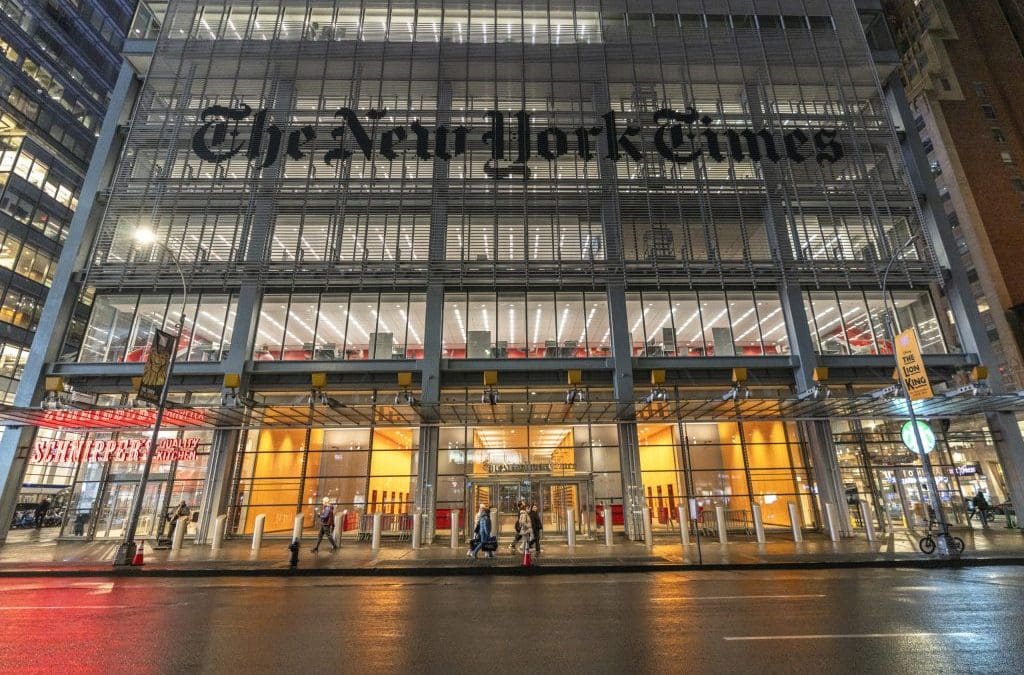
Major American news outlets were informed of the Trump administration’s plan to bombard Venezuela and abduct its president ahead of the operation early Saturday morning, but withheld their reporting on the operation to protect the military, Semafor reports.
Both The New York Times and The Washington Post knew about the raid before President Donald Trump approved it on Friday night at 10:46 pm, Semafor reported over the weekend.
However, according to two people familiar with the administration’s communications with the outlets, they “held off publishing what they knew to avoid endangering U.S. troops.”
The report raises major questions about the media’s role in the operation, which has been widely condemned as an illegal and authoritarian action by legal experts and foreign leaders; Semafor describes the withholding of coverage as potential “cooperation” with the military by news outlets.
Major news outlets in the U.S. have a history of coordinating with the Pentagon in order to protect military operations.
As Semafor notes, The New York Times reportedly withheld a story about the disastrous Bay of Pigs operation in 1961 before the Cuban invasion at the behest of the Kennedy administration.
There are numerous other such examples. In the mid-2000s, the Times withheld a major report on the National Security Agency’s campaign of warrantless spying on American citizens, Stellar Wind, for a year at the Bush administration’s request.
Most recently, The Atlantic withheld a potential report on a planned U.S. attack on Yemen that was the central focus of Signalgate. That attack, which the magazine’s editor-in-chief Jeffrey Goldberg was notified about two hours in advance, killed 15 people, including six children, one of them a newborn baby.
Goldberg noted that he wasn’t clear about the authenticity
by Michael Fox | Jan 5, 2026 | Podcast, Politics and Movements: International, Politics and Movements: US, Trump, Under the Shadow, Venezuela
In the early hours of Saturday morning, January 3rd, Venezuelans were awoken by the sounds of bombs falling. US helicopters whirled overhead. Explosions struck across the capital Caracas and in surrounding states.
Hours of chaos, fear, and uncertainty.
President Donald Trump would post over social media that the US had “captured” Venezuelan President Nicolas Maduro and his wife Cilia Flores amid a “large-scale” strike against the country.
This is the first US invasion of another country in Latin America since the 1989 invasion of Panama, when the US kidnapped and detained Panamanian President Manuel Noriega under charges of drug trafficking. The Trump administration used the same excuse to detain Maduro, despite lack of evidence linking Maduro to drug trafficking.
With this strike, the United States has taken an unprecedented step: This is the first time the United States has used its own military to invade a South American country.
Today, we go to Caracas to look in-depth at the January 3rd US invasion of Venezuela. Host Michael Fox speaks with Caracas-based reporter Ricardo Vaz.
Under the Shadow is an investigative narrative podcast series that walks back in time, telling the story of the past by visiting momentous places in the present.
Season 2 responds in real time to the Trump Administration’s onslaught in Latin America.
Hosted by Latin America-based journalist Michael Fox.This podcast is produced in partnership between The Real News Network and NACLA.Theme music by Monte Perdido and Michael Fox. Monte Perdido’s new album Ofrenda is now out. You can listen to the full album on Spotify, Deezer, Apple Music, YouTube or wherever you listen to music. Other music from Blue Dot Sessions.
Resources:
Under the Shadow
You can check out the first season of