
‘We are still living in a selective ceasefire’: Gaza, 2026
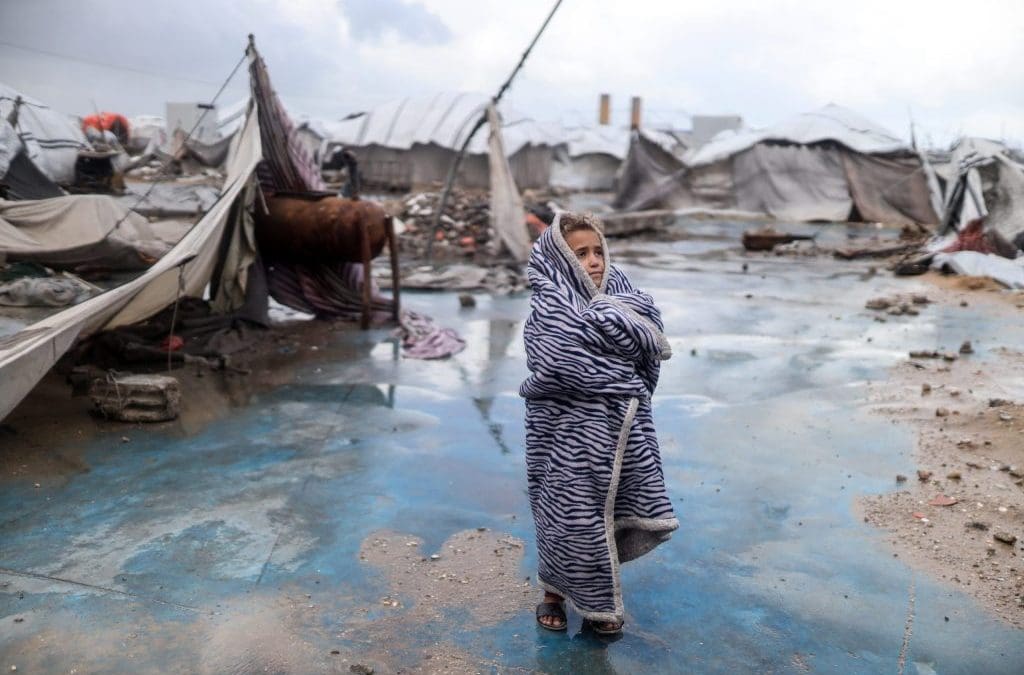
The Trump administration has said that the “second phase” of the ceasefire in Gaza is now in effect, but the fire has yet to cease. “What’s happening now is that we are still being settled silently, we are still being killed slowly, away from the world’s cameras,” Eyad Amawi, a father living in Gaza and a representative of the Gaza Relief Committee, tells The Marc Steiner Show this week. “That’s the real meaning of the ceasefire.”Get new weekly episodes of The Marc Steiner Show on Spotify and Apple Podcasts.Credits:Studio Production: Cameron GranadinoAudio Post-Production: Stephen Frank
Transcript
The following is a rushed transcript and may contain errors. It will be updated.
Speaker 1:
Papa!
Speaker 2:
[foreign language 00:00:14].
Eyad Amawi:
As the father for four children, really every night my children asked me, my little daughter ask me, “Papa, we will survive until tomorrow morning, or no?” This is the big questions, but my answer depends on my belief here. “Don’t worry, we will still alive, but you must sleep.”
Marc Steiner:
I’m Marc Steiner. Today we’re joined by Eyad Amawi. He lives in Gaza, he’s a Palestinian, a father and a husband. He’s the coordinator for the Gaza Relief Committee, trying to bring humanitarian aid to the people of Gaza. It’s hard for many of us to fathom the depth of destruction taking place in Gaza. The land, homes, hospitals, schools have been laid to waste. Starvation is rampant. And as we begin this conversation, over 75,000 people have been killed, including more than 25,000 children. And Eyad, welcome. It’s good to have you with us.
Eyad Amawi:
First of all, thank you. I have been following you for some times.

Hands Off Latin America
‘Blood everywhere’: Iran’s protests continue as violence rises
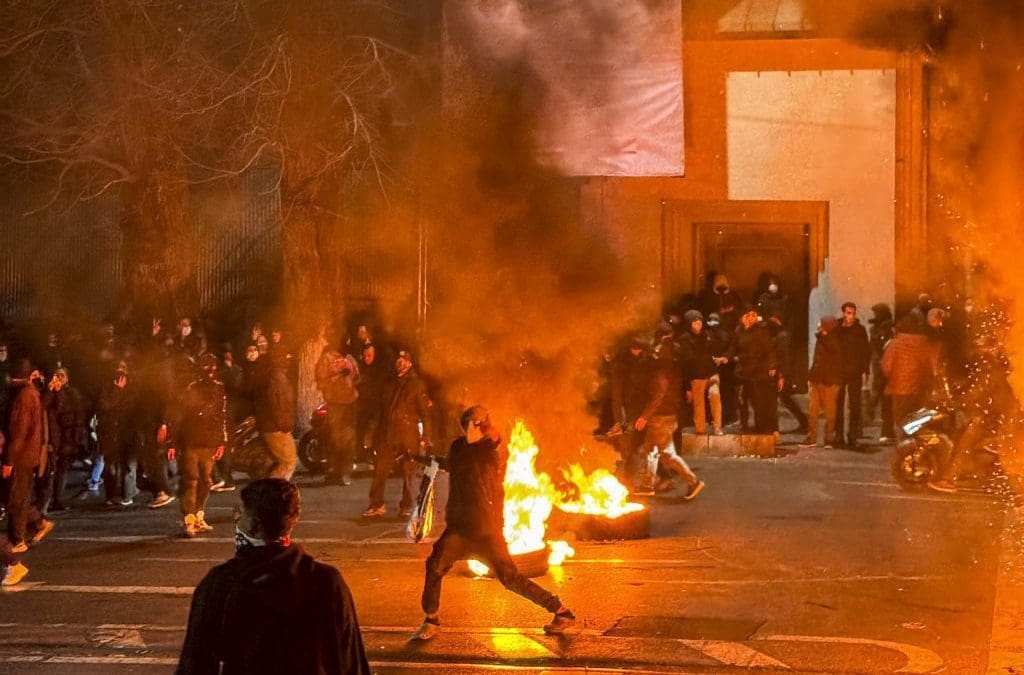
People continue to take to the streets all across Iran, even as state forces massacre protestors and the US ramps up sanctions and threatens military intervention. While a total internet blackout remains in effect in the country, TRNN Editor-in-Chief Maximillian Alvarez speaks with award-winning Iranian-Canadian journalist Samira Mohyeddin about what we do and don’t know about the crisis unfolding in Iran right now.
Credits:
Studio Production / Post-Production: David Hebden
Transcript
The following is a rushed transcript and may contain errors. It will be updated.
Maximillian Alvarez:
Samira Mohyeddin, can you please break down for us what we know about what’s happening in Iran right now, what we don’t know, and why specifically we don’t and can’t know more right now?
Samira Mohyeddin:
Iran has been under what is now past 130 hours of a nationwide internet blackout imposed by the state. What we are getting out are some reports from people who have Starlink and then also what we know leading up to the internet blackout. So protests against the dropping of Iran’s currency, which has dropped to its all time low, has really began on December 28th with the merchants in Tehhran’s grand bazaar. Those protests quickly escalated and spread to every single province in Iran. So it was not just confined to Tehran anymore. And it wasn’t just the merchant class, a wide demographic of people out on the streets. And they’re not just calling for economic reprieve or anything like that. This is now an existential problem for the Iranian government. They are calling for the downfall of the regime. They’re calling for the killing, the death of Khamenei, which is Iran’s supreme leader.
And you’re

Searching for Gaza’s lost people
According to the United Nations, over 11,000 Palestinians have gone missing in Gaza since October 2023. Relatives don’t know if the missing are dead or alive, under the rubble, or in Israeli detention centers. In this on-the-ground report from Gaza, TRNN speaks with family members about their lost loved ones and the impossible struggle to find out if they’re dead, missing, or imprisoned.
Credits:
Producers: Belal Awad, Leo Erhardt
Videographers: Ruwaida Amer, Mahmoud Al Mashharawi
Video Editor: Leo Erhardt
Transcript
Safa Saber Sadi Jundiya:
He disappeared on Monday, September 29, 2024, at 5:53 p.m. We were in Deir al-Balah. That was the last time I saw him. and he told me he was going to Gaza.
Narrator:
Safa Jundiya is one of thousands. According to the UN, since October 2023 over 11,000 Palestinians have gone missing in Gaza. Relatives don’t know if the missing are dead or alive, under the rubble or in Israeli detention centers.
Safa Saber Sadi Jundiya:
I lost my husband about a year and four months ago. I lost him when he was trying to return to the Gaza Strip via the south. Now I live with my children without my husband.
Narrator:
This is Safa’s son, Tamer. 12 years of age now, he was 11 when his father disappeared.
Tamer Mohamed Nayef Jundiya:
When he left, we said goodbye. He kissed each of us and said: Don’t worry, I’ll be back in a few hours. We told him, “OK but don’t be long because we can’t go to sleep or wake up without you.” He said: “Don’t worry”.
Safa Saber Sadi Jundiya:
We had lunch together, we chatted, we talked, we laughed, and suddenly he told me that he wanted

While he openly shakes down Venezuela for oil, US media acts like Trump cares about human rights in Iran
The Trump White House took time out this weekend from openly mocking and threatening Venezuela, and justifying US immigration forces executing an unarmed American woman while ordering the FBI to investigate her widow, to, once again, feign concern for human rights in Iran. And, once again, US media dutifully lined up to repeat this clearly absurd motivation as genuine without any an ounce of critical reporting, context, or pushback.
Almost every major outlet has taken Trump’s alleged motivation for potentially bombing Iran of defending Iranian demonstrators at face value:
Wall Street Journal (1/11/26): “…a sign the president is considering reprimanding the regime for its crackdown on demonstrators as he has repeatedly threatened.”
New York Times (1/10/26): “Mr. Trump has not made a final decision [to bomb Iran], but the officials said he was seriously considering authorizing a strike in response to the Iranian regime’s efforts to suppress demonstrations set off by widespread economic grievances.’
New York Times (1/13/26): “…the Trump administration is simultaneously considering a range of measures, including possible military strikes, to try to prevent further killings of protesters.”
CNN (1/11/26): “President Donald Trump is weighing a series of potential military options in Iran following deadly protests in the country, two US officials told CNN, as he considers following through on his recent threats to strike the Iranian regime should it use lethal force against civilians.”
Washington Post (1/11/26): “The Trump administration is considering military options in response to the crackdown…”
Washington Post (1/13/26): “Trump’s escalating rhetoric and the soaring death toll from inside Iran come as the White House said this week that his administration was weighing diplomatic options while considering potential responses [to the