


The war in the womb: Fallujah’s generational crisis
In the central Iraqi city of Fallujah, the joy of pregnancy is overshadowed by dread. For many families, the anticipation of new life is replaced by the fear of what might be born into their arms. More than 20 years after the second major US assault on Fallujah in November 2004, its toxic legacy still seeps into the city’s wombs.
For about six weeks, US forces, backed by a British battalion, waged one of the Iraq War’s most ferocious campaigns, saturating the city with white phosphorus and depleted uranium munitions. The assault leveled neighborhoods and killed hundreds of civilians.
Today, researchers warn that toxic remnants remain embedded in Fallujah’s soil, water, air, and the bloodstreams of its residents. Each year, newborns bear the silent inheritance of war: cancers, twisted limbs, missing organs, and severe congenital abnormalities.
“I just want to be like other kids,” says 12-year-old Fatema Ahmed, who was born with debilitating deformities in her arms and legs. “I feel embarrassed to be different like this.” Sitting in her Fallujah home, she stares at the floor, shyly swinging her legs.
Fatema’s mother was likely exposed to toxic material from the US assault, according to the family’s doctor. Fatema is one of scores of children in Fallujah whose bodies carry the scars of a war they never lived through.
The war’s toll is inscribed on Fatema’s body. Born with severe deformities in her arms and legs, she embodies Fallujah’s toxic legacy—one of many children afflicted by conditions that families and experts trace to heavy metals left behind after the 2004 US assaults. Photo by Jaclynn Ashly.
A close-up of Fatema’s arm deformities,
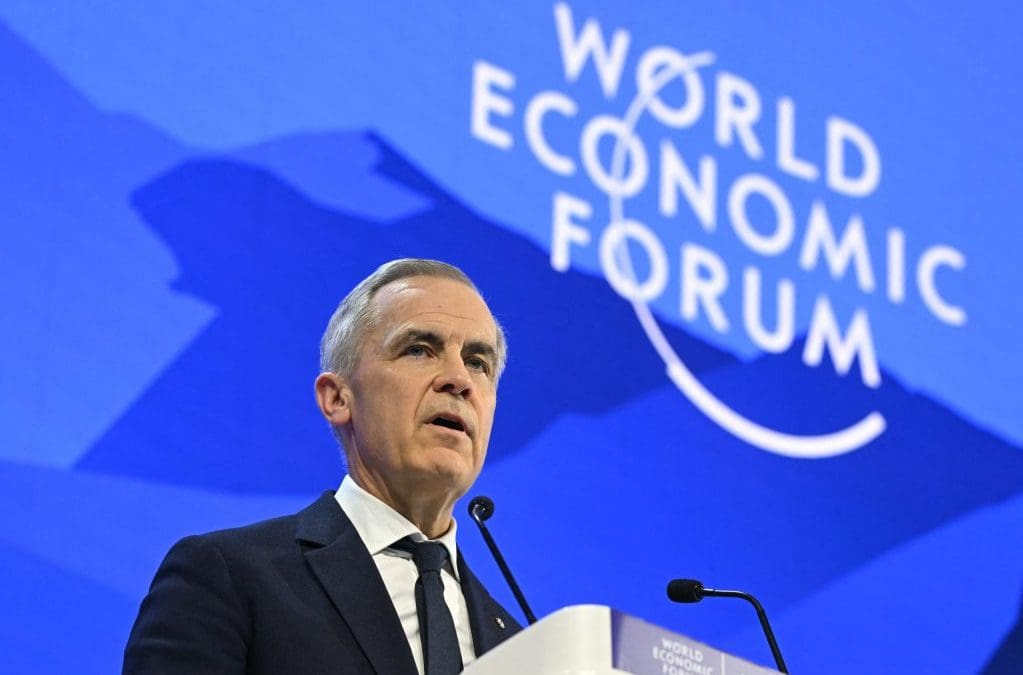
Mark Carney warns ‘American hegemony’ is destroying world order in candid speech
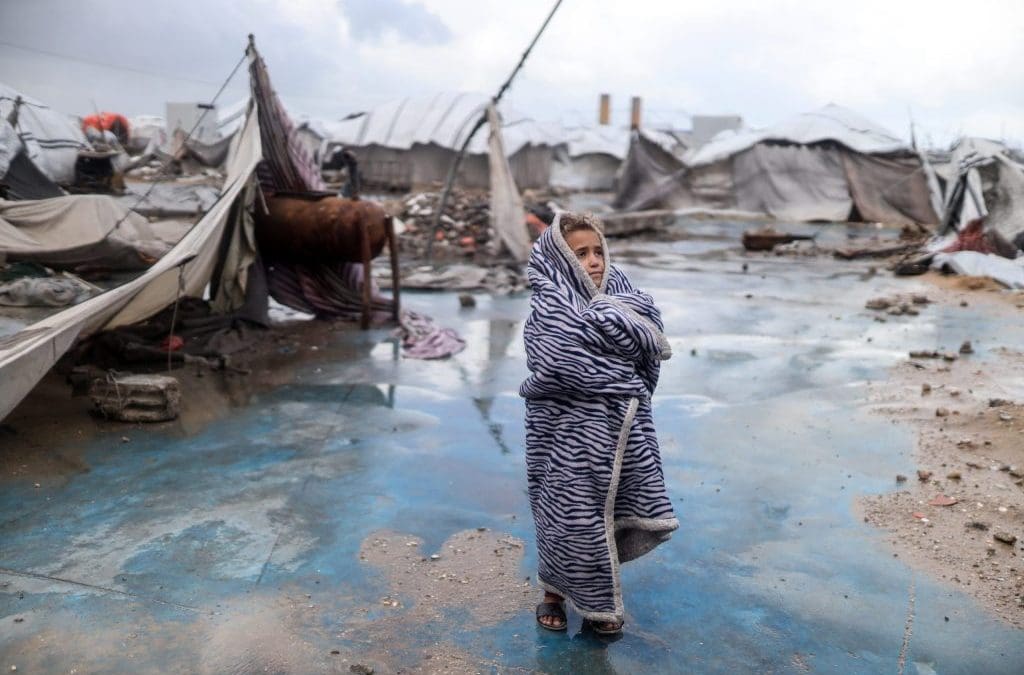
‘We are still living in a selective ceasefire’: Gaza, 2026
The Trump administration has said that the “second phase” of the ceasefire in Gaza is now in effect, but the fire has yet to cease. “What’s happening now is that we are still being settled silently, we are still being killed slowly, away from the world’s cameras,” Eyad Amawi, a father living in Gaza and a representative of the Gaza Relief Committee, tells The Marc Steiner Show this week. “That’s the real meaning of the ceasefire.”Get new weekly episodes of The Marc Steiner Show on Spotify and Apple Podcasts.Credits:Studio Production: Cameron GranadinoAudio Post-Production: Stephen Frank
Transcript
The following is a rushed transcript and may contain errors. It will be updated.
Speaker 1:
Papa!
Speaker 2:
[foreign language 00:00:14].
Eyad Amawi:
As the father for four children, really every night my children asked me, my little daughter ask me, “Papa, we will survive until tomorrow morning, or no?” This is the big questions, but my answer depends on my belief here. “Don’t worry, we will still alive, but you must sleep.”
Marc Steiner:
I’m Marc Steiner. Today we’re joined by Eyad Amawi. He lives in Gaza, he’s a Palestinian, a father and a husband. He’s the coordinator for the Gaza Relief Committee, trying to bring humanitarian aid to the people of Gaza. It’s hard for many of us to fathom the depth of destruction taking place in Gaza. The land, homes, hospitals, schools have been laid to waste. Starvation is rampant. And as we begin this conversation, over 75,000 people have been killed, including more than 25,000 children. And Eyad, welcome. It’s good to have you with us.
Eyad Amawi:
First of all, thank you. I have been following you for some times.

Hands Off Latin America
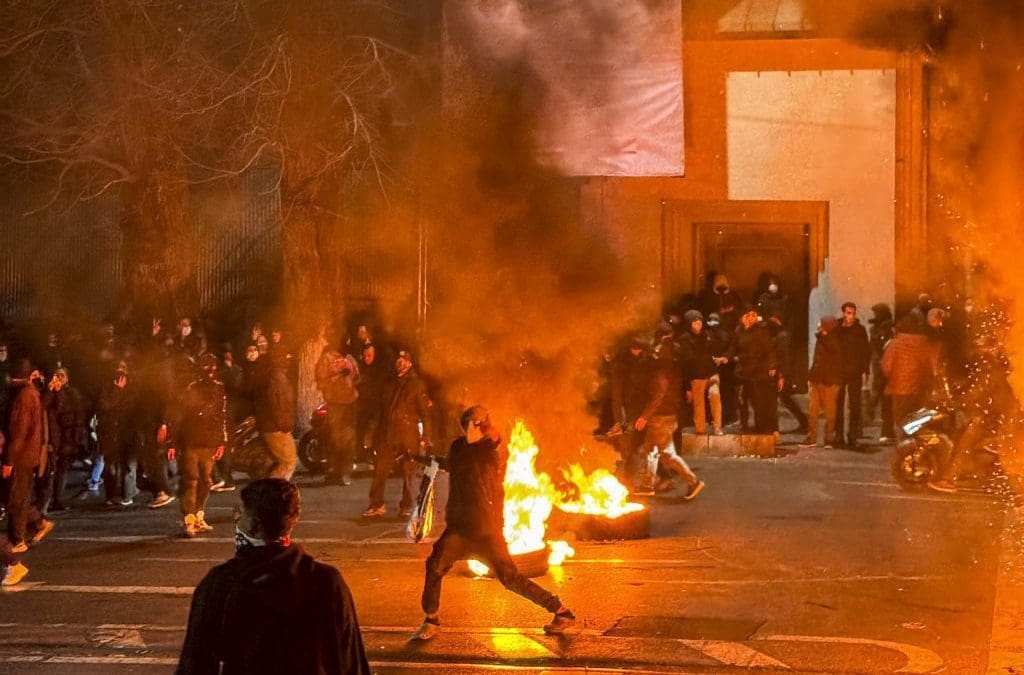
‘Blood everywhere’: Iran’s protests continue as violence rises
People continue to take to the streets all across Iran, even as state forces massacre protestors and the US ramps up sanctions and threatens military intervention. While a total internet blackout remains in effect in the country, TRNN Editor-in-Chief Maximillian Alvarez speaks with award-winning Iranian-Canadian journalist Samira Mohyeddin about what we do and don’t know about the crisis unfolding in Iran right now.
Credits:
Studio Production / Post-Production: David Hebden
Transcript
The following is a rushed transcript and may contain errors. It will be updated.
Maximillian Alvarez:
Samira Mohyeddin, can you please break down for us what we know about what’s happening in Iran right now, what we don’t know, and why specifically we don’t and can’t know more right now?
Samira Mohyeddin:
Iran has been under what is now past 130 hours of a nationwide internet blackout imposed by the state. What we are getting out are some reports from people who have Starlink and then also what we know leading up to the internet blackout. So protests against the dropping of Iran’s currency, which has dropped to its all time low, has really began on December 28th with the merchants in Tehhran’s grand bazaar. Those protests quickly escalated and spread to every single province in Iran. So it was not just confined to Tehran anymore. And it wasn’t just the merchant class, a wide demographic of people out on the streets. And they’re not just calling for economic reprieve or anything like that. This is now an existential problem for the Iranian government. They are calling for the downfall of the regime. They’re calling for the killing, the death of Khamenei, which is Iran’s supreme leader.
And you’re