
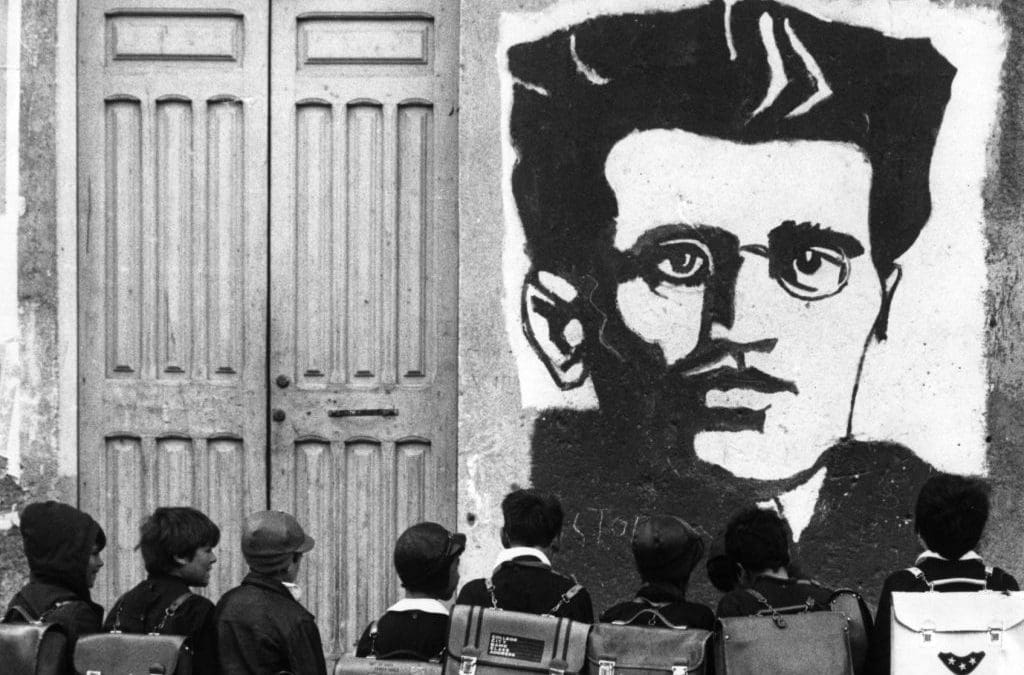
‘Gaining consent by promising force’: Late fascism and Gramsci
In Part 2 of a conversation between Mansa Musa (former political prisoner and Black Panther) and Alberto Toscano (professor of critical theory and author of Late Fascism), the two discuss how consent and coercion operate within US civil society and abroad. They specifically unpack how Donald Trump’s domestic and foreign platforms animate white nationalism—relying on the explicit promise of state violence against targeted populations.
Guests:
Alberto Toscano is a renowned Italian cultural critic, social theorist, philosopher, translator, and adjunct professor at the Simon Fraser University School of Communication. Toscano is a columnist at In These Times and the (co-)author of numerous books, including: Late Fascism: Race, Capitalism and the Politics of Crisis; and Fanaticism: On the Uses of an Idea.
Credits:
Producer / Videographer / Editor: Cameron Granadino
Transcript
The following rushed transcript may contain errors. It will be updated as soon as possible.
Mansa Musa:
Gramsci wrote about consent and coercion. Talk about the difference when it comes to a targeted population of prisons and policing.
Alberto Toscano:
Yeah. So that relationship between consent and coercion or in Gramsci’s terms also hegemony and domination or consent and force is really crucial. Gramsci was enough of a realist about politics. After all, he was also a very brilliant reader of Machiavelli that he never thought that force or coercion could be eliminated from politics altogether, but he was very interested in looking both at the past and the present to think about the mix of force and coercion, hegemony and consent. That’s also why he was so interested in the question of policing and of how to conceive of the police. And on could argue that the expansion of repression and incarceration is always a
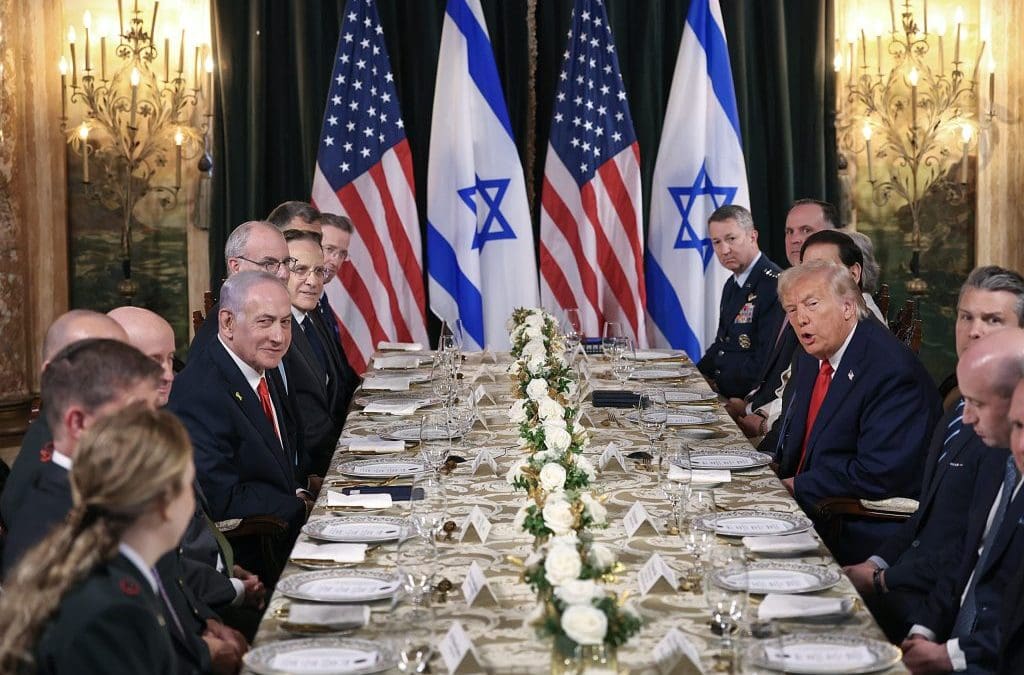
The U.S. and Iran have struck a deal to open the Strait of Hormuz, but Israel may prevent an end to the war
This story originally appeared in Mondoweiss on June 16, 2026. It is shared here with permission.
According to reports, the Memorandum of Understanding (MOU) between the United States and Iran to open the Strait of Hormuz and formally end the fighting between the two countries was signed on Monday.
It is important to clarify that, regardless of White House statements, this is not a peace deal. It is an agreement to end the standoff in the Strait of Hormuz and a commitment to stop fighting for 60 days while an agreement is reached, hopefully. The negotiation period can be extended if both parties agree. Still, it is a important agreement that indicates a end to this disastrous war could be in sight.
But as usual Israel stands to play the role of spoiler. The one thing that is most clear is that Tel Aviv won’t give up on its long-term goal of regime change in Iran. But if this MOU actually takes effect and opens the Strait of Hormuz, that will not be achieved through this war.
What is the agreement?
According to American officials, details of the MOU will be released in the next day or so. But we already have a pretty good idea of what it says and what it does not say.
While none of the terms have been announced, it seems certain that the mutual blockades of the Strait will be lifted and commercial traffic will flow through the whole Persian Gulf again. That might take a bit of time, as mines planted by Iran must be removed, a delicate process. But if all sides cooperate, it will be done in short
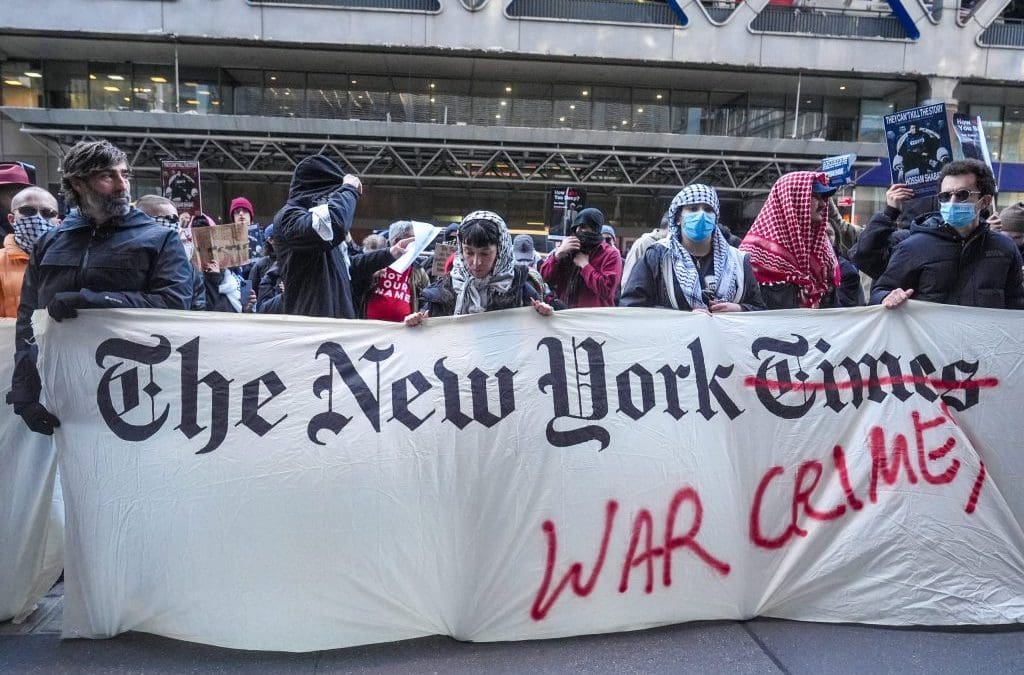
The media must be prosecuted for its role in the destruction of Gaza
As a writer, podcaster, and columnist for TRNN, Adam Johnson has been one of the fiercest, sharpest, and most consistent critics of legacy and Western media’s roles in laundering, obscuring, justifying, and manufacturing consent for crimes against humanity committed in the Gaza genocide by Israel and with the full support of the United States. But critique is not enough anymore; to ensure that these horrific crimes don’t continue, we need accountability for the political actors and media organizations that made it happen, or helped. At a live event hosted by Red Emma’s Cooperative Bookstore and Coffeehouse in Baltimore, Maryland, TRNN Editor-in-Chief Maximillian Alvarez speaks with Johnson about his new book, How to Sell a Genocide: The Media’s Complicity in the Destruction of Gaza, and about how to hold media organizations accountable for their roles in manufacturing the conditions for genocide.
Guests:
Adam Johnson is a writer, media critic, co-host of the podcast Citations Needed, and a columnist for TRNN. He is the author of the book How to Sell a Genocide: The Media’s Complicity in the Destruction of Gaza.
Credits:
Audio Post-Production: Alina Nehlich
Transcript
The following is a rushed transcript and may contain errors. It will be updated as soon as possible.
Maximillian Alvarez:
Welcome back to The Real News Network. I’m Maximillian Alvarez. As a writer, podcaster and a columnist for us here at The Real News, Adam Johnson has been one of the fiercest, sharpest and most consistent critics of legacy in Western media’s roles in laundering, obscuring, justifying and manufacturing consent for crimes against humanity committed in the Gaza genocide by Israel with the full support of the United States. Crimes committed in our
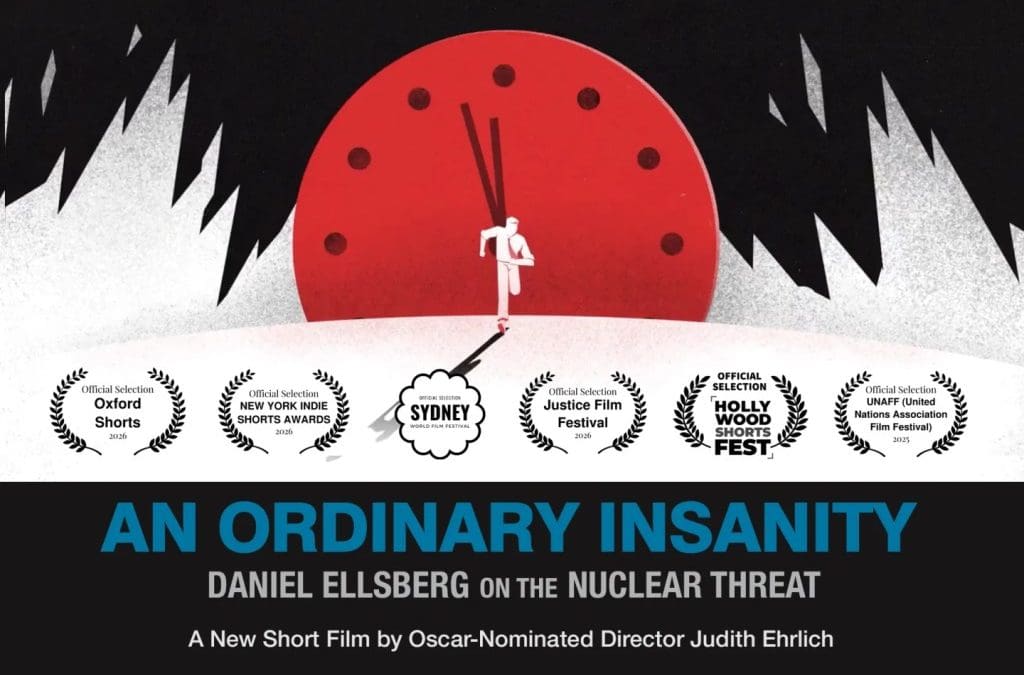
The New Documentary ‘An Ordinary Insanity’
This article was originally published by Progressive Hub on June 11, 2026. It is shared here with permission.
This film presents a synthesis of my father’s book The Doomsday Machine. His book depicts the evil murderousness of nuclear war plans, and the particular dangers posed by ICBMS, with their first strike capability, intended to be launched on warning.
He believed that with these weapons both the U.S. and the USSR/now Russia had constructed Doomsday Machines, capable of destroying most life on earth — machines that are particularly dangerous because neither side acknowledges this reality but continue to proceed as if there were some circumstances in which it was possible to win a nuclear war.
The epigraph from Dad’s book is from Nietzsche: “Madness in individuals is something rare; but in groups, parties, nations and epochs, it is the rule.”
And I am very glad that this film expands on that particular theme with the title: “Ordinary Insanity” — ordinary, as he says, because it is so widely shared.
And that points to a theme that underlies his most recent, posthumous book, Truth and Consequence: Reflections on Catastrophe, Civil Resistance, and Hope. These reflections, drawn from notes he wrote for himself over fifty years, reflect his deep meditation on what kind of flaw in the human species makes us vulnerable to this kind of insanity.
In other words, we have to face, on the one hand, the particular danger posed by the weapons we have created and the strategies that dictate their function and use. But we also have to contend with the kind of danger posed by human beings — all of us capable of participating in projects that are evil,
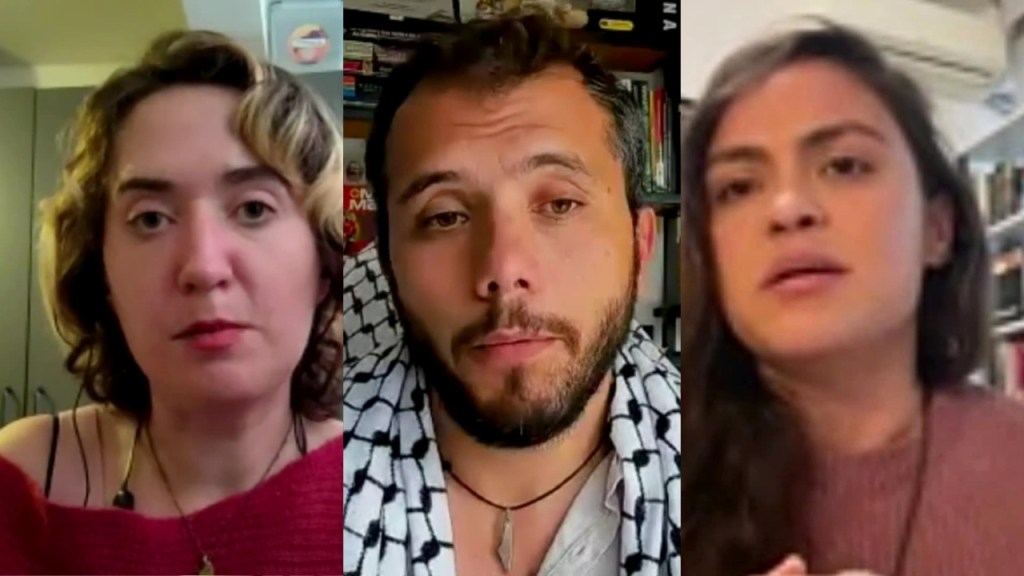
Torture, abuse, sexual violence: Freed Gaza flotilla activists speak
Israeli military forces captured the latest convoy of humanitarian aid ships sailing to Gaza with the Global Sumud Flotilla (GSM) between late April and mid-May. Activists who were imprisoned by Israel for days and eventually deported have reported harrowing treatment by their captors, including targeted torture, abuse, broken bones, unauthorized injections of undisclosed substances, and sexual violence by Israeli soldiers. We speak with a panel of freed GSM participants—Thiago Ávila, Catríona Graham, and Ariadne Teles—about what they saw and endured, and about the successes, defeats, and future of the movement to break Israel’s siege on Gaza.
Guests:
Thiago Ávila is a member of the Global Sumud Flotilla Steering Committee who was abducted in international waters by the Israelis in late April off the coast of the Greek Island of Crete. At the time, Ávila was one of two Flotilla participants and leaders forcibly transported to Israel where he was held as a political prisoner for 10 days.
Catríona Graham is a member of the Irish delegation who sailed with the most recent voyage of the Global Sumud Flotilla. While being detained by Israel, Graham shouted “Free Palestine” in Itamar Ben-Gvir’s face and was subsequently shoved down to the floor.
Ariadne Telles, is a member of the Brazilian delegation who sailed with the most recent voyage of the Global Sumud Flotilla and who also experienced abuse while detained by Israel.
Credits:
Producer / Videographer / Editor: David Hebden
Transcript
The following rushed transcript may contain errors. It will be updated as soon as possible.
Maximillian Alvarez:
Welcome back to The Real News Network. I’m Maximillian Alvarez. After 78 years of occupation and ethnic cleansing in historic Palestine and after three years