by Robert Reich | Nov 4, 2026 | Article, Democrats, Economy, Economy and Inequality, elections, midterms, Opinion, Politics and Movements: US, Reprint, Trump
This story originally appeared in Common Dreams on Nov. 04, 2026. It is shared here under a Creative Commons (CC BY-NC-ND 3.0) license.
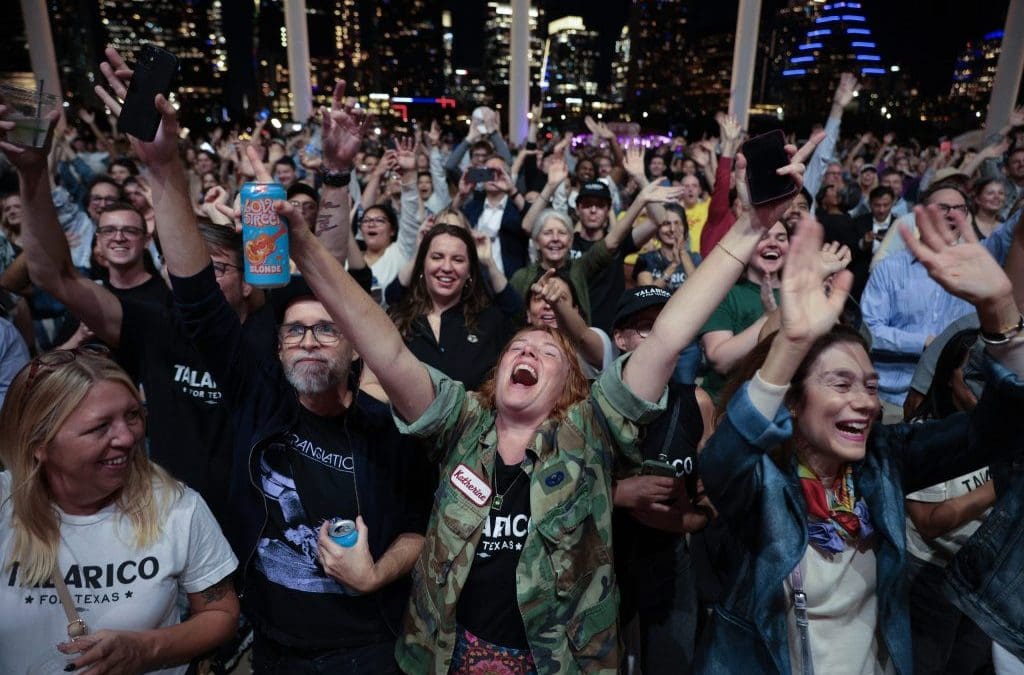
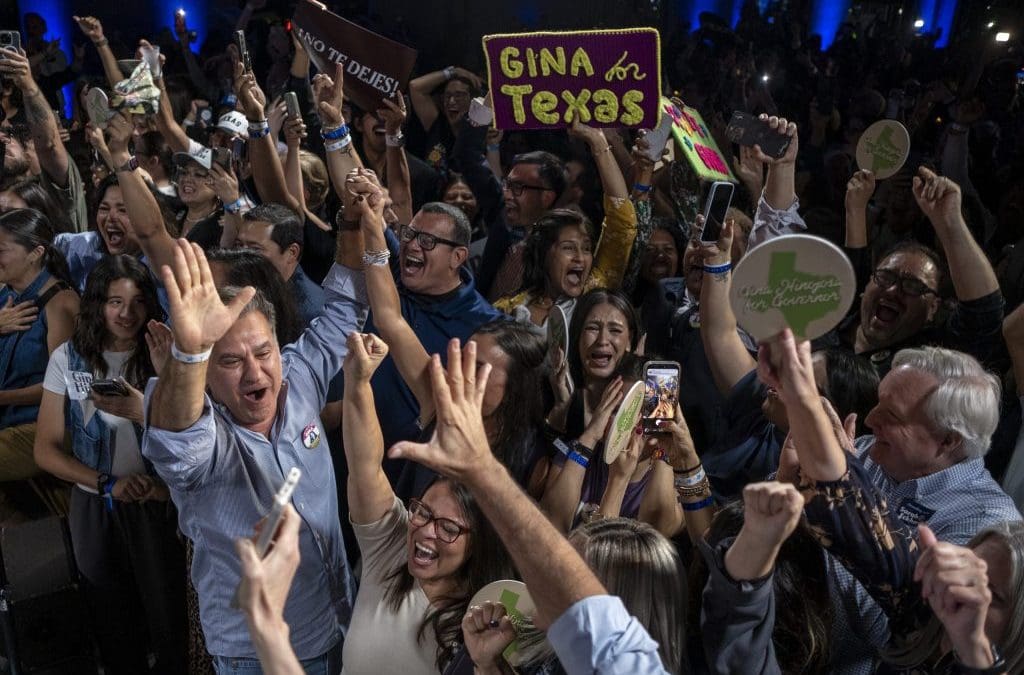
The great sleeping giant of America has awakened, taken a hard look at what’s become of the nation, and roared a thunderous “NO!”
What occurred yesterday was not—as some are saying—the inevitable mid-term swing of the pendulum against the party in power. Texas hasn’t elected a Democratic senator since 1988. The last time Kansas elected a Democratic senator was 1932.
Nor was it just the economy. Americans are unhappy with inflation, but the country is not in a depression or recession. Unemployment remains quite low.
Nor, finally, was it all due to Trump. Despite Trump’s repeated efforts to get voters to “pretend” he was on the ballot, he was not. Most Republican candidates barely mentioned him and many Democratic candidates stressed local or statewide issues rather than fixate on him.
Something much larger is responsible for what occurred: anti-establishment populism. It’s burst forth against the mammoth corporations that have scored record profits while most Americans have had to pay more. Against the mega donors and super PACs that have flooded American politics with more campaign money—legalized bribes—than ever before. And against the Big Tech billionaires who have become the most powerful force in the American economy and society—as well as Trump’s and the Republican Party’s most visible backers.
The irony is that anti-establishment anger propelled Trump into the presidency in 2016 and again in 2024. Many Americans had found his politically-incorrect rants and “America first” nativism to reflect their own anger at being disrespected or left behind. “I am your warrior,” he told supporters when
by Florestan Fernandes Jr. | Nov 4, 2026 | Article, bolsonaro, brazil, elections, midterms, Opinion, Politics and Movements: International, Politics and Movements: US, Reprint, Trump
This story originally appeared in Panamerican Dispatch on Nov. 04, 2026, and is shared here with permission.
President Donald Trump’s crushing defeat in the U.S. midterm elections and President Luiz Inácio Lula da Silva’s historic victory in Brazil mean much more than two election results. They send an enormous political message to the world. In the two largest and most important countries in the Americas, voters are saying they do not accept a unipolar world order. They reject the ideology of white supremacy. They say no to political projects that turn immigrants into enemies by persecuting them, criminalizing them and denying them fundamental rights.
But the message is broader. People want peace. They want an end to wars, military threats and unilateral sanctions that undermine free trade and relations among nations. They want a world where dialogue and diplomacy prevail over force, intimidation and one power imposing its interests on all others.
The results are also excellent news for the United Nations, which Trump’s foreign policy has treated with contempt. The UN now has a chance to regain a leading role. It can advance the reforms needed to play a truly central part in building a new international order. That order would be more democratic, multipolar and committed to peace, the sovereignty of peoples and cooperation among nations.
Another phenomenon is even more significant. A wave of popular mobilization is growing in Brazil, the United States and several European countries. It brings together young people, workers and broad sectors of society. Street demonstrations have outpaced traditional parties and political leaders, and often their ability to respond. The rise of autocratic governments and projects, threats
by Rep. Ro Khanna | Nov 4, 2026 | Congress, elections, Opinion
Tuesday was a great day for democracy. Millions of Americans voted against war, corruption and a broken economy.
Tens of millions of Americans have been struggling to pay for basics — healthcare, housing, childcare, food and energy. Millions more have lost hope for a better future. And while so many Americans are struggling to get by, the wealth of the country’s 935 billionaires — the top 0.001% of households –– rose 21% in 2025.
While the midterm results provide much to celebrate, they also present a big question: Where do Democrats lead from here?
Play
DNC Chair: ‘We’re going to tackle this affordability crisis’ and ‘take on this corrupt system’
November 3, 2026 / 05:14
President Donald Trump’s policies have worsened our inequality, and the current direction of artificial intelligence is deepening our economic divisions. But this destructive inequality predates the current corrupt administration and emerging technologies. This path traces back more than four decades, to the 1981 Economic Recovery Tax Act, through the gutting of antitrust enforcement and Nafta, and the so-called One Big Beautiful Bill Act.
The midterm outcomes present an opportunity for a new direction guided by an affirmative agenda.
That reaffirmation begins with a common national purpose. To close the economic gulf, Democrats need to develop an ambitious economic project with the same “bold, persistent experimentation” that guided Franklin D. Roosevelt through the New Deal. Business, workers, universities and government need to join together to foster economic development and revitalization.
The economic patriotism I’m talking about is not a gauzy slogan. But it is America’s Next New Deal.
Play
Georgia voters speak out about affordability: ‘Things are getting worse’
November 3, 2026 / 09:40
Let’s start with public
by Zeeshan Aleem | Nov 4, 2026 | elections, Opinion, White House, World
During an Election Day interview with Fox News, President Donald Trump made the surprising announcement that a recurring $4 billion aid package to Israel will be “cut off at the end of the year.” Trump remains under fire for joining forces with Israel in an unpopular war with Iran, and his Tuesday statement sounded like a Hail Mary attempt to help the GOP win over swing voters who oppose aid to the U.S. ally.
If that particular aid package is ended, it’s likely to be replaced by a more covert policy of arming Israel with U.S. weapons. But Trump clearly recognized that it could be politically advantageous to appear to be severing aid to Israel. A slow-moving but seismic shift is taking place across American politics: Progressives are gaining real power in the debate over Israel. Expect them to be even louder as 2028 politicking kicks off.
Trump said on Fox that the $4 billion aid package would end at the end of the year because the Israelis “don’t need it.” But as he continued, he referred to Michigan Democrat Abdul El-Sayed, and he made his political strategy clear: “Why should we suffer the slings from lunatics like an El-Sayed when they don’t need it? It’s a bad talking point, because when you say ‘Why don’t we give everybody four billion dollars,’ Israel is our number one, we give them more than anybody else, and they no longer need it, we’ve been doing it for years.”
To the extent that Trump was motioning at a real policy idea, he may have been referring to a memorandum of understanding that provides $3.8 billion in
by Anthony Coley | Nov 4, 2026 | elections, Opinion, Politics
Florida entered Election Day with two streaks on a collision course: Republicans had won seven straight races for governor. No Black Republican had ever been elected governor anywhere in America. Only one streak would survive.
We now know the answer.
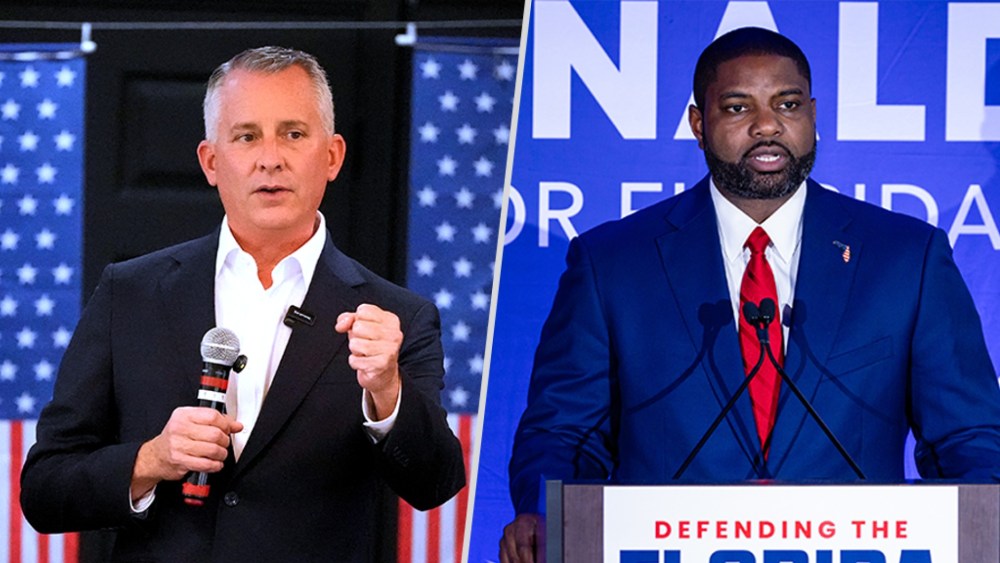
MS NOW projects U.S. Rep. Byron Donalds has won Florida’s governorship, defying political gravity and breaking a new barrier for a Black Republican candidate. Two other Black Republicans were running for governor Tuesday: Lisa Demuth in Minnesota and John James in Michigan.
Florida entered Election Day with two streaks on a collision course. Only one streak would survive.
Here at MS NOW in September, I wondered if Florida’s Republican advantage would be enough to carry Donalds and pointed out the national political environment hostile to his party and that he was trying to break through a barrier no Black Republican ever had.
Donalds ran as a conservative successor to Ron DeSantis, promising lower property taxes and insurance costs, expanded school choice, less red tape and tougher immigration and crime enforcement. He has also leaned into culture-war fights and portrayed Jolly as offering a blue-state model for Florida.
Jolly focused relentlessly on affordability, led by a state-backed catastrophe fund to lower property insurance costs. He also supported more public-school funding, tighter rules on vouchers, Medicaid expansion, abortion rights, gun reforms, climate resilience and a moratorium on hyperscale data centers. He ran against culture wars and ethics scandals while presenting himself as a former Republican offering a more inclusive alternative.
Play
Trump-backed Byron Donalds, Democrat David Jolly win FL governor primaries
August 18, 2026 / 13:13
In August’s Republican primary, Donalds’ support was notably weaker in rural northern Florida, a region that
by Symone D. Sanders Townsend | Nov 3, 2026 | elections, Opinion
The election isn’t even over, and some people are already trying to lower expectations.
With Democrats favored to win back the House, the familiar warnings are already coming: Senate Republicans will block most of their bills. Trump will veto anything that gets through. And when administration officials refuse to testify, the Justice Department won’t enforce congressional subpoenas.
Those are real obstacles. But some naysayers go further: Since Democrats may not be able to force the administration to cooperate or enact their agenda, they should be wary of investigating it. Voters want their lives to get better, the argument goes, not another “accountability tour.”
In other words, holding the administration accountable for its actions over the past two years won’t work — and Democrats should resign themselves to being powerless before they’ve even taken control.
If voters give them the House, Democrats will have to show what they can accomplish with it.
Come on now. If this is how you approach politics, you should find another line of work.
Back in April, I wrote that Democrats needed to plan what they would do with power if voters gave it back to them. A victory would come with the expectation that they could improve people’s lives. If voters give them the House, Democrats will have to show what they can accomplish with it.
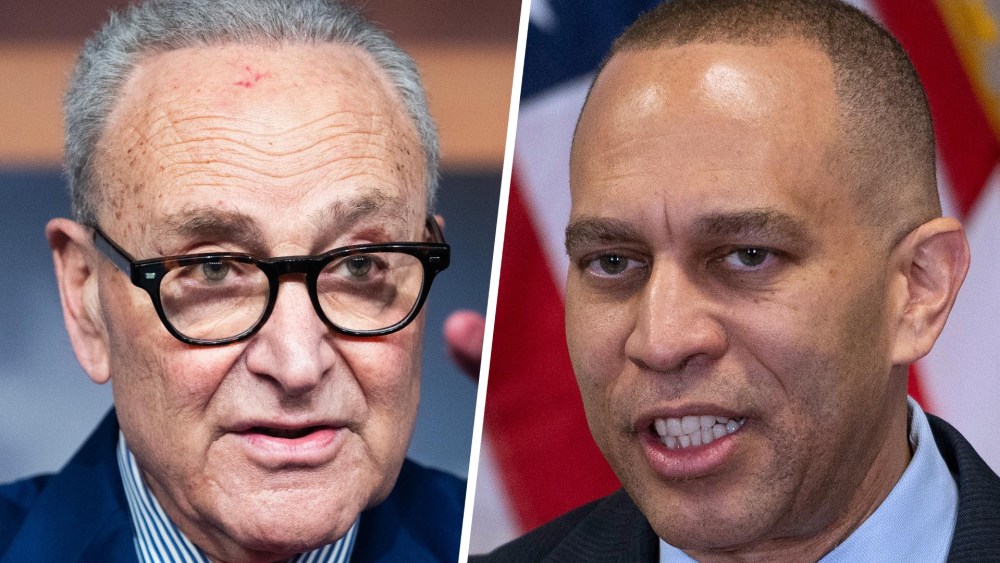
That work would test Hakeem Jeffries as speaker, along with the progressives promising a different approach and the moderates whose victories could make a majority possible. The disagreements that animated contentious primaries would move into caucus meetings, committee rooms and negotiations over which bills get a vote.
Play
‘You’ve still got to vote!’: MS NOW panel reacts to