by Julia Conley | Nov 2, 2026 | Article, Economy and Inequality, labor, Politics and Movements: US, Reprint
This story originally appeared in Common Dreams on Oct. 28, 2026. It is shared here under a Creative Commons (CC BY-NC-ND 3.0) license.
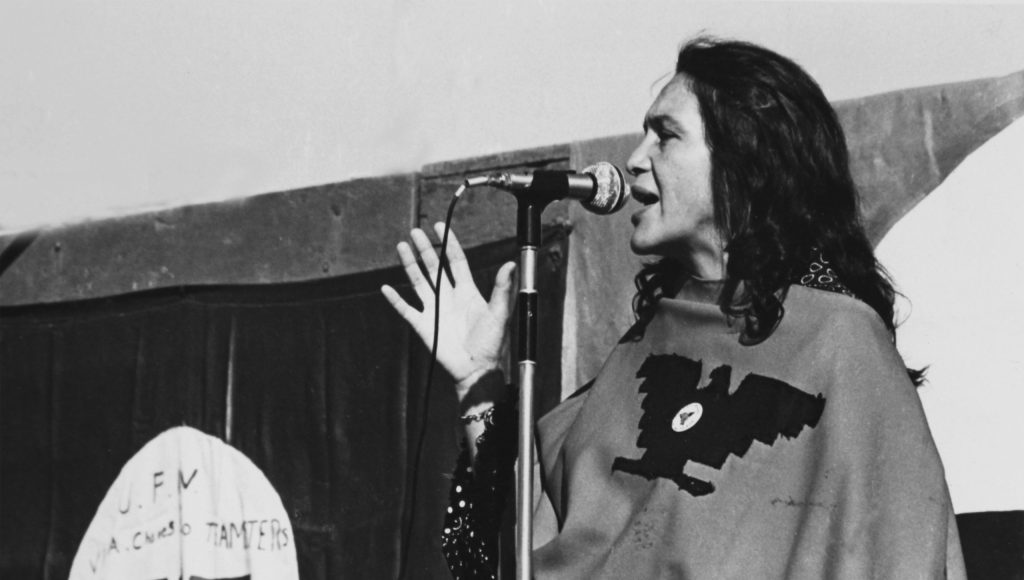
Labor advocates and Democratic lawmakers called on Americans to honor the legacy of the legendary union organizer Dolores Huerta, who died Wednesday at age 96, by “continuing to fight for her dream” of justice for all.
A spokesperson for Huerta’s family said she died of cancer, and her family members said they would share plans “to recognize and celebrate her incredible life and legacy” at a later date.
“We know that many of you around the world share in our mourning,” said her family, including her 13 children who survive her.
Huerta became a hero to workers across the world in the 1960s when she joined Cesar Chavez to establish the National Farm Workers Association, which became known as the United Farm Workers in 1972.
She helped lead a strike by Filipino workers in the grape-growing industry in Southern California, as well as boycotts of companies that paid migrant workers low wages, while exposing them to toxic chemicals and providing no job security.
Huerta faced violence by strikebreakers and police, 22 arrests for her nonviolent protests, and surveillance by the FBI, which suspected her and Chavez of Communist ties—but nevertheless organized one of the most successful produce boycotts in US history in 1968, garnering support from 17 million households and thousands of grocery stores that pledged not to purchase California table grapes due to growers’ abuse of workers.
Dolores Huerta has passed away from cancer at 96. She was a founder of what became the United Farm Workers and an inspiration for generations of organizers.Her courageous
by Jake Johnson | Nov 2, 2026 | Article, Economy and Inequality, Gaza, labor, Politics and Movements: International, Reprint, Unions
This story originally appeared in Common Dreams on Oct. 30, 2026. It is shared here under a Creative Commons (CC BY-NC-ND 3.0) license.
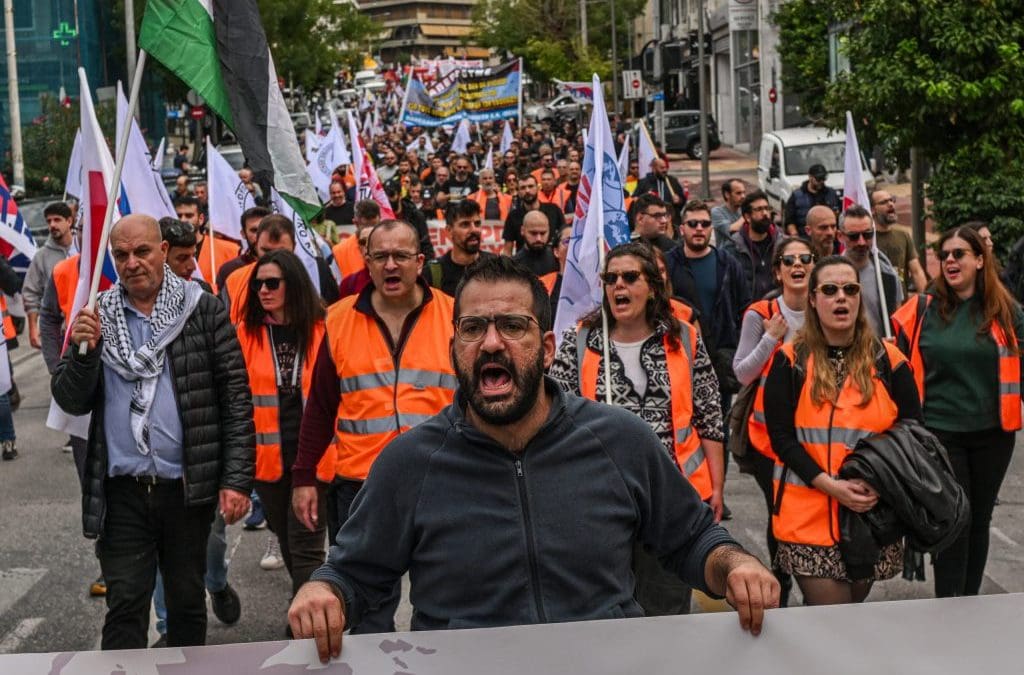
Dockworkers in more than 20 countries—from France to India to Greece—are withholding their labor on Friday to demand an end to Israel’s genocidal assault on Gaza and highlight the role that commercial ports play in fueling deadly militarism worldwide.
Organizers said the work stoppages, led by dockworkers’ unions at 113 ports across 22 countries, would be the “largest coordinated port action ever,” easily surpassing the international day of action held in February. No Harbour for Genocide, a collective of trade unions and others supporting the day of action, said $2.8 billion worth of cargo will be halted at Mediterranean ports, where workers are planning to strike for 24 hours.
“A cargo refused in one port sails on to the next,” said No Harbour for Genocide. “Refused in every port, it stops, and the workers have enforced the embargo that governments announced and did not.”
In a joint statement last month announcing the day of action, dockworkers’ unions from Türkiye, Morocco, Italy, France, Greece, Italy, and Basque Country laid out their demands:
An immediate end to the genocide of the Palestinian people and the opening of safe corridor for humanitarian aid.. An end of colonization, occupation and apartheid imposed to Palestinian People and the recognition of an independent Palestinian state recognized by the international community on the 1967 borders, with East Jerusalem as its capital.
An end to the war in the Middle East. No support, no facilitation, no participation in the US-Israeli war against Iran, Lebanon or any other imperialist intervention. Military fleets and bases
by Maximillian Alvarez | Nov 2, 2026 | Capitalism, Economy, Economy and Inequality, labor, Opinion, Politics and Movements: International, Politics and Movements: US, Socialism, video
With a global capitalist system that is wreaking havoc on the planet, pushing most of humanity into poverty, and enabling a small number of billionaire and trillionaire oligarchs to accumulate more money and power than nation-states, more people around the US and beyond are asking: “Could socialism be the solution?” But can socialism actually work in the real world? Can it actually help create a better world than the one capitalism has created?
In this live-event discussion, hosted at Red Emma’s Cooperative Bookstore and Coffeehouse in Baltimore, Maryland, TRNN Editor-in-Chief Maximillian Alvarez speaks with Ben Burgis and Mike Beggs about their new book, co-authored with Bhaskar Sankara, The Blueprint: How Socialism Can Work in the Real World.
Credits:
Production/Post-production: Cameron Granadino
Transcript
The following is a rushed transcript and may contain errors. It will be updated.
Maximillian Alvarez:
So we’re here at Red Emma’s Cooperative Bookstore and Coffee House in Baltimore, and I am really excited to be sitting with two of the three co-authors of the vital new book, The Blueprint: How Socialism Can Work in the Real World. Ben Burgis and Mike Beggs. Give it up, everyone. Hell yeah. Welcome to Baltimore, guys. So let’s talk about the S word, right? I mean, we’re here. The world’s on fire. Life continues to get harder and scarier year after year for working people everywhere. The masked jackbooted thugs that we were warned about are in our streets, hunting and disappearing our neighbors. Endless war and genocide and profiteering are ripping our world and our people apart. And everything is being run or taken over by these psychopathic, self-serving, greedy, society destroying, profit seeking, oligarchs, end times,
by Maximillian Alvarez | Nov 2, 2026 | Economy, Economy and Inequality, France, labor, Podcast, Politics and Movements: International, Unions, Working People
https://www.spreaker.com/show/2952221/episodes/feed
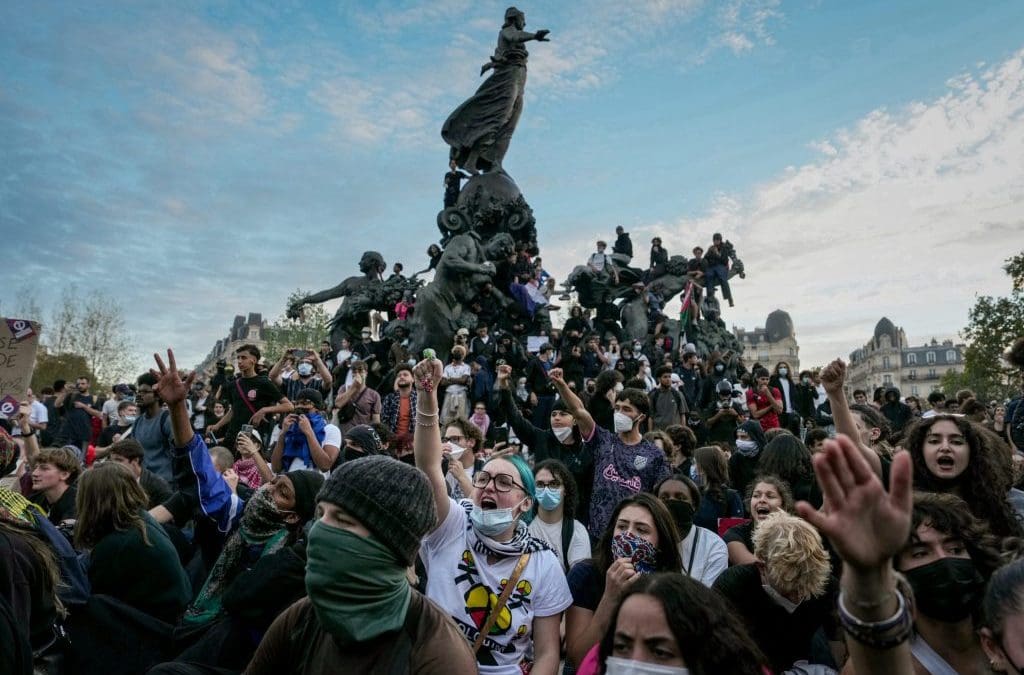
For the past month—led by students and joined by parents, teachers, labor unions, and more—France has been gripped by one of the largest protest waves in modern history. Protestors have faced violent police repression, a recalcitrant government, and rampant misinformation or skewed coverage from rightwing and corporate media. In this special international edition of Working People, we speak directly with a broad range of students and union members across France who are on the front lines of the current protest movement, and we put them in conversation with union workers and leaders in the US.
Editor’s Note: This episode contains an edited-down version of a Zoom webinar panel discussion recorded on Sunday, October 25, organized in partnership with The Real News Network, the Chicago Teachers Union, Haymarket Books, and the French labor union Force Ouvrière. Unless expressed by elected organization leaders, all views shared in this conversation and on the original webinar are those of the speakers alone.
Additional links/info:
Chicago Teachers Union website, Facebook page, Bluesky page, and Instagram
Force Ouvrière website, Facebook page, and Instagram
Haymarket Books website, YouTube channel, Bluesky page, and Instagram
Angelique Chrisafis, The Guardian, “Hundreds of thousands march across France in protests over schools and policing”
Featured Music:
Jules Taylor, Working People Theme Song
Credits:
Audio Post-Production: Jules Taylor
Transcript
The following is a rushed transcript and may contain errors. It will be updated.
Maximillian Alvarez:
Alright. Welcome, everyone, to Working People, a podcast about the lives, jobs, dreams, and struggles of the working class today. My name is Maximillian Alvarez, and today we are taking you to the streets of France, where mass, student-led protests have swept the country for the past month. We’ve gotten so many
by Maximillian Alvarez | Oct 5, 2026 | Economy and Inequality, labor, Podcast, Politics and Movements: US, Working People
https://www.spreaker.com/show/2952221/episodes/feed
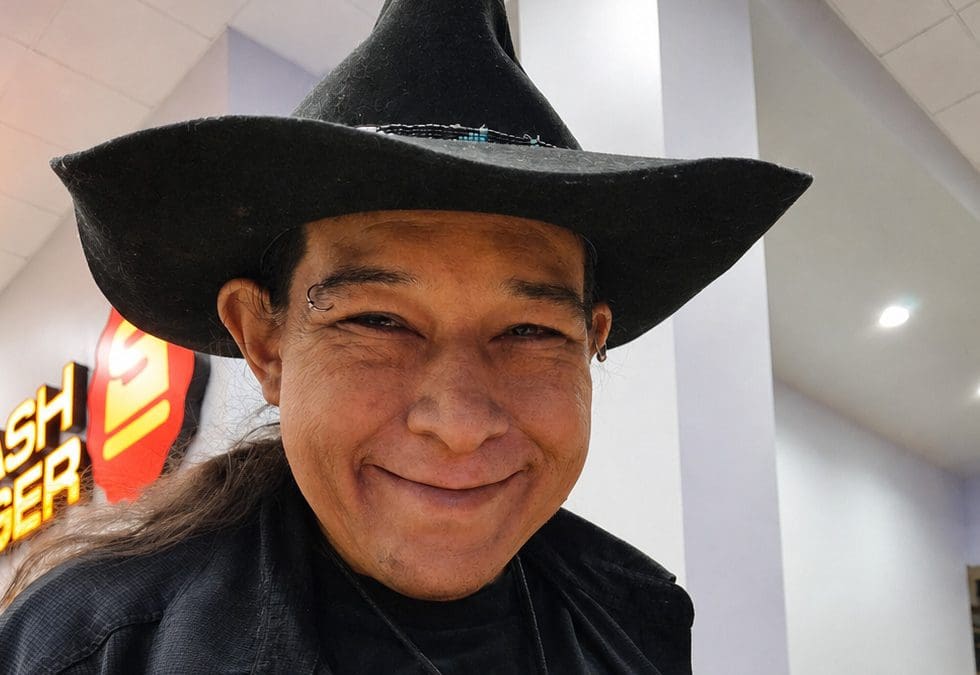
Because he was bullied in elementary school for being Native American, James Gardner’s friends lovingly call him “NDN.” His friends and family know NDN to be a fiercely loyal, loving person, and a fiercely hard worker. But as a third-generation concrete specialist, NDN was exposed to chemicals that have left him disabled, terminal, and facing foreclosure on his home. In this episode of Working People, we speak with James “NDN” Gardner and his best friend James Quigg.
Additional links/info:
GoFundMe: James Gardner: Terminal Liver Failure—Home at Risk
Maven Navarro, Forth Worth Star-Telegram, “Terminally ill, this proud man is fighting to keep the Fort Worth home he built”
Featured Music:
Jules Taylor, Working People Theme Song
Credits:
Audio Post-Production: Jules Taylor
Transcript
The following is a rushed transcript and may contain errors. It will be updated.
Maximillian Alvarez:
Alright. Welcome everyone to Working People, a podcast about the lives, jobs, dreams, and struggles of the working class today. My name is Maximillian Alvarez, and today we are in Fort Worth, Texas, and we’re talking about a fellow worker named James. As Maven Navarro recently reported in the Fort Worth Star Telegram, “After leaving Oklahoma, James Gardner built a life for himself in Fort Worth. Now he could lose it all. When Gardner walks into doctor’s offices to receive treatment for his terminal liver failure, he has to ask staff to remove all the air fresheners for his skin condition. Gardner has multiple chemical sensitivity, which he says was caused by his time as a concrete specialist working with two-part epoxy resin. The illness causes him to break out anytime he gets around chemicals, air fresheners, perfumes, cleaning supplies, and paint spark allergy
by Jonathan Rosenblum | Oct 1, 2026 | AI, Amazon, Article, Economy and Inequality, labor, Politics and Movements: US, Reprint, Unions