by Brad Reed | May 11, 2026 | AI, Article, Economy, Economy and Inequality, Inequality, Politics and Movements: US, Reprint
This story originally appeared in Common Dreams on May 08, 2026. It is shared here under a Creative Commons (CC BY-NC-ND 3.0) license.
A top state utilities regulator is calling foul on an effort to shift the power cost of out-of-state artificial intelligence data centers onto Maryland residents.
Maryland’s Office of People’s Counsel on Thursday filed a complaint with the Federal Energy Regulatory Commission (FERC) against electric grid operator PJM Interconnection objecting to plans that it said would force residents in the state to pay $1.6 billion in data center-driven transmission costs over the next decade.
The complaint states that the transmission cost allocation methodology PJM is using “broadly socializes” the cost of increased power demands that is being driven by AI data centers.
“That result is unjust and unreasonable and violates the cost causation principles that have long governed transmission cost allocation and that this commission has repeatedly affirmed,” the complaint says. “PJM’s tariff imposes these costs on Maryland electric customers even though Maryland customers do not meaningfully cause nor benefit from those investments.”
The Office of People’s Counsel pointed to the massive number of data centers built in neighboring Virginia as a primary culprit for added strain on the electric grid.
“Amidst national data center growth, Virginia stands as the epicenter,” the complaint says. “Virginia is the largest data center market in the world… As of December 2024, data centers represented 3.6 GW of demand… reflecting, since 2013, a 660% increase in megawatt-hour consumption.”
This explosive growth in energy demand is only expected to intensify over the next several years, the complaint continues, noting that “PJM projects 32 GW of peak load growth across its territory by 2030, of which approximately 30 GW
by Taya Graham and Stephen Janis | May 8, 2026 | Article, Economy and Inequality, Inequality, Inequality Watch, Opinion, Politics and Movements: US, Prisons and Policing
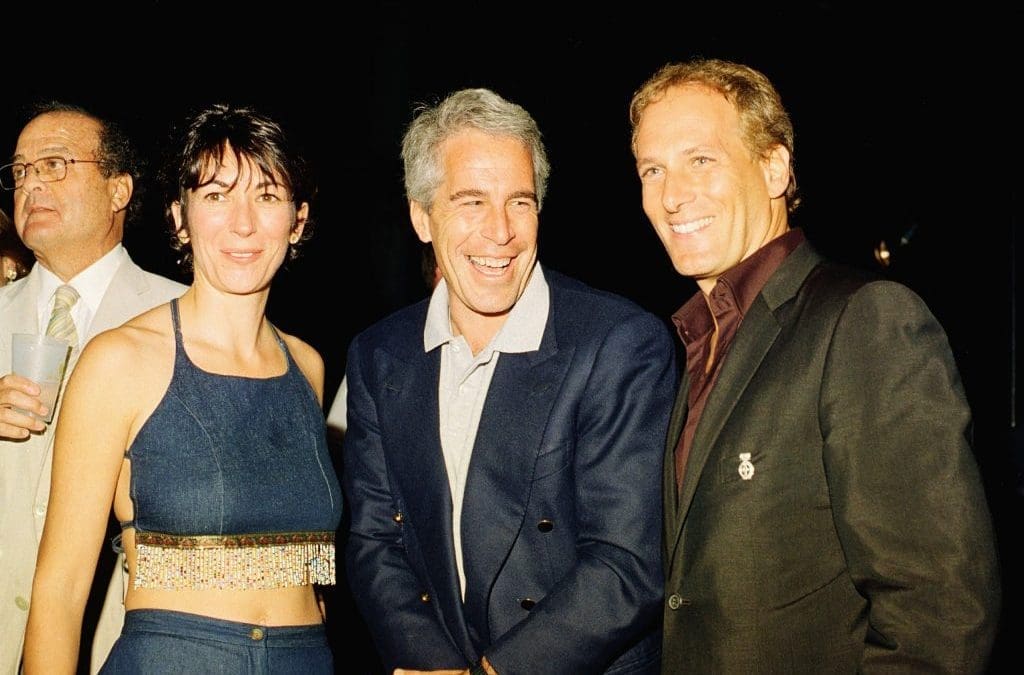
The press conference for Epstein survivors we covered earlier this year felt claustrophobic.
It was the afternoon before President Donald Trump’s State of the Union address in February. The women who had suffered at the hands of the world’s most infamous predator were crammed into a small meeting room in the Cannon House Office Building in Washington, DC.
They had gathered to demand acknowledgement that evening from both Congress and the President. The venue was so tiny, there was barely room for the survivors to gather around the podium.
The assemblage stood in stark contrast to what we found in the emails we had been poring over after the Justice Department released an often-opaque database of documents gathered during several investigations of the historic sex predator.
Based on what we’ve read, Epstein and his associates inhabited a world of material and social abundance. They weren’t constrained or forced to plead for anything. Their lives were full of easily obtained wealth, which afforded plenty of space to commit crimes.
This contrast reveals what this scandal is ultimately about: not just one man’s crimes, but the unimaginable inequality that made asking for tens of millions of dollars as easy as writing a poorly worded email. In fact, all Epstein had to do to enrich himself was to ask.
Consider what Epstein sent to media mogul Mortimer Zuckerman in July of 2014:
I’m happy to hear from you, happy to see your stock at the 120 level. an increase in over 100
million in new net worth in only a few months. (how long did it take for the first 100?) I
assume, by your email, that as I predicted, you have
by Stephen Prager | May 6, 2026 | Article, Economy and Inequality, Inequality, Iran, Oil, Politics and Movements: International, Politics and Movements: US, Reprint, War
by Mansa Musa | Apr 27, 2026 | Economy and Inequality, history, Inequality, Politics and Movements: US, Racism, Rattling the Bars, video
2026 marks the 250th anniversary of the American Revolutionary War. While the national mythology behind the “America at 250” celebrations focuses on the 18th-century battle between Patriot and Loyalist elites, what does the story of the American Revolution and the founding of the United States look like through the eyes of enslaved people? In this episode of Rattling the Bars, host Mansa Musa speaks with Professor Justene Hill Edwards, author of Unfree Markets: The Slaves’ Economy and the Rise of Capitalism in South Carolina.
Guests:
Justene Hill Edwards is an associate professor of History in the Corcoran Department of History at the University of Virginia. Her research explores the intersection of African American history, the history of slavery, and the history of American capitalism. She is the author of Unfree Markets: The Slaves’ Economy and the Rise of Capitalism in South Carolina and Savings and Trust: The Rise and Betrayal of the Freedman’s Bank.
Credits:
Producer / Videographer / Editor: Cameron Granadino
Transcript
The following is a rushed transcript and may contain errors. A proofread version will be made available as soon as possible.
Mansa Musa:
This year marks the 250th anniversary of the Revolutionary War, a conflict that we typically frame as a struggle between the colonialists and the British. However, we rarely examine the age of revolution from the perspective of the enslaved and the enslaved has a voice in this matter, as we will see. Join us today as the University of Virginia Professor of History, Justine Hill Edwards, an author of Unfree Market: The Slave Economy and the Rise of Capitalism in South Carolina. And Saviors and Trust. Professor, welcome to Rattling the Bars
by Taya Graham and Stephen Janis | Apr 24, 2026 | elections, ICE, Inequality, Inequality Watch, midterms, Politics and Movements: US, Prisons and Policing, video
Congress members of the Hispanic Caucus speak out on their concerns on ICE and Border Patrol, with their first question being: why is an additional $70 billion needed after the record breaking $140 billion allocated last year from the Big Beautiful Bill? The budget for ICE has already increased by 400% within the past year, so speculation as to how these new funds would be used now leans towards intimidation and interference at the upcoming midterm elections. Inequality Watch reporters Taya Graham and Stephen Janis break down their most recent interviews from these representatives at the nation’s Capitol in Washington, DC.
Credits:
Written by: Stephen Janis
Produced by: Taya Graham, Stephen Janis
Studio / Post-Production: Cameron Granadino
Trancript
The following is a rushed transcript and may contain errors. A proofread version will be made available as soon as possible.
Taya Graham:
Could new funding slated for ICE be used for a midterm election surprise? We’ll break down what might happen on this episode of our Capitol Hill Inequality Watch video React. Hello, my name is Taya Graham and welcome back to our Capitol Hill React show where we watch comment and analyze developments at the nation’s capital and beyond. It’s a show filtered through the prism of inequality and informed by the intellectual context of analyzing the imperative of raw power and exposing how it corrupts a political power that is supposed to serve we, the people. Now, to start the show, I want to introduce my reporting partner, Stephen Janis. Hello, Stephen. How are you?
Stephen Janis:
Hey, Taya, how are you doing? Good to be back here with you talking about power and politics.
Taya Graham:
Excellent. Well, we appreciate
by Taylor Sisk | Apr 24, 2026 | Hunger, Inequality, News, Poverty, SNAP, Trump Administration
A half-dozen cars had been in the queue for nearly four hours by the time the House of Hope mobile food pantry line began to move. Seventy or so more idled behind them by 11:30 a.m., when the food distribution began. The plan was to begin handing out boxes of groceries at 11, but the Facing Hunger Foodbank truck delivering the food blew a tire en route. No one complained.
Source