by Katie Surma | Dec 12, 2025 | Amazon Rainforest, Chevron, Contamination, Ecuador, Fossil Fuels, Indigenous Peoples, Investor-State Dispute Settlement, Investor-State Dispute Settlement System, Investor-State Dispute Settlements, ISDS, News, Oil and Gas Drilling, Oil and Gas Industry, oil spills, Pollution, Texaco
This article originally appeared on Inside Climate News, a nonprofit, non-partisan news organization that covers climate, energy and the environment. Sign up for their newsletter here. Over a quarter century in the Ecuadorian Amazon, oil giant Texaco (now Chevron) perpetrated an ecological disaster: It dumped 3.2 million gallons of toxic waste, spilled 17 million gallons of crude oil and flared…
Source

by Jessica Corbett | Dec 10, 2025 | Amazon, Article, Climate Crisis, Economy and Inequality, Ecuador, Politics and Movements: International, Politics and Movements: US, Reprint
This story originally appeared in Common Dreams on Dec. 09, 2025. It is shared here under a Creative Commons (CC BY-NC-ND 3.0) license.
A US advocacy group, American human rights lawyer Steven Donziger, and the group in Ecuador behind a historic legal battle against Chevron over its dumping of toxic waste in the Amazon rainforest are condemning the Ecuadorian government’s plans to pay the oil giant hundreds of millions of dollars due to an arbitration ruling.
In response to the legal fight in Ecuador that led to a $9.5 billion judgment against Chevron—which bought Texaco—the fossil fuel company turned to the investor-state dispute settlement (ISDS) system, suing the South American country in the Hague-based Permanent Court of Arbitration. As part of the latter case, Ecuadorian Attorney General Diana Salazar Méndez’s office announced Monday that the government would pay the US company only around $220 million, rather than the over $3 billion Chevron sought.
While Chevron said in a statement that it was “pleased with the resolution of this matter” and claimed the decision “strengthened the rule of law globally,” and Salazar Méndez’s office celebrated the dramatically lower figure, and the Union of Peoples Affected by Chevron-Texaco (UDAPT)—the group that began the case against oil company in 1993—pushed back against the government’s framing of the reduction “as if it was a success and an economic achievement.”
“The reality is it is a defeat for justice,” UDAPT argued in a Tuesday statement. “For 32 years, UDAPT has documented pollution, environmental crime, and lives broken by Chevron, proving what should be obvious: Communities have not recovered, health has not been restored, clean water has not returned, and the territories that sustain life remain contaminated. A debt is not owed to Chevron. A debt is owed to the Amazonian families still waiting for
by Jake Johnson | Nov 17, 2025 | Donald Trump, Ecuador, Election, Military Bases, News
Ecuador’s voters on Sunday delivered a major blow to right-wing President Daniel Noboa by decisively rejecting the proposed return of foreign military bases to the South American country’s soil — including installations run by the United States. Around two-thirds of voters opposed the measure with most ballots tallied, a result that was widely seen as a surprise. Voters also rejected a…
Source
by Sharon Zhang | Oct 23, 2025 | Boat Strikes, Colombia, Donald Trump, Drug War, Ecuador, News, Pete Hegseth, Venezuela, War On Terror
The U.S. bombed two boats in the Pacific Ocean in two days, the Trump administration announced this week, in a major escalation of the U.S.’s aggression as Defense Secretary Pete Hegseth has vowed that the “strikes will continue, day after day.” Hegseth announced both strikes in nearly identical posts on X on Wednesday, bringing the total number of publicly announced attacks to nine.
Source
by Michael Fox | Oct 13, 2025 | Ecuador, Indigenous communities, Peru, Podcast, Politics and Movements: International, Stories of Resistance
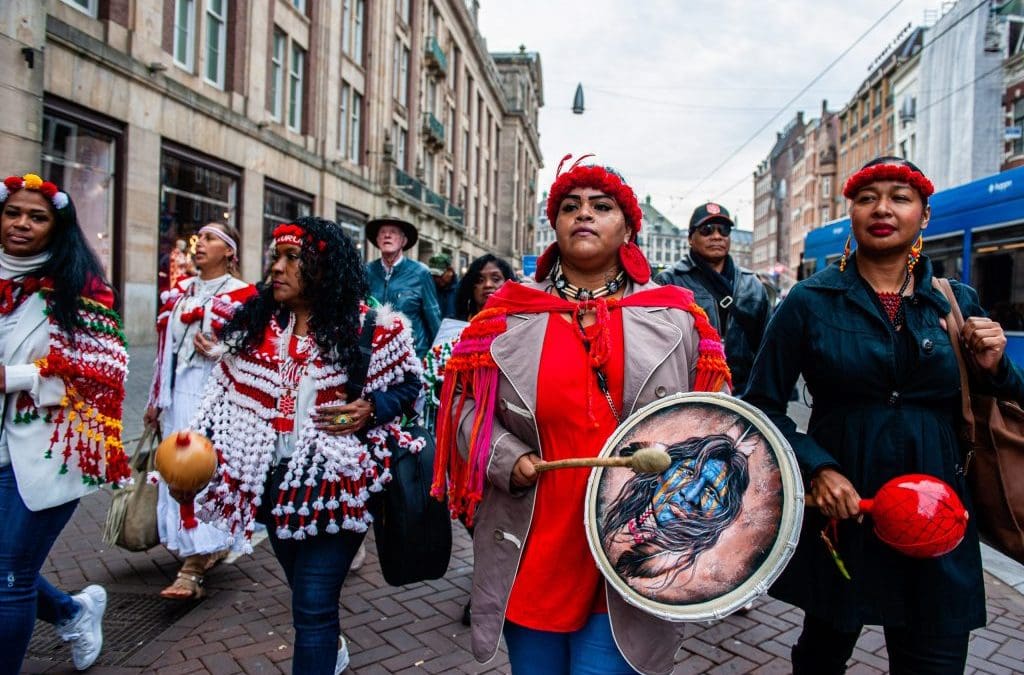
It was once called Columbus Day, and it still is in many parts. A day to celebrate the Italian explorer Christopher Columbus, who supposedly “discovered” America. But America was there long before Columbus came. And so were millions of people up and down the continent. Experts estimate that there were anywhere from 60–90 million people in the Americas at the time. Possibly even more people in the Americas than in Europe at the time.
But disease and successive wars by waves of invading Europeans decimated the local Indigenous populations. Over the next century, roughly 90% of Indigenous peoples in the Western Hemisphere had been wiped out.
But they have constantly resisted to this day.
Please consider supporting this podcast and Michael Fox’s reporting on his Patreon account: patreon.com/mfox. There you can also see exclusive pictures, video, and interviews. If you like what you hear, please subscribe, like, share, comment, or leave a review. And please consider signing up for the Stories of Resistance podcast feed on Spotify, Apple Podcasts, Spreaker, or wherever you listen.Written and produced by Michael Fox.
Stories of Resistance Indigenous resistance episodes:
Episode 4: How Indigenous peoples in Brazil fought COVID-19
Episode 8: Celebrating Indigenous roots in Chile’s Arica carnival
Episode 23: Reforesting the Andes, one tree at a time
Episode 48: Protecting Q’eswachaka, the last Incan rope bridge
Episode 50: Inti Raymi returns as an act of resistance
Episode 54: How Indigenous field hockey is reviving Mapuche culture
Episode 56: Karipuna resistance: Defending the Amazon
Transcript
It was once called Columbus Day, and it still is in many parts. A day to celebrate the Italian explorer Christopher Columbus, who supposedly “discovered” America.
But America was there long before Columbus came. And so were millions of people up and down the
by Michael Fox | Oct 3, 2025 | Economy and Inequality, Ecuador, Podcast, Politics and Movements: International, Stories of Resistance
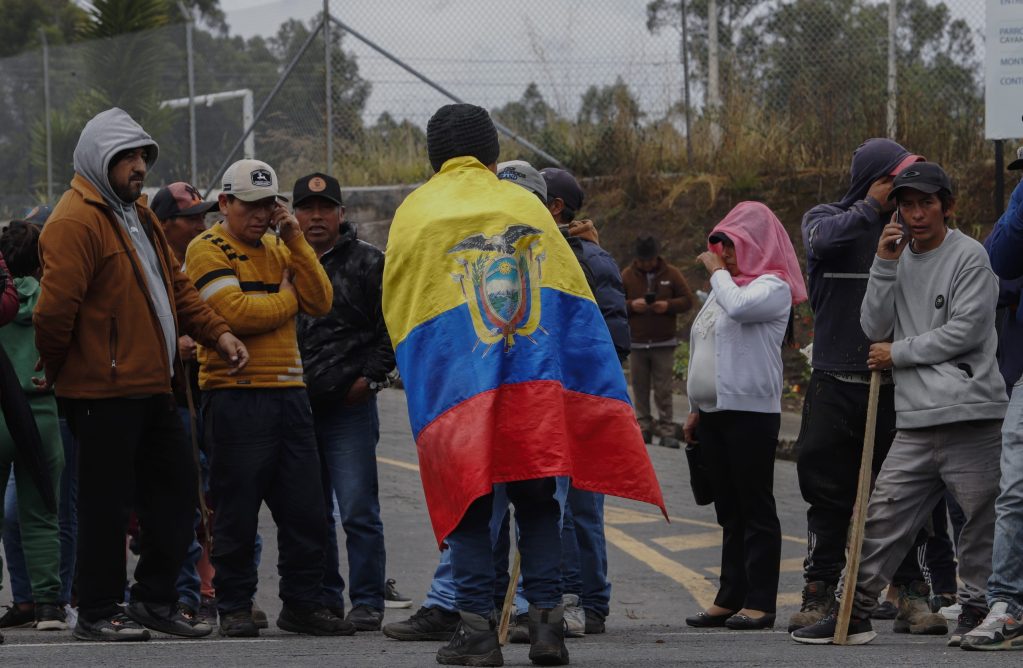
In Ecuador, the country’s largest Indigenous movement has been leading mass protests in the streets for nearly two weeks against President Daniel Noboa’s lifting of diesel subsidies. Gas prices have spiked. They say it will impact the price of food.
They’re calling their protests an “indefinite national strike.” The country is now on fire. They have faced repression. But they have vowed to continue in the streets, demanding justice. Demanding their rights. Standing in defense of their communities, their lives, and their future.
This is Stories of Resistance—a podcast produced by The Real News. Each week, we’ll bring you stories of resistance like this. Inspiration for dark times.
Please keep an eye out for Michael’s latest article about the Ecuador protests. It’ll be online with Truthout. You can visit www.Truthout.org for more.
BIG NEWS! This podcast is a finalist for this year’s Signal Awards for best history podcast. It’s a huge honor just to get this far.
And you can help us win. Your vote can make a difference. Anyone can vote.
Here’s the link: https://vote.signalaward.com/PublicVoting#/2025/shows/genre/history
All you have to do is click on the link. That will take you to a page where you can click on the Stories of Resistance icon. Register your email and you’re all set.
While you’re there, please also vote for The Real News’s Marc Steiner. He’s in the running for best episode host. You can vote for him here: https://vote.signalaward.com/PublicVoting#/2025/individual-episodes/craft/best-host
Please consider supporting this podcast and Michael Fox’s reporting on his Patreon account: patreon.com/mfox. There you can also see exclusive pictures, video, and interviews.
If you like what you hear, please subscribe, like, share, comment, or leave a review.
And please consider signing up