by Jake Johnson | Sep 23, 2026 | brazil, Climate Change, Climate Crisis, El Niño, Extreme Heat, Global Warming, India, Indonesia, News, Nigeria, ocean temperatures, Sudan
A report published Wednesday by researchers at the University of Chicago’s Climate Impact Lab estimates that extreme heat fueled by this year’s “Super El Niño” event could kill more than 450,000 people in the coming months, in addition to deaths from drought, wildfires, and other extreme weather. The report notes that “anomalously warm conditions” caused by the record-shattering El Niño…
Source
by Chris Walker | Sep 22, 2026 | AI, Artificial Intelligence, Climate Change, Climate Crisis, climate disasters, Donald Trump, News
President Donald Trump has dismissed legitimate concerns about the growth of artificial intelligence (AI), comparing them to the “hoax” of the climate crisis. “The same people that said, ‘We’ll all be dead in twelve years because of Global Warming’ … are the people that are now saying that AI is going to kill us, that robots are going to attack us, and everything is a DISASTER…
Source
by Chris Walker | Sep 16, 2026 | Climate Change, Climate Crisis, glacial melt, Nepal, News
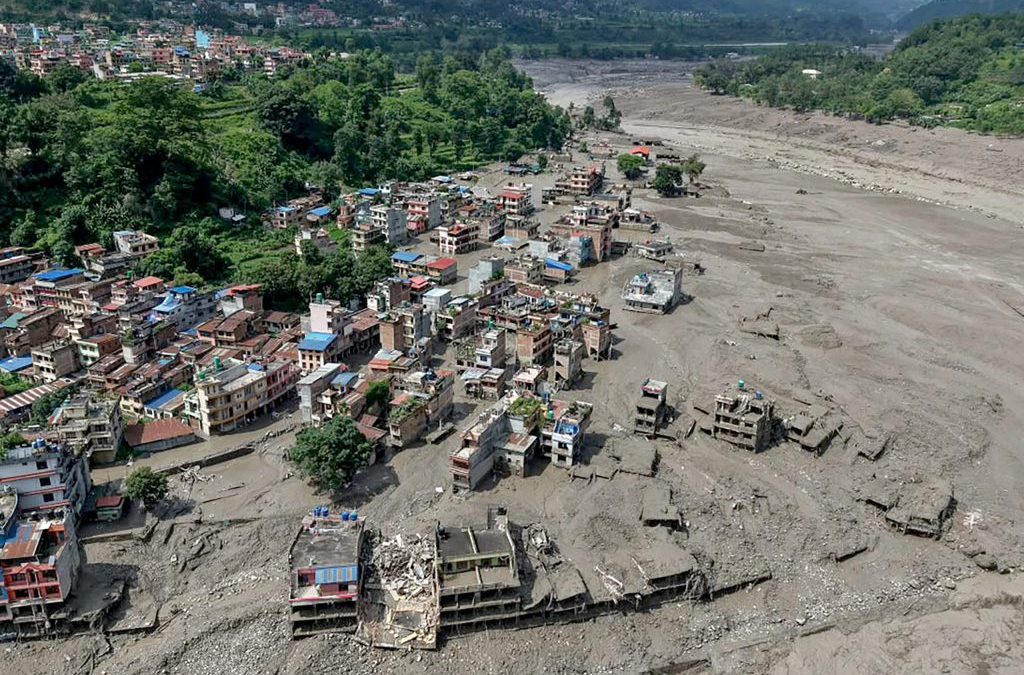
Government leaders from Nepal are calling for climate justice in the wake of devastating glacial floods last month that killed 1,300 people and left thousands more missing. Preliminary investigations into the flooding determined that the disaster was likely due to glacial collapse, a phenomenon that is becoming more frequent and more likely to occur in the future due to the climate crisis.
Source
by Jake Bittle | Sep 16, 2026 | Biden Administration, Clean Power Plan, Climate Crisis, Coal, EPA, Greenhouse Gas Emissions, News, Power Plants
Coal is by far the dirtiest of the world’s major energy sources. It accounts for almost half of the cumulative global carbon emissions since the industrial era began — as much as oil and natural gas combined. And it generates much more carbon dioxide per unit of energy than either oil or gas. Most climate experts agree that phasing out coal power is the single biggest change the world could make…
Source

by Julia Conley | Sep 15, 2026 | Article, Climate Change, Climate Crisis, Reprint
This story originally appeared in Common Dreams on Aug. 27, 2026. It is shared here under a Creative Commons (CC BY-NC-ND 3.0) license.
Scientists and climate action campaigners on Thursday pointed to the collapse of a glacier as a likely cause of disastrous flash flooding in Tibet and Nepal’s Rasuwa district, where emergency workers are searching for more than 1,300 missing people after water and mud poured into the Trishuli River valley, crashing through villages where thousands of people live and sweeping away bridges, homes, and miles of roads.
An initial assessment by geologists and glaciologists found that in satellite imagery taken before the flooding, a glacier was seen about 4,000 feet above the valley where at least 353 people were later killed Wednesday by the rushing waters and mudslide.
The glacier appeared about 2 million square feet smaller after the flooding, while the valley was “strewn with ice and mud” and the nearby river was “swollen beyond its banks, submerging the surrounding vegetation beneath murky brown floodwaters.
The scientists said an “ice avalanche”—a massive chunk of ice that fell off a glacier in the mountainous region and into the valley below, was likely at least partially to blame for the flash flooding, but noted that it was too early to rule out other or additional causes.
The satellite imagery appeared to show that “a glacier in the area basically snapped off in a clean break, allowing it to fall just over a vertical kilometer to the valley bottom,” Daniel Shugar, a geologist at the University of Calgary in Canada, told The New York Times. “The bottom looks like a bomb exploded—it’s just deposits from the broken-up glacier.”
The chunk of ice was likely about 2,000 feet wide, Shugar told the