Tens of Thousands Join Indigenous-Led Protest at COP30 Demanding Urgent Action

To kick off our week of coverage from the COP30 climate summit in Brazil, we play video of a major protest that took place Saturday, when tens of thousands of people took to the streets of the host city Belém to demand urgent climate action. The Indigenous-led action was the first major climate protest at a United Nations climate conference since 2021; protests were banned by Egypt…
Source

Original

Big Banks Poured $2B Into Oil and Gas Financing in the Amazon Since Last Year

A day after the Brazilian state-run oil firm Petrobras announced it would begin drilling for oil near the mouth of the Amazon River “immediately” after obtaining a license despite concerns over the impact on wildlife, an analysis on Tuesday revealed that banks have added $2 billion in direct financing for oil and gas in the biodiverse Amazon Rainforest since 2024. The report from Stand.
Source

Original

‘Great day’ for Brazil as coup plotter Bolsonaro convicted, sentenced to 27 years

‘Great day’ for Brazil as coup plotter Bolsonaro convicted, sentenced to 27 years

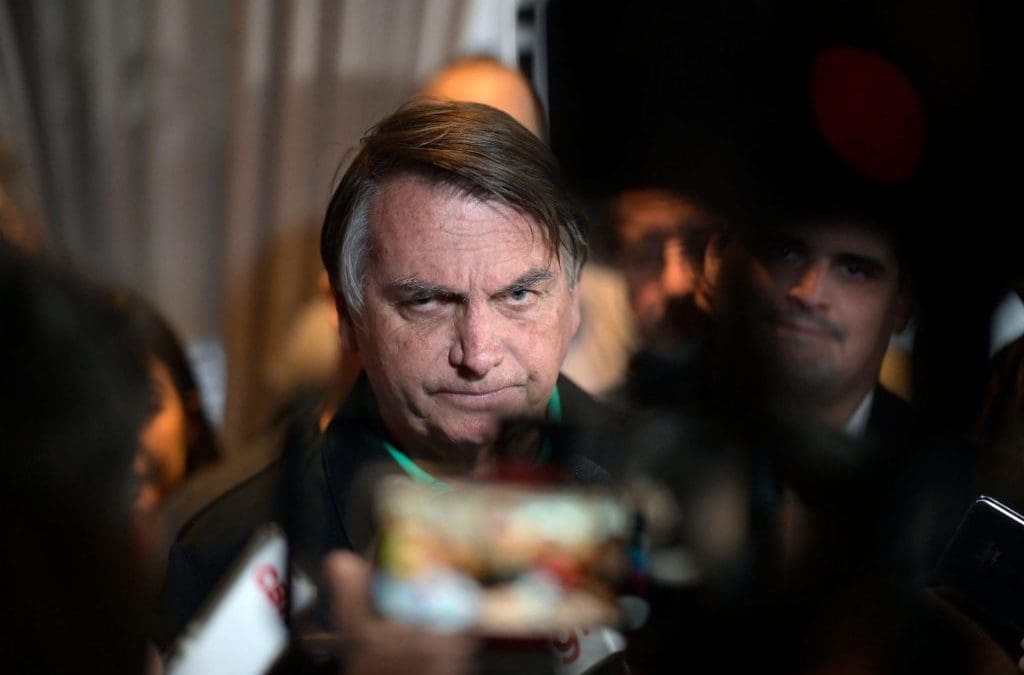
Former Brazilian President Jair Bolsonaro speaks to members of the media in Belo Horizonte, Minas Gerais state, Brazil, on June 30, 2023. Photo by DOUGLAS MAGNO/AFP via Getty Images
Common Dreams Logo

This story originally appeared in Common Dreams on Sep. 11, 2025 . It is shared here under a  Creative Commons (CC BY-NC-ND 3.0) license.

Former Brazilian President Jair Bolsonaro  was sentenced to over 27 years behind bars Thursday after four of five Supreme Court justices on a panel voted to convict the far-right leader and seven associates of plotting a military coup and assassination of current President Luiz Inácio Lula da Silva and other officials.

“This criminal case is almost a meeting between Brazil and its past, its present, and its future,” said Justice Cármen Lúcia Antunes Rocha, on Thursday cast the third and decisive vote to convict the former president and seven co-plotters, referring in part to the two decades of US-backed  military dictatorship, during which Bolsonaro served as an army paratrooper.

Lúcia joined Justices Flávio Dino, Cristiano Zanin, and Alexandre de Moraes—who, along with Lula and Brazilian Vice President Geraldo Alckmin were targeted for assassination by the plotters—in voting to convict the defendants of attempting to subvert Lula’s victory  in the 2022 presidential election.

The defendants—who in addition to Bolsonaro include army generals and former Defense Ministers Walter Braga Netto and Paulo Sérgio Nogueira de Oliveira; former Institutional Security Minister Augusto Heleno Ribiero; admiral and former Navy Commander Almir Garnier Santos; former Justice Minister Anderson Torres; and former presidential adviser Márcio Mirando—were found guilty of crimes including attempting a coup, involvement in an armed criminal organization, attempting the violent abolition of democratic rule of law, and aggravated damage of the state’s assets.

Lt. Col. Mauro Cid, a former Bolsonaro aide who turned state’s witness, was sentenced  Thursday to two years of confinement under open conditions, the most lenient form of carceral punishment in the Brazilian justice system.

“The government wanted to remain in power by simply ignoring democracy—and that is what constitutes a coup d’état,” Moraes said ahead of his vote on Tuesday. “The leader of the criminal group made it clear—publicly and in his own words—that he would never accept defeat at the ballot, a democratic loss in the elections, and that he would never abide by the will of the people.”

Bolsonaro was sentenced to 27 years, 3 months in prison, with penalties for the other convicted defendants still uncertain as of Thursday evening. Bolsonaro, who is 70 years old, denies any wrongdoing. He is currently under house arrest and could remain there until after exhausting the appeals process. He is already banned  from running for any office until 2030 due to his abuse of power related to baseless claims of electoral fraud.

Justice Luiz Fux voted Thursday to absolve Bolsonaro, asserting that there was “absolutely no proof” that the former president took part in or was even aware of the coup and assassination plot.

However, Lúcia argued that there was copious evidence indicating that Bolsonaro and his accomplices acted “with the purpose of eroding democracy and institutions.”

“They acted to hijack the soul of the republic,” she said. “The case files show a coordinated criminal enterprise by the defendants, who adopted the methods of a digital militia to attack the judiciary, the electoral system, and the electronic voting machines.”

The landmark verdict came amid acute political polarization in Latin America’s biggest democracy and threats from the office of US President Donald Trump  to unleash American “military might” in defense of the “Trump of the Tropics,” as Bolsonaro is often called. The Trump administration has already slapped 50% tariffs  on Brazilian imports and has sanctioned  Moraes.

US Secretary of State Marco Rubio responded to Thursday’s developments by vowing on social media that “the United States will respond accordingly to this witch hunt.”

Like Trump in 2020, Bolsonaro made many baseless allegations that his loss in the 2022 election was due to fraud, fueling lies and conspiracy theories that led to the January 8, 2023 mob attacks  on government buildings. Around 1,500 Bolsonaro supporters were arrested  in the days following the storming of Congress and the presidential offices.

While many right-wing Brazilians were outraged by the convictions, leftist lawmakers and others applauded what Lula’s Workers’ Party (PT) called  “a historic moment for Brazil.”

Brazilian Secretary of Institutional Affairs Gleisi Hoffmann (PT) said  on social media, “The conviction of Jair Bolsonaro and his accomplices by the Federal Supreme Court expresses the vigor of democracy and national sovereignty.”

“They were convicted in due legal process, based on compelling evidence of the crimes they committed,” she continued. “It is a historic, unprecedented decision so that they may never again dare to attack the rule of law and the will of the people expressed at the ballot box.”

“It is also the proud response of Brazil’s judiciary to the economic sanctions and absurd coercion of the Donald Trump government, in conspiracy with the traitors to the homeland in the service of Bolsonaro,” Hoffmann added. “Today… Brazil told the world that crimes against democracy are intolerable. And they are unforgivable.”

Federal Deputy Talíria Petrone (Socialism and Liberty-Rio de Janeiro) called  Thursday “the greatest day ever,” while former colleague Jean Wyllys also hailed  this “great day.”

Erika Hilton, a Socialism and Liberty federal deputy representing São Paulo, taunted Bolsonaro with the prospect of a lengthy stay at a notorious maximum security penitentiary.

Federal Deputy Benedita da Silva (PT-Rio de Janeiro) said  on social media that “democratic Brazil is proud and celebrating the firm decision” of the high court, “whose members suffered countless threats, including death threats, from the conspirators against the democratic rule of law.”

Referring to the United States, da Silva praised the justices, who “did not bow to the threats to our sovereignty from the greatest external power.”“Now we have to defeat the amnesty coup of the convicted plotters that they are still trying to pass,” she added, a reference to efforts by the right-wing Congress to pass clemency legislation for Bolsonaro. “No amnesty!”

Original

Paulo Freire and education for freedom

Paulo Freire and education for freedom

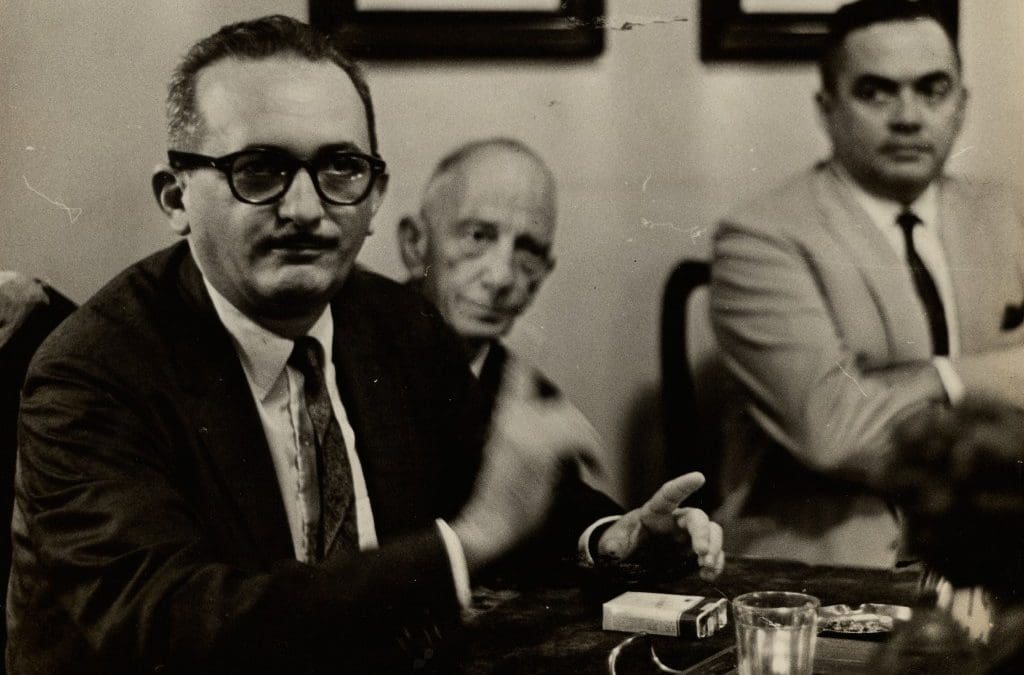
Paulo Friere, 1963. Public domain/Arquivo Nacional Collection.

Brazilian educator Paulo Freire inspired and he resisted. He was imprisoned and exiled during the Brazilian dictatorship and he carried his teachings around the world. He believed literacy and learning could be tools to empower. He helped people learn to read and write, but also understand their place of oppression and rise above it.

He wrote, “Education doesn’t transform the world. Education changes people. People transform the world.”

This is episode 67 of Stories of Resistance—a podcast produced by The Real News . Each week, we’ll bring you stories of resistance like this. Inspiration for dark times.

You can check out Michael’s exclusive pictures of this student march here, on his Patreon .

Michael’s Panamerican Dispatch podcast episode and pictures on the voices of resistance in Washington, DC, are here: https://www.patreon.com/posts/voices-of-in-dc

Please consider supporting this podcast and Michael Fox’s reporting on his Patreon account : patreon.com/mfox . There you can also see exclusive pictures, video, and interviews. 

If you like what you hear, please subscribe, like, share, comment, or leave a review. 

And please consider signing up for the Stories of Resistance podcast feed, either in Spotify , Apple Podcasts , Spreaker , or wherever you listen.

Written and produced by Michael Fox .

Resources

Transcript

He was a man who inspired; who left a left a legacy long beyond his 75 years. A man who empowered, and continues to empower others, even though he passed nearly three decades ago. A man of hope. Of belief in the power of every individual. Every human being. And that we could learn through each other—with each other—together.

This man was Paulo Freire.

His life was dedicated to helping others to unlock their every potential, to help others break the chains that tie them down. His words and his teachings, his pedagogy, has been taught the world over, and changed lives. It still does.

Paulo Freire was born in Recife, Brazil, on September 19, 1921. He faced poverty and hunger early. It would impact him throughout his life. 

“I didn’t understand anything because of my hunger,” he said. “I wasn’t dumb. It wasn’t lack of interest. My social condition didn’t allow me to have an education. Experience showed me once again the relationship between social class and knowledge.”

He studied law and philosophy. He worked as a Portuguese teacher. Above all, he was an educator. See, he believed that true learning, transformative learning, didn’t come through rote memorization and repetition. It came through creative critical thinking. Through personalizing lessons.

He believed that education could truly be a means of liberation. Of empowerment. And he put this into practice in Northeastern Brazil.

In the early 1960s, working through the University of Recife, he and a team of youth educators helped to teach 300 farmworkers in the town of Angicos, Rio Grande do Norte, to read and write in just 40 hours. 

It was a huge success and it had profound significance. It meant they could now vote. See, at the time, only people who could read or write could vote in Brazil. The Brazilian government brought Freire on to replicate the program around the country. 

But plans were cut short by the 1964 military coup. Paulo Freire was imprisoned and then exiled to Bolivia and then Chile. 

“The right to ask questions,” he would say later, “is the reason I was jailed and the reason I was exiled.”

He published books: “Education as a Practice of Freedom,” and then, in 1968, his infamous “Pedagogy of the Oppressed.”

The book is so profound it is still used and taught around the world today. And it was banned in Brazil under the dictatorship.

In it, he attacks what he calls the “Banking Model” of education, where students are empty cups to be filled up by their teachers. This, he writes, is an instrument for oppression, while a “problem-posing concept of education is an instrument for liberation.”

“Education,” he writes, should be “a mutual process” where teachers work with the students, not teach at them.

Freire writes in the Pedagogy of the Oppressed that “In their political activity, the dominant elites utilize the banking concept to encourage passivity in the oppressed… and take advantage of that passivity to ‘fill’ that consciousness with slogans which create even more fear of freedom. This practice is incompatible with a truly liberating course of action, which, by presenting the oppressors slogans as a problem, helps the oppressed to ‘eject’ those slogans from within themselves.”

Simple words, yet so profound. And so, so different from most of the teaching and education around us. Paulo Freire was truly ahead of his time. 

He inspired. And he resisted. Literacy and learning can be a tool to empower. It can be a tool to change the world. But, as he wrote, “Education doesn’t transform the world. Education changes people. People transform the world.”

Paulo Freire would teach at Harvard University and work as an education advisor with the World Council of Churches. He would act as an advisor on education reform in numerous former Portuguese colonies in Africa. He finally returned home to Brazil in 1980, after 16 years in exile.

His message is still carried across the country and the globe. From land occupations by Brazil’s Landless Workers’ Movement to university classrooms. His pedagogy and praxis continues to be a roadmap for liberation and freedom. A roadmap for lifting us all up. A roadmap for democracy 

He writes in the Pedagogy of the Oppressed: “For the truly humanist educator and the authentic revolutionary, the object of action is the reality to be transformed by them together with other people—not other men and women themselves. The oppressors are the ones who act upon the people to indoctrinate them and adjust them to a reality which must remain untouched.

“But the more I think of what I did, what I proposed, the more I understand myself much more as a thinker and a kind of epistemologist, proposing a critical way of thinking and a critical way of teaching, of knowing to the teachers in order for them to work differently with the students.”

Paulo Freire died on May 2, 1997, at the age of 75. His words and his teachings are just as important today as ever. And, in fact, in Brazil, while in office then-President Jair Bolsonaro pushed to ban his work and his books from university classrooms.

Creative and critical discussions in classrooms and in the public are prohibited for only one reason—to control the message on behalf of the powerful and the elite, and ensure that long-standing systems of oppression continue unchallenged and untouched. Something, sadly, that we are seeing more and more of, today, in the United States and elsewhere around the world.

Hi folks, thanks for listening. I’m your host Michael Fox. Paulo Freire was born today, More than a century ago. 

My dear friend Catherine Murphy has just finished a documentary on Paulo Freire’s life and in particular his work in Angicos, Rio Grande do Norte. It’s called “Reading the World.” You must check it out. It debuted in Brazil recently. It’s still making the rounds on the festival circuit. I’ll add a link in the show notes to the trailer and the website.

The clip I used of Paulo Freire speaking in English comes from an interview he did with the International Literacy Institute in 1996. It’s on YouTube. I’ll add a link to that too in the show notes. 

As always, if you like what you hear and enjoy this podcast, please consider becoming a subscriber on my Patreon. It’s only a few dollars a month. I have a ton of exclusive content there, only available to my supporters. And every supporter really makes a difference.

This is the latest episode of Stories of Resistance, a podcast series produced by The Real News. Each week, I bring you stories of resistance and hope like this. Inspiration for dark times. If you like what you hear, please subscribe, like, share, comment, or leave a review.

Thanks for listening. See you next time.

“My philosophical conviction is that we did not come to keep the world as it is. We came to the world in order to remake the world. We have to change reality.”

Original