by Adam Johnson | Feb 6, 2026 | Article, ICE, Minneapolis, police accountability, Policing, Politics and Movements: US, Prisons and Policing
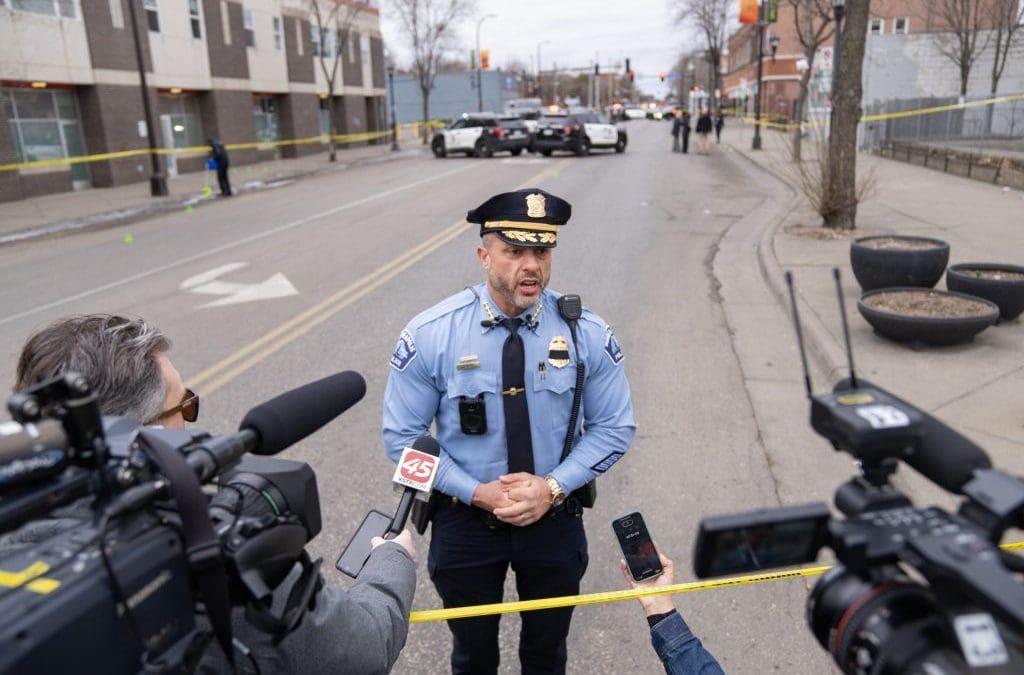
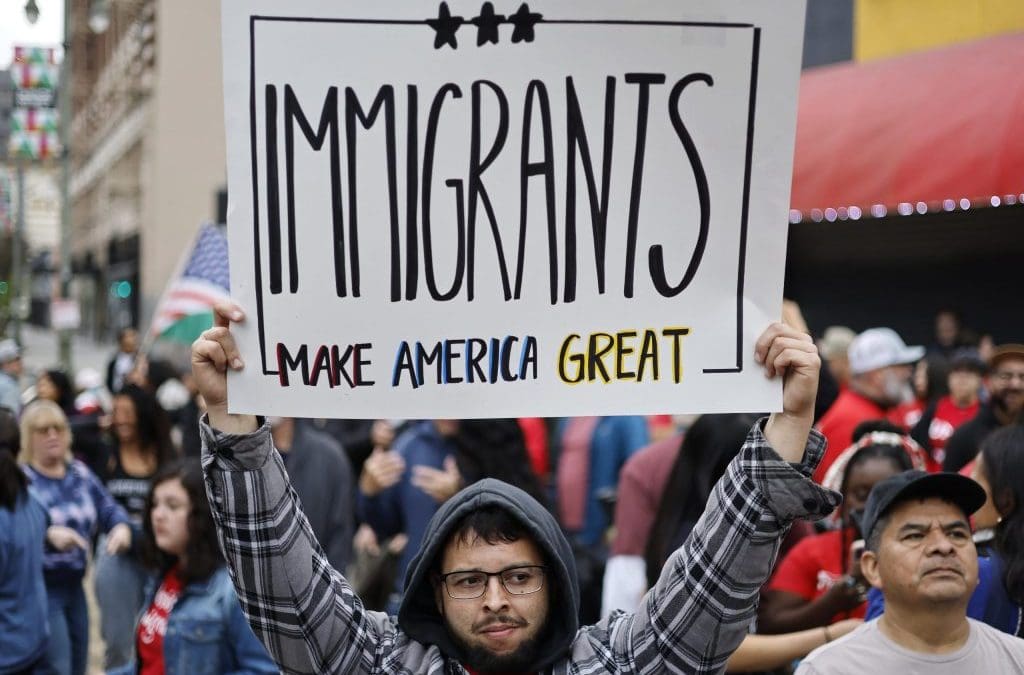
Elite consensus over the past year is that “defund” and “abolish” language from immigrant and Black Lives Matter activists of the late 2010s and early 2020s was a primary contributor to Harris’ 2024 loss to Trump. Despite this conventional wisdom lacking things like evidence, good-faith analysis, or empirical basis, it has quickly been cemented into the conventional wisdom of the Beltway and the media. The narrative, somewhat awkwardly, requires acting as if we jumped directly from 2017 to 2023, and requires ignoring that at the height of “abolish ICE,” Democrats over-performed in the 2018 primaries. And, at the height of “defund the police” rhetoric, Biden used the wave of George Floyd activism to help him capture the White House in 2020. But the story—and make no mistake, it’s simply a story—fit neatly into a left-punching, elite-serving narrative: Harris was bogged down not by a clearly sunsetting Biden clinging to power, not by veering to the center and thus depressing progressive energy, not by her continued support for the ongoing genocide in Gaza, but some vague brand association that swing voters had with Harris and anti-police and anti-ICE language in the preceding years.
This elite consensus has been, in large part, pushed out by billionaire-backed groups like Searchlight Institute, Third Way, Blue Rose’s David Shor and other influential liberal pundits. It is in this context one must examine this latest PR effort by center-left media and their allies in law enforcement to contain the populist anger over DHS abuses and their attempt to frame said abuse as an anomaly, a one-off deviation from a narrative of progress and reform after the mass
by Stephen Prager | Feb 6, 2026 | Article, ICE, immigration, Politics and Movements: US, Prisons and Policing, Reprint, Trump
This story originally appeared in Common Dreams on Feb. 02, 2026. It is shared here under a Creative Commons (CC BY-NC-ND 3.0) license.
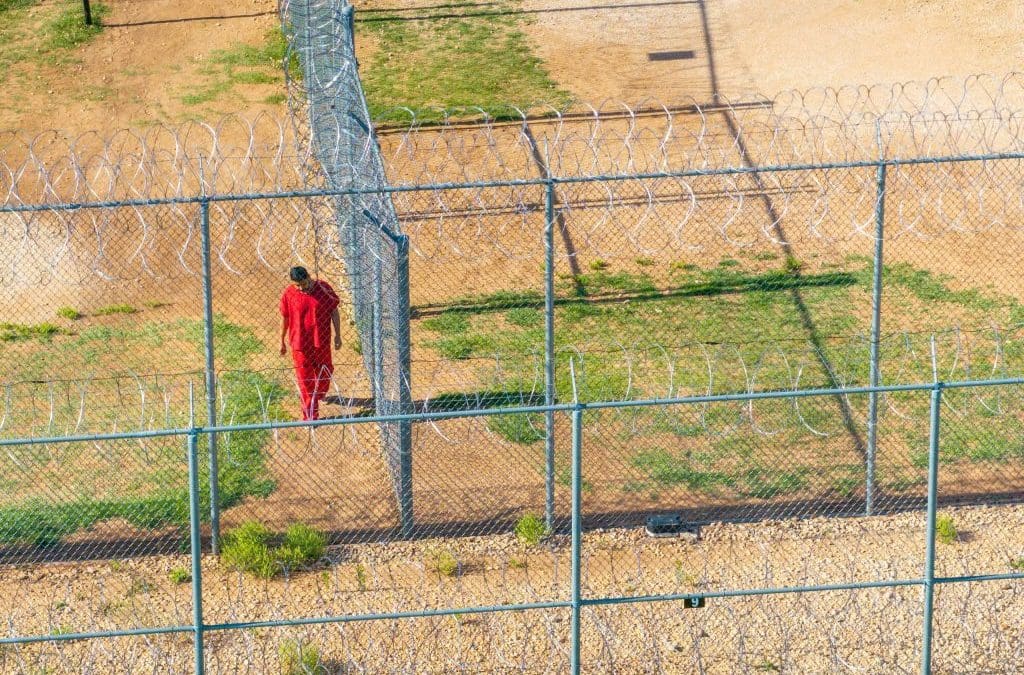
In the wake of immigration agents’ killings of three US citizens within a matter of weeks, the Department of Homeland Security is quietly moving forward with a plan to expand its capacity for mass detention by using a military contract to create what Pablo Manríquez, the author of the immigration news site Migrant Insider calls “a nationwide ‘ghost network’ of concentration camps.”
On Sunday, Manríquez reported that “a massive Navy contract vehicle, once valued at $10 billion, has ballooned to a staggering $55 billion ceiling to expedite President Donald Trump’s ‘mass deportation’ agenda.”
It is the expansion of a contract first reported on in October by CNN, which found that DHS was “funneling $10 billion through the Navy to help facilitate the construction of a sprawling network of migrant detention centers across the US in an arrangement aimed at getting the centers built faster, according to sources and federal contracting documents.”
SCOOP: A repurposed Navy contract to funnel tens of billions to ICE for a nationwide “ghost network” of concentration camps—just got a lot bigger. https://t.co/yvzszpD8t2— Pablo Manríquez (@PabloReports) February 2, 2026
The report describes the money as being allocated for “new detention centers,” which “are likely to be primarily soft-sided tents and may or may not be built on existing Navy installations, according to the sources familiar with the initiative. DHS has often leaned on soft-sided facilities to manage influxes of migrants.”
According to a source familiar with the project, “the goal is for the facilities to house as many as 10,000 people each, and are expected to be built in Louisiana, Georgia, Pennsylvania, Indiana, Utah, and Kansas.”
Now
by Brett Wilkins | Feb 5, 2026 | Article, China, Politics and Movements: International, Politics and Movements: US, Reprint, Russia
This story originally appeared in Common Dreams on Feb. 04, 2026. It is shared here under a Creative Commons (CC BY-NC-ND 3.0) license.
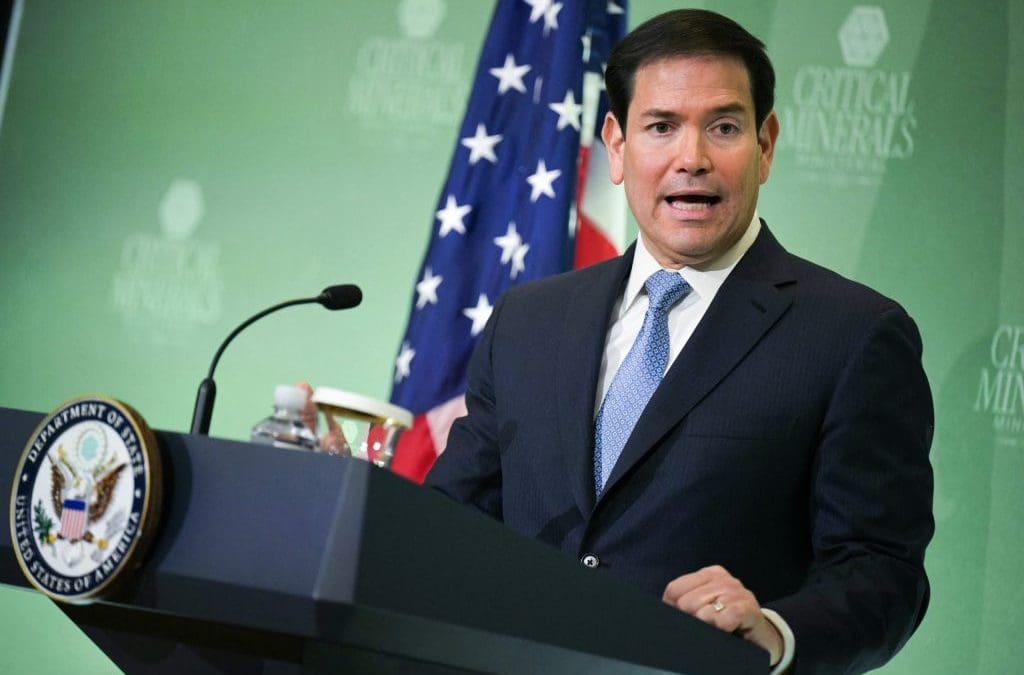
Secretary of State Marco Rubio on Wednesday implicitly confirmed that New START—a key arms control treaty between the United States and Russia—will expire Thursday, prompting renewed demands for what one group called “a more coherent approach from the Trump administration” toward nuclear nonproliferation.
Asked about the impending expiration of New START during a Wednesday press conference, Rubio said he didn’t “have any announcement” on the matter, and that President Donald Trump “will opine on it later.”
“Obviously, the president’s been clear in the past that in order to have true arms control in the 21st century, it’s impossible to do something that doesn’t include China because of their vast and rapidly growing stockpile,” Rubio said.
🇺🇸🇷🇺🇨🇳 Secretary of State Marco Rubio:I don’t have any announcement on New START right now. I think the President will opine on it later. The President has been clear in the past that in order to have true arms control in the 21st century, it’s impossible to do something that… pic.twitter.com/8pxi3bfdsy— Visioner (@visionergeo) February 4, 2026
New START, signed in 2010, committed the United States and Russia to halving the number of strategic nuclear missile launchers in their arsenals. While the treaty did not limit the size of the countries’ actual nuclear arsenals, proponents pointed to its robust verification regime and other transparency features as mutually beneficial highlights of the agreement.
“We have known that New START would end for 15 years, but no one has shown the necessary leadership to be prepared for its expiration,” said John Erath, senior policy director at the Center for Arms Control and Non-Proliferation and former longtime
by Jon Queally | Feb 4, 2026 | Article, Economy, Economy and Inequality, immigration, labor, Politics and Movements: US, Reprint
by Katya Schwenk | Feb 2, 2026 | Article, east palestine, Economy and Inequality, Politics and Movements: US, Reprint, sacrifice zones
This article was first published by The Lever, an investigative newsroom. Click here to get The Lever’s free newsletter.
On a balmy evening last September, Michael Fowler stumbled out to the south rail line in East Palestine, Ohio, and sat down in the middle of the tracks. His dog, a white Chihuahua, was beside him. The sun was setting. He waited perilously for the next oncoming train.
He wouldn’t have to wait long. Dozens of times a day, freight trains blare through East Palestine, cleaving the small Ohio town in two. The stretch of tracks on which Fowler sat was just a few hundred yards west of the site where two and a half years earlier, a Norfolk Southern train carrying tank cars full of toxic chemicals derailed and burned. The accident sent dark plumes of smoke over the town, leached toxins into local creeks and soil, and ignited a national reckoning around rail safety, one that has since delivered few reforms.
Fowler, 54, was upset with Norfolk Southern, an East Palestine police officer later reported in a sworn affidavit. He had not received the money he was promised from the $85 billion rail company — his cut of the $600 million settlement that Norfolk Southern had agreed to pay to resolve residents’ class-action lawsuit over the derailment. Eighteen months after the settlement’s announcement, still no check had arrived.
That September night, Fowler had decided to take matters into his own hands. He hoped to “cost the railroad money,” the police officer wrote, by putting himself in the path of the trains, which ran so close to his home that he could see the tracks from his front lawn.
Fowler was not the only East Palestine
by Sharon Zhang | Jan 30, 2026 | Article, big tech, Palestine, Politics and Movements: International, Politics and Movements: US, Reprint
This story was originally published on Truthout on Jan. 29, 2026. It is shared here under a Creative Commons (CC BY-NC-ND 4.0) license.
Well-known Gaza journalist Bisan Owda has been banned from TikTok, she says, just days after the finalization of the company’s sale to U.S. investors — including a firm headed by the notoriously pro-Israel Larry Ellison.
Owda announced the censorship of her account in a video on Instagram on Wednesday, saying that TikTok had banned her permanently. She had 1.4 million followers on the platform, she said, as a result of years of audience-building under Israeli occupation and genocide.
“I had 1.4 million followers there. I have been building that platform for four years now,” she said.
The account did appear to be banned on Wednesday and Thursday. However, late Thursday afternoon Eastern Time, Owda’s account appeared to be restored, but restricted. Some content seemed to not be available, and a banner appeared at the top of her feed that read: “Posts that some may find uncomfortable are unavailable.”
The Palestinian journalist has spent years documenting life in Gaza under Israeli occupation and, recently, amid Israel’s genocide. Her series with Al Jazeera’s AJ+ has won numerous awards, including a Peabody Award, an Edward R. Murrow Award, and even an Emmy. At the same time, pro-Israel voices have sought to silence Owda, including in a campaign in 2024 to pressure her Emmy nomination to be withdrawn.
In her Instagram video, Owda said that the ban was “expected” due to pressure from high-powered figures to censor Palestinian voices from TikTok.
She overlaid a video of Israeli Prime Minister Benjamin Netanyahu’s remarks at the UN General Assembly in September, in which he named TikTok as a “number one” priority of Israel.
She also shared a