by Julia Conley | Apr 14, 2026 | Article, Politics and Movements: International, Politics and Movements: US, Prisons and Policing, Reprint
This story originally appeared in Common Dreams on April 14, 2026. It is shared here under a Creative Commons (CC BY-NC-ND 3.0) license.
The former president of a top international human rights watchdog views the United States’ monthslong campaign of bombing boats in the Caribbean Sea and eastern Pacific Ocean as a clear-cut case of “murder,” he told The Intercept Monday, but he warned that pressure from the Trump administration may stop the body from investigating the Pentagon’s actions.
Juan Méndez, a former president of the Inter-American Commission on Human Rights, noted that a month after the IACHR held a hearing on the boat bombing campaign, officials “may well feel that this is a very delicate situation, and if they take the initiative, they’re going to incur the wrath of the United States.”
The hearing last month was the first of its kind and included testimonies from the ACLU, the Center for Constitutional Rights, International Crisis Group, and Ben Saul, the United Nations special rapporteur on counterterrorism and human rights. The groups presented evidence that the US has been violating both domestic and international law by bombing vessels that it has claimed—without making any evidence publicly available—are involved in drug trafficking. Nearly 170 people have been killed in dozens of strikes, and legal experts worldwide have asserted the US is violating international law and has committed extrajudicial killings—potentially making those involved in the strikes liable for murder.
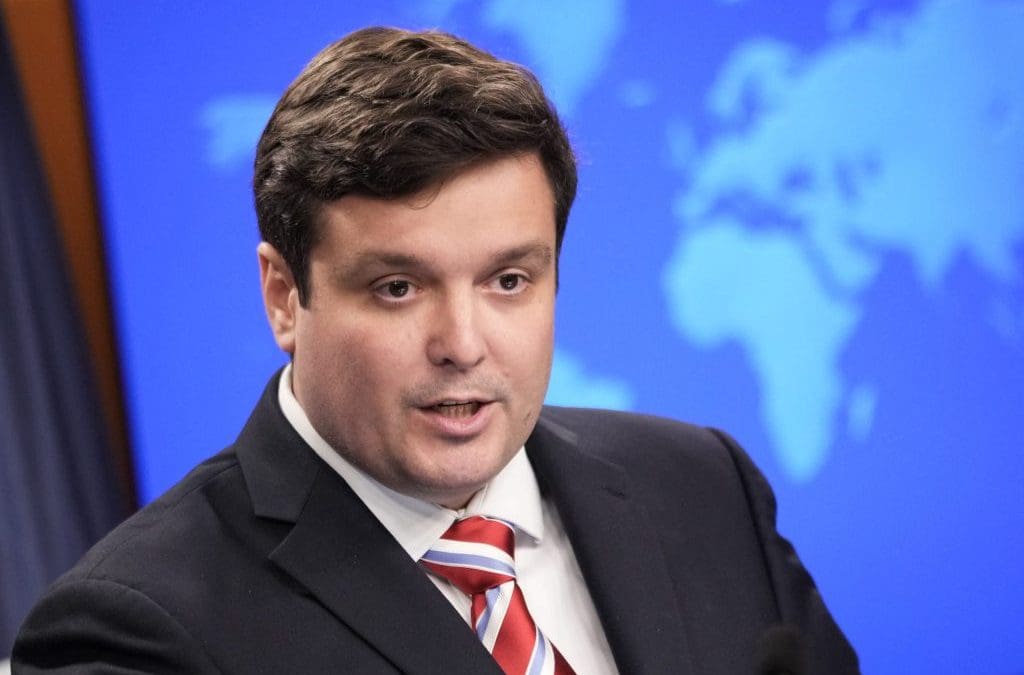
The hearing was followed by a statement from Tommy Pigott, a State Department spokesperson, who said the IACHR had “strayed far outside its mandate” by looking into the boat attacks—as the family of one man killed in a bombing requested it to—and accused the ACLU of trying to manipulate the body.
“The United States calls on the
by Jake Johnson | Apr 13, 2026 | Article, Iran, Politics and Movements: International, Politics and Movements: US, Reprint, Trump, War
by Jane Slaughter | Apr 13, 2026 | Article, Economy and Inequality, labor, Politics and Movements: US, Reprint, Unions
This story originally appeared in Labor Notes on April 6, 2026. It is shared here with permission.
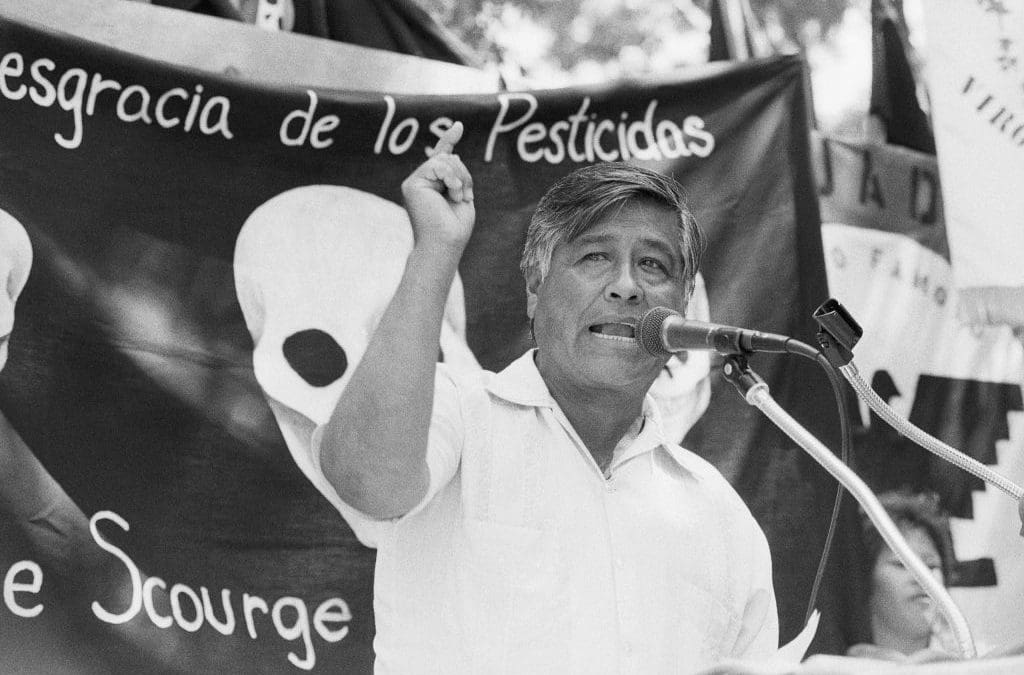
In 2011 Frank Bardacke published an 800-page history of the Farm Workers union: Trampling Out the Vintage: Cesar Chavez and the Two Souls of the United Farm Workers. It opened many eyes to the reasons the UFW became a shadow of its former self.
Bardacke starts the book with an epigraph, a quote from Shakespeare’s Julius Caesar: “O what a fall was there, my countrymen! Then I, and you, and all of us fell down…”
Bardacke was a farmworker in the fields of the Salinas Valley for six seasons in the 1970s. When he decided to write his book years later, he went back to his carpool co-workers, finding them still at work in the fields. In 1994, the union had been thoroughly defeated for nearly 10 years—but his old friends were afraid even to mention its name where the foreman might hear.
I interviewed Frank Bardacke after a New York Times investigation revealed evidence that Chavez had sexually abused young girls who were volunteering with the union, and the allegation that he had also assaulted union co-founder Dolores Huerta. –Jane Slaughter
Jane Slaughter: The revelations about Cesar Chavez as a sexual predator: many people have said they were “surprised but not shocked” or “shocked but not surprised.” How did you react?
Frank Bardacke: The abuse of Ana Murguia was rumored at the time among UFW staff, primarily at the La Paz headquarters. Many of the rumors originated with Ana’s stepmother, Kathy Murguia. But people just didn’t want to hear it. They didn’t want to look into it very deeply because Cesar was one of these
by Brett Wilkins | Apr 13, 2026 | Article, elections, Europe, Politics and Movements: International, Reprint
by Jake Johnson | Apr 10, 2026 | Article, Economy, Economy and Inequality, Politics and Movements: International, Politics and Movements: US, Reprint, War
This story originally appeared in Common Dreams on April 09, 2026. It is shared here under a Creative Commons (CC BY-NC-ND 3.0) license.
A new analysis released Thursday estimates that the average American taxpayer shelled out over $4,000 to the federal government last year “for militarism and its support systems” such as the Pentagon, whose already-massive annual budget is poised to surge to $1.5 trillion if President Donald Trump gets his way.
The National Priorities Project (NPP) at the Institute for Policy Studies found in its latest annual Tax Receipt report that, through their federal taxes, the average US taxpayer contributed $4,049.35 to Pentagon contractors, military personnel, nuclear weapons, aid to foreign militaries, and last year’s bombing of Iran’s nuclear energy facilities. That’s significantly more than the average US taxpayer contributed to healthcare for low-income Americans through Medicaid—$2,492.
NPP’s estimated militarism sum for last year does not include costs related to the current, massively unpopular US-Israeli war on Iran, which began on February 28, 2026 and has already cost Americans billions at the pump.
“But if we place the 2026 Iran war costs in the context of our 2025 tax receipt and put the cost at $35 billion—a line the US is likely on the verge of crossing—the average taxpayer will have paid $130 for the war on Iran, eight times more than the $16 the average taxpayer paid for a full year of home heating and energy assistance in 2025,” NPP said.
The $1,870 that the average US taxpayer paid toward Pentagon contractors in 2025 was “fifteen times as much as the $124 the average taxpayer paid for school lunches and other nutrition programs,” the analysis found.
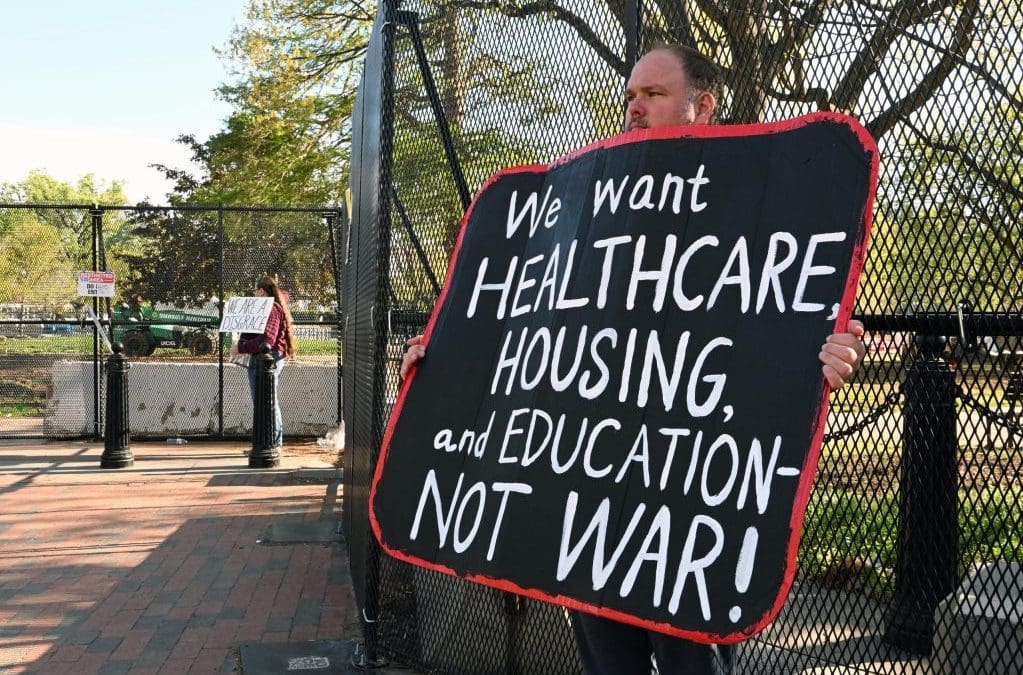
“It’s shameful that our tax dollars are doing more to bomb children in Iran and other countries than to feed
by Stephen Prager | Apr 10, 2026 | Article, Economy and Inequality, health care, mexico, Politics and Movements: International, Politics and Movements: US, Reprint
This story originally appeared in Common Dreams on April 10, 2026. It is shared here under a Creative Commons (CC BY-NC-ND 3.0) license.
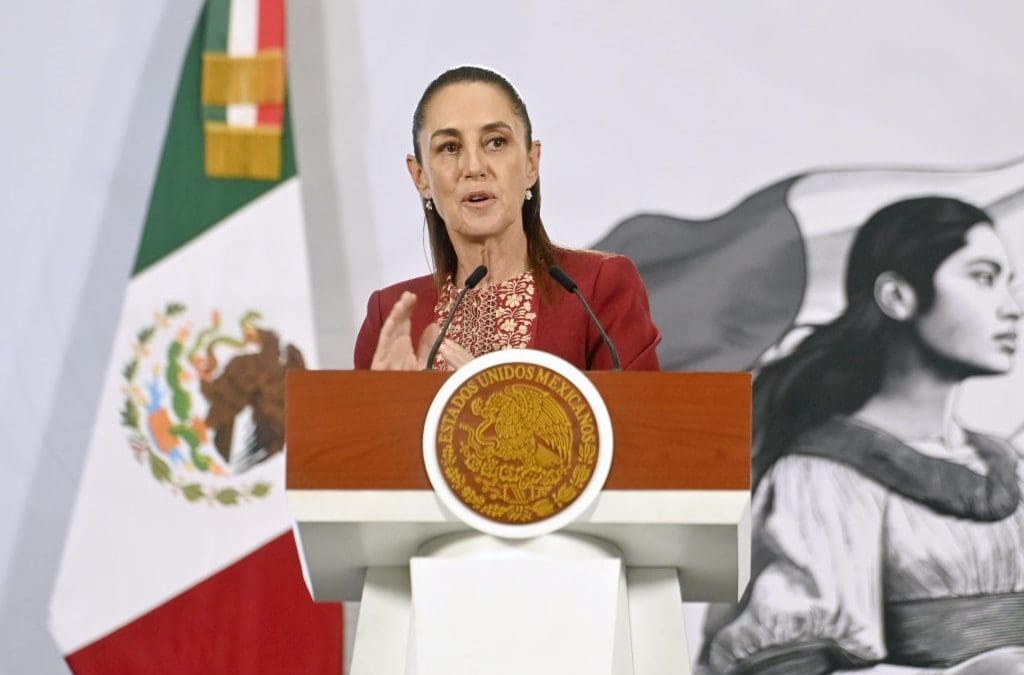
As Mexican President Claudia Sheinbaum moves forward with a plan to enact universal healthcare for her country’s more than 130 million people, a longtime advocate for Medicare for All in the US called the development “both inspiring and frustrating.”
“Inspiring because it shows what is possible,” Wendell Potter, a former insurance company communications director who has become a leading critic of the industry, told Common Dreams. “Frustrating because here in the US we are going in the opposite direction.”
Earlier this week, Sheinbaum announced a decree that she called “a historic step” for Mexico.
Beginning in 2027, her government plans to unify Mexico’s public health institutions into a single Universal Health Service, allowing patients across the country to receive care from the Mexican Social Security Institute (IMSS), the Social Security Institute and Social Services of Workers of the State (ISSSTE), and the IMSS‑Bienestar program, which provides free services to those without employer-provided insurance.
According to TeleSur, universal access would be rolled out gradually, with universal emergency care and continuity of treatment, free of financial constraints, beginning in January. Specialized services such as radiotherapy, laboratory tests, and imaging studies would be phased in later that year, and universal prescription fulfillment and hospitalization would also be added to the program in 2028.
“The goal is that when we leave the government [in 2030], any Mexican man or woman can go to any health institution for treatment for any ailment and be received,” Sheinbaum said.
🇲🇽🏥 SHEINBAUM TO DECREE UNIVERSAL HEALTH SYSTEMBy presidential decree, any Mexican will be able to receive healthcare at any public institution, regardless of enrollment. 120M